‘I’m Living With Early-Stage Alzheimer’s Disease—but I’m Not Letting It Steal My Hope or Voice’
After losing her mom to Alzheimer’s, Molly McFadden is facing her own diagnosis with courage

I remember the first time I was on stage and scrambled my words. If my lines in a play were supposed to be “Sherwin-Williams,” I’d find “William Sherman” or other similarly discombobulated phrases coming out of my mouth. Fellow thespians know that we all lose a line here or there, but this was different. It was a black hole, and I had to wait for it to pass to regain my footing and my spot in the play. I knew something was up. Today, at age 72, I know that something to be Alzheimer’s disease, the same condition that took my mother at a similar age.
Born in Denver, I spent 25 years in New York pursuing theater, singing and creating. My husband and I built a life around creativity. We even owned a jazz bistro in Michigan that was the heart of our community. I’ve always been a glass-half-full person, someone who looks at challenges as opportunities. But that doesn’t mean my journey has been easy.
My mother’s Alzheimer’s disease diagnosis
When my mother began showing signs of Alzheimer’s disease in the 80s and 90s, our world changed. But it wasn’t immediately obvious. She became very savvy at dodging questions and worked to hide her cognitive decline out of embarrassment. There weren’t nearly the same resources and education as there is now, and she found herself ashamed of her condition. Delaying accepting it also meant delaying care, which impacts the outcomes of many types of dementia and Alzheimer’s.
I paused my thriving New York City career to come to Tennessee, beginning a 12-year journey as her primary caregiver. It was a macabre journey with little information available. I promised her I’d never put her in a nursing home, but I quickly learned that with Alzheimer’s disease, such promises are often impossible to keep.
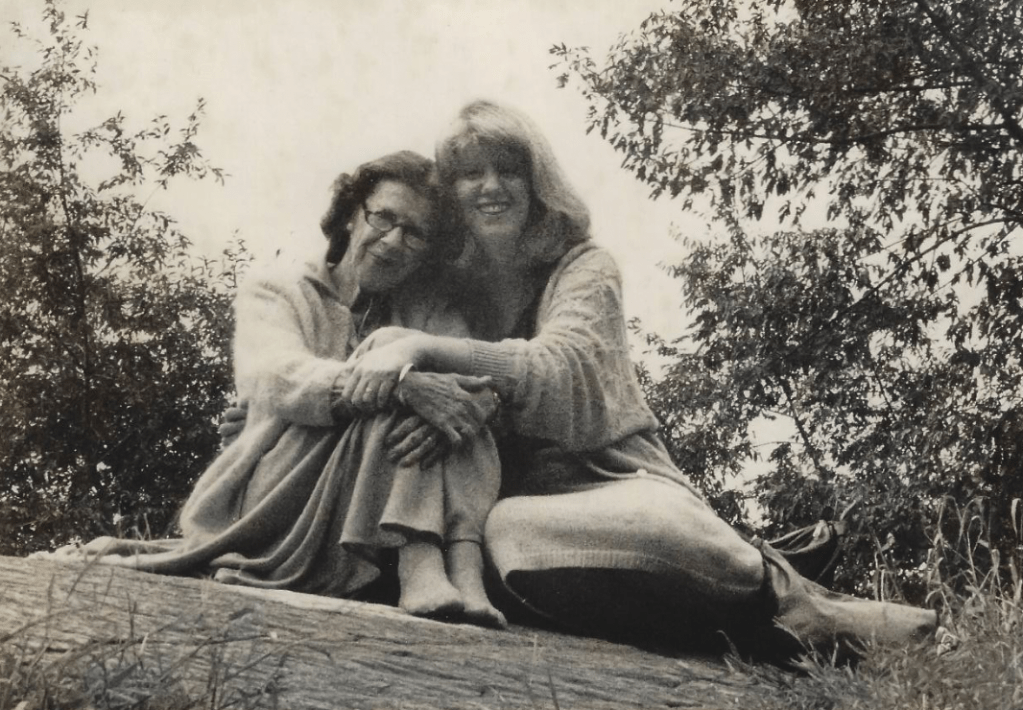
Her struggle became the inspiration for my art, my way of understanding and processing the impact of this devastating condition. After her passing, we rebuilt our life in Michigan, where our nights were full of dancing, music and laughter at the jazz bistro. Alzheimer’s disease, and all its devastating ugliness was behind me. Yet it was always in the back of my mind that I could face the same fate one day, since it can be genetic.

Unexpectedly, I learned I was ‘high risk’
Out of the blue, the Cleveland Clinic’s brain research department sent me a letter that they had randomly selected me to invite me to participate in a two-year study about lifestyle’s impact on people who potentially could get Alzheimer’s disease. I was thrilled to help, but couldn’t believe the irony that it was random. I even asked my doctor if they told the Cleveland Clinic. They hadn’t. In time, I knew it was no accident—I believe my mom had a part in sending me the letter.
“The power of early detection is the power of prevention.” —Rhonna Shatz, DO
They asked if I wanted to know if I had the gene, and I did. I was “high risk.” I put it out of my mind and determined I’d just watch it, and that I was fine. Until those lines in my play started to scramble.
My doctor dismissed my concerns as normal aging
I went to my primary care doctor, explaining my concerns and my family history of Alzheimer’s disease. Like many doctors, she dismissed my worries as stress or aging. But I knew something was wrong. I persisted, saying “You’re not hearing me.” It’s a difficult condition to diagnose. In fact, primary care physicians only get it right 60 percent of the time.
A neurologist later did a brain scan, calling it a “typical 70-year-old brain,” but I knew better. When they did a spinal tap, the truth finally emerged—I had early symptoms of mild cognitive impairment (MCI) that could lead to Alzheimer’s disease. It was blooming inside of me, like I’d suspected, and I had to determine what I’d do next, both logistically and emotionally.
Now, I push for everyone who asks me for advice to insist on scans if they are worried about the condition, and to not take “it’s menopause” or “it’s aging” or “it’s fine” as an answer—especially if they’re at risk of developing of dementia or Alzheimer’s disease.
Since February 2023, I’ve been on an infusion medication called Leqembi that potentially peels away brain plaque that can affect my mental ability. I’ve had no side effects, and I’m monitoring my progress through continued research studies. My doctors tell me I’m “buying time,” though no one can predict exactly how much.
I made sweeping changes after my Alzheimer’s diagnosis
My doctors prescribed a complete lifestyle overhaul. Gone are my days of indulging in breads and desserts. As someone who loves to cook any and all types of recipes, this has been an adjustment. I adopted a Mediterranean diet filled with lots of salads, beans and vegetables.
“Exercise and anti-inflammatory diets, such as the MIND diet, reduce inflammation and increase a reserve of [neuron] connections that help compensate for any disease-associated losses,” explains Rhonna Shatz, DO, director of the Memory Care and Brain Health Center at University of Cincinnati Health. “Even people in late mild cognitive impairment or dementia stages benefit from these interventions.”
I started walking every day and practicing meditation. I learned to breathe, to center myself. Eight minutes of meditation became my daily ritual. Sometimes I’ll even pull my car over if I find myself getting stressed and take those eight minutes right on the side of the road. As researchers learn more about the connection between stress and disease, I realize why meditation is part of the prescription for my overall health and wellness, not just a “nice to have.” Deep breathing exercises have been associated with lowering blood pressure, and that has been linked to lower risk of all-cause dementia.

Breaking Alzheimer’s disease misconceptions
A diagnosis of MCI or Alzheimer’s disease comes with a variety of misconceptions and hesitations. My theater colleagues have wondered if I can still do it, or if I’m going to forget my next lines. But I’ve proven I can adapt and persevere with new ways of remembering.
People often ask why I’d want to know about my risk. But I’ve learned that knowledge is power. I encourage others to fight for themselves, to get tested and not to be afraid.
“Not all memory problems are Alzheimer’s disease, and many types of causes of memory issues may be treatable, especially if caught early,” says Glen R. Finney, MD, director of the Geisinger Memory and Cognition Program and Professor of Neurology at Geisinger College of Health Sciences in Scranton, PA. “Even Alzheimer’s disease now has disease-modifying treatments that can help slow progression, but they work best the earlier Alzheimer’s disease is detected.”
I refused to let this diagnosis define me. I rewrote my play “Living on the Moon,” incorporating my journey. I started performing again, working with directors who understood my condition and supported me. Some nights were challenging—words would slip away—but I learned to breathe, to trust myself, to keep going.
I began giving TED talks, using my puppet, a representation of my mother, to share my story. My message became clear: “Why give in when you can fight back?” I started handing out literature at conferences, talking openly about early detection and treatment.
My family and future
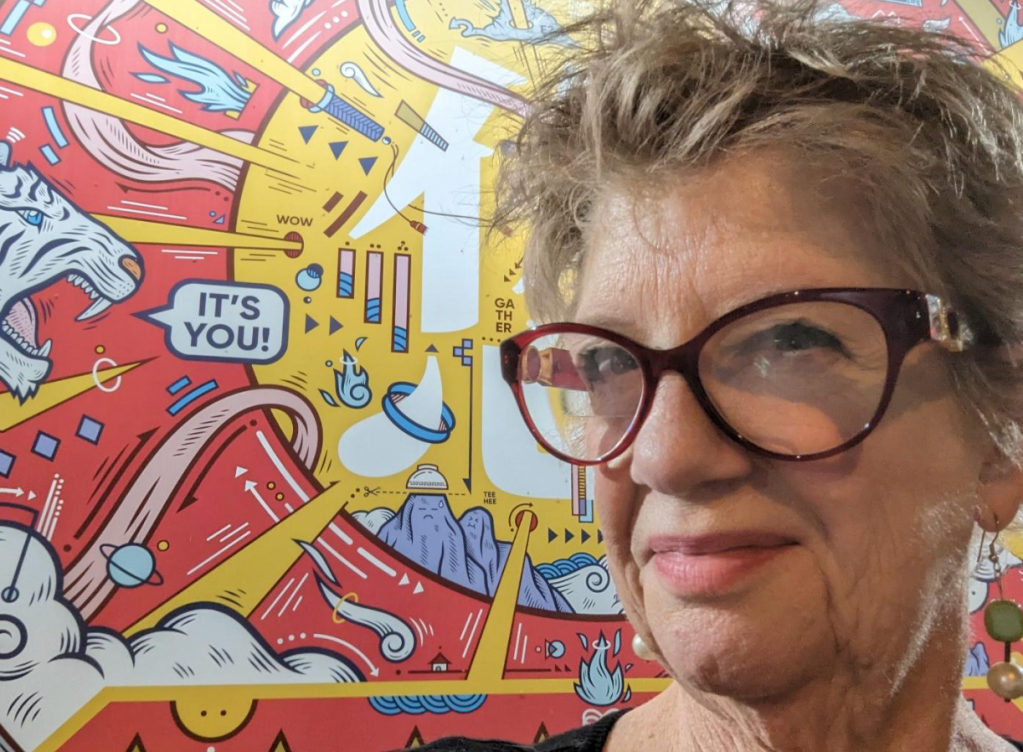
My husband, daughter and son-in-law are my support system. We’ve had open conversations about what might come, agreeing that if I need care, we’ll address it directly. I’m not interested in assisted living—if I need a facility, we’ll go straight there. I don’t want my family to go through some of the agonizing decisions and progressive disease implications I did with my mom.
Buying time doesn’t mean just living for the day. It also means living long enough to see incredible breakthroughs in Alzheimer’s research, including a new test just FDA-approved for diagnosis that might have meant a blood test instead of my spinal tap.
“Multiple genetic and environmental factors contribute [to Alzheimer’s disease], almost half of which, if addressed early, might prevent the end-stage symptoms—the progressive and relentless inability to make new memories, unintended repetitions, aphasia and functional loss—that in the past was considered the first point of intervention,” says Dr. Shatz. “The power of early detection is the power of prevention.”
Living with Alzheimer’s disease: My advice

My next adventure? The Edinburgh Fringe Festival. I’ll be performing 24 shows, hoping to tour the piece and get it published. My goal is to keep performing and writing as long as I can. But, my husband did look quite relieved when I told him maybe we should work less and travel more. “Thank God,” he laughed. So, Paris and England, Ireland and other destinations are on our list of places to see. I want to kayak, visit friends and continue living a full life.
To anyone facing similar challenges: Don’t be afraid. Fight for yourself. Talk to doctors, get referrals and seek information. Your body is telling you something, so listen. Just as you’d immediately seek treatment for cancer, approach Alzheimer’s the same way. One day, the disease might even be eradicated.
I’m not defined by this condition. I’m defined by my resilience, my art and my love for life. Some days are harder than others, but I keep breathing, keep moving forward. There’s hope, always hope.
Conversation
All comments are subject to our Community Guidelines. Woman's World does not endorse the opinions and views shared by our readers in our comment sections. Our comments section is a place where readers can engage in healthy, productive, lively, and respectful discussions. Offensive language, hate speech, personal attacks, and/or defamatory statements are not permitted. Advertising or spam is also prohibited.