Dr. Florence Comite Reveals the ‘Game-Changing’ Trick To Living Longer and Healthier
A continuous glucose monitor (CGM) can give you surprising insights into your health

Key Takeaways
- Real-time glucose tracking shows how daily habits impact your health.
- Personalized data shows each body responds differently to diet and habits.
- Small, consistent lifestyle changes help prevent long-term metabolic disease.
In her new book, Invincible: Defy Your Genetic Destiny to Live Better, Longer, pioneering endocrinologist Florence Comite, MD, founder of the Center for Women’s Health at Yale University, shares science-backed strategies to help women demystify their bodies and live fully, long into old age. Here, an excerpt for Woman’s World readers:
Excerpt of ‘Invincible: Defy Your Genetic Destiny to Live Better, Longer’
To improve your health, you need to know what’s going on inside you.
Several years ago, I found myself out of shape, unhealthy, sleeping too few hours, and gaining weight, particularly around my trunk—not a good place to be as an endocrinologist and longevity physician who wants optimal health for a long life.
My parents lived long, outliving their siblings, which bodes well for me. But keeping my health so I could do all that I wanted in life, from snow skiing, water-skiing, and rollerblading to playing baseball and soccer with my grandchildren, great- and great-great grandchildren, is my plan. Keeping my joie de vivre means the world to me.
How did my health decline? I was burning the candle at both ends—expanding the Comite Center, giving presentations on the medical circuit, working nights and weekends on a challenging new business venture.
I can function well on four or five hours of sleep—I did it all through residency and raising my sons—but I was getting less than that most nights.
My deep sleep gave me energy, but I was missing rapid eye movement (REM) sleep, the kind that’s important for memory consolidation, processing emotions and brain development. I wasn’t eating properly—lots of carbs. I didn’t have time for exercise or my favorite stress-reducing activities like meditation, yoga and qigong.
I was doing everything wrong, and I knew it, but business and busy-ness made it seemingly impossible to get my personal life in order.
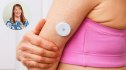
All-day insights via a smartphone
Then I had my eye-opener, my aha moment, thanks to a remarkable wearable device called a continuous glucose monitor, or CGM. A CGM is a tool for feedback that measures your glucose or sugar, the fuel that provides energy to your cells.
Glucose goes up and down throughout 24 hours, usually rising after high-carbohydrate meals, intense exercise, poor sleep, illness and stressful situations. When glucose rises, your pancreas releases insulin to push the fuel into your muscles. This system works great for crucial short-term energy needs, such as when you must run out of a burning building or jump out of the way of a car that ran a stop sign at the crosswalk. But when there’s too much sugar in your system or it stays elevated regularly, the excess is stored as fat. Too much glucose in circulation over time leads to insulin resistance, where your cells no longer respond to the insulin hormone and sugar remains in your bloodstream.
Genomic variation in our DNA contributes to risk, depending on the genes you inherited. My mother was never diabetic; she was active all her life, even gardening until age 102, and she slept well, too. But her glucose had been rising since her 90s. That was a warning sign to me. I wanted to do everything in my power to ensure that diabetes would not emerge in my future, given all the ramifications and triggers of the chronic diseases of aging.
A CGM provides a warning that can help you avoid that fate. It’s a device smaller than a quarter that you attach to the back of your arm. A tiny needle inside the CGM applicator inserts a filament in the back of your upper arm so the sensor can measure your glucose. The needle doesn’t stay in your arm, only the filament—a mosquito bite feels more painful—and starts measuring interstitial glucose, the sugars in the fluid around your muscle cells.
Although CGM glucose closely parallels blood glucose, it is not exact. What is important are the trends it captures. The data is sent to an app on your smartphone so you can keep track of your sugars. The device transmits the numbers for two weeks, then you remove it from your arm.
A CGM is a game-changing tool for diabetics who no longer must prick a finger and place a drop of blood onto a test strip several times a day. And for each of us, nondiabetics and prediabetics, I have found that wearing a CGM gives you control with confidence to follow your choices in how you eat, sleep, exercise and face stressful situations. This tiny tool will have an incredible impact on your healthspan and quality of life, with moderate variations in your routine.

Real-time data = better choices
While visiting Israel over a decade ago, I got one of the first CGMs available from pharmaceutical giant Abbott. I wanted to try it out for myself, thinking it could help my patients with glucose dysregulation or insulin resistance and others suffering from severe carb cravings. This type of personal CGM wasn’t available in the US at the time.
As an endocrinologist who likes a New York bagel now and then, I was keen to better understand how my food choices impact my current and future health, so I started experimenting with the FreeStyle Libre and Dexcom. I found wearing a CGM to be an incredibly useful self-quantifying practice. It helps me appreciate how my daily diet, sleep, stress and exercise directly affect my health.
We are all unique human beings with individual microbiomes. You likely recall that the microbiome refers to bugs in our gut that help us manage nutrients by aiding in digestion, metabolism and absorption. A bagel may send one person’s sugar through the roof, but it would barely cause a blip for another person. CGMs prove that there are no one-size-fits-all diets or good-for-everyone strategies—like the much-touted intermittent fasting—for achieving an optimal metabolism.
The CGM provides precise insights about you. That’s the most significant benefit that allows me to take immediate steps to manage my health. Another huge plus is motivation; wearing a CGM reveals what happens to my glucose after eating certain foods. I find that I’m much more in tune with myself, which provides a greater incentive for me to adjust my choices of what to eat, how much to eat and how much I sleep to reverse aging.
Additionally, my glucose rises and falls with how I feel if I am getting an infection, feeling under the weather or taking on too much travel and allows me to make vital decisions about my day.
Finding patterns makes it easy to get healthy
I saw the benefits from the very first day. Wearing the sensor gave me numerical insights into how my food choices, activities and stress impacted my body. After I ate a banana, boom, my sugars spiked. Surprisingly, my sugars remained steady when I ate a Tate’s Bake Shop chocolate chip cookie! It was fascinating to see my sugars fluctuate from too high (spike over 120) to low (dip under 70). I finally understood why I was never hungry when awakening… Fasting for hours until the afternoon was never difficult for me because my morning glucose was typically steady in the 80s. My training as an endocrinologist taught me what to expect, but seeing the sugar spikes and dips in real time on my iPhone made it immediately applicable.

Little, Brown Spark; Excerpted from Invincible by Florence Comite. Copyright © 2026 by Florence Comite. Used with permission of Little, Brown Spark, an imprint of Little, Brown and Company. New York, NY. All rights reserved.
Ready for more? Subscribe to our YouTube channel for video podcasts, health tips and uplifting stories designed for women 40, 50, 60 and beyond.
This article originally appeared in the May 25, 2026, print issue of Woman’s World.
Conversation
All comments are subject to our Community Guidelines. Woman's World does not endorse the opinions and views shared by our readers in our comment sections. Our comments section is a place where readers can engage in healthy, productive, lively, and respectful discussions. Offensive language, hate speech, personal attacks, and/or defamatory statements are not permitted. Advertising or spam is also prohibited.