Did Johnny Cash Serve in the Military? The Truth About His Air Force Years and Impact
The country legend intercepted Soviet codes in Germany—then spent decades honoring fellow veterans

Long before he was singing “Ring of Fire,” country music icon Johnny Cash served in the military during The Cold War. Following his rise to fame in the 1950s and 1960s he decided to use his platform to bring music and joy to military members overseas alongside his wife, June Carter Cash. To learn more about Johnny’s time in the military, keep scrolling.

A look at Johnny Cash’s time in the military
On July 7, 1950, at the age of 18, Johnny Cash enlisted in the U.S. Air Force. After completing basic training at Lackland Air Force Base in Texas, he went on to technical training at Brooks Air Force Base and radio intercept training at Keesler Air Force Base in Mississippi.
Cash was ultimately assigned to the 12th Radio Squadron Mobile of the Air Force Security Service, stationed in Landsberg, West Germany.
During his time overseas, Cash worked as a Morse code operator, intercepting Soviet transmissions. He was reportedly the first American to learn of Joseph Stalin’s death on March 5, 1953—a moment that has since become one of the more remarkable footnotes in his life story.
“[The military] taught me the things every military service imparts to its enlisted men,” Cash said of his experience, according to his website, “Plus one skill that’s pretty unusual: if you ever need to know what one Russian is signaling to another in Morse code, I’m your man.”
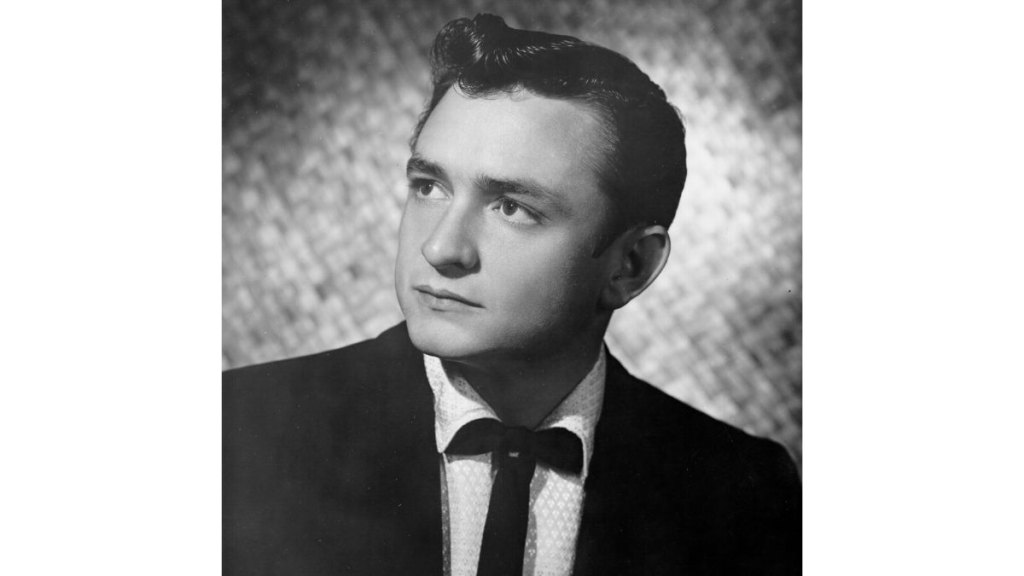
“I was the ace. I was who they called when the hardest jobs came up. I copied the first news of Stalin’s death. I located the signal when the first Soviet jet bomber made its first flight from Moscow to Smolensk; we all knew what to listen for, but I was the one who heard it,” Johnny wrote his 1997 autobiography Cash.
Johnny’s time abroad was also where he created his first band, The Landsberg Barbarians, and wrote one of his most iconic songs, “Folsom Prison Blues.”
He was honorably discharged on July 3, 1954. His final rank was Staff Sergeant, and even though he went on to become one of the most popular musicians of all time, he never forgot about his time in the service.

How Johnny Cash honored military members
Back in civilian life, Johnny went on a variety of United Service Organizations (USO) tours—some of which he even brought his second wife June Carter on. He also wrote some songs inspired by the military, including his 1971 “Singing in Vietnam Talkin’ Blues,” which reports claim was inspired by his visit there that same year.
“I went to support our guys, because I loved them so much. I know they didn’t want to be there, which is why I went over myself. I was asked to come to Vietnam and I was paid well, but right away we all got caught up in the whole thing,” Cash said, per the Huffpost. “Pretty soon June, [guitarist and singer/songwriter] Carl Perkins and I were doing seven and eight shows a day, sometimes for only 10 people in a hospital ward.”
Beyond that, Johnny and June also met with Richard Nixon and First Lady Patricia Nixon, during which they discussed a number of issues, including the Vietnam War.
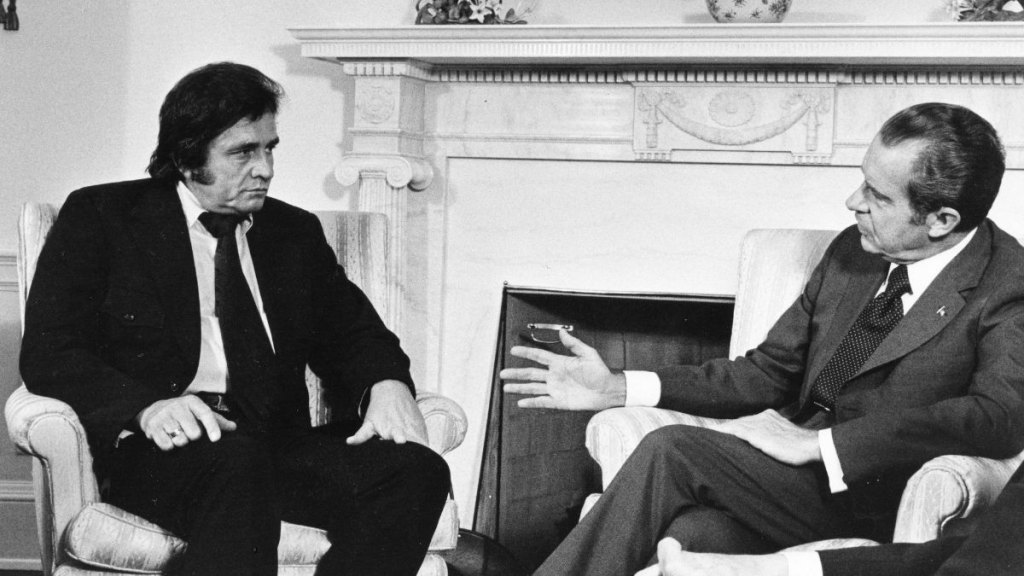

“We pray, Mr. President, that you can end this war in Vietnam sooner than you hope or think it can be done, and we hope and pray that our boys will be back home and there will soon be peace in our mountains and valleys,” Johnny told the former president.
Years later, in 1996, Johnny was named a Kennedy Center Honors recipient and awarded a National Medal of Arts in 2002.
“With his wife, the very gifted June Carter Cash, and family often by his side, he has traveled all over the world to give a voice to the feelings of farmers and workers, prisoners and lovers. From the heartland of America, he’s sung for the people who are the heart of America… Johnny Cash, you have our applause, our admiration and we have your records,” former President Bill Clinton told Johnny in 1996.
Conversation
All comments are subject to our Community Guidelines. Woman's World does not endorse the opinions and views shared by our readers in our comment sections. Our comments section is a place where readers can engage in healthy, productive, lively, and respectful discussions. Offensive language, hate speech, personal attacks, and/or defamatory statements are not permitted. Advertising or spam is also prohibited.