Gloria Steinem Saw Dolly Parton as a Feminist Icon, Too—and They Actually Had a Lot in Common
From empowering women to choosing lives without children, Steinem and Parton shared a surprising bond

Key Takeaways
- Gloria Steinem and Dolly Parton, feminists in their own right, passed away a week apart.
- Both Steinem and Parton contributed to feminism in their own ways.
- The activist and the singer both chose the path of not having children.
Feminist trailblazer and activist Gloria Steinem died on September 2, at age 92, and the world lost one of the most influential voices in the fight for women’s equality. For nearly five decades, Steinem used her writing, activism and unmistakable voice to challenge the limits placed on women and push for a more equal world.
But there was another woman Steinem recognized as a force for feminism—one who made her case not through political speeches or feminist manifestos, but through music, business and the unapologetic way she lived her life: Dolly Parton.
Parton never embraced the label “feminist” in the way Steinem did. Yet to Steinem, a label was hardly the point. Parton’s songs gave voice to working women, challenged double standards and told honest stories about women’s lives, while her career demonstrated the power of a woman building her own success on her own terms. Even her famously glamorous image became part of that message: Rather than allowing femininity to diminish her, Parton turned it into a source of confidence, humor and power.
Steinem recognized that long before many others did. In 1987, she named Parton one of Ms. magazine’s 12 Women of the Year, honoring her not only as a gifted songwriter and performer, but as a savvy businesswoman who used her success to help women, working people and communities in her native Tennessee. Steinem put it simply: “If feminism means each of us finding our unique power, and helping other women do the same, Dolly Parton certainly has done both,” Steinem wrote in her cover story.
Nearly 40 years later, those words feel especially poignant. Steinem understood that feminism could take many forms—and that sometimes, a woman can advance the cause of women simply by refusing to be anything other than herself. Dolly Parton did exactly that, proving that strength could come wrapped in rhinestones, sound like a country song and still change the world.
Steinem praised Parton for her contributions to feminism
Throughout the 1987 cover story in Ms., a feminist magazine co-founded by Steinem herself, the activist continued to share why she believed Parton deserved the Women of the Year title. Not only did she make an impact with songs like “Dumb Blonde,” “9 to 5” and “Just Because I’m a Woman,” but with Parton’s inability to be anyone but herself.
After listing off all of Parton’s achievements, which at the time include just three of her eventual ten Grammys, Steinem explained the singer’s connection to feminism.
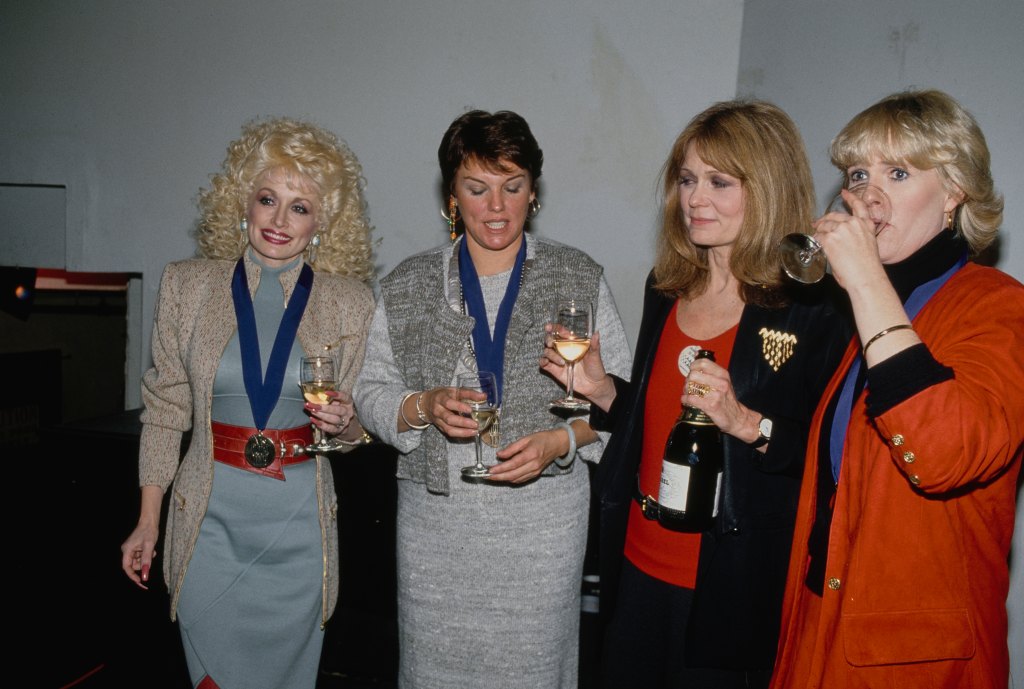
“People who haven’t listened to Dolly Parton or to feminism may be surprised to learn that they go together,” she wrote. “In fact, she has crossed musical class lines to bring work, real life, and strong women into a world of pop music usually dominated by unreal romance. She has used her business sense to bring other women and poor people along with her. And her flamboyant style has turned all the devalued symbols of womanliness to her own ends.”
Steinem recognized a shared outlook on life in Parton. Although the singer may not have been definition of an activist, she certainly let that side of her shine through her independent career and unapologetic way of living.
The articled added, “All this has been accomplished with her country accent intact, and a populist taste for tight, bright clothes that emphasize, and never apologize for, a body that is as mythically female as the Great Goddess statues of prehistory. Like Bette Midler, she has taken all the ridiculed modern symbols of femininity, from makeup and platform shoes to wigs and false eyelashes, infused them with humor and a conscious power.”
Steinem and Parton followed a shared path
Aside from their advocacy for women, Steinem and Parton had another similarity: their choice not to have children. As career-driven women, both chose to follow a similar path. Although their reasoning behind the decision differed, it reiterates the fact that having children is not a obligation but a choice.
“Not for a millisecond, I have to say,” Steinem said when asked if she regretted not having children. “Not everybody with a womb has to have a child, like not everybody with vocal cords has to be an opera singer.”
She later shared a bit more insight on her reasoning. Steinem explained, “I’m not sure why except perhaps because when I was growing up, I was looking after my mother, who was not well. I’ve noticed that other people who were small people looking after big people don’t want to do it again.”
Over the years, Parton shared her own thoughts on why she never had children. Although the idea had crossed her mind as a young married woman, the singer knew it wasn’t meant for her.

“I didn’t have children because I believed that God didn’t mean for me to have kids so everybody’s kids could be mine,” Parton once said. “I could do things like Imagination Library because if I hadn’t had the freedom to work, I wouldn’t have done all the things I’ve done. I wouldn’t be in a position to do all of the things I’m doing now.”

Parton later confirmed that although she worried she might miss out on motherhood, it wasn’t something she regretted.
“I haven’t missed it like I thought I might,” Parton confirmed in 2023. “When you’re a young couple, you think you’re going to have kids, but it just wasn’t one of those burning things for me. I had my career and my music and I was traveling. If I’d had kids, I’d have stayed at home with them and worried myself to death about them.”
Steinem and Parton, both cultural icons in very different ways weren’t quite as different as you might think.
Conversation
All comments are subject to our Community Guidelines. Woman's World does not endorse the opinions and views shared by our readers in our comment sections. Our comments section is a place where readers can engage in healthy, productive, lively, and respectful discussions. Offensive language, hate speech, personal attacks, and/or defamatory statements are not permitted. Advertising or spam is also prohibited.