As ‘The Golden Girls’ Comes Back To Free TV, an Expert Explains Why the Show Still Feels So Timeless (Exclusive)
A TV historian explains why 'The Golden Girls' still resonates—and why its MeTV debut matters

When The Golden Girls premiered on NBC in 1985, the premise alone made it unusual. A sitcom built around four women in their 50s and 60s living together in Miami was hardly the sort of concept television executives typically bet on, yet what began as a gamble for NBC quickly became one of the most beloved sitcoms in classic TV history.
More than three decades after the series ended its original run in 1992, the show continues to thrive in syndication, streaming and the pop culture conversation. And now, the series is about to reach yet another audience as it joins the lineup on MeTV on March 16—a move that television historian Jim Colucci, author of Golden Girls Forever: An Unauthorized Look Behind the Lanai, says represents a meaningful shift in how the show is being seen again. “It is a big deal because the show has proven how popular it is by continuing to grow in terms of the number of outlets clamoring to show it,” Colucci says.
While The Golden Girls has appeared on numerous cable and streaming platforms over the years, this new home carries a unique distinction. “What’s so interesting about MeTV is that it is the first broadcast home for the show since NBC,” he explains. “By that I mean you don’t need cable and you don’t need streaming, so it’s technically free. A lot of us get our broadcast signal through cable these days, but it is really a broadcast station that goes out over the airwaves.”
In other words, the sitcom that first aired on network television is returning to the same basic medium that introduced it to audiences in the first place. “It’s kind of a return to the old ways of doing business and watching it,” Colucci says. “For those who do not subscribe to Disney to get Hulu and don’t want to pay that fee, here we have the show back on broadcast.”
Key takeaways below on ‘The Golden Girls’ coming to MeTV
-
Why The Golden Girls joining MeTV is a big deal: Television historian Jim Colucci explains why the show’s March 16 arrival marks the first time the beloved sitcom has returned to broadcast TV since its original NBC run.
-
The surprising reason the show hasn’t aged: From wardrobe choices to the lack of trendy technology, Colucci reveals why the series still feels fresh decades after it ended in 1992.
-
The timeless themes that keep viewers coming back: Friendship, chosen family, aging, healthcare and other real-life issues helped give the sitcom emotional depth rarely seen in comedies.
-
Why the show resonates with younger audiences too: Early NBC testing revealed kids loved Sophia’s rebellious humor—and today’s fans in their 20s are still discovering the show for the first time.
-
A behind-the-scenes story from a Golden Girls DVD signing: Colucci recalls Betty White charming a crowd of fans—many of them young—at a packed Barnes & Noble event.
-
How The Golden Girls joined the ranks of classic TV legends: According to Colucci, the show is one of the rare sitcoms—alongside I Love Lucy—that continues recruiting entirely new generations of viewers.
Why we still love ‘The Golden Girls’
But the real question surrounding The Golden Girls isn’t simply where it airs, but why it continues to resonate with so many people more than 30 years after it ended. Colucci believes the answer lies in a rare alignment of creative elements that few television series ever achieve.
“Everything that could go right about a show went right about The Golden Girls,” he says. “There are so many things that can go wrong on a sitcom that can either make the show completely not work and get canceled after a few airings or could make it a mediocre also-ran in our memories. Just one factor being off can take a show from classic to also-ran.”
In the case of The Golden Girls, he says, nothing misfired. “In this case, everything went right—from the initial casting of the four women through the writing from the beginning, and then some of the writers who are now today’s TV greats who were nurtured in their early jobs on the show, to the set design and the costumes and the wardrobes,” Colucci notes. “Everything was really perfect and also classic.”
Another key reason for the show’s longevity, he argues, is something that rarely receives much attention: the way the series avoided tying itself to specific trends or technology that would quickly date it.
“Because the characters were women in their 50s and 60s, the writers and producers weren’t looking for them to wear the absolute latest young hip fashions and they weren’t going to be using the absolute latest technology,” Colucci explains. “There were no cell phones back then and barely any personal computers, but the show also wasn’t trying to be about the cutting edge of technology. Nothing about it ended up dating the show that way. What the women wore was, for the most part, age-appropriate, sometimes a little daring, not necessarily climate-appropriate because they were in Miami, but it was certainly flattering.”
Even the clothing that does reflect the era has aged surprisingly well. “Although some of the outfits look very ’80s or ’90s, the fashions actually come back and recycle,” he says. “So some of it looks good again.”
Strong recurring themes
What truly makes the show timeless, however, has little to do with costumes or production design. Instead, it lies in the themes the series explored week after week.
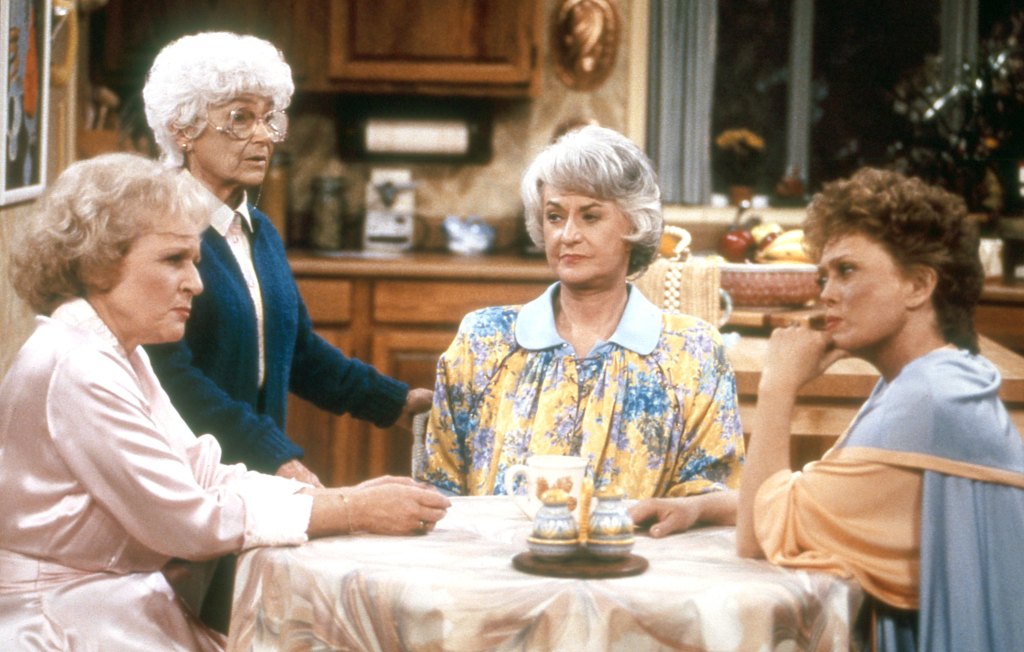
“It’s about themes that are perennial in terms of building a surrogate family, the power of friendship,” points out Colucci. “It’s about issues that are perennial, unfortunately, that plague the human condition that we have not solved—homelessness, lack of healthcare, immigration, aging. These are things that are part of being a human and were then and are now and will always be. When you see beautifully dressed people being funny and talking about things that matter to you and tugging at the heartstrings in ways that still resonate with you, it feels like it could be happening today.”
For him, that combination is the real magic behind the show’s staying power. “People from generations who weren’t even born back then can find it now and feel like they’re watching it for the first time and not like it’s some old relic in black and white that they pulled out of grandma’s VCR cabinet.”
Ironically, the very thing that made The Golden Girls unusual in 1985 remains unusual today.
“The sad thing is it would still be unique in 2026,” Colucci says. “It’s still hard to get Hollywood to focus on older characters and older performers in movies and television—ageism is alive and well. But that helps give the show both a depth and a gravitas and a license to talk about issues in ways that really resonate with real people that a lot of sitcoms can’t go that deep,” he says.
Younger-skewing shows, he explains, are rarely structured to address the same kinds of subjects: “I love Seinfeld, but Seinfeld is not going to be tackling an issue like elder care. If it did, it’s going to be done with snark, but the other thing is, none of those characters is old and has that wisdom.”
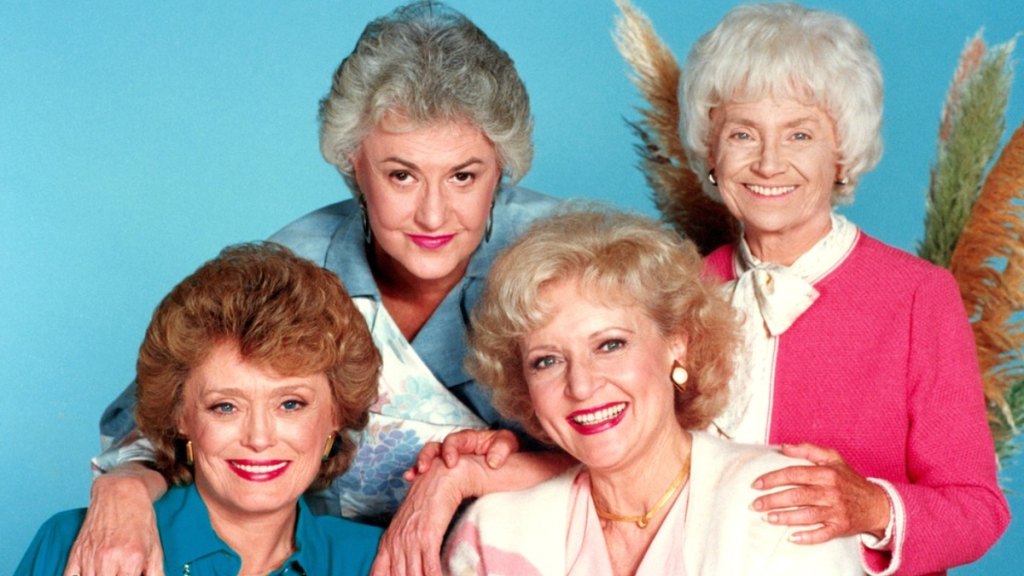
By contrast, the characters of Dorothy (Bea Arthur), Rose (Betty White), Blanche (Rue McClanahan) and Sophia (Estelle Getty) draw from decades of fictional life experience. “The Golden Girls could do that by virtue of them having older characters who have been around the block, who have life experience, who can speak from that experience,” he says.
‘The Golden Girls’ continues to reach a wide audience
Another surprise surrounding the show has always been the breadth of its audience. While many viewers assume the series’ primary appeal is to older audiences, Colucci believes the reality is more complicated. “The Golden Girls never skewed exclusively old. After an early test screening of the pilot, NBC executives expected only the most positive reviews to come from the older group. Instead, the early testing said this is going to be an across-the-board hit.”
“Kids,” he relates, “would watch it and they got a kick out of Sophia because she was this tiny little person sassing the bigger person, Dorothy, and kind of rebelling against authority. There’s an adage that’s an oxymoron in Hollywood that the more specific you make a character, the more general the appeal. The idea is that when you hang some character traits on a character that we can identify as either ourselves or someone we know and love, it makes us believe that character. If you make it a sarcastic 65-year-old woman from Brooklyn who moved to Miami, well, a lot of us know either a woman who moved from Brooklyn to Miami or a 65-year-old woman or someone sarcastic. There’s something to hang your hat on with that.”
Because of that specificity, audiences of all ages can find themselves in the characters. “Even for younger people we have the power as humans of empathy. We can identify that Dorothy is like my friend or that Blanche reminds me of someone I know.”

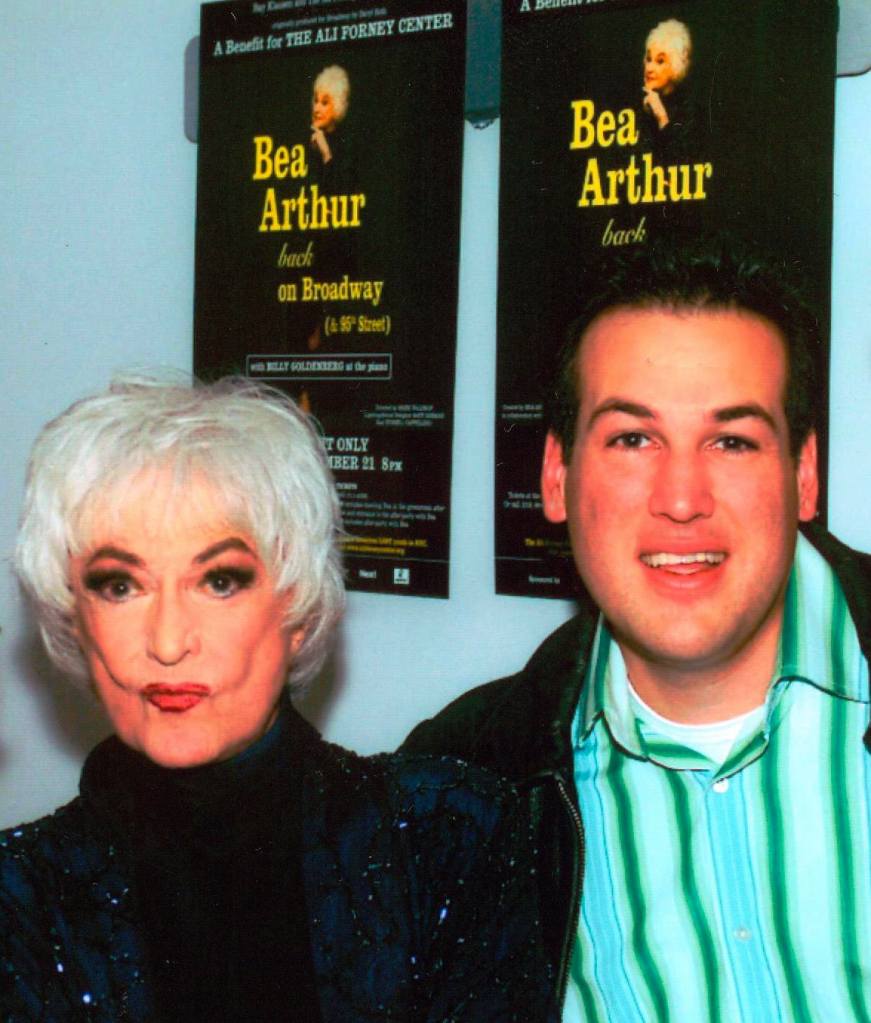
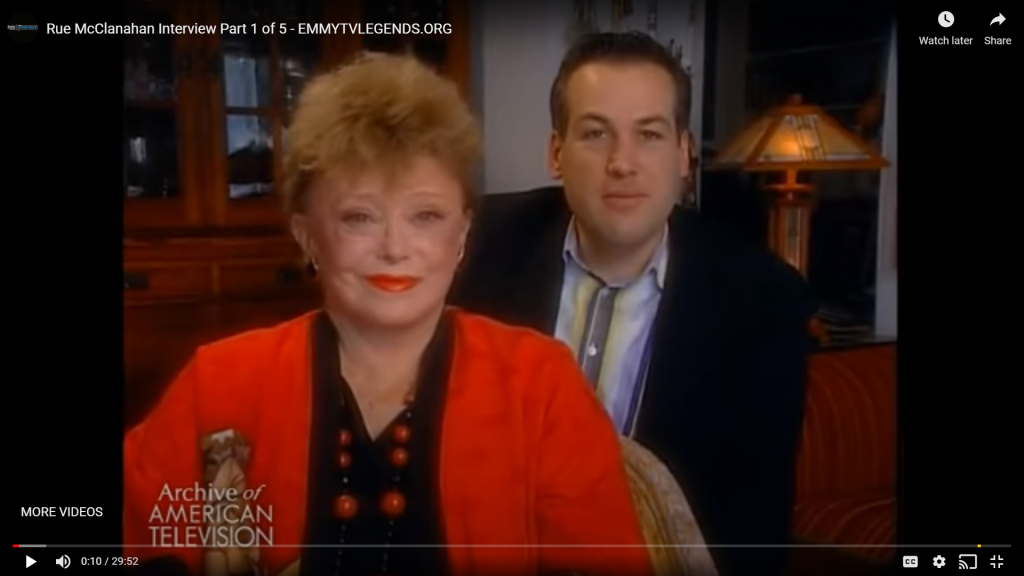
Colucci saw that generational appeal firsthand years later while researching one of his books about the series. In 2005, actresses Betty White, Bea Arthur and Rue McClanahan appeared at a DVD signing event for the show’s third season at a Barnes & Noble in New York. The turnout stunned the bookstore staff.
“The line wrapped around the block between Sixth and Seventh Avenue on 21st Street twice,” Colucci shares. “They signed for, like, three or four hours where they weren’t even scheduled to do that and they still didn’t get through the whole line.”
Perhaps even more surprising was who stood in that line. “Those weren’t all old ladies on walkers,” he laughs. “I was interviewing people for my book and it was young sorority sisters who hadn’t been born when the show was on. Even now, you talk to people in their twenties who love the show and they were not nearly born in 1991. You have to be 34 to have even been an infant when the show ended, and there are plenty of fans under 34.”
He observes that enthusiasm at the DVD signing resembled something closer to a rock concert than a quiet book event. “One girl pressed herself against the window with a poster board that said, ‘Betty, will you share cheesecake with me?’” Colucci recalls. “Betty turned to her and went like, ‘Oh, sorry, too full,’ and then smiled and blew her a kiss. The girl fell backward like she practically fainted as if Paul McCartney had blown a kiss at her.”
Joining the ranks of classic TV
Moments like that illustrate just how unusual the show’s long-term cultural reach has been. “Before The Golden Girls, the only other show I ever knew that did this was I Love Lucy,” he says. “Through syndication and through the classic nature of the humor, it was able to recruit new generations who weren’t even around the first time. I think through streaming we’re about to see more shows join that list, like Friends and perhaps Seinfeld, The Office and The Big Bang Theory. But The Golden Girls was only the second show I ever knew of that did that.” Which makes the show’s arrival on MeTV on Monday, March 16, feel less like nostalgia and more like the latest chapter in a continuing story.

Over 40 years after Dorothy, Rose, Blanche and Sophia first shared a cheesecake around the kitchen table, audiences are still discovering them for the first time. And if Jim Colucci is right, that discovery may continue for many decades to come.
Where to watch ‘The Golden Girls’ now—streaming, cable and free TV options
Whether you’re a longtime fan or discovering the show for the first time, The Golden Girls has never been easier to find. Starting March 16, the series airs on MeTV—a free, over-the-air broadcast channel, meaning no cable subscription or streaming service required. For those who prefer to stream, the show is available on Hulu (with a Disney Bundle subscription). And for cable viewers, Hallmark Channel has also carried the series in syndication. No matter how you watch, Dorothy, Rose, Blanche and Sophia are never far away.
Viewers can find where to watch MeTV at https://www.metv.com/wheretowatch/zip/.
Conversation
All comments are subject to our Community Guidelines. Woman's World does not endorse the opinions and views shared by our readers in our comment sections. Our comments section is a place where readers can engage in healthy, productive, lively, and respectful discussions. Offensive language, hate speech, personal attacks, and/or defamatory statements are not permitted. Advertising or spam is also prohibited.