Exclusive Look at Blumhouse’s New ‘Wolf Man’—A Haunting Vision from Leigh Whannell
The classic horror film is updated by Blumhouse and the filmmaker behind 'The Invisible Man'

In the 1930s and 1940s, the Universal Monsters represented the first cinematic universe, bringing together supernatural beings like Dracula, Frankenstein and the Wolf Man. In the aftermath of the Marvel Cinematic Universe, the studio has made several attempts to resurrect that idea — most notably with Dracula Untold (2014) and Tom Cruise’s The Mummy (2017) — but things didn’t pan out, though that seemed to change with 2020’s The Invisible Man from writer/director Leigh Whannell, who returns this January with the Blumhouse production of Wolf Man, the latter of which he discusses exclusively with Woman’s World.
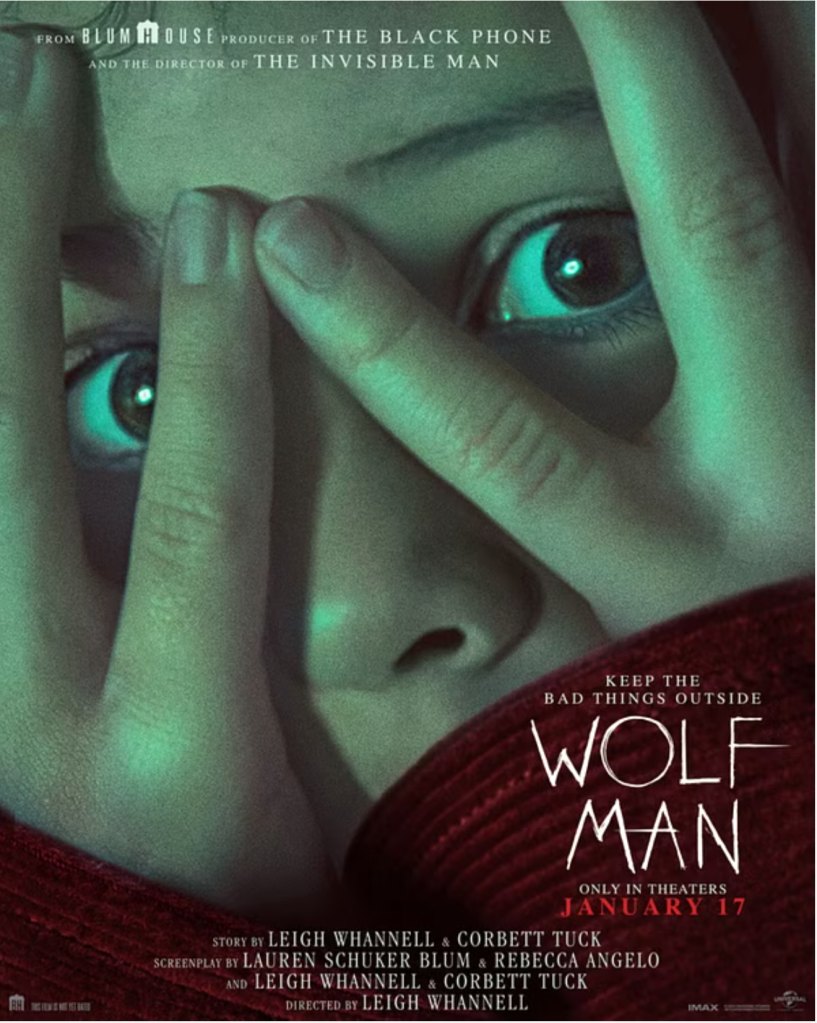
Universal officially describes the film as follows: “Family man Blake relocates from San Francisco to Oregon with his workaholic wife Charlotte and daughter Ginger after inheriting his childhood home, left vacant following his estranged father’s mysterious disappearance and presumed death. At the farmhouse, the family is attacked by a werewolf that claws Blake’s arm. They barricade themselves inside the home, but soon Blake begins to transform, jeopardizing the safety of his wife and daughter.”
Wolf Man, which is executive produced by Ryan Gosling, stars Christopher Abbott as Blake, Julia Garner as Charlotte and Matilda Firth as Ginger.
Check out the trailer for Wolf Man below—and read on for an exclusive conversation with director Leigh Whannell.
WOMAN’S WORLD: Frankenstein’s Monster didn’t know what he was, Dracula was more than comfortable with what he was as this undead being, but Larry Talbot, the original Wolf Man, was this guy desperately trying to hold on to his humanity and fighting against what he was becoming. That seemed to make him the most human of the Universal Monsters. What’s your feeling?
LEIGH WHANNELL: I think you summed it up really succinctly, and I’m glad you said that, about the monster fighting for their humanity, because that word for word is the thing that I latched onto when I started writing this. The first thing you do when you take on any writing project is you’re, like, “Okay, what’s the big thing that I’m trying to do here?” You need to think of the big idea before you get into the details. When I was doing The Invisible Man, the thing that presented itself to me was an abusive partner, somebody whose invisibility was tormenting you. With Wolf Man, the thing that presented itself was disease.

You talked about trying to hold onto your humanity.These degenerative diseases — whether it’s Parkinson’s or cancer or Alzheimer’s — are a real-life horror story, and most of us know somebody who’s been affected by that. I thought that the Wolf Man story really fit neatly into what you were saying about someone trying to hold onto their humanity as they lose it. If you watch a film like Amour [2012] or Still Alice [2014], they’re kind of horror movies. And so I thought the Wolf Man latched onto the concept of disease. That was the first big thing. I was like, “Okay, that’s what I’m trying to do here. For better or worse, this is my take on it.”
WW: But the thing about the Wolf Man story is that there is no happy ending to that story. In most movies, you think there’s going to be a cure or a solution, but not so here.
LW: No. With Dracula, you hate the guy, so if we defeat Dracula, we win the day. But in the case of Wolf Man, your protagonist is your antagonist, so there’s a strange kind of empathy for him. At the end of American Werewolf in London, I feel bad for this guy. It’s funny, because you’re saying all the things that I was thinking about back when I first started writing Wolf Man, but I was worried whether my take was the right one. That character, Blake in this case, is a tragic, empathetic one, and there’s no way around that tragedy. This is something that really hurts you at test screenings; audiences love happy endings.

WW: It’s not like Beauty and the Beast where the kiss of true love turns the beast back into a prince.
LW: Or Luke Skywalker blowing up the Death Star and we all get a medal.
WW: Except Chewbacca.
LW: [laughs] Yes, except Chewbacca. You are locked into a tragedy when you do Wolf Man, which is something I recognized from the start, but I just went with it. There was no way around it; you’ve just got to run full-on. I didn’t play with it and try to find a way out; I knew this was going to be a tragedy.
WW: Looking at the trailer, there is definitely a claustrophobic sense to the movie.
LW: The first draft of this was written in 2020 during the pandemic, and like everybody else, my world was just turned upside down, even just psychologically. A lot of people obviously really suffered during the pandemic; they’d lost people they loved or they were suffering from long isolation. The world was just upside down for me, although I feel I got off pretty easy, but even then, human beings weren’t designed to stay in their house for six months. I remember just thinking, “I’m going to go mad; I’m going to lose my mind.” I couldn’t handle the psychological stress of being inside my home for that long, and it was through all that the first draft of this movie was written. So that confinement from COVID bled into this movie.
I’m definitely going to say to your readers that this is not a COVID movie, but it was written during COVID, and the way I felt for that year is in the script.

WW: Obviously casting is always important, but it feels like it would be particularly true in a contained film like this one.
LW: It’s crucial because of that. When you’re not making a film with a vast cast of characters and flipping around from person to person, God, you really need to get your cast nailed down. The audience is only going to be looking at a few faces the whole time. I mean, if you have a cast of thousands, your problem becomes the opposite. It’s, like, “How am I going to give everybody their moment in the sun?” For me. I was like, wow, I’m really going to have to make this compelling. So I was so focused on the actors, and I think Chris Abbott and Julia Garner were two perfect people, because I wouldn’t say they’re genre fans. They’re real actors and authenticity is always their goal; they will make fun of it if it doesn’t feel real to them. So in a way, they’re the best for this, because I needed someone to make this concept feel very real.
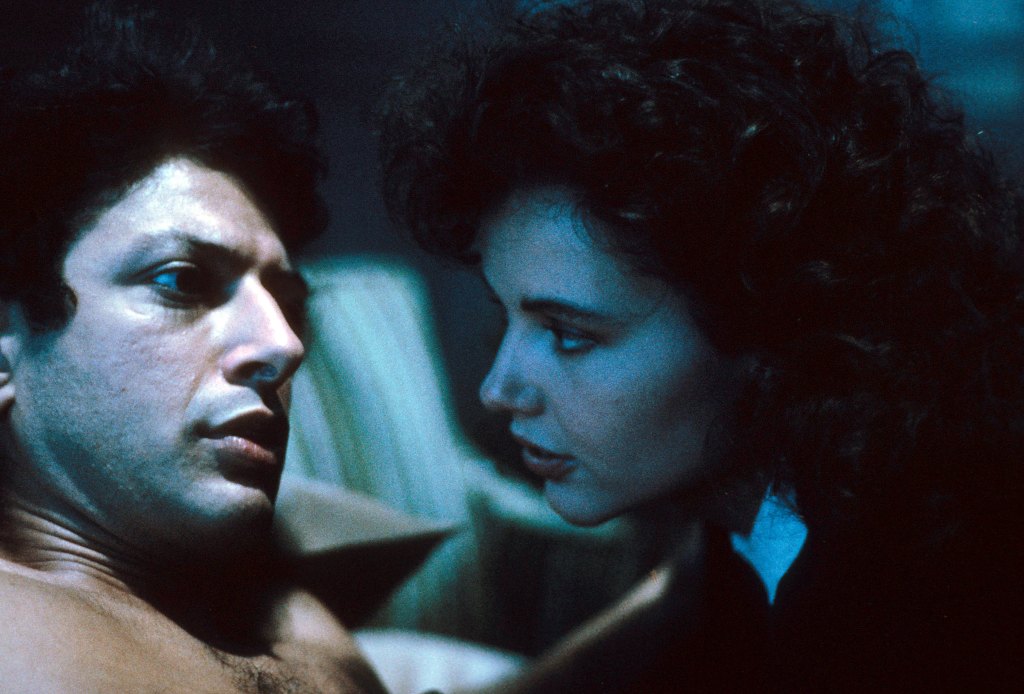
A great example is Geena Davis and Jeff Goldblum in The Fly. You got an outlandish concept. That concept is so crazy in that he transports himself and merges with a fly, but those two actors make it feel like it’s absolutely something that could happen. And then there’s the level of the makeup and the artistry. So The Fly was really something I was holding in regarding. Actually, the two movies that were my church during the writing of this were John Carpenter’s The Thing and David Cronenberg’s The Fly, because they’re both movies about a contained group of people trapped in a. space with an enemy close to home, someone you love or someone who’s right next to you. And they’re practically effects-driven rather than computer effects-driven. It’s all of those things combined.
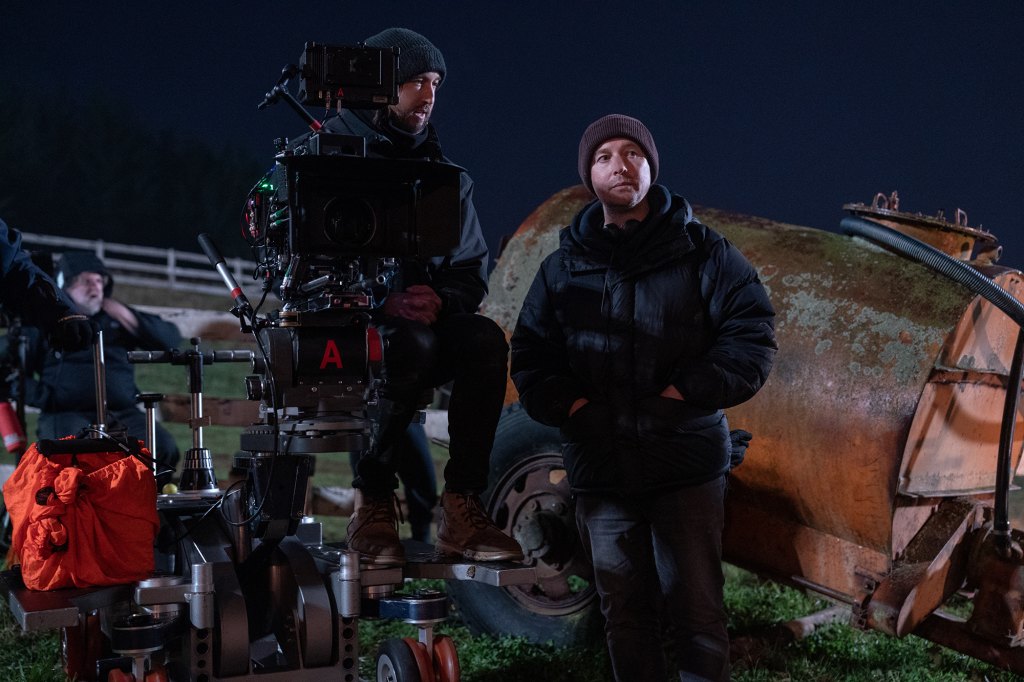
WW: It would seem that the casting of the daughter, Ginger, was going to be extremely important, and you ended up casting Matilda Firth.
LW: Matilda is just incredible. It’s funny, with a kid you’re always kind of throwing mud at the wall. You never quite know, because a kid can be charming during a job interview, but then you get on set and it’s just not working, especially in a film like this. And wait until it’s 3:00 in the morning and you’re freezing cold — that’s when you’ll find out how the kid is. But Matilda’s just so great and she’s so mature. It doesn’t come across that way, because you talk to her and she would just nod. She doesn’t say things that actors say, like, “I see what you’re saying there.” I’m thinking, ‘Is it going in? Is she hearing me?’ But then she just knocks it out, so I was really lucky.
WW: Did you go back to Lon Chaney’s Wolf Man at all?

LW: Not really. I remember when I got the job doing Invisible Man, I bought the book by H.G. Wells, but it was such a product of its time that I had to treat it like it didn’t exist and that the lead character was completely new. And I sort of took the same approach here. I already knew so much about The Wolf Man, I’m such a fan. But it’s almost like I had to put my fandom aside and just cold-bloodedly approach the story like this has never been done before. And that’s my way of Jedi mind tricking myself into thinking this is a new thing.
If I approach it like it’s not a character that’s been around for a hundred years, I can escape nostalgia and homage and get into a different territory. When I watched John Carpenter’s The Thing, I didn’t think about the previous works, even though I knew there was a book and a movie. He was so singular in his approach that he just made you forget. And that’s what I’m trying to do. Whether or not I succeed is up to the audience.
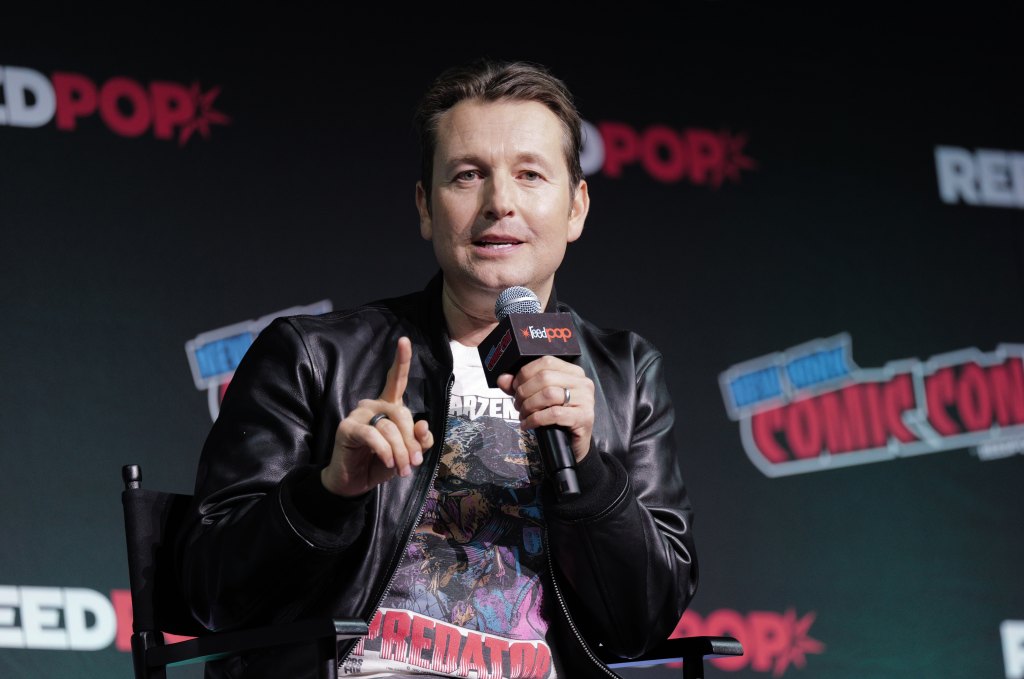
Wolf Man has a release date of January 17, 2025 from Universal Pictures. The teaser trailer above debuted at the 2024 New York Comic-Con, with the full trailer expected soon.
Conversation
All comments are subject to our Community Guidelines. Woman's World does not endorse the opinions and views shared by our readers in our comment sections. Our comments section is a place where readers can engage in healthy, productive, lively, and respectful discussions. Offensive language, hate speech, personal attacks, and/or defamatory statements are not permitted. Advertising or spam is also prohibited.