The Biggest Chocolate Bunny in the World Weighed Over 9,000 Pounds and Was Over 12 Feet High
Chocolate bunnies have been supersized and decked out to new heights.

Every spring, chocolate bunnies fill store shelves from coast to coast.
But just how many of these sweet, hollow-eared treats make it into Easter baskets across the country? An estimated 91 million chocolate bunnies are sold for Easter every year in the U.S. That staggering number raises a natural question: where did this beloved tradition come from in the first place?
Record-breaking chocolate bunnies that made history
Some chocolate Easter bunnies have gone far beyond what you’d find in any drugstore display. Over the years, chocolatiers and luxury brands around the world have created chocolate bunnies of remarkable size and value—from a massive sculpture that took a team more than a week to build to a creation adorned with real diamonds. These record-setting entries are a far cry from what most of us find in our Easter baskets, but they show just how far the beloved chocolate bunny tradition has traveled.
The largest chocolate bunny in history measured at 178 inches high, 83.1 inches wide and 69.3 inches long and was achieved by Equipe da Casa do Chocolate at Shopping Uberaba, in Uberaba, Minas Gerais, Brazil, on February 25, 2017. The team had nine professionals working for eight consecutive days on the sculpture, which weighed 9,359.7 pounds.

The world’s most expensive chocolate bunny was commissioned by luxury brand VeryFirstTo in 2016 for $49,000 in collaboration with the company 77 Diamonds. Sculpted by pastry chef Martin Chiffers—a two-time European Pastry Cup Coupe du Monde de la Pâtisserie winner—it was made of 75 percent Tanzanian cacao, stood about a foot tall and weighed 11 pounds. VeryFirstTo founder Marcel Knobil purchased two diamonds worth over $35,400 to adorn the bunny’s eyes. Chiffers spent roughly 32 hours crafting both the bunny and the three gold-leaf-embossed eggs at its feet.
How the chocolate bunny became a tradition in America
The story of the chocolate Easter bunny stretches back much further than you might expect, rooted in centuries-old legends that crossed the Atlantic with European immigrants. Long before candy aisles existed, German settlers in Pennsylvania brought a charming tale about a mythical, egg-laying hare to their new homeland. That legend eventually evolved into the candy-filled Easter mornings millions of families enjoy today—and it was Robert L. Strohecker, an enterprising Pennsylvania drug store owner, who helped turn the chocolate bunny into the nationwide craze it remains to this day by building a 5-foot-tall bunny made of milk chocolate to promote his shop.
Per Stefanelli’s Candies, “Since ancient times, rabbits have been regarded as a symbol of fertility and new birth. The concept of an Easter bunny was first brought to America with the migration of the Germans in the 18th century. When the group settled down in Pennsylvania, they introduced the legend of the Osterhare, a mythical rabbit known for its egg-laying. Each year, the children of these immigrants would craft special nests for the Osterhare to lay eggs in and leave him carrots for his troubles.”
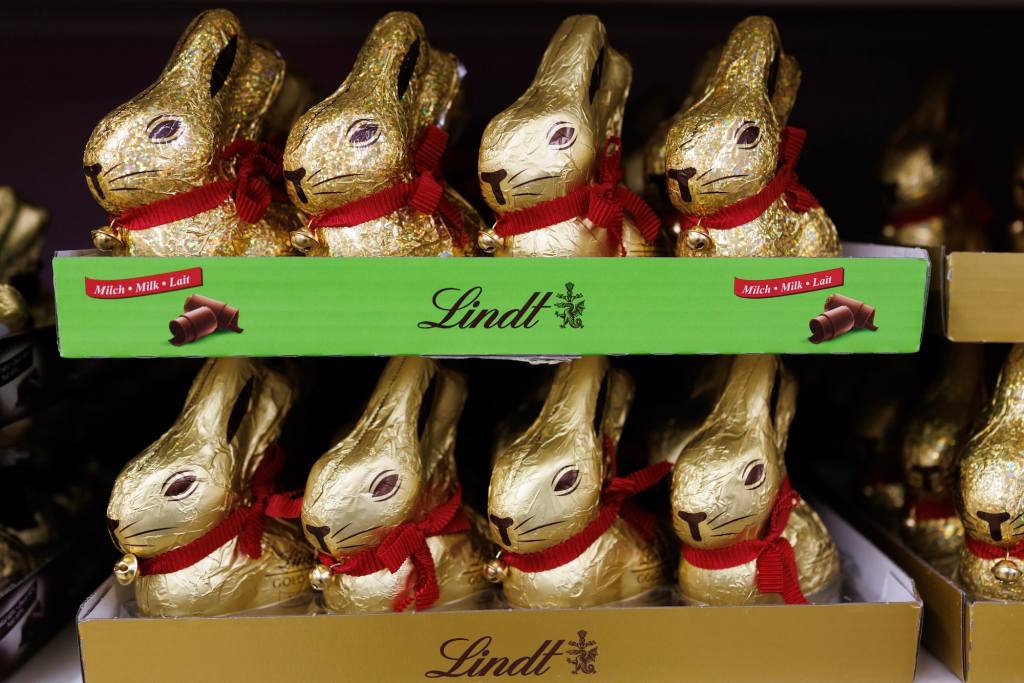
As Stefanelli’s Candies explains, the tradition spread across the country and the Osterhare myth evolved into candy-filled celebrations. The chocolate bunny is believed to have been originally created by someone of German heritage, with chocolate molds from the 19th century discovered in Munich, the largest city in Bavaria.
Do you eat your chocolate Easter bunny ears first?

When you finally unwrap your own chocolate bunny this Easter, where do you start nibbling? It turns out the vast majority of us share the same sweet instinct when it comes to that very first bite, and the National Confectioners Association has the data to show just how much we all agree. Whether it’s force of habit or simply the most tempting spot on the bunny, one part gets chosen first by an overwhelming number of chocolate bunny lovers every year.
According to data collected by the National Confectioners Association, most consumers say they eat the ears first (78 percent), while some signaled they eat chocolate bunnies’ feet first (17 percent) or tail first (5 percent).
This Easter, as you reach for one of those 91 million chocolate bunnies, know that you’re part of a tradition stretching back centuries—and if you go for the ears first, you’re in very good company.
Conversation
All comments are subject to our Community Guidelines. Woman's World does not endorse the opinions and views shared by our readers in our comment sections. Our comments section is a place where readers can engage in healthy, productive, lively, and respectful discussions. Offensive language, hate speech, personal attacks, and/or defamatory statements are not permitted. Advertising or spam is also prohibited.