The Platypus Was Already a Mysterious Animal. This New Study Just Made It Even Weirder
A new study set out to examine platypus hair and ended up rewriting what we thought we knew about mammal biology.

You already know the platypus is strange. It’s the animal that lays eggs, has a duck bill, shoots venom from its ankles, and glows under blacklight for reasons no one can explain.
In fact, when European scientists first encountered it nearly 230 years ago, they literally thought it was a prank — a beaver-like body stitched to a duck’s bill by some creative taxidermist.
But here’s the thing: scientists in 2026 are still uncovering new layers of weirdness. And the latest discovery might be the most baffling one yet.
A finding no one saw coming
A study published on March 18, 2026, in the journal Biology Letters revealed that the tiny pigment-producing structures inside platypus hair—called melanosomes—behave more like a bird’s than a mammal’s.

“This was totally unexpected,” said researcher Jessica Leigh Dobson of Ghent University, per Discover Wildlife. “Hollow melanosomes have never been found in mammals before, and the combination of hollow and spherical is not seen anywhere else as far as we know.”
Read that again: not seen anywhere else, as far as we know. Not in any bird. Not in any mammal. Not in any creature scientists have studied. The platypus, once again, stands completely alone.
What exactly are melanosomes?
Melanosomes are microscopic cell structures—roughly 1/1000th of a millimeter long—responsible for producing pigment. They come in different shapes: spherical or rod-shaped, solid or hollow.
For more than 50 years, scientists operated under a widely accepted rule: hollow melanosomes existed only in birds, while mammal melanosomes were always solid.
Dobson upended that rule using high-resolution microscopy to examine platypus hair at an extraordinarily detailed level. What she found was that platypus melanosomes are both hollow and spherical.

In birds, hollow melanosomes serve a clear purpose. They form nanostructures that create those brilliant, iridescent colors you see in peacock feathers or hummingbird throats.
The hollow interior plays a direct role in how light bounces and refracts, producing vivid visual displays.
But platypuses, on the other hand, are simply brown.
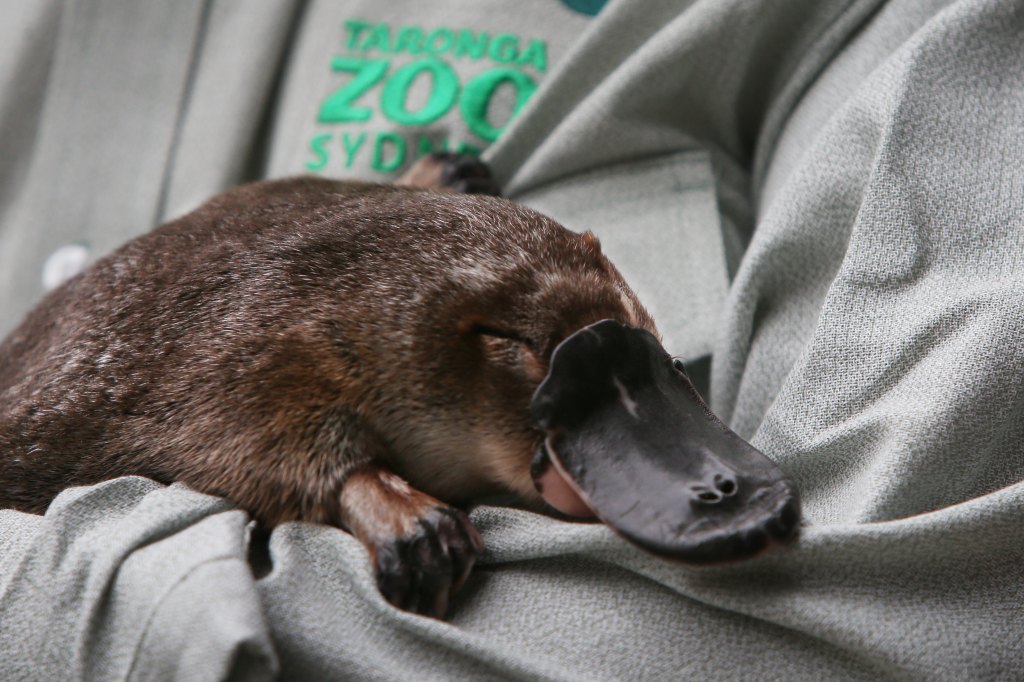
That disconnect is part of what makes this finding so puzzling. If hollow melanosomes in birds exist to produce flashy, bright colors, why would a plain brown semi-aquatic mammal have them?
“This doesn’t really conform with what we currently know about how melanosome shape correlates with color,” Dobson added.
The study also examined echidnas—the platypus’s closest living relatives, and fellow egg-laying mammals — along with approximately 120 other mammal species. Hollow melanosomes were not found in any of them.
Whatever is going on here appears to be exclusive to the platypus.
Scientists have a theory—albeit unproven
Scientists do have a working hypothesis, though it remains far from concrete.
The common ancestor of platypuses and echidnas is believed to have been aquatic. Researchers theorize that hollow melanosomes may have offered some form of insulation suited to life in the water.
Over evolutionary time, echidnas transitioned to living on land and may have lost these hollow structures. Platypuses, which stayed aquatic, may have retained them.

It’s an elegant idea, but it remains unproven. For now, the hollow melanosomes join a long list of platypus traits that science simply cannot fully explain yet.
A resume of biological absurdity
This discovery slots neatly into what is arguably the most ridiculous biological profile of any living animal. Consider the full picture:
- It’s an egg-laying mammal with a duck-bill and beaver-like body
- Females produce milk but have no nipples
- Males carry venomous spurs on their hind legs
- It can sense electricity and uses electroreception to hunt underwater
- It glows under UV light—and scientists still don’t know why
- It has 5x more sex chromosomes than most other mammals
- Its melanosomes now defy everything scientists thought they understood about mammalian pigment structures

The platypus was so bizarre upon discovery that scientists believed it was a hoax. Nearly 230 years later, it’s still serving up surprises that challenge fundamental assumptions in biology.
Dobson’s finding doesn’t just add a quirky footnote to the platypus’s already extraordinary file.
It cracks open a question that scientists assumed was settled for more than five decades: that hollow melanosomes belonged exclusively to birds. One small structure in one strange animal’s fur just rewrote that textbook rule.
Conversation
All comments are subject to our Community Guidelines. Woman's World does not endorse the opinions and views shared by our readers in our comment sections. Our comments section is a place where readers can engage in healthy, productive, lively, and respectful discussions. Offensive language, hate speech, personal attacks, and/or defamatory statements are not permitted. Advertising or spam is also prohibited.