What Is a Pudu Deer? Meet the San Diego Zoo’s Newest Baby That Looks More Like a Piglet
The birth is a small but meaningful moment for a near-threatened species with an estimated population of just 10,000.

The world’s smallest deer species grows no bigger than a house cat — and the San Diego Zoo just welcomed one more into the world.
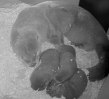
A baby pudu was born at the San Diego Zoo Safari Park over the past weekend. The newborn is female and currently stands just a few inches tall.
Pudus hold the title of smallest deer species in the world. Fully grown adults reach only 13 to 17 inches in height, roughly 45 centimeters. Some have compared their size to a house cat. At that stature, they barely come up to a person’s knees.
For comparison, elk and larger deer species can reach over two meters tall. Pudus are also recognized for their wide eyes, slender legs and shy temperament.
Their native range covers parts of South America, specifically Chile and Argentina.
The new fawn shares her habitat with her mother, Posey, and has already been spotted trotting alongside her. Zoo staff describe the little one as adventurous with a confident demeanor.
Keepers have also noted her curious nature, and according to the zoo, she is adapting well to her new surroundings. Guests interested in seeing the baby pudu can find her at the San Diego Zoo Safari Park.
Only about 10,000 southern pudus remain in the wild
While the fawn settles into her new home, her wild counterparts in South America face a far more precarious situation.
The International Union for Conservation of Nature most recently assessed the southern pudu (Pudu puda) in 2016. The species currently carries a “Near Threatened” designation on the IUCN Red List.
No official census of southern pudus exists, but total population estimates hover around 10,000 animals.
A significant portion of that population lives on Chile’s Chiloe Island, which sits off the southern Chilean coast and features dense forests and small rural communities.
But populations on Chile’s southern Chiloe archipelago are approaching endangered status. Dozens of pudus are reported killed or injured on the main island each year, per Reuters.
The two biggest dangers facing the species are vehicle strikes and attacks by dogs. Pregnant females face heightened risk during winter and spring months. Javier Cabello, a veterinarian who founded the Chiloe Silvestre NGO, emphasized that the pudu’s small stature leaves it especially defenseless against fast cars and aggressive dogs.
A wildlife center sees the toll firsthand

On Chiloe Island, the Chiloe Silvestre wildlife center has cared for 18 injured pudus this year. Roughly half of those animals arrived with injuries from dog attacks. About one-third had been struck by vehicles.
Javiera Lopez, the center’s head veterinarian, reports that roughly 50 injured pudus come in each year. She warned that reclassification to “endangered” and eventually “critically endangered” seems inevitable.
The San Diego Zoo’s newest fawn is just one deer. But for a species whose estimated global population hovers around 10,000 — and whose biggest threats are as ordinary as passing cars and household dogs — every new arrival adds up.
Conversation
All comments are subject to our Community Guidelines. Woman's World does not endorse the opinions and views shared by our readers in our comment sections. Our comments section is a place where readers can engage in healthy, productive, lively, and respectful discussions. Offensive language, hate speech, personal attacks, and/or defamatory statements are not permitted. Advertising or spam is also prohibited.