The $100 Heart Scan That Could Reveal Hidden Heart Disease Before Any Symptoms Appear
What does a calcium score of zero mean? Learn how CAC scores work and what high scores could mean for your heart health.

Heart disease often develops silently for decades, and a calcium heart scan is one of the few tools that can spot trouble long before symptoms appear. Here’s what cardiologists want you to know about the test, what the numbers mean and whether it’s right for you.
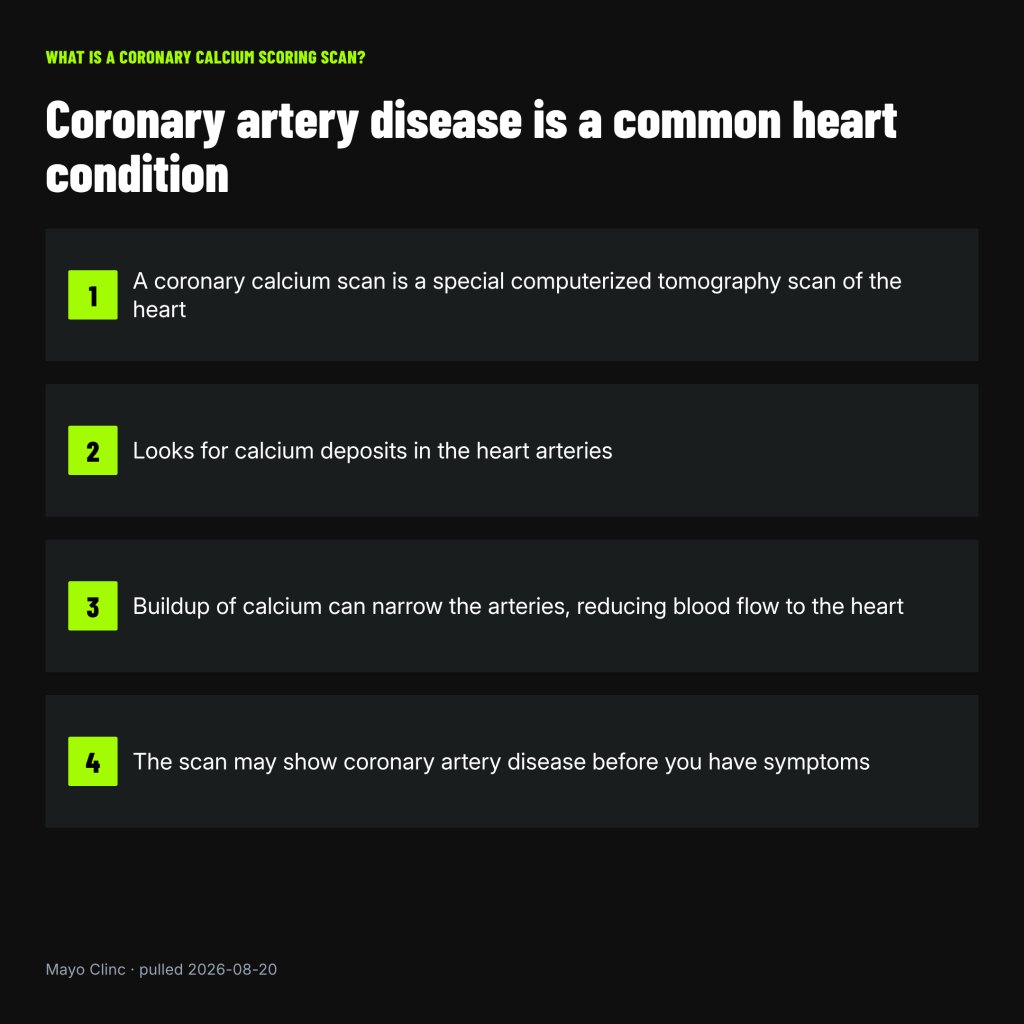
What is a calcium heart scan?
A calcium heart scan is a quick, noninvasive CT imaging test that measures calcium buildup in the coronary arteries, the blood vessels that supply the heart. Calcium acts as a marker for plaque, which narrows arteries and raises the risk of heart attack and other cardiac events.
The test also goes by CAC scan, CT calcium score and coronary calcium score, and cardiologists use those terms interchangeably. Dr. Gaurav Banka, a board-certified cardiologist, told Torrance Medical that “heart disease often develops quietly over decades” and that early tools like calcium scoring help doctors catch risk when prevention still works. Specialized software tallies a total score by measuring the volume and density of calcium deposits that show up as bright white spots on the artery images.

What does your CAC score mean?
A score of zero is ideal and points to a very low risk of a major cardiac event, while scores above 300 signal severe calcification and significantly higher risk.
A score of 1 to 100 reflects mild plaque buildup, and 100 to 300 indicates moderate buildup, according to Dr. Anas Alani, a noninvasive imaging cardiologist and director of the cardiac CT program at Loma Linda University Health. “If you have a calcium score of zero, that’s the best-case scenario. Studies show that your risk of a major cardiac event over the next five years is extremely low, less than one percent per year,” Alani said. High scores carry serious weight. “In some studies, patients with a calcium score above 300 had a risk equivalent to someone who already had a heart attack. Scores above 1,000 represent extensive disease and require very close follow-up,” he said.
How much does a calcium heart scan cost?
A calcium heart scan typically runs $100 to $400 out of pocket, depending on the hospital or imaging center performing the test, according to GoodRx.
Insurance usually doesn’t cover this heart test since it’s considered a screening rather than a diagnostic procedure, so most patients pay directly. That price reflects a fast appointment with minimal equipment beyond the CT scanner itself. There’s no contrast dye, no IV and no lengthy prep, which helps keep costs lower than other cardiac imaging studies. The scan itself takes only minutes, but the information it delivers can shape years of treatment decisions. Some employers, wellness programs and cardiology practices offer discounted or bundled pricing, so it’s worth calling ahead to compare rates in your area.
Who should get a calcium heart scan?
People with intermediate cardiovascular risk who aren’t sure whether to start cholesterol medication are among the best candidates for a calcium heart scan, along with patients who have a family history of premature heart disease.
The test also helps people with borderline or conflicting risk factors get a clearer, more personalized picture of their cardiovascular risk. “A score of zero can be very reassuring and may allow some patients to safely delay medication while focusing on lifestyle prevention. Conversely, an elevated score can help identify patients who would benefit from earlier or more aggressive treatment,” Banka said. Early detection lets doctors start medications when appropriate, guide lifestyle changes that slow plaque buildup and flag high-risk patients before a heart attack or stroke happens.
What happens during a calcium heart scan?
Patients lie on a CT scanner table for about five to 10 minutes, with no contrast dye and no IV required. The only prep is skipping caffeine and cigarettes beforehand, since both raise heart rate and can blur the images.

“The entire scan takes about five to 10 minutes. It’s very low radiation, about one millisievert, which is less than the natural background radiation we’re exposed to in a year,” Alani said. The process is fast, simple and low-risk, which is part of why cardiologists have embraced it as a first-line screening for adults with unclear risk profiles. Patients typically receive results within a few days and can review them with their doctor to plan next steps, whether that means monitoring, medication or lifestyle changes.
Can a calcium heart scan predict other health risks?
New research suggests a calcium heart scan may predict mortality risk from conditions beyond heart disease. An Intermountain Health study presented at the American Heart Association Scientific Sessions 2025 tracked more than 40,000 patients over five years, comparing all-cause mortality by CAC score.
Of the patients with any CAC who died during the study, only 25% died from cardiovascular disease, while 75% died from noncardiovascular causes. Patients with any level of CAC were two to three times more likely to have died from any cause. “We know that not having any CAC is a predictor of being in good coronary health, but we were surprised to find that it may also be a sign you’re in good general health. Someone’s CAC score could be a more powerful predictor of a person’s overall health than we previously thought,” Jeffrey L. Anderson, MD, principal investigator and a distinguished clinical and research physician at Intermountain Health, said in a statement. Anderson said coronary plaque may correlate with plaque elsewhere in the body and may weaken immune surveillance that protects against cancer.
Conversation
All comments are subject to our Community Guidelines. Woman's World does not endorse the opinions and views shared by our readers in our comment sections. Our comments section is a place where readers can engage in healthy, productive, lively, and respectful discussions. Offensive language, hate speech, personal attacks, and/or defamatory statements are not permitted. Advertising or spam is also prohibited.