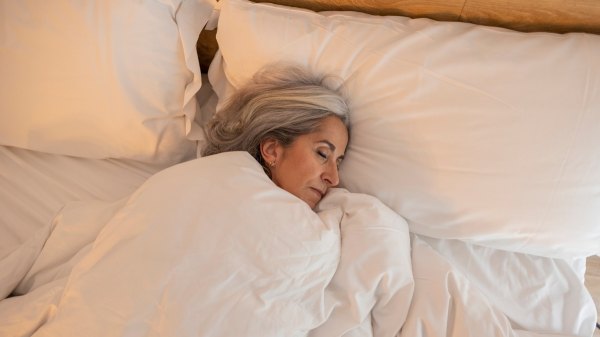
Cotton Sheets for Night Sweats: What Women Need To Know About How Bedding Affects Hot Flashes and Better Sleep
Why 75% of women in menopause sleep better after switching to cotton sheets

If you’ve ever kicked off your covers at 2 a.m. drenched in sweat, cotton sheets might be part of the answer.
Whether you run naturally warm, deal with night sweats or are navigating perimenopause or menopause, the search for cooler sleep can feel endless. One change worth considering sits right under you: your sheets. Before you dismiss that as a marketing pitch, there’s real research behind it.
What the research on cotton sheets actually shows
Bedding material directly affects sleep quality by influencing skin temperature, body temperature and thermal comfort, according to a 2024 systematic review published in PMC/NIH that analyzed nine studies across multiple fiber types.
Cotton’s core advantage comes down to breathability. Its fiber structure allows air to circulate freely, preventing heat from being trapped against your skin overnight. Cotton is able to draw moisture away from the skin and allowing it to evaporate, creating a natural cooling effect that helps your body maintain the core temperature drop needed to enter restorative sleep.

Body temperature regulation during sleep is directly linked to melatonin production and smooth transitions into slow-wave sleep and REM sleep, per INTEGRIS Health’s 2025 clinical overview. Cotton’s breathability supports this process passively — no plug-in cooling pad required.
Why sheets matter more during perimenopause and menopause
Up to 75% of women experience hot flashes and night sweats during perimenopause and menopause, according to the Cleveland Clinic. The reason comes down to biology: declining estrogen causes the hypothalamus (your body’s internal thermostat) to become very sensitive to even small temperature changes, per the Mayo Clinic. A rise as small as half a degree can now trigger a hot flash that would barely have registered before.
When that happens in the middle of the night, the sheets you’re lying on either help your body recover quickly or make things worse. Polyester and synthetic blends trap heat and moisture against the skin, extending that overheated window. Cotton wicks and releases moisture instead, giving your body a better surface to cool itself down on. The Cleveland Clinic specifically lists lightweight cotton as a recommended strategy for managing night sweats.

Cotton vs. synthetic: Why the fabric matters
Switching from polyester or microfiber to cotton most commonly produces reduced night sweating, less skin irritation upon waking and a cooler sleep surface overall. “Clothing and bed sheets can make a condition like eczema or dry skin worse because of the material,” says Dr. Marina Peredo, a board-certified Manhattan-based dermatologist, per The Healthy‘s February 2026 guide. Cotton reduces this risk. It’s also naturally hypoallergenic and resistant to dust mites when laundered regularly.
Conventional sheets, especially synthetic blends, may also be treated with formaldehyde, flame retardants or wrinkle-resistant chemical finishes that off-gas VOCs. Certified organic cotton with GOTS certification avoids these entirely.
Percale vs. sateen: Which keeps you cooler?
Not all cotton sheets are the same. For hot sleepers and women managing night sweats, percale is the better choice. It uses a crisp one-over-one-under weave that’s highly breathable, cool and gets softer with washing. Sateen uses a four-over-one weave for a silkier feel but sleeps slightly warmer. It’s a better for cool sleepers or winter months, though still far superior to synthetics.
Thread count is widely misunderstood. The sweet spot for breathability and durability is 200 to 400. Above 600 tends to trap heat despite the luxury feel — the opposite of what a hot sleeper needs.

The honest caveats

The NIH systematic review notes the relationship between bedding fiber and sleep quality is “complex” and varies by individual, ambient temperature and other factors. Cotton’s benefits are real but not a cure-all. Your bedroom temperature, mattress and personal physiology all play a role. If night sweats are frequent and severe, talking to your doctor about treatment options is worth considering alongside any bedding changes you make.
Cotton also wrinkles easily and retains moisture if not washed regularly. Weekly laundering is recommended to prevent bacteria buildup.
Cotton sheets won’t solve every sleep problem. But if overheating or night sweats are disrupting your rest, the evidence suggests this is one of the more practical and well-supported changes you can make.
Conversation
All comments are subject to our Community Guidelines. Woman's World does not endorse the opinions and views shared by our readers in our comment sections. Our comments section is a place where readers can engage in healthy, productive, lively, and respectful discussions. Offensive language, hate speech, personal attacks, and/or defamatory statements are not permitted. Advertising or spam is also prohibited.