How to Lose Weight Walking: Expert Tips to Burn More Fat and Speed Up Weight Loss!
Discover easy ways to supercharge your walks and shed pounds with expert-backed techniques!

When it comes to exercise, walking is as easy as it gets—you just put one foot in front of the other. But what if you’d like to be more strategic about your efforts so that you can lose weight while walking? We gathered advice from top doctors on how exactly to approach a new walking routine with weight loss as the goal.

How to lose weight walking
As the only physician in the U.S. to specialize in all three certifications of obesity medicine, internal medicine and strength/conditioning, Charlie Seltzer, MD, says the first thing to do before starting a walking-for-weight-loss routine is to get a baseline.
He explains, “similar to the way people need to figure out how much to eat by tracking their intake, you should grab a pedometer and then see what your average step count is over the course of a couple weeks.” His recommendation: “Then gradually try to walk more with a 5 to 10 percent increase.”
Woman's World Answers

Once you have your baseline, there are several things you can do to lose weight while walking. Here’s what helps:
Break it up (or don’t!)
We’ve all heard the 10,000 steps a day guideline. But should you pack all your steps into one long walk, or sprinkle your day with lots of smaller walks?
The problem with major step counts: it does take a long time to do,” says Dr. Seltzer. But you can really lose weight by walking, so feel free to break up long walks into smaller chunks if that’s more manageable for you. One trick Dr. Seltzer likes: “Use a walking pad” if your workday allows. “The little things will add up over time, like parking farther away from the front door or taking the steps over an elevator.”
Note: Yale-educated integrative physician and weight-loss expert Eric J. Rosenbaum, MD, points out one caveat. He says, “if you’re trying to get your heart rate up to improve your cardiovascular conditioning, then you want to do your walking all at once.”
Pick up the pace
Speaking of increasing your heart rate, taking a brisk walk can burn more calories and shed fat faster than a slow stroll. So as you get in better shape, increase speed and incline or add a component of HIIT (high intensity interval training) to your routine.
Melina Jampolis, MD, podcast host of Practically Healthy by Dr. Melina, recommends, “If you are walking on a treadmill, simply bump up the speed or incline for 30 seconds and then go back to your normal pace—don’t stop—for 1 minute and repeat 10 times.” (Be sure to warm up and cool down for a few minutes before and after).
Dr. Jampolis says, “This sort of training burns more calories during—and for a couple of hours after—workouts, so it can be very time efficient.” If out in nature, try a slow jog for 30 seconds during walks. Or at a mall, try walking the stairs or escalator for 30 seconds.
How to know if you’re getting aerobic exercise
Dr. Rosenbaum says, “If you can, get to a pace where you just start to break a sweat, moving you into a moderate zone of exercise. You’ll lose weight faster within the same amount of time.”
Aim for 30 minutes a day
Some experts point out that step counts and distance guidelines are unreliable since people have different lengths of legs and strides. Instead, you may prefer to use time as your guidepost. So how many minutes of moderate intensity walking is needed to lose weight?
Dr. Rosenbaum recommends “something doable like 30 minutes a day.”
For weight loss, the American College of Sports Medicine suggests at least 30 minutes of walking at least five days a week, which has been shown to cause modest weight loss when incorporated with diet and other weight bearing exercise.”
That equals 150 minutes per week. But many walkers build up and do 60 minutes or more daily. Dr. Rosenbaum has found, “if you can hit 200 or more minutes a week, then weight loss can be more significant.”
Don’t overdo it
Dr. Seltzer notes, that fitness trackers are great for counting steps, but unreliable for estimating calories burned. “The more intense your walking workout is, the more likely you are to overeat to compensate.” So aim for the sweet spot where you get enough movement to burn calories but won’t feel famished and grab unhealthy snacks that can sabotage your weight loss efforts.
“Focusing solely on exercise and not paying attention to your nutrition will take a lot longer to lose that one pound,” adds Lauren Borowski, MD, a clinical assistant professor of sports medicine at New York University, and the head physician for the United States Men’s Ski Jumping Team. She reminds, “You can’t out-exercise a bad diet.”
4 ways to lose even more weight while walking
Ready to take your walking for weight loss journey to the next level? These tips can help you burn extra calories and melt fat.
- Eat more protein
It satisfies cravings, which is crucial during the weight loss process. Even more importantly: protein is made of amino acids, the raw material needed to repair and build lean muscle tissue that revs your metabolism. Aim for a total of 1 gram per day per pound of your ideal body weight. So if you would like to weigh 140 pounds, try to eat 140 grams of protein, spread throughout your day.
- Walk after meals
A Cleveland Clinic study shows that exercising after eating, especially walking at a brisk pace, reduces fat-packing blood sugar spikes by 45 percent. In fact, it’s one of the Glucose Goddess’s top blood-sugar hacks. And a current TikTok health trend promotes walking for 30 minutes after breakfast every day. (Learn more about the viral 30-30-30 plan.)
- Add resistance training
Dr. Seltzer says that technically, “the ultimate goal isn’t to lose weight. It’s to lose body fat. So you have to weight train.” One easy approach is to wear a weighted vest or backpack on walks to work muscles, a viral trend known as rucking.
- Walk and get rewarded
Dr. Jampolis recommends the new app WeWard that rewards people with financial perks and gift cards for walking daily. It’s been shown to boost users’ step counts by nearly 25 percent. She says, “It can be a fun incentive to walk more.”
How long does it take to lose weight walking?

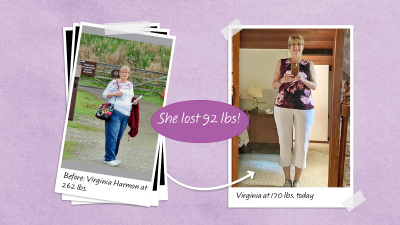
When it comes to walking for weight loss, cardiologist David Sabgir, MD, founder of Walk With a Doc, sums it up this way: “It may not happen overnight, but it will happen.” He’s seen countless examples of women achieving health success stories using this moderate pace activity.
“Let’s say you keep your diet the same and add 2 miles of walking a day. That’s close to losing 2 pounds a month and over 20 pounds in a year,” and you can expedite it if you “increase steps, add strength training, add incline, add speed bursts, and fine-tune your diet.”
One final word of advice: Don’t stop strolling once you hit your weight loss goals. There are long term benefits to walking, including weight management. Dr. Rosenbaum says, “walking has been shown to keep weight off after losing it!”
Conversation
All comments are subject to our Community Guidelines. Woman's World does not endorse the opinions and views shared by our readers in our comment sections. Our comments section is a place where readers can engage in healthy, productive, lively, and respectful discussions. Offensive language, hate speech, personal attacks, and/or defamatory statements are not permitted. Advertising or spam is also prohibited.