Andy Griffith’s Dark Side: How a Chilling Movie Flop Led to ‘The Andy Griffith Show’
The 'Sheriff' nearly became Hollywood's greatest villain in a role that almost broke him

Key Takeaways
- Andy Griffith’s darkest role nearly consumed him before his arrival in Mayberry.
- 'A Face in the Crowd' changed his life—but didn’t make Griffith a movie star.
- Lonesome Rhodes and Andy Taylor represented two sides of the same man.
When people think of The Andy Griffith Show, they think of warmth. Of front porches and quiet wisdom and a sheriff who could solve problems with a smile instead of a gun. But what they usually don’t consider is how close Andy Griffith came to being defined by something very different, because before Mayberry, there was A Face in the Crowd and you couldn’t get any further apart from Andy Taylor than Lonesome Rhodes.
Released in 1957 and directed by Elia Kazan, A Face in the Crowd cast Griffith as Rhodes—a charismatic drifter who rises to media power and reveals a deeply manipulative, dangerous core. It was, by any measure, a stunning performance.
As biographer Daniel de Vise, author of Andy and Don: The Making of a Friendship and a Classic American TV Show, explains to Women’s World in an exclusive interview, landing the role was a career-defining moment: “Getting this Kazan film, of course, was a huge deal,” he says. “Kazan was at the top of his game, having directed A Streetcar Named Desire, On the Waterfront and Giant, among others, so anybody who was a leading man for Kazan was a big deal. And so A Face in the Crowd was a major, major coup for Andy.”
And Griffith, for his part, delivered in a way that still resonates so many decades later. Muses De Vise, “I would say if you’re appraising his career, it’s probably his single greatest role as far as a one-off thing. There’s nothing that even approaches the work he did on A Face in the Crowd.”
Which is a striking statement considering the cultural footprint of North Carolina-based Mayberry and the iconic partnership he had with Don Knotts’ Deputy Barney Fife. But De Vise is clear that, in terms of pure acting, this was Griffith at his peak.
A performance that took its toll
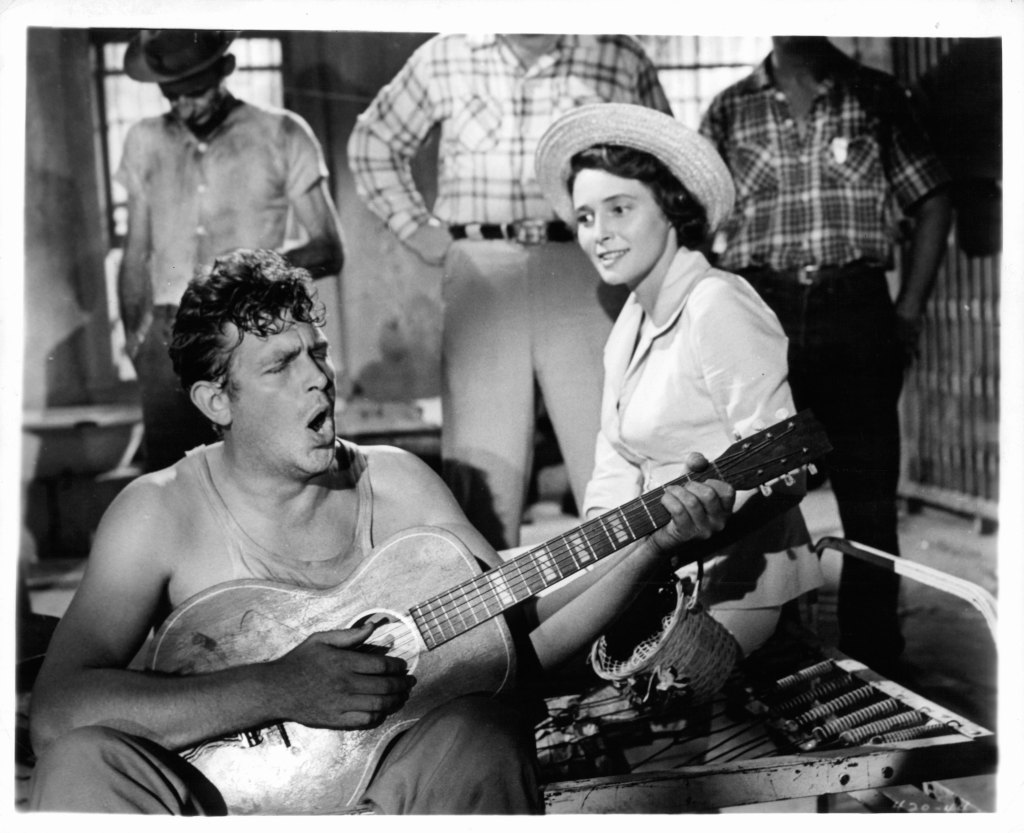
Part of what makes that performance so powerful is how deeply Griffith seems to inhabit Lonesome Rhodes. And according to De Vise, that wasn’t just an illusion, it came to the actor at a cost. “I know from what I read about him and what people told me, that it really chewed him up and spat him out during that role because he sort of method-acted it,” he says. “And so he kind of became the Lonesome Rhodes character during that time.”
Lonesome Rhodes enters A Face in the Crowd as a charming nobody—a drifter with a guitar and a quick smile who’s discovered in an Arkansas jail and handed a microphone. But what begins as harmless, down-home entertainment steadily morphs into something far more unsettling. As Rhodes rises through radio and into television, he reveals a darker core: manipulative, ego-driven and intoxicated by power, using his growing audience not just to entertain but to control. It’s a transformation that allows Andy Griffith to chart a chilling descent from affable everyman to something far more dangerous—and it’s that gradual unraveling that makes the performance so unforgettable.

And the immersion of the actor into his onscreen persona blurred the line between them that wasn’t always healthy. “This is where maybe he got into the habit of putting his fist through drywall when angry and things like that,” suggests De Vise, “and maybe drinking too much and pulling tablecloths off of tables and such.”
It was a far cry from Andy Taylor, yet in some ways, both characters were reflections of the same man. “I think the real guy has probably got elements of that Lonesome Rhodes character—and there are wonderful elements of him that are elements of the Andy Taylor sheriff character,” he notes. “I don’t think either Lonesome Rhodes or Andy Taylor is all Andy. I think there’s bits of both those characters in the real guy.” And that duality—darkness and decency—would ultimately define Griffith’s career. But at the time, it left him in a precarious place.
A brilliant performance, but a dead end
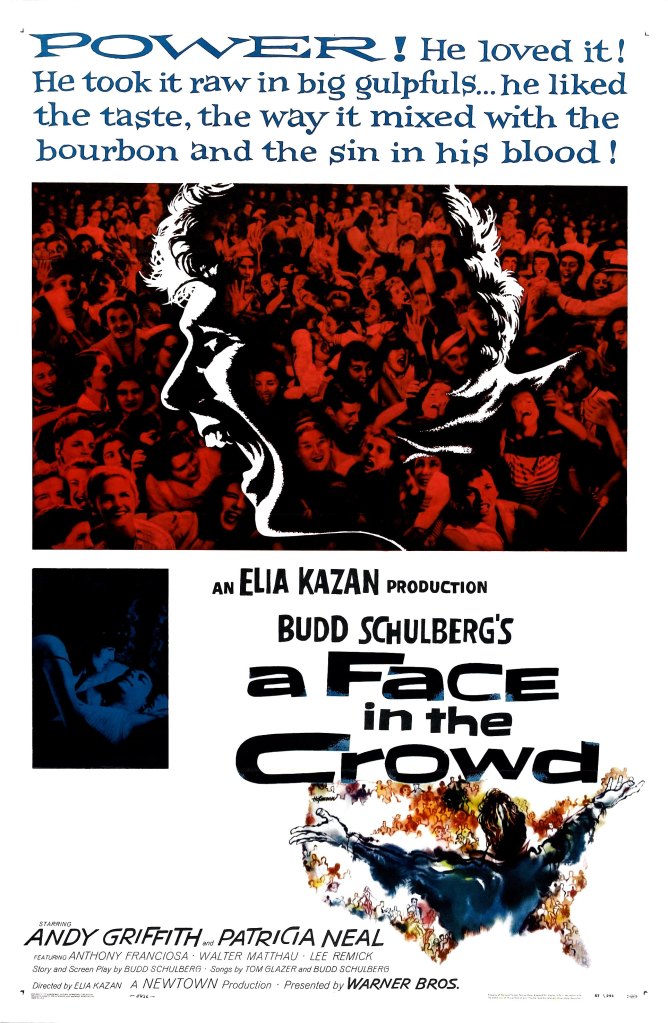
Today, A Face in the Crowd is widely regarded as a classic—eerily prescient in its portrayal of media influence and personality-driven power. But in 1957, audiences weren’t quite ready for it. “At the time,” explains De Vise, “A Face in the Crowd got middling reviews. A lot of people didn’t get it, so it probably wasn’t considered a huge hit at the time, either critically or commercially. And it was one of a string of tragedies in Andy’s life that he wasn’t able to convert the success of that movie into more great film roles, because his next film, Onionhead, was a flop. And then he didn’t make, I believe, another film until after The Andy Griffith Show.”
Even Kazan, who had recognized Griffith’s potential, was frustrated by what followed and saw the television medium as a step down. “From Andy Griffith’s own perspective,” points out the biographer, “it was his only play, because after A Face in the Crowd, he struck out in cinema.”
The birth of Mayberry
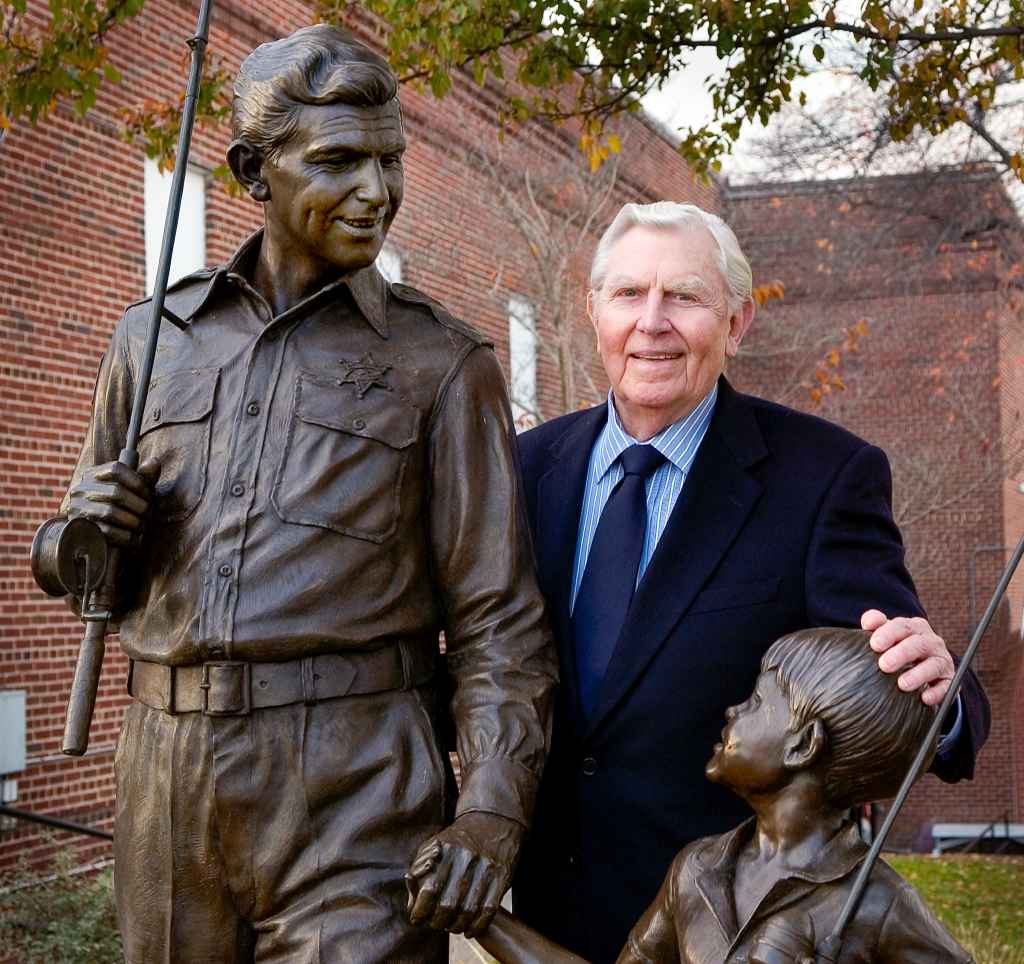
And that’s where the story takes its most fascinating turn, because the failure of A Face in the Crowd to launch Griffith as a film star, more or less forced him to pivot toward television and something “quieter,” like Mayberry.

When The Andy Griffith Show premiered in 1960, it presented audiences with a version of Griffith that felt worlds away from Lonesome Rhodes. Gone was the manipulative firebrand and in his place was Sheriff Andy Taylor, who was patient, thoughtful and, most of all, grounded. But if you look closely, the connection between the two roles becomes clear. Lonesome Rhodes showed what Griffith could become when charisma turned dark, while Andy Taylor demonstrated what that same charisma looked like when guided by empathy. It’s a fascinating contrast.
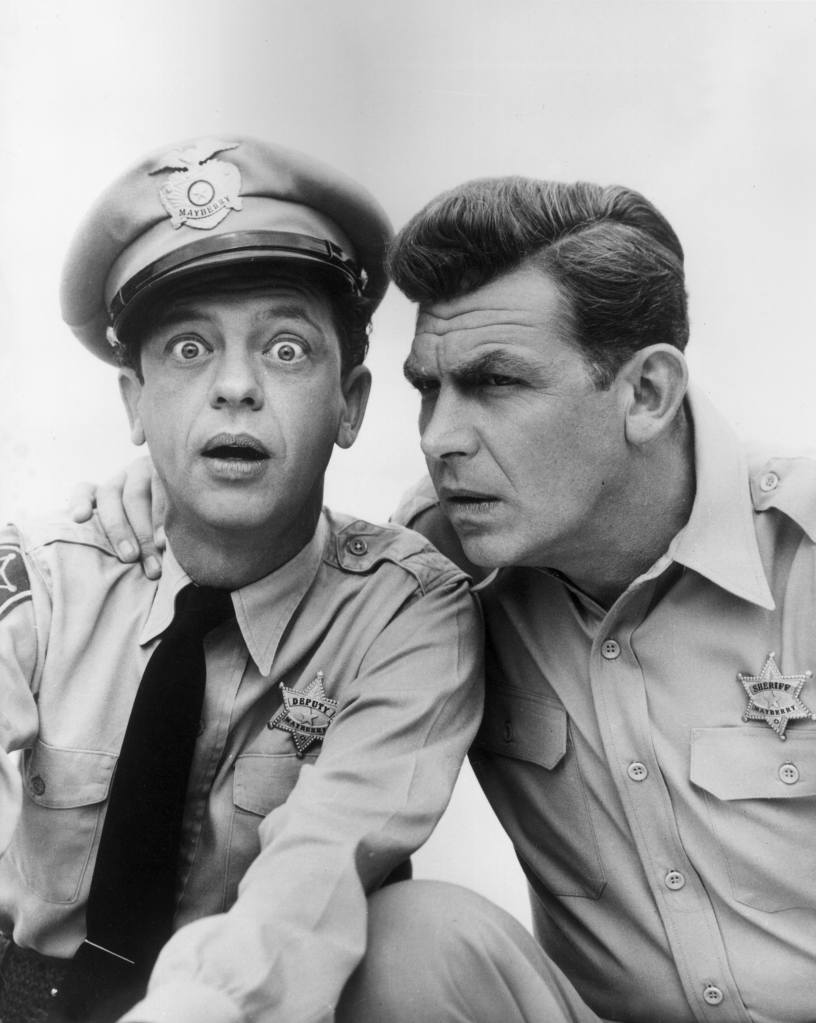
For Griffith himself, the change may have been a way for him to step back from a role that had taken more out of him than audiences ever realized. De Vise notes that after fully immersing himself in Lonesome Rhodes, Griffith had to find his way back: “I can’t overstate that he became more like the Lonesome Rhodes character while he was playing him, and probably had to chill out and decompress after that role, and then became more normal again afterwards.”
That “more normal” version of Andy Griffith is the one audiences embraced for eight seasons—and continue to embrace today as they return to Mayberry. But what’s interesting is that without the failure of one, the other might never have existed. While A Face in the Crowd didn’t make him a movie star, it did put him on the road to Mayberry.
Conversation
All comments are subject to our Community Guidelines. Woman's World does not endorse the opinions and views shared by our readers in our comment sections. Our comments section is a place where readers can engage in healthy, productive, lively, and respectful discussions. Offensive language, hate speech, personal attacks, and/or defamatory statements are not permitted. Advertising or spam is also prohibited.