Normal AST Levels by Age and What It Means for Your Risk of Fatty Liver Disease
What your blood test results really reveal—and why postmenopausal women need to pay attention
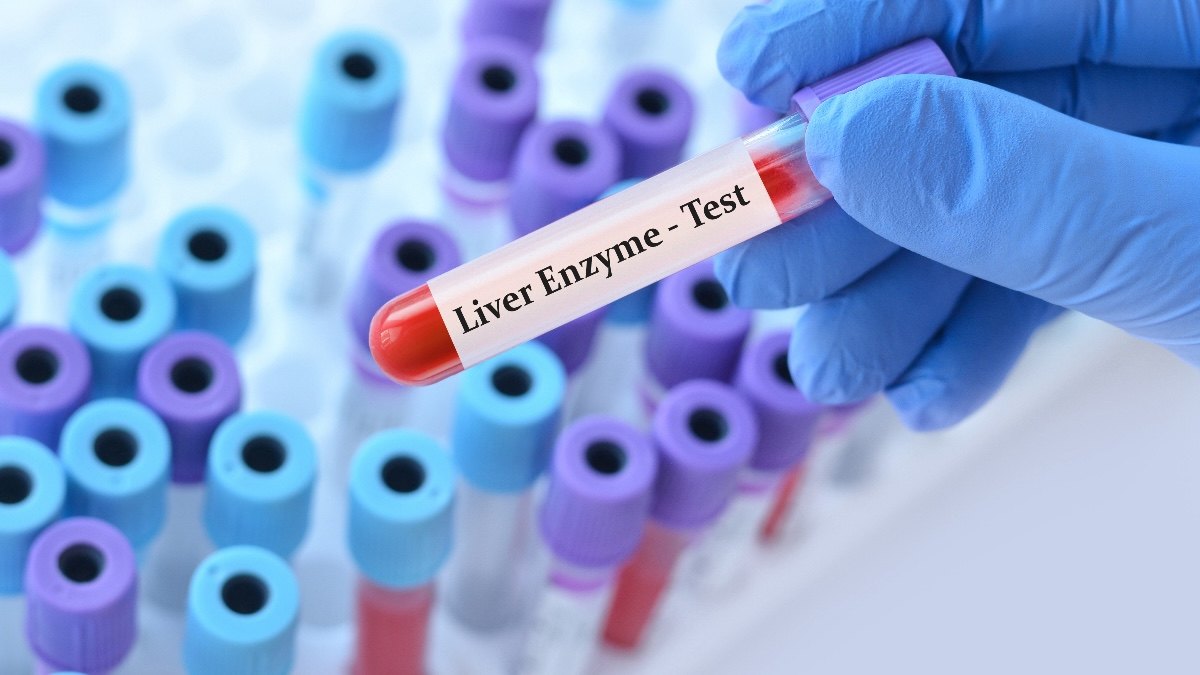
A1C, LDL, HDL… the number of medical abbreviations you might see on your patient portal is enough to make you think your doctor speaks an entirely different language. Two such acronyms you may be less familiar with are AST (aspartate aminotransferase) and ALT (alanine transaminase)—liver enzymes measured through blood tests. But why are they important? Is there such a thing as normal AST and ALT levels by age? And what are their implications for fatty liver disease?
Keep reading as top hepatologists (read: liver doctors) translate this liver lexicon and reveal what it all means for your health—including a simple score that can help assess your liver risk.
What are AST and ALT?
They’re both enzymes found inside liver cells, where they perform important metabolic functions, explains hepatologist Meena B, Bansal, MD, system chief of the Division of Liver Diseases, Icahn School of Medicine at Mount Sinai.
“They’re not found exclusively in the liver, but what matters most is that when there’s damage to the liver, these enzymes spill out into the blood,” she continues. “And that’s what we’re measuring in the blood: a marker of liver injury.” Such damage may be caused by:
- A virus like hepatitis B or C
- Alcohol abuse
- Certain medications, like an overdose of Tylenol. (Dr. Bansal says “overdose” is the operative word—it would have to be nearly an entire bottle to impact the liver.)
In fact, AST is one of several blood tests clinicians use to assess liver function and injury, explains Joseph K. Lim, MD, professor of medicine, director of clinical hepatology and vice-chief of the Section of Digestive Diseases at Yale University School of Medicine. “[The panel] includes total bilirubin, alkaline phosphatase, AST and ALT. Elevated bilirubin or alkaline phosphatase may suggest bile duct injury, while elevations in AST or ALT point to liver cell injury,” he says.
One important way these two enzymes differ? ALT is slightly more liver-specific in that it is mostly in the liver cells, Dr. Bansal points out, while AST is expressed a bit more broadly in other parts of your body, like the heart, kidneys, muscles and red blood cells.

Normal AST levels by age
“In children, AST levels can gradually decrease with age, so pediatricians often interpret them using percentiles,” says Dr. Bansal. “In adults, however, AST levels are generally stable. As a hepatologist, I don’t typically adjust what’s considered ‘normal’ [test results] based on adult age.”
That said, there is such a thing as normal AST levels for women and men, irrespective of age. “A truly normal, slam-dunk level of AST is less than 20 [U/L] for women and less than 30 [U/L] for men,” she reveals.
“This is lower than you might see as the ‘range of values’ when you review your own laboratory tests. That is because the ranges provided on your lab reports represent what the values are for 95 percent of the population getting their blood tests done at that specific lab, and so these normal ranges can vary across the region and country.”
What causes low or high levels of AST?
“Other reasons AST levels might be higher than expected include heart problems, like a heart attack, muscle injury—for example, after running a marathon—or pancreatic disease, such as pancreatitis,” Dr. Lim adds. “Lower-than-normal AST is less common but can occur with malnutrition, for instance, a vitamin B6 deficiency, kidney disease or certain medications like [the antibiotic] Flagyl.”
You’ve probably noticed that we’re playing favorites—focusing more on AST than ALT. There’s a good reason for that: “AST is found in both the mitochondria [the powerhouses of the cells] and the cytoplasm [the jelly-like material] of liver cells, while ALT is mostly just in the cytoplasm,” says Dr. Bansal.
“This matters because AST elevations often reflect more extensive liver injury. The AST-to-ALT ratio can also provide useful clinical clues: When AST is higher than ALT, especially if the ratio is greater than 2:1, it may suggest alcohol-related liver disease—for example, if your AST is 40 and your ALT is 20.”
Fatty liver disease risk increases post-menopause
Fatty liver disease is now the most common reason women need a liver transplant, reveals Dr. Bansal. “It used to be called NASH [nonalcoholic steatohepatitis] because liver biopsies looked like alcohol-associated damage, even in people who didn’t drink.”
But research now shows the true cause is metabolic dysfunction, including prediabetes, diabetes, high blood pressure, high cholesterol and obesity—especially being more of an “apple” body shape than a “pear,” she reveals. These factors, along with hormonal changes, partly explain why risk increases in women after menopause, when fat distribution shifts.
The updated term for the condition is MASH (metabolic dysfunction-associated steatohepatitis), which better reflects what’s really driving the disease: underlying metabolic health, not alcohol.

The test that can predict your risk of significant liver fibrosis

When it comes to AST and ALT, there’s a simple score that can help assess your risk for liver fibrosis or advanced disease, Dr. Bansal explains. “People with risk factors—such as obesity, high cholesterol, diabetes or prediabetes—can easily calculate their risk for liver fibrosis [the buildup of scar tissue in the liver] using a simple score called the FIB-4.”
The FIB-4 score is based on AST and ALT levels, age and platelet count, which you’ll find on a standard CBC (complete blood count), she explains. “You can quickly find a FIB-4 calculator online, enter your numbers and see where you stand.”
- A score less than 1.3 indicates a low risk for significant fibrosis
- A score of 1.3 or higher suggests you may want further liver assessment
There are several follow-up tests available, including measurements of liver stiffness, such as liver elastography (e.g., FibroScan) and other blood-based tests, Dr. Bansal adds. The bottom line? Knowing your AST and ALT numbers and calculating your FIB-4 score are empowering steps that’ll help you take control of your liver health.
Conversation
All comments are subject to our Community Guidelines. Woman's World does not endorse the opinions and views shared by our readers in our comment sections. Our comments section is a place where readers can engage in healthy, productive, lively, and respectful discussions. Offensive language, hate speech, personal attacks, and/or defamatory statements are not permitted. Advertising or spam is also prohibited.