Dr. Vonda Wright: ‘Muscle Is a Literal Longevity Factory for Women’—Her Plan To Stay Strong After 50 (Exclusive)
Plus discover the 'elixir of longevity' she says many women are never offered

To our younger selves, “getting in shape” was usually code for fitting in smaller jeans. But after age 50? It means so much more. It means taking steps to ensure our golden years are truly radiant. We want powerful muscles, strong bones, resilient body systems, balanced emotions, a sharp mind. And Vonda Wright, M.D., is on a mission to make sure we have it all. Here, she shares amazing secrets from Unbreakable, her new book about muscle mass and longevity. These secrets have transformed her own 58-year-old body and set her up to be strong and independent for decades ahead.
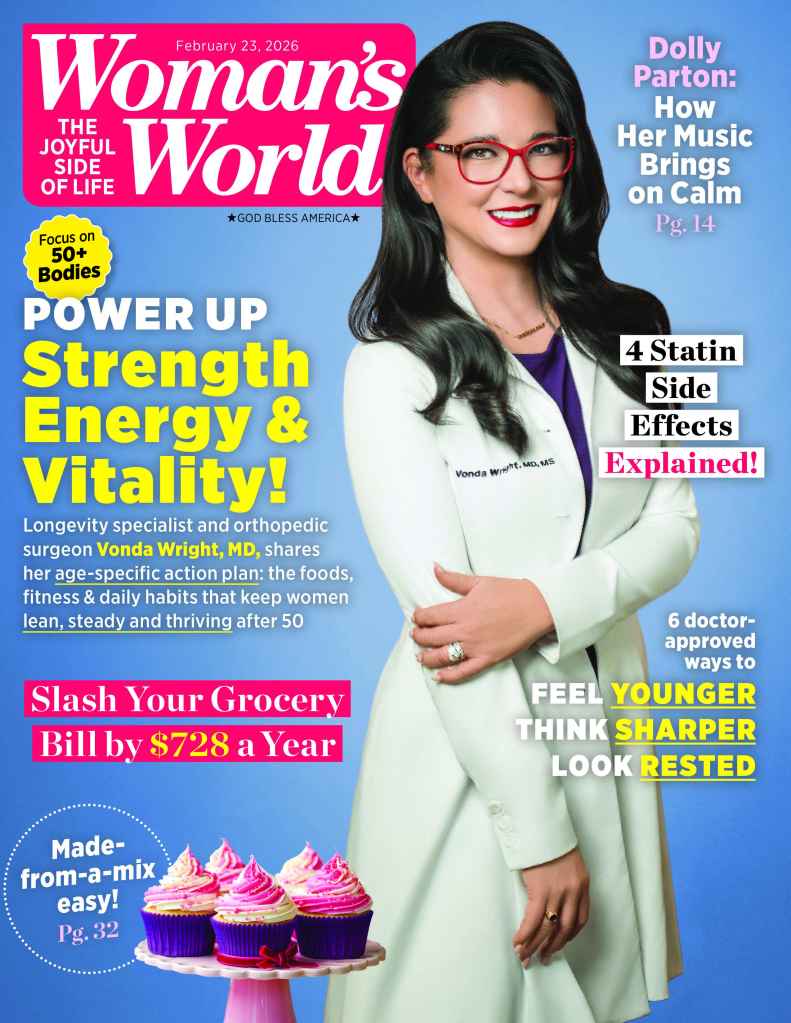
Check out Dr. Wright, who appears on the cover of this week’s Woman’s World magazine (get your copy here!), where she shares how you can set yourself up for a long, strong life.
Why muscle strength is ‘a literal longevity factory’
As women move toward, through and beyond our 50s, declining estrogen quietly reshapes our biology. What matters most in this transition isn’t weight—it’s muscle, the tissue that protects strength, metabolism, balance and long-term health.
Surprise fact: As estrogen naturally begins to drop, our muscle mass often begins to disappear too. That’s because estrogen plays a big role in allowing us to utilize the protein we eat, and if we can’t absorb enough protein from food, our bodies are forced to break down muscles and “steal” protein from them. Go on an old-fashioned diet (which cuts protein along with calories) and the problem worsens. “Up to 40 percent of weight lost will be muscle, not fat,” says Dr. Wright, an Orlando-based orthopedic surgeon and former University of Pittsburgh sports medicine researcher.
Losing muscle lowers resting metabolic rate, so we burn fewer calories and become more prone to weight gain. But a speedy metabolism isn’t all we miss out on. Muscle mass and longevity are fundamentally linked because “skeletal muscle churns out hormones, proteins and other chemicals that build and protect the brain, heart and other organs. It helps keep bones strong. It impacts mood. It helps manage blood sugar and metabolic health,” Dr. Wright says. “Muscle is a literal longevity factory.” And to function at its best, she adds, muscle must be supported by healthy bone, tendons and cartilage.
If the goal for your future self is to be vital, active and joyful, “you must build and maintain these tissues.” But what if you’re just too tired for that?
Dr. Wright’s story: Losing her swagger and getting it back
If you’ve ever felt like your body betrayed you overnight, Dr. Wright has been there. About 10 years ago, in the middle of her very full and active life, “my estrogen walked out the door. I was suddenly weaker, and my whole body hurt,” she shares. “My brain was shrouded in fog. My waist disappeared, and I had fat hanging out of my bra.” Her sleep was lousy too; she’d often wake with her heart racing scary-fast. She was 47 at the time.
Once tests confirmed her heart was fine, what did she do? Something very relatable: “I suffered through like so many women,” she admits. Only after three years did she finally try a strategy that made it possible for her to actually stick with habits to improve her health. Spoiler: It’s not diet or exercise.
Start the easy way: Prioritize sleep first
“As a mobility doctor, I used to start by telling people how to move,” Dr. Wright shares. Then she learned firsthand that “we won’t move or even eat well if we’re exhausted.” So first, before you even think about joining a gym or eating better, try prioritizing sleep. She promises being rested has a huge impact on your ability to lead a more active lifestyle.
Another way to help wake up your brain: “Tell yourself, ‘I am capable, I have hope for the future, the best is yet to come,’” she says.
And set goals for your future. Imagine what you want in detail. (The doc personally aims to be thriving at age 97.) She promises these “mindset pivots” give you energy to adopt new habits. Then you’ll be ready to consider another fairly low-effort strategy with the potential for huge impact.
The ‘elixir of longevity’ many women are never offered
For years, 40 percent of women used hormone replacement therapy after menopause. Often referred to as HRT, Dr. Wright prefers the term menopause hormone therapy or MHT. It includes creams, patches, pills and injections that help restore estrogen and other declining hormones. If you’re not familiar with these options, you’re in good company. Because in 2002, a major study was widely misinterpreted, suggesting grave risks. Menopause hormone therapy use fell to four percent, and many doctors never mention it to patients.
What have subsequent studies shown? Several, including landmark findings that appeared in JAMA, show that the treatment (particularly if started within 10 years of your last period) can lead to better sleep, brain function, mood, muscles, bones, metabolic health, overall longevity and more. Sure, some factors (like high stroke risk) may mean you’re not a candidate. But for many of us, “I think it’s the elixir of longevity,” says Dr. Wright.
Even after 70, “estrogen is still critical for bone health. And poor bone health leads to 70 percent of all hip fractures.” In other words, MRT may prevent independence-ending injuries. No matter your age, she believes you deserve a nuanced conversation with your doctor about what risks MRT would pose and if it might help you thrive.
When Dr. Wright personally began HRT, “my black-and-white world went technicolor again,” she says. She was ready to embrace crucial lifestyle changes.

How to eat for happy, turbocharged muscles
What you eat greatly impacts how much muscle you’re able to build and also whether your body feels good enough to stick with a strength training routine. For a tactic with immediate impact, Dr. Wright recommends cutting added sugar and highly processed carbs. Not only can it help boost energy, but it can also relieve pain fast. “It makes you less inflamed. Many of my patients report a difference within a week,” she says. Less pain, more energy—it’s a big win.
And be sure to “feed your muscles,” she adds. Because older adults need more protein (about half a gram for every pound you weigh, or 100 grams for a 200-pound woman). For maximum absorption, spread intake out evenly through the day, and aim for “at least 30 grams of protein at every meal.” That’s about a cup of Greek yogurt with nuts, three eggs with cheese or four ounces of chicken. Prioritizing protein is crucial to muscle mass and longevity.
More steps to take over time: Dr. Wright suggests using a free food-tracking app like MyFitnessPal for three weekdays and two weekend days to really understand what you’re consuming. (Because both undereating and overeating can keep us from our goals.) You also want to get 30 grams of fiber and a little healthy fat each day. And skip processed foods.
Why heavy lifting changes everything
If you’re only going to commit to one new habit, “start lifting weights,” urges Dr. Wright. At first, lifting your own body weight or using soup cans may be enough. (That’s what Dr. Wright’s mom Joy, 86, did!) But you’ll need heavier weights over time. “Lifting for strength means lower reps and heavier weights,” she explains, noting this method works far better and takes up less time than lifting lighter weights more often.
Worried you can’t do this type of resistance training? Studies on 90-year-olds show it improves strength and function by 150 percent. If they can do it, so can you! And lifting at any age is proven to make us as strong as or stronger than someone 20 years younger who doesn’t lift, she notes.
Smart tip: If you’re dealing with, say, back or shoulder pain, you may get free help through health insurance if you start physical therapy. This worked for Dr. Wright’s mom. There’s also a beginner workout available at TheUnbreakableBook.com.

Add in regular walks
Muscle is a natural shield, but other factors help keep us hardy too. “Just because you’re strong doesn’t mean you won’t fall,” notes Dr. Wright. She says we benefit greatly from daily walks plus working on our endurance, flexibility and balance.
“Research finds that midlife and older women thrive on this combination,” notes the doc, now 58, who used her own approach to gain eight pounds of muscle, cut her body fat by 33 percent, boost mood and brain function and generally get her swagger back.
Dr. Wright’s bottom line on muscle mass and longevity
When well planned, all this exercise “fits into the most hectic of lives,” she promises. “Growing old is not for sissies. But if we make time to build physical and mental resilience, we feel unbreakable.” And nothing beats that.

With Dr. Wright’s proven strategies, you have everything you need to feel strong, vibrant and truly unbreakable. Ready to start? Your future self is already cheering you on.
This story originally appeared in the February 23, 2026, issue of Woman’s World
Ready for more inspiration? Subscribe to our YouTube channel for video podcasts, health tips and uplifting stories designed for women 40, 50, 60 and beyond.
Conversation
All comments are subject to our Community Guidelines. Woman's World does not endorse the opinions and views shared by our readers in our comment sections. Our comments section is a place where readers can engage in healthy, productive, lively, and respectful discussions. Offensive language, hate speech, personal attacks, and/or defamatory statements are not permitted. Advertising or spam is also prohibited.