Where Craft Meets Identity: How Zohair USA Is Elevating Hair Restoration into a Purpose-Driven Practice

Summary: With more than 55 years of experience, Zohair Mamary is guiding licensed hairstylists toward a specialized field that combines technical mastery with deeply meaningful client impact.
Zohair Mamary, founder of Zohair USA, has spent over five decades working in hair styling and later in the field of custom wigs and hairpieces. Across 55 years, he has built a reputation defined by precision, empathy and consistency. He believes his career has evolved alongside an industry that has expanded in visibility, yet continues to operate at a deeply personal level for those it serves.
Mamary attributes his longevity to a clear principle. “Clients often seek more than appearance. They seek recognition of their identity and self,” he says. In his view, the service begins where aesthetics end, entering a space where identity, confidence and personal continuity intersect.
Earlier in his career, Mamary established a flagship salon in New Jersey overlooking the Hudson River. “The operation we had in New Jersey employed more than 20 professionals and delivered a structured, high-touch client experience. It reflected both discipline and operational rigor, reinforcing us as a trusted authority in custom hair solutions,” he recalls. Over time, he adds, long-term relationships and consistent client feedback became the clearest measure of success, shaped by reliability and technical exactitude.
Today, his practice is based in Bergen County, positioned within close proximity to several major hospitals. This location reflects a deliberate focus on individuals experiencing medically related hair loss.
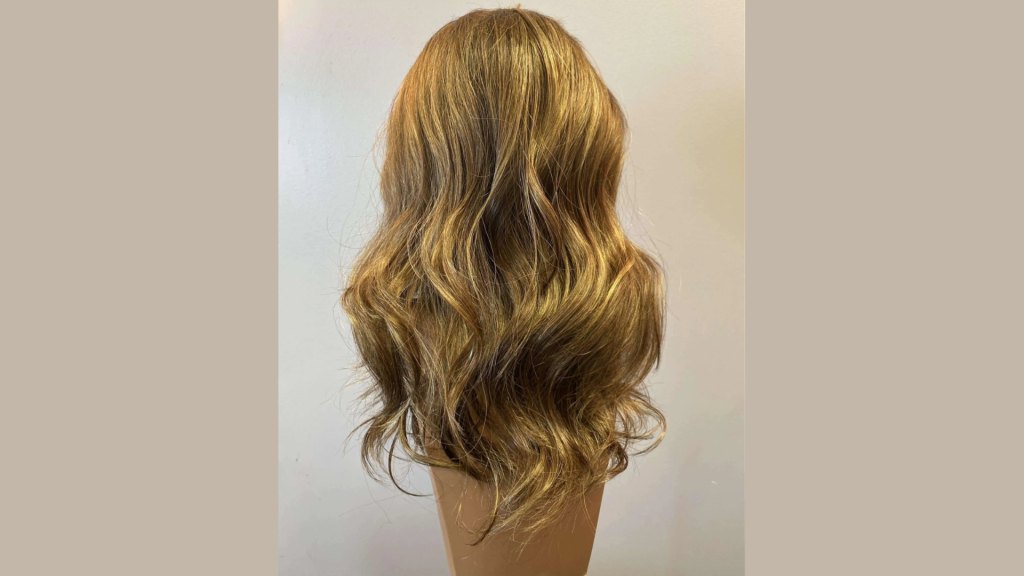
“Our work is centered on bespoke solutions, with each piece designed to align with the client’s physical needs, comfort and daily life,” Mamary says. While broader product offerings exist within the business, he emphasizes that individualized craftsmanship remains the defining principle of his approach.
Through decades of experience, Mamary has observed a structural shift within the hairstyling profession. “There are many hairstylists who have dedicated their careers to serving clients and refining their craft,” he explains. “Over time, as the industry changes, some feel like their role is diminishing. I want to show them that their foundation is still strong. If they understand the industry and communication, they are already equipped to pursue a new and meaningful direction.”
He adds a broader reflection on timing and professional transition. He says, “At a certain point in a career, experience often becomes the most valuable asset. The question becomes how that experience is applied in ways that still create impact.”
According to Mamary, Zohair USA now extends beyond direct client service into structured mentorship and professional development. He believes he has designed a model intended to support licensed stylists transitioning into the specialized field of hair solutions. “The framework integrates technical training with commercial and operational guidance, helping practitioners to establish independent, sustainable practices,” he notes.
He adds that participants receive direct instruction in customization techniques, client consultation and fitting methodology. Equally significant, he says, is the emphasis on the business infrastructure required to support the work. Mamary provides guidance on studio setup, supplier relationships built over decades, presentation standards and communication approaches tailored to sensitive client contexts. According to him, each component is designed to reinforce both professional integrity and client trust.
Mamary works closely with stylists through extended training cycles, often traveling to their locations to provide hands-on instruction. This engagement continues until participants demonstrate the technical competence and confidence required to operate independently. Mamary regards this as essential to the process, stating, “This is not something that can be absorbed quickly. It is developed through repetition, observation and real experience.”
According to him, interest in the model has already emerged across multiple regions, with stylists from other states exploring adaptation within their own markets. Mamary views this early momentum as validation of a broader need within the industry for more specialized, purpose-led forms of practice.
“Specialized services aim to offer pathways toward higher earning potential and long-term client relationships. In certain contexts, services may intersect with insurance-supported care, depending on individual circumstances,” he explains. Mamary approaches this dimension with caution, emphasizing that financial outcomes are a consequence of quality, consistency and trust.
After decades of building businesses, Mamary returns most often to the human dimension of his work. “The most meaningful part of this work is witnessing that moment of recognition,” he says. “When a client looks in the mirror and feels a sense of identity return, it carries a deep emotional weight. That is what gives this work its purpose. It is also what I want to pass on.” These moments, he adds, have fundamentally shaped his understanding of professional fulfillment.
Through Zohair USA, Mamary extends an invitation to experienced professionals seeking longevity, stability and deeper engagement with their craft. According to him, the model is anchored in technical rigor and guided by empathy, with a clear focus on addressing a sustained and growing human need.
In a sector often influenced by shifting trends, Zohair USA maintains a disciplined commitment to purpose. The work begins with understanding and proceeds through skilled execution toward personal transformation. For Mamary and those he mentors, it represents a professional philosophy shaped by experience, continuity and the enduring value of helping individuals reconnect with themselves.
The information provided in this article is for general informational and educational purposes only. It is not intended as legal, financial, medical or professional advice. Readers should not rely solely on the content of this article and are encouraged to seek professional advice tailored to their specific circumstances. We disclaim any liability for any loss or damage arising directly or indirectly from the use of, or reliance on, the information presented.


