Author Angela Shupe Reflects on Her Mom’s Harrowing Journey from the Philippines to America During WWII (EXCLUSIVE)
Author of ‘In the Light of the Sun’ pens a personal essay for Filipino American History Month

Greetings, fellow bookworms! Here at Woman’s World, it’s no secret our staff is filled with book lovers. When we’re not reading books, we’re writing about books, talking about books or recommending books. But one of the best parts of our jobs is connecting with authors. Whether we’re interviewing a writer about a recent release, asking authors to share their TBR (to-be-read) list, doing exclusive book cover reveals or excerpting a preview from an upcoming novel, we are always loving what we do! Our latest bookish venture? Collaborating with beloved and debut authors—and inviting them to write for us! In WW’s guest essay series, authors will open up about everything from the inspiration behind their latest novels to their childhood, family stories, memorable travels and more!
This week, we’re sharing an essay written by Angela Shupe. The author released her debut historical fiction novel, In the Light of the Sun, earlier this month. The sweeping story, based on true events, follows two sisters—separated by oceans and global conflict—who are connected through music in the Philippines and Italy during WWII. Here, during October’s Filipino American History Month, Shupe shares what it was like watching her beloved mother, Carmen, face the devastating effects of Alzheimer’s and how discovering an old suitcase unearthed memories and stories from her family’s past. Keep scrolling to read Shupe’s essay.

Discovering a suitcase of memories
Heartbroken watching my mom, Carmen, slip away due to Alzheimer’s, I sought some way to preserve her memories and my family’s heritage. And then I made a discovery. One day, while rummaging through my parents’ attic, I unearthed an old suitcase, tan with tattered hunter green leather edges. I’d never seen it before. When I popped open the worn bronze latches, out spilled all sorts of items from my mother’s life.
Quickly, I realized that this was the suitcase she brought with her when she first arrived in the US from the Philippines, one she used to capture the memories of her life in the Philippines and her first years in the US. It was filled with letters from friends and family, along with letters penned in her hand and old photographs. She even saved the ticket from her flight and a slip of paper recording her single piece of luggage. This flight was her first. After stepping on that plane, she never again set foot in her homeland. The flight took her far away from the only home she knew, bringing her to a place foreign to her, where she would stay.
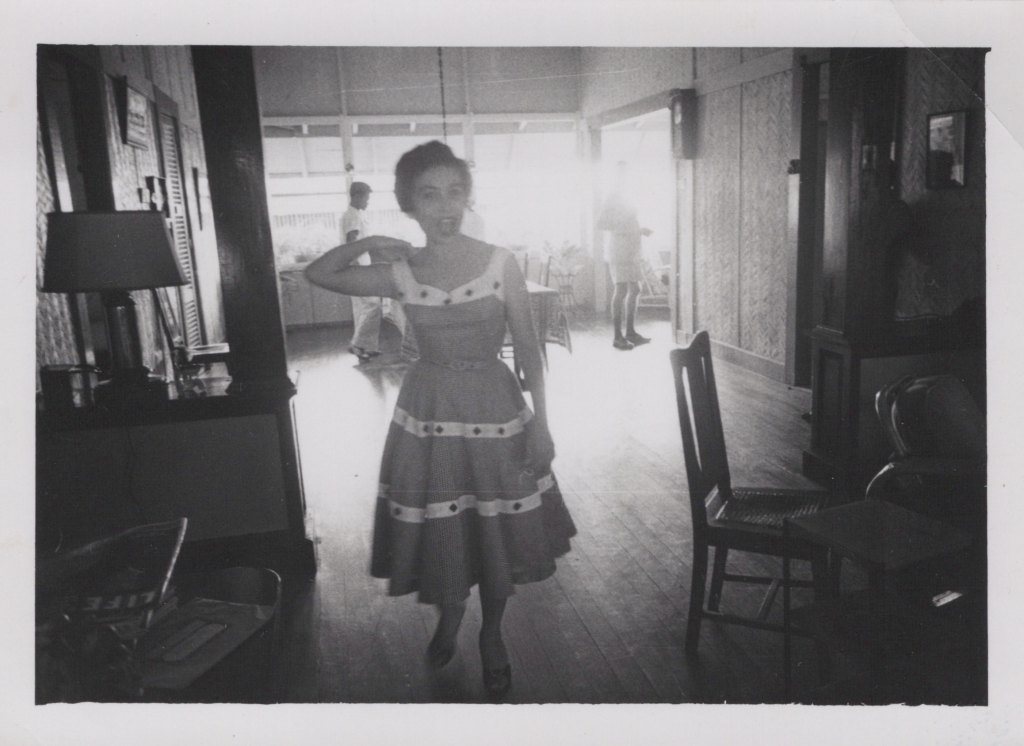
Sorting through the suitcase, memories flooded my mind of the stories my mom told me about her childhood. She was only 11 years old when the Japanese bombed the US airbases near her home in Floridablanca, Pampanga, in December 1941. The reverberations shook their home, toppling furniture and their icebox and leaving her with a wound on her cheek that would scar, only to become a lifelong reminder of the war.
Reliving mom’s harrowing memories
Fearing the approach of the Japanese soldiers, my mother and her family, like so many others, fled their home, seeking refuge at her aunt and uncle’s home in the Zambales mountains. In this mountainous jungle, she witnessed the horrors of the war, enduring the brutal occupation of the Japanese military.
Living through such perilous times, music was a lifeline for my mom. Her love of family, her faith and her love of music kept her from despair. Music was an integral part of her life, as she and her siblings regularly sang at home, gathered around her father’s piano, at church, at events and at her aunt and uncle’s. I loved her stories of my grandfather singing along in his powerful baritone.
When I was young, my mom shielded me from the harrowing details of the war stories. But not long after I found her suitcase, she, surprisingly, began recounting some of the terrible things she witnessed. I was stunned by her revelations and worried that she might be trapped in these memories.
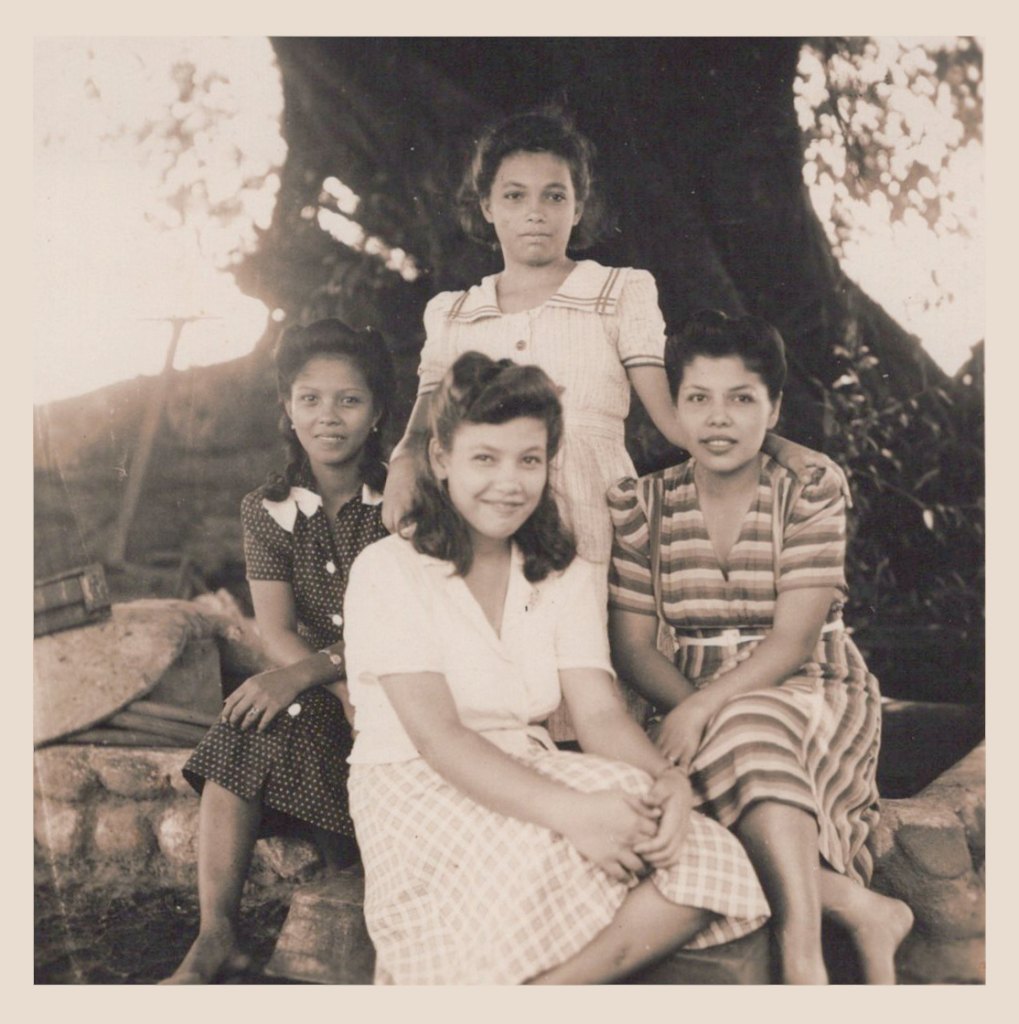
I was also incredulous, wondering if Alzheimer’s had twisted her memories. Curious to learn what really happened, I delved into research. I was horrified to discover these stories were true. I learned about the approximately 200,000 young women and girls throughout Asia, including young Filipinas, who were systematically taken captive and brutally forced into sexual slavery by the Japanese military. Tragically, so many of these Filipina women and girls carried their physical and emotional wounds throughout their lives in silence for fear of being made outcasts. They only began recounting their heartbreaking experiences as elderly women in the 1990s. Learning about these “comfort houses” throughout the Philippines, I was devastated and grieved that my own mother was a witness to something so horrific.
Along with the brutal treatment of young Filipinas, the Japanese military subjected the Filipino people to the regular round-ups of men and boys who were forced into labor. I also learned of the arrest, inhuman torture and execution without trial of civilians. Then, in February 1945, as fighting centered in Manila, Japanese Rear Admiral Sanji Iwabuchi ordered the approximately 20,000 men under his command to fight to the death. He and his men went on a month-long bloodthirsty rampage, committing barbarous atrocities upon the people of Manila, slaughtering an estimated 100,000 men, women, children and even infants in the massacre. At the war’s end, the city lay in ruins as one of the most devastated cities of WWII alongside Warsaw and Berlin.

The enduring power of music
The idea that my mom experienced such devastation shook me to the core. Reflecting on the stories she’d told me, along with my childhood memories, I realized something: Her experiences in the war were not commonly known by those she encountered here in America. And I understood why she often felt misunderstood.
After researching, I pored over my mom’s time capsule of a suitcase again. But this time, with newfound emotion, I sought evidence of anything that may have brought her hope and comfort during the war. Photos and other items in the suitcase reflected her great love for music.
I knew she had desperately wanted to follow in the footsteps of her Nonna, a former soprano with two Italian opera companies. Before the war, one of her older sisters left the Philippines to voice train with their Nonna in Italy. It was my mom’s lifelong dream to do the same. Unfortunately, the war changed everything. Yet the suitcase told the story of a young woman determined to pursue her love of music regardless of what that dream looked like.
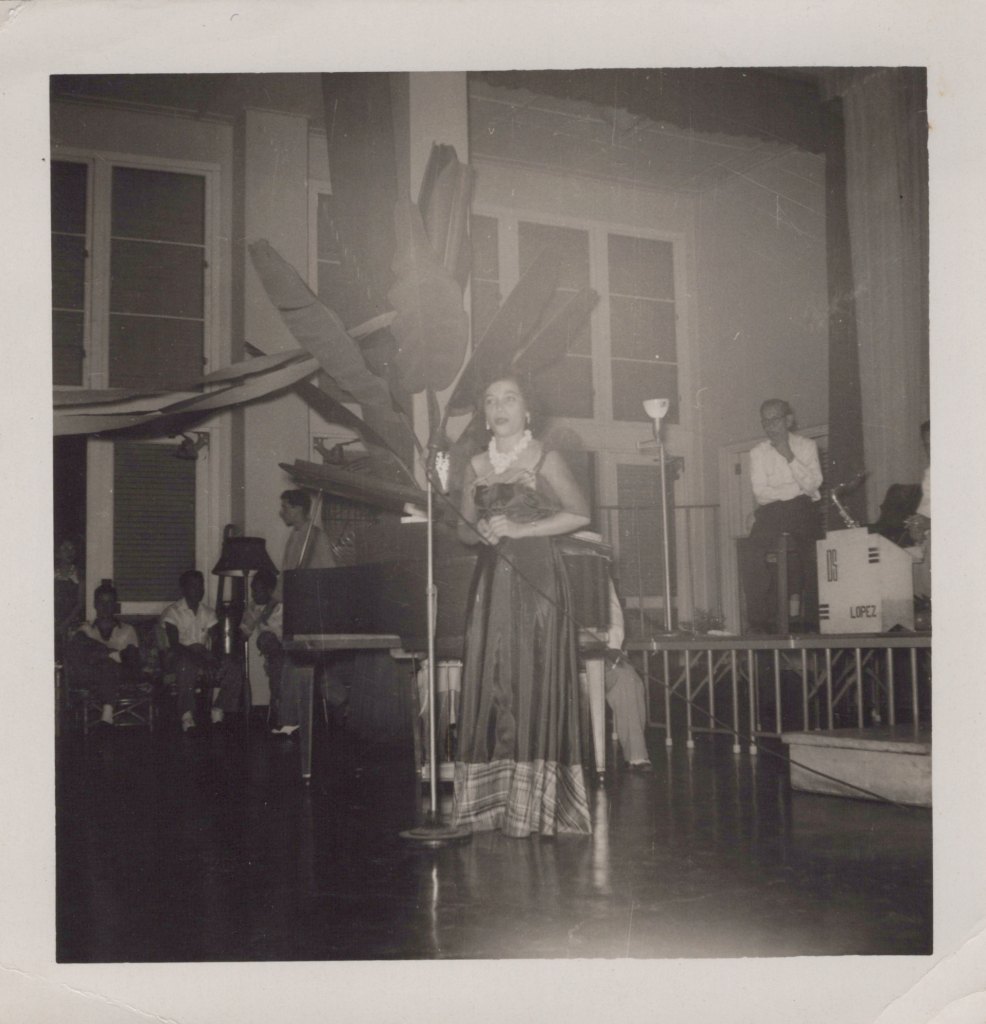
After coming to the US, she initially studied voice at Baylor University in Texas and eventually earned a degree in fine arts. Scattered alongside the letters and photos were postcards from listeners who’d enjoyed my mom’s performances on the KCEN Waco Sings television show and who wanted to hear more of her singing. I marveled at these—she’d never mentioned them—along with other memorabilia, including newspaper articles and photographs of her in costume from her student performances. My mom’s love of music was evident.
During my childhood, music filled our home. I loved listening to her stunningly rich voice as she rehearsed sacred arias like the “Panis Angelicus” and the “Ave Maria” to sing at mass. It brought her such joy.
‘My heart brimmed with gratitude’
Two years after I found the suitcase, my mom, Carmen, sadly, could no longer even converse. The idea that her gorgeous voice was silenced struck me as tragic and cruel as I drove to her care home. As I walked to the door, I spied a group of residents gathered in the living room.

I pushed open the dark wooden doors and entered just in time to hear my mom belting out “O mio babbino caro” as if on stage at the Metropolitan Opera House. Residents and care workers stood stock-still, listening in reverie. I stood alongside them, stunned and enthralled. I wiped my tears away and listened intently. My mom’s smile beamed after finishing the last note. Her stellar performance brought the applause of all who were listening.
My heart brimmed with gratitude. Neither the war nor this awful memory-stealing disease could break my mom’s lifelong love affair with music. Despite the difficulties, music—that touchstone in her life—was still with her. And her voice couldn’t be silenced.
Angela Shupe is the author of In the Light of the Sun, which was inspired by her mother’s, aunts’, and grandmother’s experiences during World War II in the Philippines and Italy. For more information and to order your copy of the book, visit www.angelamshupe.com.
Conversation
All comments are subject to our Community Guidelines. Woman's World does not endorse the opinions and views shared by our readers in our comment sections. Our comments section is a place where readers can engage in healthy, productive, lively, and respectful discussions. Offensive language, hate speech, personal attacks, and/or defamatory statements are not permitted. Advertising or spam is also prohibited.