Chuck Lorre Says His ‘Missteps’ Led Him to Gratitude—and TV Fame (Exclusive)
The 'Big Bang Theory' creator turns career clashes and hard-won gratitude into a candid memoir

Key Takeaways
- Chuck Lorre says every painful career detour helped lead him to the life he has now.
- The 'Big Bang Theory' creator credits early clashes with shaping 'Dharma & Greg’s joyful lead.
- Lorre says gratitude—not constant happiness—is the lesson he’s trying to choose each day.
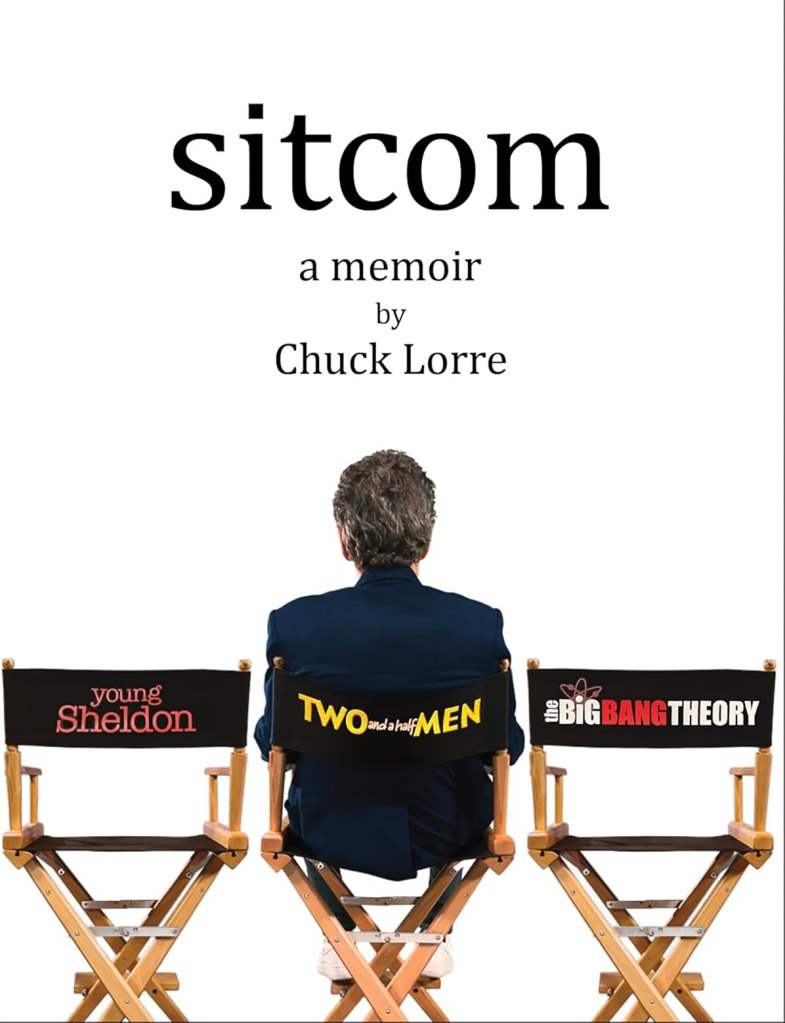
For more than three decades, Chuck Lorre has been one of the dominant forces in television comedy, creating such massive hits as The Big Bang Theory, Two and a Half Men, Mom, Young Sheldon and Dharma & Greg. Now, after spending all those years telling other people’s stories, he’s finally decided to tell his own. The result is titled, appropriately enough, Sitcom (arriving October 13 from Dey Street Books), a candid look back at a life and career filled with extraordinary successes, painful failures, difficult relationships and more than a few lessons learned the hard way.
What Chuck Lorre reveals in his new memoir
As Lorre explains, he initially resisted the idea of writing a memoir at all, until putting the first page on paper helped him recognize something about the road he’d traveled: even the mistakes and experiences he might once have wished away played a role in getting him where he is today.
That idea runs throughout Woman’s World’s exclusive conversation with Lorre, whether he’s reflecting on his turbulent early experiences, the unlikely evolution of The Big Bang Theory into an expanding television universe, taking an unexpected trip into the multiverse with Stuart Fails to Save the Universe or adjusting to an industry that has shifted from traditional network television and syndication to streaming.
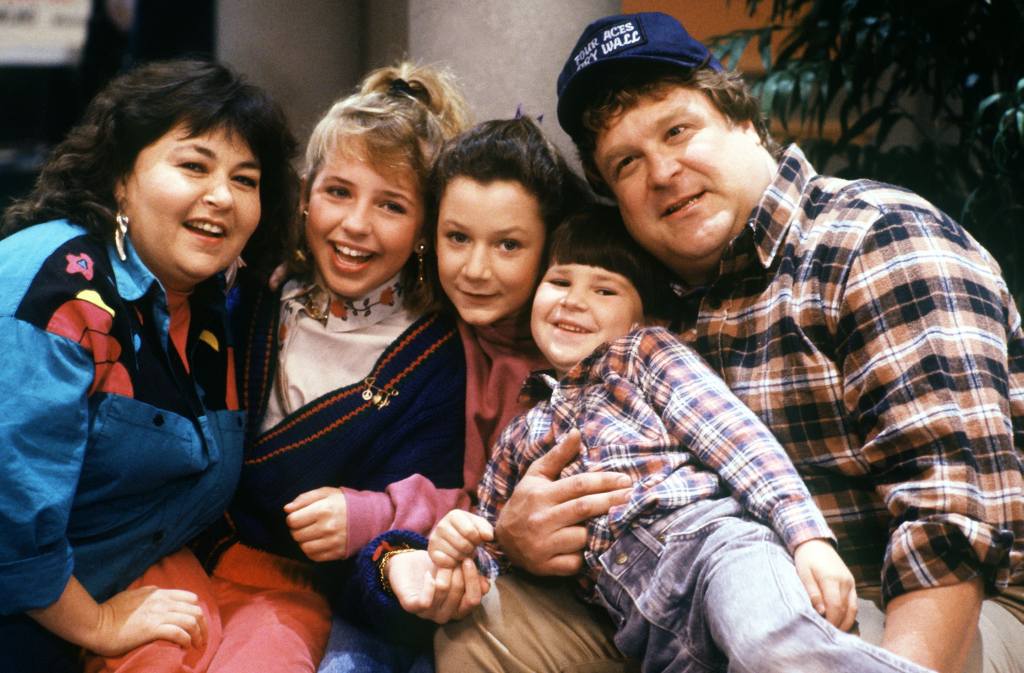
Born Charles Michael Levine on October 18, 1952, in Bethpage, New York, Lorre initially pursued a career in music, working as a guitarist and songwriter before making the transition to television writing. His early credits included animated series and the sitcom My Two Dads, but his breakthrough came when he joined the writing staff of Roseanne in 1990. Starring comedian Roseanne Barr as the outspoken matriarch of a working-class Illinois family, the ABC sitcom was both a ratings powerhouse and a groundbreaking departure from traditional television family comedies.
How ‘Roseanne,’ ‘Grace Under Fire’ and ‘Cybill’ shaped Chuck Lorre
In an October 2026 appearance on Jesse Tyler Ferguson’s Dinner’s on Me podcast, Lorre revisited his experience on Roseanne, claiming that Barr fundamentally resented having other people write material for her. Having established herself as a stand-up comedian who created her own routines, she reportedly struggled with the collaborative nature of scripted television. Lorre described an atmosphere of hostility toward the writers, characterizing Barr’s behavior as malicious. He recalled working 60- and 70-hour weeks, determined to endure the situation because he was supporting his family and feared returning to poverty. Ultimately, his tenure ended after approximately two seasons. Barr has offered her own sharply critical assessment of Lorre, acknowledging that she fired him and accusing him of producing scripts that lacked heart.
Despite that experience, Lorre emerged with a valuable understanding of how to build a successful sitcom around a strong, outspoken female comedian. His next major project was Grace Under Fire, which premiered on ABC in September 1993 and starred stand-up performer Brett Butler as Grace Kelly, a divorced, recovering alcoholic raising three children while working a blue-collar job. The series tackled such subjects as domestic abuse, addiction and economic hardship while maintaining the rhythms of a traditional situation comedy. It was an immediate success, becoming one of television’s highest-rated new programs. Unfortunately, Lorre says he soon found himself in another battle with his leading lady.
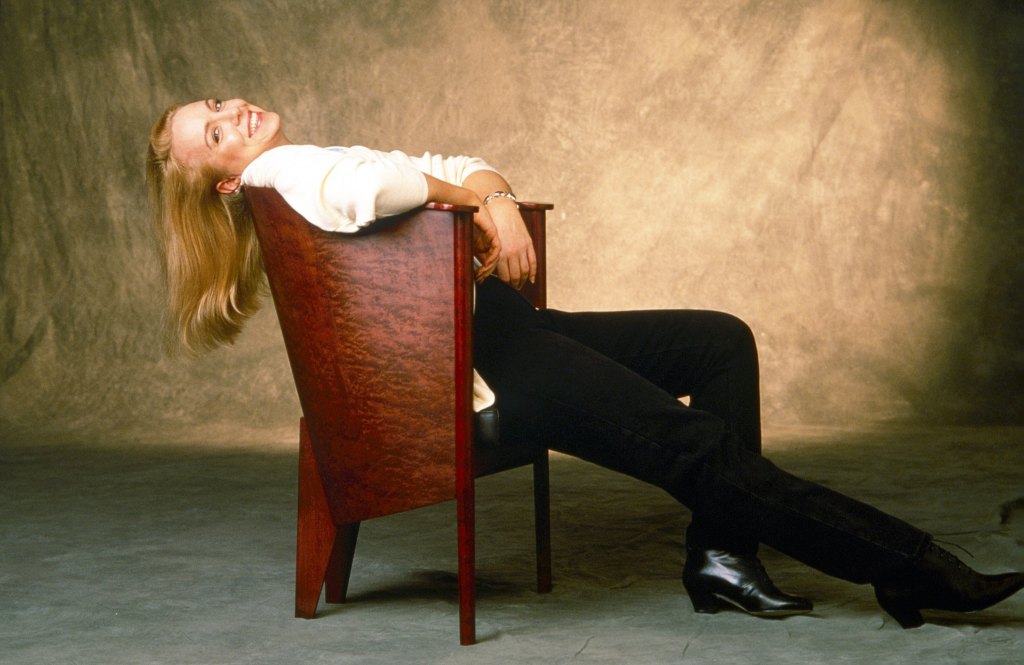
Lorre says Butler wanted greater creative control over the portrayal of Grace and frequently challenged the scripts, objecting to jokes and storylines she considered inappropriate for the character. Disagreements ranged from the show’s reliance on certain types of humor to proposed romantic relationships that Butler believed lacked credibility. By the end of the first season, the relationship between star and creator had deteriorated so badly that Lorre requested permission to leave. In a 1997 interview with the Los Angeles Times, he explained that nothing he did seemed capable of satisfying Butler, even though the program was an enormous hit. He subsequently retained a consulting credit but relinquished day-to-day control. Butler later acknowledged that her struggles with prescription drug addiction contributed to her increasingly difficult behavior and undermined her credibility with colleagues. Grace Under Fire continued without Lorre, but behind-the-scenes turmoil, frequent changes in producers and Butler’s personal difficulties ultimately contributed to its cancellation in 1998.
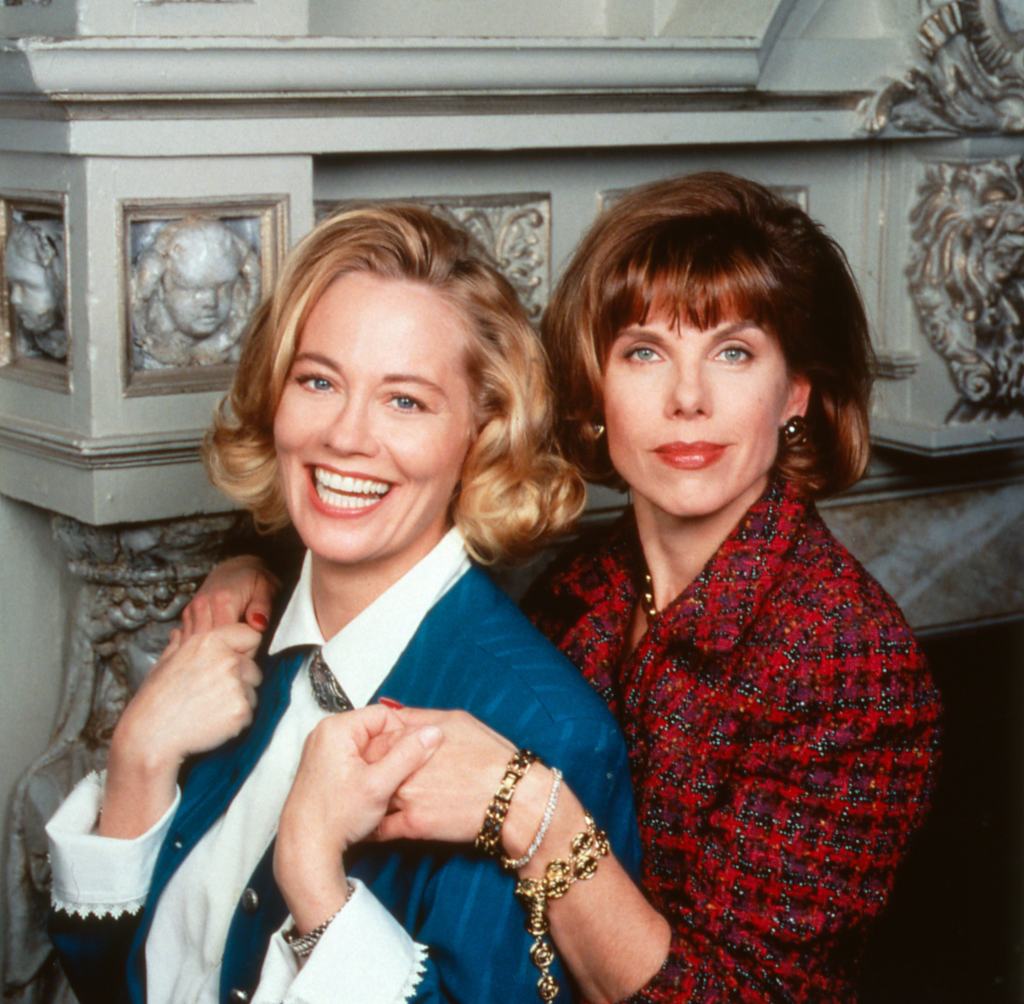
Lorre’s next opportunity came with Cybill, which premiered on CBS in January 1995. The series starred Cybill Shepherd as Cybill Sheridan, a middle-aged actress struggling to maintain a career in Hollywood while navigating relationships with her ex-husbands, daughters and wealthy best friend, Maryann Thorpe, played by Christine Baranski. The comedy received considerable critical acclaim, particularly for Baranski’s performance, which earned her an Emmy Award. However, the show’s success created another unexpected problem for Lorre: Shepherd reportedly became unhappy with the amount of attention and comedic material being devoted to Baranski’s character.
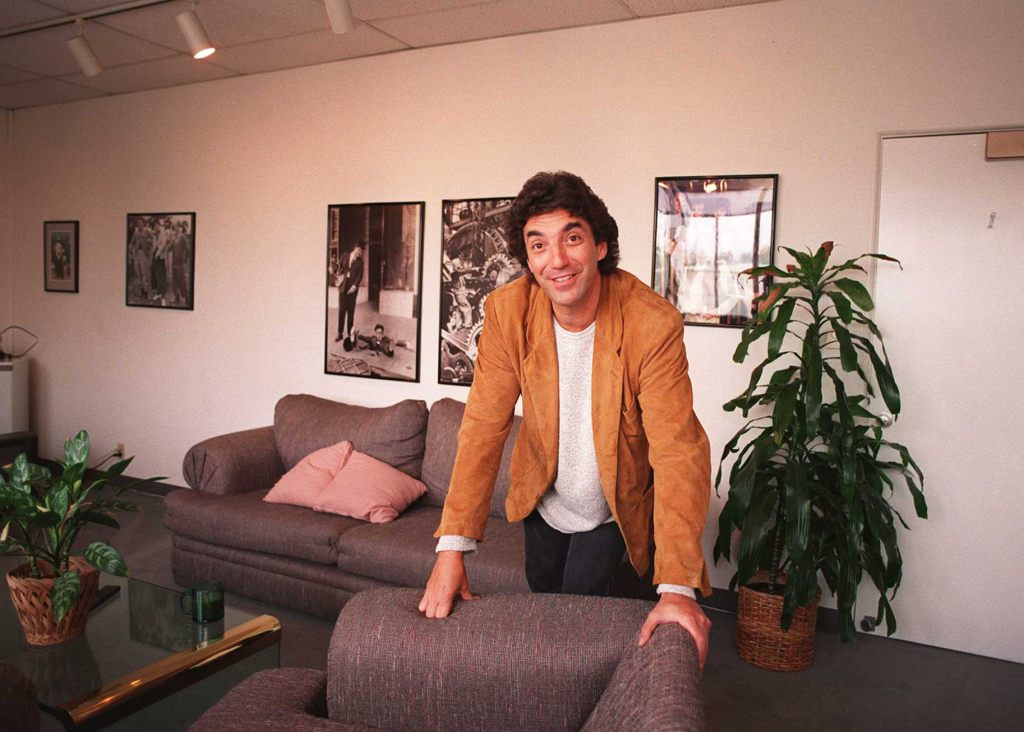
The resulting conflict was fundamentally about the creative direction of the series and who should occupy its center. Lorre maintained that his intention had always been to make Shepherd the star, while recognizing that Baranski’s Maryann was an exceptionally effective supporting character. Shepherd saw things differently. In a 1996 interview, she explained that what Lorre wanted to do with the show was not what she wanted, making his departure necessary. Unlike his experience with Butler, when he had asked to be released from his responsibilities, Lorre was fired from Cybill. Years later, discussing the situation with The New Yorker, he attributed the disagreement to Shepherd’s dissatisfaction with the distribution of the comedy between the two principal characters. Shepherd, for her part, remained unapologetic about the decision. The series continued until 1998, but Lorre had once again lost control of a successful program he had created.
Why Chuck Lorre created ‘Dharma & Greg’ after early career clashes
Collectively, these experiences represent Lorre’s personal baptism by fire, the resulting flames of which could have consumed a lesser creative person, but instead it somehow (miraculously might be a better word) led to the series Dharma & Greg, which turned things around completely for Lorre. Oh, he’d still be burned on occasion, and would have to fight against his own self-destructive impulses, but this was the pivoting point that would result in everything that’s followed—which Woman’s World discusses with him in this exclusive interview.
WOMAN’S WORLD: What made you want to put yourself out there like this? You’re obviously successful enough that you don’t have to do a memoir, but you chose to.
LORRE: You know what? I was getting a lot of encouragement from friends who’ve been listening to me tell these silly stories about some of the stuff I’ve been through on this journey, and they were encouraging me to write it down. And for several years, I was uninterested in the idea. But maybe it’s about getting older, wanting to get some perspective on this life that seems now to have more of it behind me than in front of me, for sure. And maybe an opportunity that my children can have a little bit of insight as to the road that led to this crazy place. I really resisted doing this for the longest time, but once I wrote the first page of the book, which is, in my defense, telling the story of how I was always trying to get acceptance by accomplishing something, not by who you are, but what you do. It’s the misbegotten theme of my life or young life, and once I wrote that page, it was a little bit of catharsis in recognizing where I went off the rails.
WW: Because I assume that’s something you don’t spend a lot of time thinking about, what kind of wake-up call or awareness does that bring to you when you’re actually sitting down and doing it?
LORRE: Well, one of the first things that happens is you recognize, or I did, that I should just do this in the first person here, that every one of those missteps, every one of those terrible choices, those naive, arrogant choices, led me to where I am now and I’m very, very grateful for where I am now. It’s astonishing to me how things turned out. So looking backwards wasn’t a matter of feeling regret as much as gratitude that I had to make all those mistakes to get to where I am. Clearly, in some of the more horrible events, had they not happened, I don’t know if we’re having this conversation.
WW: People say that all the time, like, “Oh, if I could go back in time, I would fix this or I would change this.” But it would be horrifying to meet your younger self when you were dating your wife or something. What if you said something to yourself that threw everything off and suddenly your entire life changes? It did have to go the way it went.
LORRE: And acceptance of those missteps is important. There’s a little letting go and acknowledging, “Okay, that happened.” The other aspect of this memoir was I started out early on deciding if I’m going to do it, I’m going to tell the truth as I know it. I’m not going to sugarcoat it. I’m not going to avoid the ugly stuff that is my responsibility or someone else’s. There’s no reason to do this and paper it over.
WW: You’ve talked about coming to peace with certain things in your life. In the book, you describe how your father begged you not to leave, but you left anyway, something you still regret. Did writing about that experience and acknowledging what happened bring you any sense of peace?
LORRE: Well, this is turning into a therapy session. That regret remains, and I think I even said that in the book. There’s a great deal of catharsis in telling about this journey, but there is also a regret. That’s still a wound, but certainly better to write about it than not.
What Chuck Lorre says about gratitude, regret and his career
WW: When you look back at this amazing career and your dealings with people like Roseanne, Cybill Shepherd and Brett Butler, do you view those as “nightmare situations” or sort of a training ground that you had to go through to get where you are?
LORRE: Again, the missteps, the clash of personalities and whatnot, it all got used. One of the things I set out to do when I started writing this thing was to try and find ways to make clear that the early experiences were integral to what came later. That wonderful show that I loved doing so much back in the ’90s, Dharma & Greg, was predicated on my thoughts after having been through Roseanne and Brett Butler and Cybill Shepherd.
Actually, it was a conscious experiment to see if I could create a lead female character who was life-affirming and loving and nurturing and joyful. A character who was homeschooled by hippies and was not traumatized by public school. That was the invention of Dharma Finkelstein and as it turned out, she could have been from Mars because she was so strange.
This was a character who had walked down the street with Greg and put money in people’s parking meters so they don’t get a ticket. People she doesn’t know, because it just seemed like the right thing to do. And I don’t get to that character ever had I not been through female leads that were strident, that were angry, that had their fists up. Admittedly, that’s a very funny approach to comedy—Roseanne’s approach to comedy inarguably is brilliant, but it’s dark. There’s an anger in it. But if you pull all that anger out, you wind up with a character like Dharma Finkelstein, a character I loved. And had that not worked, I don’t go to Warner Brothers. And if I don’t go to Warner Brothers, I don’t do Two and a Half Men. It’s a domino effect how these things worked out.
How ‘The Big Bang Theory’ became a TV universe
WW: And to go from, you have Two and a Half Men and Mom to…
LORRE: Big Bang Theory.
WW: Yes, The Big Bang Theory. Not since the heyday of All in the Family and Happy Days has there been this many spinoffs shooting off of one sitcom. Are you shocked at the afterlife in the form of these three very distinct shows?
LORRE: I don’t think I’d use the word shocked, but I certainly would use the word grateful. And that began with Young Sheldon. We had done so much material over the years on The Big Bang Theory about Sheldon’s childhood, and we’d met his mother, played by Laurie Metcalf, a deeply religious woman who recognized she had a special son and how difficult it was for her to be a parent to this remarkable child. It seemed like a very natural extension to dive into that family. That family was the story of Young Sheldon, more so than young Sheldon himself. His older brother and his twin sister—how they dealt with having a sibling who was a once-in-a-generation mind—how does it affect them? That became that series. I guess the word spinoff kind of denigrates the whole idea of it, but it was a really good idea to investigate what made this young man who he was. What are the component parts that ultimately led to a Nobel Prize-winning scientist in the final episode of The Big Bang Theory?
WW: It was so interesting to explore George the father, how he had to wrestle with having this son who couldn’t be further apart from him.
LORRE: He was this football coach in East Texas, and we got to do a little bit of repair work on the legacy of George Cooper, which I thought was wonderful that we got to do that. His son misunderstood him, not an uncommon phenomenon for a son. We got to recognize that in the series.
WW: Did Georgie & Mandy’s First Marriage feel like a natural spinoff?
LORRE: Really easy. That began with Steve Malero and Steve Holland—we all go back to Big Bang. We’ve been working together for about 20 years, 12 years of The Big Bang Theory and seven years on Young Sheldon. And when we recognized that we were bringing Young Sheldon to an end, because he goes off to college and after seven seasons, that was the appropriate way to end this thing, with him leaving to go to college at the age of 14, which is his story.
They walked into my office one day and said, “We have an idea”—it was a beautiful, beautiful idea, which was we had invented this bizarrely wonderful relationship between Georgie and Mandy, an enormous age gap between them, like a 12-year age gap between them. Early on when we were writing about that romance, I think it was me—I hate taking credit for this—I said, “You really want to make this difficult and perhaps worth pursuing?” Yes, he’s dating a woman and lying about his age, a woman who’s 10, 12 years older than he is. Let’s get her pregnant and start a family. And then we stumbled into this wonderful ensemble with her parents, her brother and the brilliant Zoe Perry as the mother-in-law. It became an immediate coherent ensemble that was fun to write for and really quite enjoyable to put in front of an audience every week, because the stories were small family stories and they played beautifully in that, I guess, now somewhat maligned genre of four cameras in front of an audience. But it’s still a great way to tell a story on a couch or in a kitchen.
WW: And it’s amazing how the cast—they’re actors and professionals—could go from a single-camera, filmed show like Young Sheldon and shift over to four cameras and a studio audience for Georgie and Mandie so flawlessly.
LORRE: Well, Montana made the biggest leap. He’d never done that before, but suddenly he’s a star of a four-camera show where for seven years he was George Jr. on Young Sheldon. He had the biggest journey to step in front of a live audience, and he nailed it on day one. It was an amazing thing to see.
WW: Then we get to Stuart Fails to Save the Universe, and we’re dealing with the multiverse. What is your feeling about that sort of seismic shift?
LORRE: Around 12 years ago, when we knew we were bringing Big Bang to a close, when we all agreed that the 12th season would be the final season, I had this crazy idea that Stuart had a portal in his comic book store that led to other dimensions, and I presented it to some folks at Warner Brothers and they were not terribly interested.
WW: What a shock.
LORRE: They would’ve been over the moon had I wanted to spin off one of the principal players in the series, Leonard or Penny, but I didn’t. I thought we told that story and we told it well, and I’ve always been a big fan of Kevin Sussman. There was no real opportunity back then to do it, but then the appetite for anything connected with The Big Bang Theory only grew over time, I guess. And so when I pitched it again to Warner Brothers and HBO Max, they said yes, though they were deeply dubious.
As well, they should be. I want to spin off the supporting players in a multiverse comedy adventure series. They had every reason to be frightened and concerned, but it worked out great. It was a blast to do and it was exactly what I wanted to do, which was to take some chances and do things I’d never done before. I’d never really gotten to work with any of the technology that’s available for, whatever, 30, 35 years.
My form of storytelling is two people sit on a couch, drink coffee and talk. That’s what I’ve been doing for 35 years, and jumping from universe to universe and going through these high-concept genre environments, that was something I’d never gotten a chance to do. We just recently, a couple of days ago, started writing Season 2.
WW: That’s amazing, isn’t it?
LORRE: I was just absolutely delighted, because, again, it’s an opportunity to stretch and push the envelope, which at this point in my career seems like the right thing to do. For better or worse, they’re giving me the credit to take those chances, and while there might be concern, I have a little bit of leeway as a result of the success in the past. So take that leeway and go for it.
WW: The only complaint I have about Stuart is episodes that run 16 minutes or 19 minutes.
LORRE: What’s up with that is we told the story that we wanted to tell. We thought it was good and fulfilling and funny, and we’d had discussions of, Should we pad this and bring it up to a more typical length, but the ultimate decision was, It feels good this way. This story works exactly the way it is. There’s no grid, like a network grid, that we have to fit into. Had it been on CBS, it has to be 20, 21, 22 minutes long. It has to be. It can’t be longer. In the streaming universe, there’s no grid. The show is what the show is, and so it seemed like the better choice was to put the show on that we think is worth telling and is funny, because goddamn it, it’s got to be funny. Otherwise, what are we doing? You want to be stressed out? There’s a lot of stuff you can watch on streaming platforms that will stress you out. This shouldn’t be one of them. That said, as we’re working on Season 2, the opening episode might be 45 minutes long.
WW: My wife and I still watch The Big Bang Theory marathons on weekends, and even after all these years, we’re laughing at the same episodes. That’s one of the remarkable things about traditional television syndication: those shows become part of people’s lives in a way that lasts for decades. But now you’ve also had tremendous success with streaming, with The Kominsky Method on Netflix and Stuart Fails to Save the Universe on HBO Max. Given how much the television landscape has changed, do you miss the traditional syndication model, where audiences could discover and revisit shows almost constantly, or do you prefer the creative opportunities that streaming offers?
LORRE: You know what? Again, I’m going to go back to the tried and true adjective for how I feel about this, which is gratitude. I don’t know that I would’ve had an opportunity to make The Kominsky Method had there been no streaming platforms. I don’t see a lot of good coming from me walking into one of the legacy networks and saying, “I want to do a show about 75-year-old men and they’re dealing with their prostate issues.”
That environment was, while it was wonderful for me, and I’m, again, grateful for it, they were always chasing that younger demographic. That 18 to 49 obsession amongst the networks because of the advertising demand for younger viewers would’ve precluded me getting to do The Kominsky Method at all anywhere. So then I got to do three seasons of it, and I got to work with heroes like Michael Douglas, Alan Arkin and Kathleen Turner; Danny DeVito did a couple… it was just an embarrassment of riches. I don’t know that that happens elsewhere, had there been no opportunities like we had at Netflix. So, I’m not looking at it as a problem that the syndication thing has collapsed. I’m really grateful I came along when I did. It worked out really well. That said, this new environment has opportunity as well, but it’s just a different opportunity. It may not be that gazillion dollars that can be accrued from selling a hundred episodes into syndication, but you can get to make extraordinary shows and you can list them all, the shows that we love on streaming now that would not exist otherwise.
WW: You’ve done the gazillion dollar thing, so this is okay.
LORRE: Unquestionably, I am the luckiest motherf***er in town.
WW: When you look back at this journey overall, just what is your feeling having put it down on paper now?
LORRE: I hate to be redundant because people change the channel if the show is redundant.

WW: We’re pretty close to the end; the readers will probably stick with it.
LORRE: I’ve got to go back to gratitude. People say, “How are you doing? Are you happy?” Happiness comes and goes, you know what I mean? You can wake up one morning and be in a miserable mood, and the next morning it’s all sunshine and roses. Gratitude is something you can choose. Happiness happens to you. You win the lottery or you have a terrific bowel movement. Whatever it is, there’s happiness.
But gratitude is a choice I can make, and I forget to make it all the time. I fall down, I slide down the slope of resentment and aggravation, being short-tempered and aggravated that things aren’t going the way I want them to go. I wish I were in a perpetual state of awareness, but I am not. More often than not, the perpetual state is confusion, bafflement, anger, resentment, fear, grief… whatever. But that can be circumvented by remembering to go, “Holy sh**, look at this life you’ve had. Shut up and say thank you to whatever God you think is up there.”
Conversation
All comments are subject to our Community Guidelines. Woman's World does not endorse the opinions and views shared by our readers in our comment sections. Our comments section is a place where readers can engage in healthy, productive, lively, and respectful discussions. Offensive language, hate speech, personal attacks, and/or defamatory statements are not permitted. Advertising or spam is also prohibited.