‘Christmas Always Brings a Little Hope’: Debbie Macomber on Her New Book and the Real Reason for the Season (Exclusive)
We caught up with the "Queen of Christmas Novels" to discuss her latest book and how stories provide escapes when we need them most

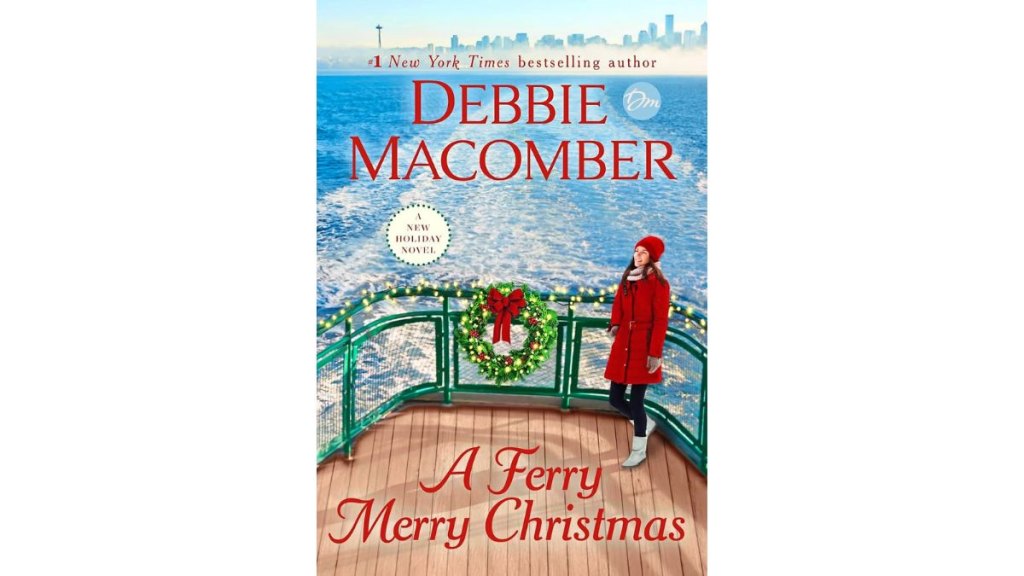
From baking to decking the halls and knitting, Debbie Macomber, 77, celebrates every Christmas season with a flurry of fun traditions. One of her favorites? Writing an annual holiday novel. “This is the 27th year in a row that I’ve released a Christmas book,” says Debbie with a smile during a Zoom call from her home in the Puget Sound in Port Orchard, Washington. Her newest novel, A Ferry Merry Christmas, tells the story of a group of grouchy ferry passengers brought together in the best of ways. “The whole premise of the story is about people stuck on a ferry boat and everyone is so upset,” she says. “Then something happens that ends up changing everything—sometimes we all need a reminder about the true joys and real reasons for the holiday season.”
Themes of connection are a constant throughout Debbie’s seasonal books. “During the holidays, some people may feel lonely and my wish is for these stories to offer a comfortable escape—Christmas always brings a little hope and I like to think my books do too.” Read on for more on her newest feel-good story, her inspiring author journey and more.

Woman’s World: Debbie, thank you so much for talking with us! Can you tell us what the premise of A Ferry Merry Christmas means to you?
Debbie: “At its heart, it’s a story about how things can change when you least expect it. It starts out with this disgruntled group of people and turns into sheer joy and excitement. And really, that’s what happens with so many of us each year. We get so caught up in the craziness of Christmas, and then it just takes one tiny moment—a child opening a gift, a hug from a grandma, a smile from a neighbor—to suddenly turn everything around and remind us what the holiday season is all about.”
WW: In A Ferry Merry Christmas, the plot follows the Bond siblings. Was writing the brother-sister dynamic fun for you?
Debbie: “Yes! I have one brother, so the sibling personalities and that slight rivalry is a bit autobiographical. I think that comes through here with Avery and Reed. It’s a hard holiday season for both of them. This is the first year without their beloved grandmother and Avery’s gone through this kind of messy relationship that left her so disappointed. Reed is looking to protect her, so he’s trying to find the perfect man for her. But she’s like, ‘Back off! Let me do this on my own.’ It’s that classic situation: an older brother looking out for his younger sister; that was fun and familiar to write about.”
WW: Like you said, they’re both facing grief. What advice do you have for people who may be in a similar situation this holiday season?
Debbie: “That’s one of the reasons I write these Christmas books, so that somebody can get caught up in a story. Not because they want to forget, but because they just want a moment of peace—something to take their mind off what they’re missing. It’s very hard. We lost a son, and I know what that’s like. That first Christmas was especially difficult. Losing somebody and then facing the holiday—in so many ways, it’s like you’re actually feeling that loss all over again. But I think that’s the simple message: You make the best of it. You still love, you still miss, you always will, but you have to try to move forward and enjoy the moment and the season with friends and family. It’s so difficult but over time it’s also healing.”
WW: Thank you for sharing that with us. You mentioned your books providing an escape. Do readers ever say your stories helped them through a hard time?
Debbie: “I was just at a book event in Oklahoma and met this wonderful man—he was such a sweetheart. He’d been married for 65 years and his wife had just passed. I was so touched. I mean, obviously, there was this big hole in his heart, but he was there, he showed up—he wanted to support the group and the library he loved so much. He was such a big promoter of it. And you know, he was moving forward despite the pain. He said, ‘I miss her, but I’m here.’ That meant a lot to me.”
WW: We’d love to rewind a bit and hear about your journey as an author. Was this career always a dream of yours?
Debbie: “Well, I’ve always, always, always wanted to write. I started my first book when I was about 13 years old. It was about triplets named Faith, Hope and Charity. Kind of the precursor to my characters in my book, Shirley, Goodness and Mercy. But I never did well in school. I’m dyslexic; I struggled. I married young because college wasn’t an option for me. Still, the dream of writing stayed with me. When you’ve had a negative school experience, it’s so easy to push your dreams into the future. Then something happened that changed everything. My cousin David got leukemia, and I went to visit him in the hospital but couldn’t find his room, so I asked a doctor for directions. He said, ‘Very easy. Go down the corridor, all the way to the end and through the door marked Absolutely No Admittance.’
And that’s what it’s like with big dreams—you just have to be willing to walk through that door.”
WW: That’s so inspiring. Did you sell your first manuscript or story next?
Debbie: “Sort of. After David passed, it was as if God were saying, ‘If you’re ever going to be a writer, don’t wait. The time is now.’ So that’s when I started—with a rented typewriter. My husband was working in construction and out of work at the time, but one night he came home and said, ‘You really need to do it. Go for the dream.’ He sacrificed so I could write. The first thing I ever sold was a short story about our youngest son in the church Christmas play. All he had to do was step forward, recite a Bible verse and step back, which he did perfectly, except he forgot the reference. He looked right at me, terrified, and I whispered, ‘Luke.’ He straightened his shoulders and confidently said, ‘Luke Skywalker.’ I sold that story for $5. It was a small thing, but it was validation—and it gave me faith to keep on going.”

WW: Can you offer any guidance for women who might be at a similar crossroads, wanting to try something new or follow a dream amid self-doubt?
Debbie: “I was a storyteller who had to learn to be an author: to spell, to write, to believe I could. After being publicly critiqued by an editor at a writer’s conference, I went home discouraged. My husband was in Alaska waiting for pipeline work, unemployed. The kids and I were living on $150 a week. I even tried to get a refund for the conference, but they said no. So I went to a children’s writing workshop. Everything I’d sold so far had been articles about my kids, so I thought maybe that’s what I was meant to do. The editor there said, ‘I’m not buying.’ The agent said, ‘I’m not taking new clients.’ But the author said something I’ll never forget: ‘Your book has a home. Your job is to find it.’
“That spark of hope sent me home to write a new query letter. I mailed it off and waited. No reply. So I decided to mail it to a second publisher. I loaded the kids into the station wagon, drove to the post office and spent $10—precious dollars we couldn’t spare—to mail it. When I got home, there was a letter in the mailbox: a response to my first query. Scrawled across it in bold marker were the words, ‘Do not mail us your manuscript. We are not buying at this time.’ I felt sick. But three weeks later, New York called and bought the book. If I had waited even half an hour, I never would’ve mailed the second query. Divine timing. Then, every one of the four books I’d written went on to sell—including the one the editor mocked in front of 300 people. That very story, rewritten but not changed in heart, later made The New York Times list in a reissue. My advice is to follow your heart because sometimes nos eventually lead to a yes.”
WW: What do you hope this book, and all your holiday books, bring to readers?

Debbie: “People become emotionally invested in stories, so I want to make sure my readers feel good when they finish a book. My books aren’t going to change the world—I’m never going to write the great American novel—but I am going to help someone through a lonely night. I’m going to give a new mother a moment of escape so she can relax for a little while. And that’s what means the most to me. Books offer comfort. They’re immersive, but they’re also a gentle reminder of your own life, your memories and what really matters.”
To order your copy of A Ferry Merry Christmas, visit DebbieMacomber.com.
Conversation
All comments are subject to our Community Guidelines. Woman's World does not endorse the opinions and views shared by our readers in our comment sections. Our comments section is a place where readers can engage in healthy, productive, lively, and respectful discussions. Offensive language, hate speech, personal attacks, and/or defamatory statements are not permitted. Advertising or spam is also prohibited.