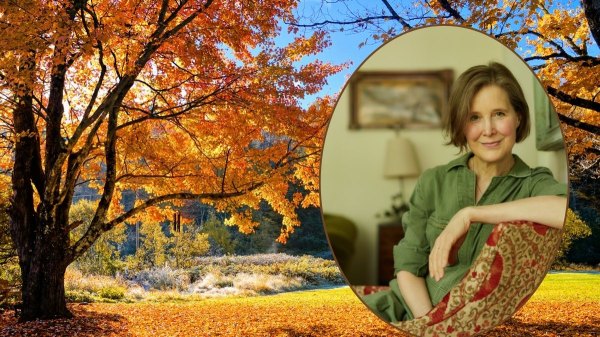
Debbie Gibson, 55, on Living Midlife on Her Terms: ‘I’m in a True Second Act Right Now’ (EXCLUSIVE)
From teen pop queen to veteran hitmaker, the 'Only in My Dreams' singer shares her story in a new memoir

Debbie Gibson became a teen icon thanks to her impressive songwriting skills and adorably perky stage presence, and when her song “Foolish Beat” topped the Billboard Hot 100 in 1988, she earned the title of the youngest female artist to write, produce and perform her own No. 1 hit—a record she holds to this day.
Gibson was just 16 when she recorded her 1987 debut album, Out of the Blue, for which she was the sole songwriter, and tracks like “Only in My Dreams” and “Shake Your Love” remain potent as ever nearly 40 years later. Now 55 (and still a fan of classic ’80s styles like shoulder pads and scrunchies), Gibson has continued to perform and released her most recent album in 2022. Her newest project is a memoir, titled Eternally Electric, after her 1989 hit “Electric Youth,” and given her status as a pop trailblazer who’s been in the spotlight since high school, it’s quite the revealing read.
With her memoir hot off the presses, Debbie Gibson sat down with Woman’s World to talk about her creative process and her long journey from ’80s teen queen to music industry veteran.

Woman’s World: What inspired you to write your memoir, and why did you decide to write it now?
Debbie Gibson: This is the third time that I’ve pitched a memoir. When my mom was alive, she and I did two other rounds of pitching publishers at various points in my career. You always think you have something to say, especially when you’re younger, but now that I’ve lived so much more life, I’ve realized that this is the right time. Like so many members of my audience, I feel like I’m in a true second act right now. People are embracing agelessness and embarking on new things as they get older, and that idea of being put out to pasture has become dated for women.
I feel like it’s a great time to speak to women who grew up with my music. My early audience saw me living a very normal life outside of show business, so we all related to one another, and now that’s happening again. I went through so many different phases in my life and career, and I’m in a place right now where I have the reins. I’m designing my life the way I want it to be, and it’s very empowering. It’s a great perspective to speak from. It’s not that I have it all figured out, but I think I have a strong sense of myself and a perspective that’s come from experience and all the challenges I’ve been through. I’m not just saying, “Rah-rah, you can do it!”

WW: What was your experience of writing Eternally Electric like?
DG: I was in such a vortex writing it. The thing that I didn’t anticipate was that there’s so much you have to leave out in order to expound on certain things. Originally, I was going to do something that was more like life lessons and reflecting back on certain experiences, but I let the music lead the way, and in the process, I realized the book wanted to be a really classy, straightforward memoir. It felt weird, because I was like, “I’m not 80! I’m just in my 50s.” It was a wild process, and I started embracing the fact that on Tuesday, you might tell a story differently than you’re going to on Friday.
The most important part of it was making sure my voice was always authentic. I knew when I read the audiobook that I had accomplished that, because the engineer said he could tell that I wrote my own book, and that’s not true for every celebrity memoir. I was really proud of that. I love words and alliteration and finding that perfectly concise sentence that encapsulates something, but I didn’t want to get too heady about things. I wanted to keep it natural and organic.

WW: Given the fact that you became famous at such a young age, how did you manage to stay grounded?
DG: Having a commitment to my craft and not seeing fame as the endgame was a big part of that. I always put being a good human being before being a star, and so much of it has to do with how I was raised. I’m from this big Italian family, and if anybody ever got on their high horse for any reason, there was always somebody there to remind you of who you really were. My sisters weren’t impressed with me. They celebrated my success, but they didn’t ever feel less-than and they didn’t put me on a pedestal. My focus was always on the art, and I think that kept me humble. I started in community theater and talent shows on Long Island and worked my way up. It was really grassroots, and there was very much a feeling back then of “Hometown girl makes good.”
In the early stages of my career, when I was meeting my fans, I was like, “Oh, my God, these are people my age.” I always thought of people as people and didn’t want to think of them feeding my ego. I think my mom really instilled that in me. She always took time with people and asked them questions. She had a natural curiosity for people. That quality has kept me grounded, and as a songwriter, I’m channeling experiences and I like to see the connectedness of people, rather than just seeing the differences.

WW: What were the biggest challenges you faced as a teen girl in the music industry?
DG: Growing up at my own pace was a biggie, and that’s the biggest thing for any young girl in the music industry. I wanted to hang on to my youth and innocence for as long as I could, and that doesn’t make you popular in a record company meeting. The same thing that endeared me to everyone and sold everyone on me was the thing they wanted to change. The minute they can do it, it’s like, “OK, quick, we need to transition into womanhood,” but that doesn’t happen overnight for anybody.
I use the word “commodity” a lot in the book, and I had to separate myself out from that commodity. At the end of the day, I always chose myself. A record label is important, but a label is nothing without the artists. The beauty of the industry right now is that artists can go and do it on their own and it’s a hard road, but it’s a very freeing road. That’s where I’m at in my career. I do things my way and make sure they suit my pace and my creative vision. I love that I started out in the ’80s, and it’s a fun feeling to be a time machine for people, but I also love that I have access to technology now, and I can combine those things.

WW: You were one of the few ’80s pop stars who wrote all their own songs. What is your songwriting process like?

DG: It’s a craft, and there’s structure to a song with the verse, the chorus and the bridge—and I’m a big bridge fan—but it’s also magical and mysterious. I sing my thoughts. There’s that inner monologue that we all have, and mine has always had a melody that accompanies it at all times. I don’t know why I was given that, but I’m so grateful. It’s like tuning a radio. I’m always paying attention to it and not dismissing any little ideas that come up. Very often, I’ll pull one of those ideas. It could just be a line or a concept, and I’ll take a voice note or go to the piano and play it.
Sometimes the very first line of a song comes first and sometimes the hook comes first. I’m either working backwards, fabricating a story or pulling from my own experience and doing the lead up to the hook, or I’m seeing where the verse and the story takes me and seeing if I can find a catchy payoff. I’m never satisfied until the hook is annoyingly catchy. If something doesn’t stick with me all day long, it’s not worth exploring.

WW: If you could give your teen self advice, what would you tell her?
DG: I would tell myself to take everything in. I felt like I was rolling down the highway across the country in my tour bus, and I missed it. I didn’t take things in and see all the things that there were to see. Everything you do during the day can be just as important as what’s going on onstage. I was living for the stage, but the little things that you encounter over the course of the day are all part of the magic of life.

WW: Nowadays, there are more young women than ever writing their own songs. What is it like to see artists like Taylor Swift and Olivia Rodrigo following in your footsteps?
DG: It makes my songwriter heart so happy to see women crafting their own music and fulfilling their own vision. Older male record executives are now the ones who are like, “How do we figure out how to promote these women and protect this vision?” It really is flipped from when I started. I think young, creative women are forces to be reckoned with. They’re teaching the older men a thing or two about how artists communicate with audiences in the purest way. I sit back feeling like a proud, silent fairy godmother.

Conversation
All comments are subject to our Community Guidelines. Woman's World does not endorse the opinions and views shared by our readers in our comment sections. Our comments section is a place where readers can engage in healthy, productive, lively, and respectful discussions. Offensive language, hate speech, personal attacks, and/or defamatory statements are not permitted. Advertising or spam is also prohibited.