Elyce Arons Shares Behind-The-Scenes Look Into Founding the Kate Spade Brand in New Memoir (EXCLUSIVE)
The co-founder of the beloved brand shares memories of Katy and the magic behind Frances Valentine

Since its launch in the ‘90s, Kate Spade has become one of the most iconic names (and my personal favorite!) in the fashion industry. Known for bold colors and luxury materials that remain affordable, the brand has built a loyal following with its playful yet polished aesthetic, seamlessly blending classic design with modern flair to create pieces that are both timeless and accessible. But who are the faces behind the brand? None other than Katy Brosnahan and Elyce Arons, two women who met in college and quickly became friends for life.
Back then, Arons had no idea she and Katy would go on to co-found not one, but two fashion brands: Kate Spade and Frances Valentine. Though they sold Kate Spade in 2007, its legacy endured. “It was a very personal business—it was our heart and soul,” Arons tells Woman’s World.
Here, Woman’s World caught up with Arons to discuss her friendship with Brosnahan, how they started multiple businesses together, her memoir and what she’s up to now. Keep scrolling to find out all the details.
What is ‘We Might Just Make It After All’ about?
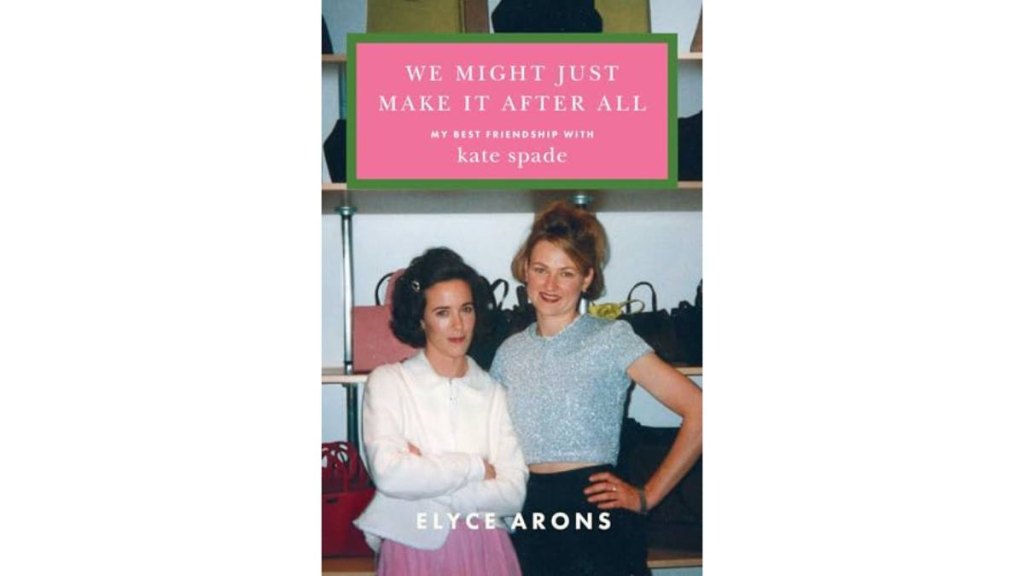
Arons’s debut memoir tells the story of her and Brosnahan, whose friendship began when they met at the University of Kansas, led to the creation of a handbag line that reshaped the fashion industry. From navigating love, cramped NYC apartments and early career struggles to building a global brand, the memoir captures their enduring bond, the highs and lows of entrepreneurship and the stylish legacy they left behind.

Woman’s World: We know you and Katy met at the University of Kansas, and we’d love to know more about that friendship. What first drew you to each other?
Elyce Arons: She was very preppy at the time. She had on a popped polo shirt, baggy khaki shorts and Legion loafers. And I had just gotten back from a New York trip with my mom, and I came back with a pair of parachute pants and green scrunched, pointy-toe boots, which were the height of punk back then. I thought I was the coolest thing since sliced bread. But then I looked at Katie, and we kind of looked at each other, thinking we’re not going to be friends, but we immediately became friends.
We were both majoring in journalism, so we walked to class a lot together, and she was probably the funniest person I’ve ever met. We both really had a thing for practical jokes, so we played them on each other all the time. And we also found that we shared a love for vintage shopping, probably because we were both broke a lot in high school and college, so it was a really easy way to find cool stuff to wear. And then the reason that we both majored in journalism was because Mary Tyler Moore was a huge TV show on in the early 70s, when we were just coming of age, and she had a real impact on us.
WW: So if you both majored in journalism, where did the idea to start a brand come from, and how did you get from point A to point B?
EA: We always wanted to have a business when we were in college together, and we were listening to that mantra of follow your passion. We both love to travel, so we thought, ‘Oh, we’ll open a travel agency,’ but we knew nothing about that. Alternatively, we thought we’d open a vintage store and sell pieces. Katy had worked at a men’s clothing store, and I was a beverage cart girl at the time, so we were just trying to earn some money. When we were all in New York years later, her boyfriend Andy said, ‘Why don’t you start a handbag company?’ Katy had been at Mademoiselle for about seven years by then, and I had been working in marketing for a couple of different fashion companies before that.
So Katy and Andy called me one night and they said, We know what business you guys are going to have. It’s a handbag company. I was like Handbags? And yet, Katy had this idea for a new type of handbag because she saw a void in the market for things she was looking for for photo shoots. She had the idea to create a really simple, chic, American-style bag. And the brand was born. I quit my job, and we cobbled our money together and showed at what was called the accessory circuit back then.
WW: How did your friendship influence the way you built the brand together? And how did you and Katy navigate that balance?
EA: There were four of us involved in the business who founded it. Andy, Katy’s husband, was involved a lot, but didn’t start with us full-time until we were about three years out. He was really involved all the time anyway; he came up with the idea. He really pushed Katie to do it, because she would not have done it without other people. And then we met our other partner, Pamela Bell, in 1993. I think we started the company with the idea that we had no business plan, but with the idea of that we can create a place where it’s fun to work. All four of us are originally from the Midwest. So we have very Midwestern values on being polite and nice to people and gracious. And so it held true throughout the 13 years we owned the business that we would only hire polite people.
Going into business together also depends on the friendship. And I wouldn’t say we always put our friendship first, but we knew our bond was so strong that there wasn’t going to be anything to come between us. However, we always tried to put our business hats on when discussing work. And you can get emotional about stuff. Design is emotional, and it’s very personal, but we always wanted to do the right thing, and we always saw eye to eye on that.
WW: There weren’t too many women-led fashion startups at the time. What obstacles did you face when you were breaking into such a competitive industry?
EA: It’s funny, if we’d gone into ready-to-wear, it would have been different. But we kind of snuck in with accessories at the time because nobody had a handbag. Everybody has a handbag company now, but at the time, there weren’t really handbag companies, so focusing on handbags was really our forte. The most difficult thing was getting materials and manufacturers to work with us because when you’re a couple of girls walking up saying, ‘We want to make handbags, and you have no technical skills and you don’t really know what you’re talking about,’ they’re scared to take a chance on you because they don’t want to lose money.
WW: Can you describe an instance where you realized Kate Spade was taking off?
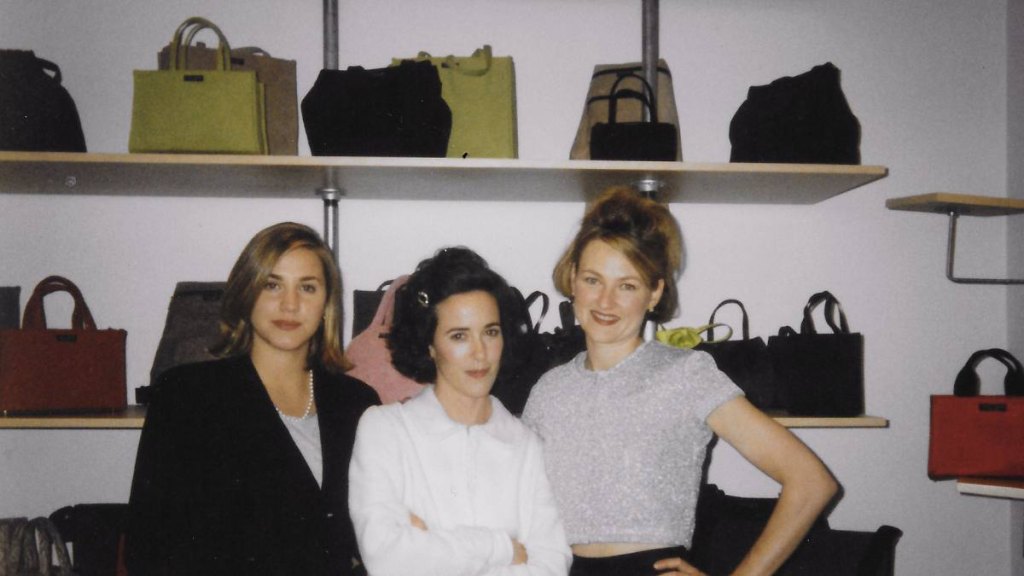
EA: One of the moments was when Vogue called and wanted to do a story on us. And it happened in 1995, which was two years after we started. We just moved into our new office space on 29th Street. When Vogue came in to do that photo shoot, I felt this was the pinnacle, like Vogue magazine is shooting little old us from Kansas, Missouri and Ohio. And that was a moment. I was so excited that day. It was the first time I’d have my makeup done professionally, and I wore Katy’s top she got married in because we were all talking about what we were going to wear.

WW: How do you see the legacy of Kate Spade today? What’s the big takeaway for you?
EA: They’re awfully big. They’ve grown quite a bit since we owned it. And for us, it was a very personal business. It was our heart and soul. And I feel that way about Francis Valentine today. I put my heart and soul into it. I think at Kate Spade, we used a lot of our own references for bagged silhouettes and shoes that we liked, and we do the same at Francis Valentine; it’s never trend-driven. It’s always based on a mood at the time and how you’re feeling and really great design, and less about what’s going on out there in the market. I remember Katy saying something that has always stuck with me. She said, ‘If you’re never on trend, you’re never off trend.’ And I always loved that about her, because she really wasn’t thinking about what everybody else was doing. It was about what we were doing.
WW: We’d love to know more about Francis Valentine. What led you and Katy to reunite creatively to launch this new brand?
EA: When we sold Kate Spade, it wasn’t because we were so exhausted, but we just had children, so it was a great time for us to take time off and spend time with them. Katy ran the school store, and I was president and chairman of the board at our school for many years. I learned so much, and I met so many wonderful people, but we both really missed creating things. We started talking about it in 2013 and started working on a new accessories company that was handbags and shoes. One of the big drivers for us was that in between Kate Spade and Francis Valentine, we actually had time to be consumers, and we weren’t always working all the time.
So we’d go shopping together, and I would want to get a new pair of shoes. I wasn’t able to really find what I was looking for at the price I wanted to pay. So we started talking about how we can make really great designs and really great quality at a much better price point. That was part of the impetus to start Francis Valentine.
WW: How has Frances Valentine evolved since Kate’s passing, and how do you continue to carry her legacy through the brand as well?

EA: When we started Francis Valentine, we started with accessories. We started with handbags and shoes, because that was Katy’s forte. She loved designing those, and we were doing really well, moving along. We’d only been in business for two years, and that’s when we lost Katy. One of the things we wanted to do was create a tribute to her. So we made two of her favorite vintage pieces. One was a caftan, this embroidered caftan that she had worn on every vacation we’d ever taken together. The other was an embroidered sweater that we bought at a thrift store decades ago. And we remade those and called them the Love Katy collection. They sold out immediately. We made them again. They sold out again and again and again. Soon, our customers started asking us for all the pieces we were using in our campaigns, which were our vintage pieces. Then we made a swing coat and cigarette pants. And then we had to make everything, because they kept asking for it. She inspired the apparel because the things we made were hers.
WW: Your new memoir combines your love of fashion with books. What inspired you to write ‘We Just Might Make It After All? Was there a particular moment or memory that pushed you to tell the story?
EA: I was sitting around with my former partner, Pamela, and my husband, Andy, and we were laughing so hard that we were doubled over, and Andy said, ‘You guys have to write this down. You have to write a book.’ And over the years, people have told me that you have to do this. I honestly don’t think I could have done it before the time I started. I started about five years after we lost Katy, because it was just a little bit too raw. However, I didn’t want to forget any of the details, either, and I knew I needed to do it by a certain time. And so my husband started pushing me, and I just let him push.
It was really cathartic, actually. It was great, and I think it helped me get through a lot that I hadn’t quite dealt with yet. But most of all, I laughed a lot, and I went through all the photographs at that time, and the parties that we went to, and the celebrations that we had. I feel like I appreciated Katy every day she was here, and yet I always wish that I’d given her that extra hug and made that extra phone call, so I wish I’d been with her. We had a great time together, almost 40 years as friends, and I don’t regret one single day of it.
Conversation
All comments are subject to our Community Guidelines. Woman's World does not endorse the opinions and views shared by our readers in our comment sections. Our comments section is a place where readers can engage in healthy, productive, lively, and respectful discussions. Offensive language, hate speech, personal attacks, and/or defamatory statements are not permitted. Advertising or spam is also prohibited.