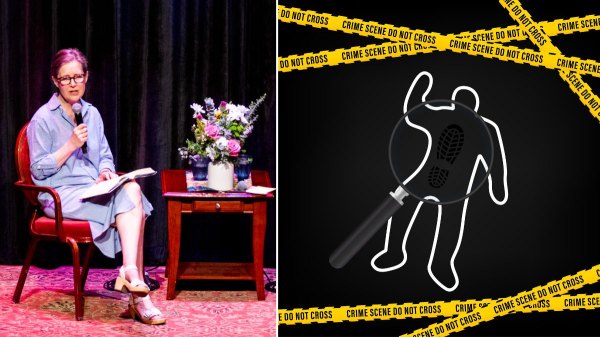
James Bond Books After Ian Fleming: How 007 Survived and Thrived Without the Man Who Created Him
Bond historian Mark Edlitz reveals how generations of authors have reinvented 007 for new readers

Key Takeaways
- James Bond books continued despite fears 007 couldn't survive Ian Fleming's death.
- Kingsley Amis became the first official Bond continuation novelist.
- Later authors found very different ways to reinvent Fleming's James Bond.
Ian Fleming’s James Bond has survived torture, gunshots, poison, assassination attempts, exploding lairs and any number of megalomaniacs bent on world domination. Yet perhaps the greatest threat to 007’s survival arrived on August 12, 1964, when his creator died at the age of 56.
At the time, there was no reason to assume someone else could simply pick up where Ian Fleming left off. Bond and Fleming had become so closely identified with one another that the idea of another writer creating new adventures for 007 seemed almost unthinkable. But more than 60 years later, we know how that turned out.
Beginning with Kingsley Amis’ Colonel Sun in 1968, James Bond has lived an extraordinary second life on the printed page, with John Gardner, Raymond Benson, Sebastian Faulks, Jeffery Deaver, William Boyd, Anthony Horowitz and others offering their own interpretations of Fleming’s secret agent. There have also been Young Bond novels, The Moneypenny Diaries, stories about other Double-O agents, a Felix Leiter novel and even a series of mysteries centered around Q.
For author and James Bond historian Mark Edlitz, whose books include The Lost Adventures of James Bond and James Bond After Fleming, that history raises a fascinating question: How do you continue a character who once seemed inseparable from the man who created him? After all, the Bond series Fleming wrote includes classics like Casino Royale and short story collections such as Octopussy, which included “The Living Daylights.”
MARK EDLITZ: “When Ian Fleming died, there was an assumption that the character would die with him. At that time, there were some, what we might call today, continuation novels, but it wasn’t the norm. And in fact, as it relates to Fleming in particular, everyone conflated Fleming and Bond and said that Fleming was writing about himself and writing about his own experiences. How could we ever continue telling James Bond stories without Ian Fleming? It’s a fool’s task. It’s a fool’s errand. And Fleming’s widow, who generally speaking didn’t support the Bond novels while he was alive, said, ‘Let’s not do it. I don’t necessarily love them, but it is Ian’s. Let’s not continue.’ And there is a certain logic to that.”

James Bond refuses to die
There was, however, a fairly obvious problem with allowing the literary Bond to disappear: People wanted more James Bond, fueling in part that by the time of Fleming’s death, only the third of what would be 25 official films had been released.
According to Edlitz, there was another consideration as well. Other writers were interested in producing Bond stories whether Fleming’s estate authorized them or not, creating an additional incentive to maintain control of the literary character.
MARK EDLITZ: “There were other writers who were trying to publish Bond continuation novels without the consent or permission of the estate. So what happened was it was almost you either use it or lose it as it relates to copyright. So as a defense mechanism, the estate was sort of compelled to tell more Bond stories. Otherwise, people would infringe and there’d be confusion… It’s also a money-making endeavor.”
The question was no longer simply whether Bond should continue. It was who could possibly follow Ian Fleming?
Kingsley Amis takes on the impossible
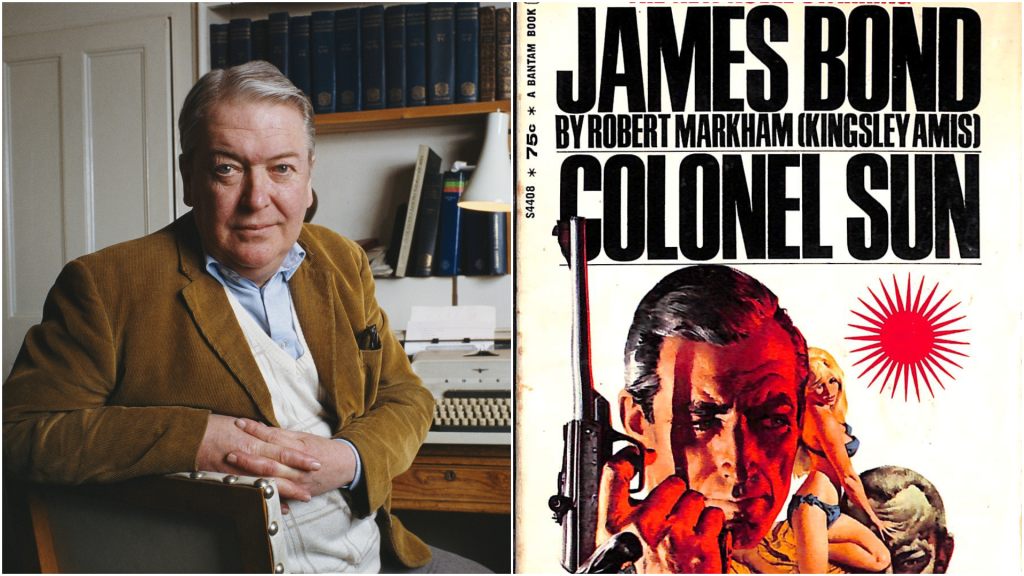
The answer ultimately became acclaimed British novelist Kingsley Amis, himself an authority on Fleming’s creation. Writing under the name Robert Markham, Amis produced Colonel Sun, published in 1968 and officially recognized as the first James Bond continuation novel.
MARK EDLITZ: “The estate looked at several writers before picking Kingsley Amis, and Amis knew Fleming. He wrote those Fleming appreciation books, so he was a good candidate. And he was also asked to review The Man with the Golden Gun manuscript, which was published posthumously. So he knew his Bond.”
Technically, though, another Bond beat Amis into bookstores. In 1967, The Adventures of James Bond Junior 003½, a children’s novel credited to the mysterious R.D. Mascott, became the first post-Fleming Bond-related book. The pseudonym concealed author Arthur Calder-Marshall. And pseudonyms were initially supposed to play a much larger role in Bond’s future. But that didn’t happen. Instead, Colonel Sun became something of an isolated experiment, and the literary Bond entered a strange period in which writers continued exploring 007 without establishing a regular series of new adventures.
What if James Bond was a real person?
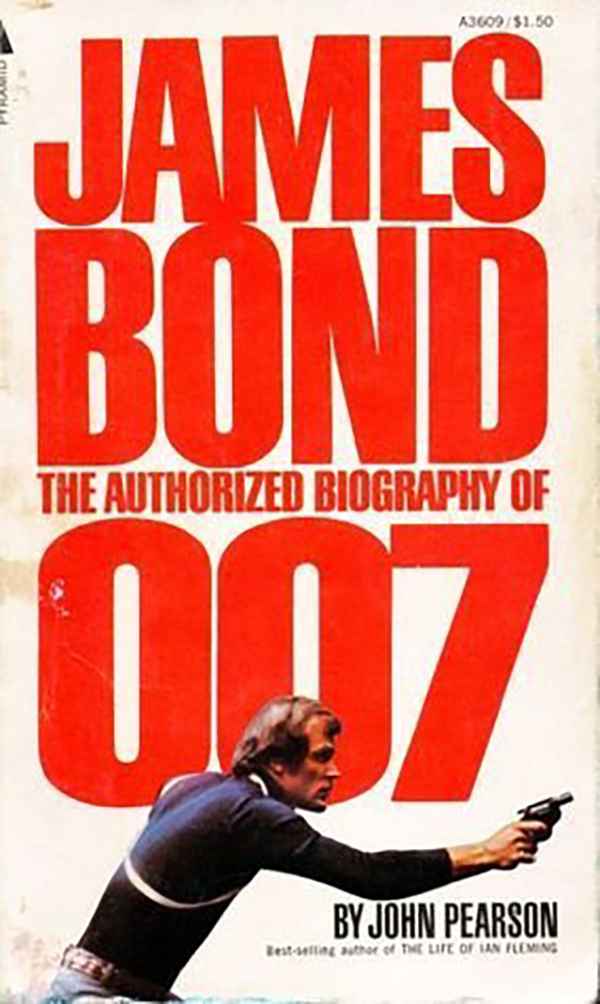
One of the strangest—and most fascinating—experiments came from John Pearson, who had previously written a biography of Fleming, arriving in the form of 1973’s James Bond: The Authorized Biography of 007.
MARK EDLITZ: “It’s an official biography of James Bond, as if James Bond were a real character who John Pearson, the actual author, was given an opportunity to interview about his life. And this book told, from Bond’s perspective, the Fleming novels and short stories, but it also filled in the gaps between them before and after. It’s Bond looking back at his life, which is pretty cool and also very meta.”
Bond returned to print again through an entirely different route when screenwriter Christopher Wood novelized The Spy Who Loved Me in 1977 and Moonraker in 1979. Rather than dismissing those books as disposable movie merchandise, Edlitz considers Wood’s work an important part of the literary Bond tradition.
MARK EDLITZ: “Novelizations are sometimes looked on poorly, but you could tell Christopher Wood wrote his James Bond story with as much love and care as he could muster. He’s definitely drawing from Fleming. It’s really well done, the first one being spectacular.”
By the end of the decade, the message was becoming clear. Ian Fleming was gone, but readers weren’t finished with James Bond. This time, the estate decided to bring him back for good.
John Gardner reinvents James Bond
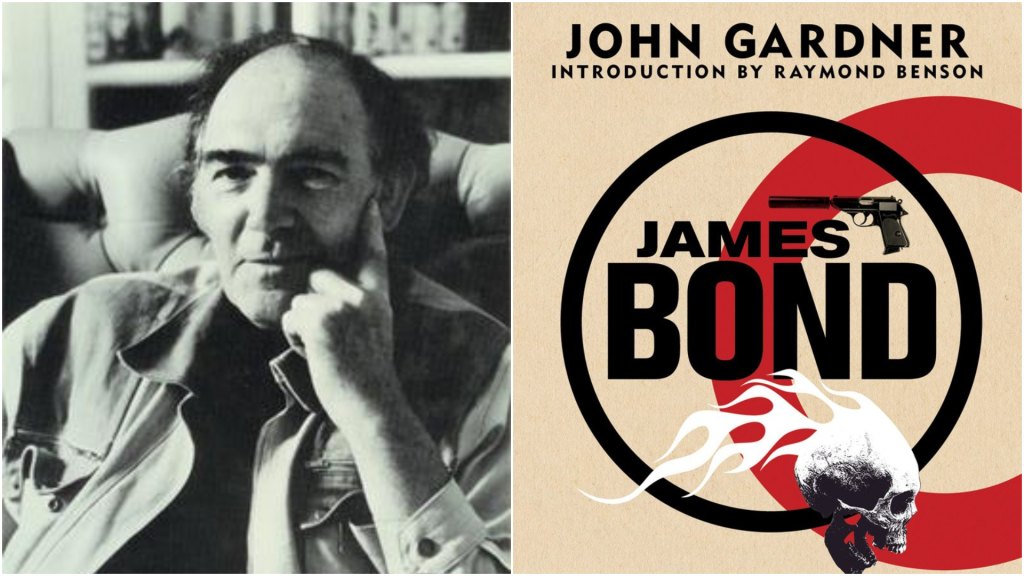
In 1981, Licence Renewed introduced author John Gardner’s version of 007, beginning what would become the longest sustained run by any continuation novelist.
MARK EDLITZ: “The estate says, ‘Okay, we’re going to do this for real.’ And they discuss it with a few authors and eventually decide to go with John Gardner, who winds up writing more Bond novels than Ian Fleming did.”
Gardner eventually produced 14 original novels plus the novelizations of Licence to Kill and GoldenEye. And what makes his run particularly interesting to Edlitz is that Gardner didn’t spend those years simply doing an Ian Fleming impression; his Bond evolved over time.
MARK EDLITZ: “If you look at the totality of Gardner’s works, you’ll see different eras within them. You’ll see where he’s trying to be Fleming. You’ll see where he’s experimenting. You can see where he’s doing his own thing. He’s no longer trying to be beholden to Fleming. He’s like, ‘This is me, this is my interest,’ and there’s a hint of parody throughout all of them. There’s one where the bad guy hypnotizes people through spiked ice cream.”
It sounds absurd, but the freedom Gardner enjoyed would prove significant. Once multiple writers began inheriting Bond, the question was no longer whether they could duplicate Fleming. The more interesting question became: How much could they change while still remaining true to James Bond?
Raymond Benson combines Fleming’s Bond with the movies
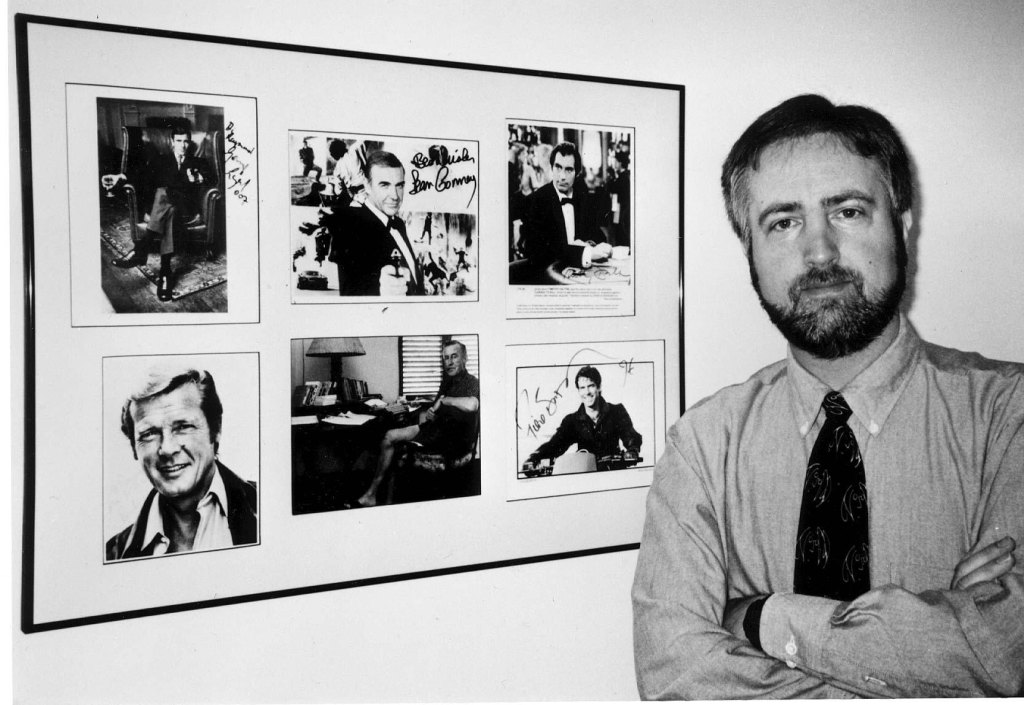
When Raymond Benson succeeded Gardner, the first American officially commissioned to write the adult Bond continuation novels was given a different mission. Rather than simply carrying forward Gardner’s interpretation, Benson was asked to find a middle ground between two Bonds that had increasingly become distinct: Fleming’s literary character and the spectacular cinematic version known around the world.
MARK EDLITZ: “The one thing to keep in mind about all of these authors is that after Gardner, who was given more or less freehand—I would say Gardner was given more freehand than any other author—other authors are frequently given parameters in which to work. Benson’s directive, which he wanted to do and agreed with, was: Let’s try to take the character of Ian Fleming’s James Bond, just the character, and combine that with movie-like plots. Those are the parameters in which Benson worked. And if you’re going to evaluate Benson’s work, you should have that basic understanding of that’s what he was asked to do, that’s what he was trying to do and that’s what he wanted to do. But it’s not meant to be exactly like Ian Fleming.”
Benson ultimately produced six original Bond novels, three film novelizations and three short stories between 1997 and 2002. His experience also demonstrates just how carefully the custodians of Bond guarded Fleming’s creation.
MARK EDLITZ: “Ian Fleming Publications, sometimes called Glidrose, was also getting comfortable with him as a writer. And for his first one, he definitely had to write chapters and submit as he went. One of the things that Ann Fleming required when she gave the first go-ahead for Kingsley Amis in ’68—published ’68, written before then—was that the board had to approve the novels once they were written. And if they were not given the thumbs up by everyone, they wouldn’t publish it.”
What does it mean to be faithful to Ian Fleming?
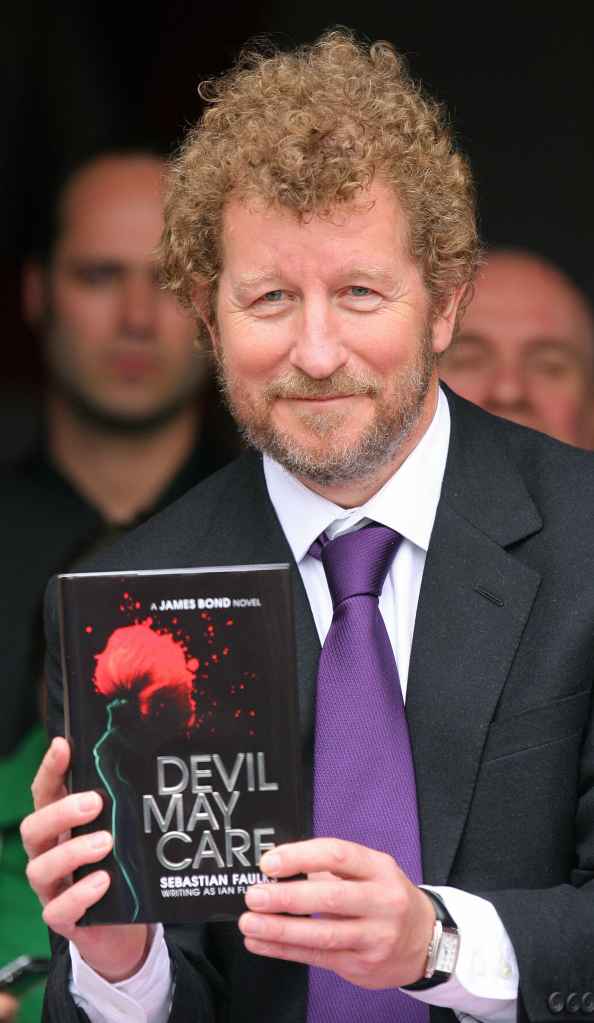
Eventually, the continuation novels began answering that question in radically different ways. When Sebastian Faulks was selected to write Devil May Care for the 2008 centenary of Fleming’s birth, his assignment was unlike those given to Gardner or Benson.
MARK EDLITZ: “When we get to Sebastian Faulks, he was asked to write as Ian Fleming, whereas no other author before or since has been tasked with that. So when you’re reading Sebastian Faulks, it’s helpful to understand the parameters in which he was working.”
Jeffery Deaver took virtually the opposite approach with 2011’s Carte Blanche. Instead of transporting readers back into Fleming’s world, Deaver did what Fleming himself had done in the 1950s: write a contemporary thriller.
MARK EDLITZ: “Jeffrey Deaver wrote a contemporary Bond. He didn’t want to write a period Bond. He felt like he didn’t want the audience to have any bumps in their experience of falling into the story. And now a bump means a character has to go to find a coin to make a payphone call. He didn’t want the reader to have to worry about those kinds of things that only existed then and no longer now. He told me that Ian Fleming was writing contemporary stories, and he was going to too. Deaver’s book can be read as if you’ve never read a James Bond novel in your life, including Fleming. It’s an intro to Bond’s world and the Bond character.”
And therein lies one of the fascinating contradictions of continuation Bond. Does honoring Fleming mean preserving the world exactly as he left it orr does it mean doing what Fleming did—writing James Bond for the world that exists now?
Anthony Horowitz goes home to Fleming

Anthony Horowitz found another solution: Rather than moving Bond forward, he moved himself backward. His three novels—Trigger Mortis, Forever and a Day and With a Mind to Kill—occupy different points around Fleming’s original chronology, those books essentially serving as sacred text.
MARK EDLITZ: “He has one set immediately before Casino Royale, he has one set after Goldfinger and then he has another one set after The Man with the Golden Gun. So Horowitz takes you through the entire arc of Bond’s career, but completely melding to Fleming’s material. And he holds Fleming in such esteem that he won’t deviate from anything that Fleming wrote. So he has a few, what he calls postmodernist touches to allow that we’re in a different world and there’s different times and there’s different points of view, but he’s not trying to update James Bond by even that much.”
There is one rule, however, that helps prevent all these different versions from collapsing under decades of accumulated continuity.
MARK EDLITZ: “All the authors are working under the assumption of ignoring the other continuation novelists. That’s not your business. Don’t even read them. You don’t have to. But all the authors are given the complete set of Ian Fleming’s James Bond novels and told, ‘This is the world. This is your character.'”
James Bond without James Bond
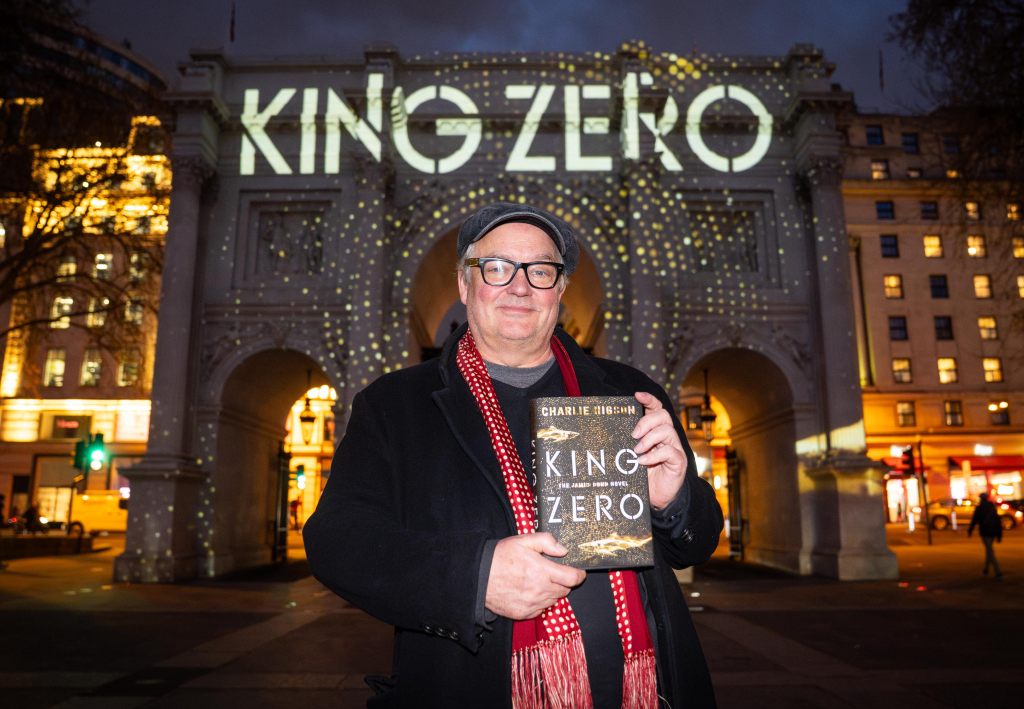
Eventually, even 007 himself ceased to be the boundary of the literary Bond universe. There were Charlie Higson’s Young Bond novels, which began with SilverFin in 2005, imagining the future secret agent as a schoolboy. There were Steve Cole’s subsequent Young Bond adventures, and Samantha Weinberg, writing as Kate Westbrook, turning Miss Moneypenny into the center of her own story. The latter series is one Edlitz admits he initially underestimated.
MARK EDLITZ: “Samantha Weinberg wrote a trilogy of books called The Moneypenny Diaries that people, including me, wrongly dismissed as being A, opportunistic and B, ‘chick lit.’ And so a lot of people had come to them late, but they’re as good as any other James Bond continuation novel, and they are firmly in Fleming’s world. They’re quite ambitious books, weaving in and out of Fleming’s timeline, weaving in and out of real-world events while having a mystery through all three books. And they are some of the best continuation novels and should be read and treasured and adored because they’re spectacular.”
The publishing program itself has accelerated. Kim Sherwood’s Double-O trilogy focuses on other agents within the program. Raymond Benson returned to Fleming’s universe with The Hook and the Eye, centered on Felix Leiter. Vaseem Khan has launched a series of Q mysteries. M.W. Craven’s James Bond and the Secret Agent Academy is scheduled for 2027. And Charlie Higson, having introduced generations of younger readers to Bond, has returned to the adult 007 with On His Majesty’s Secret Service and 2026’s King Zero. For Edlitz, there’s no contradiction between these wildly different approaches.
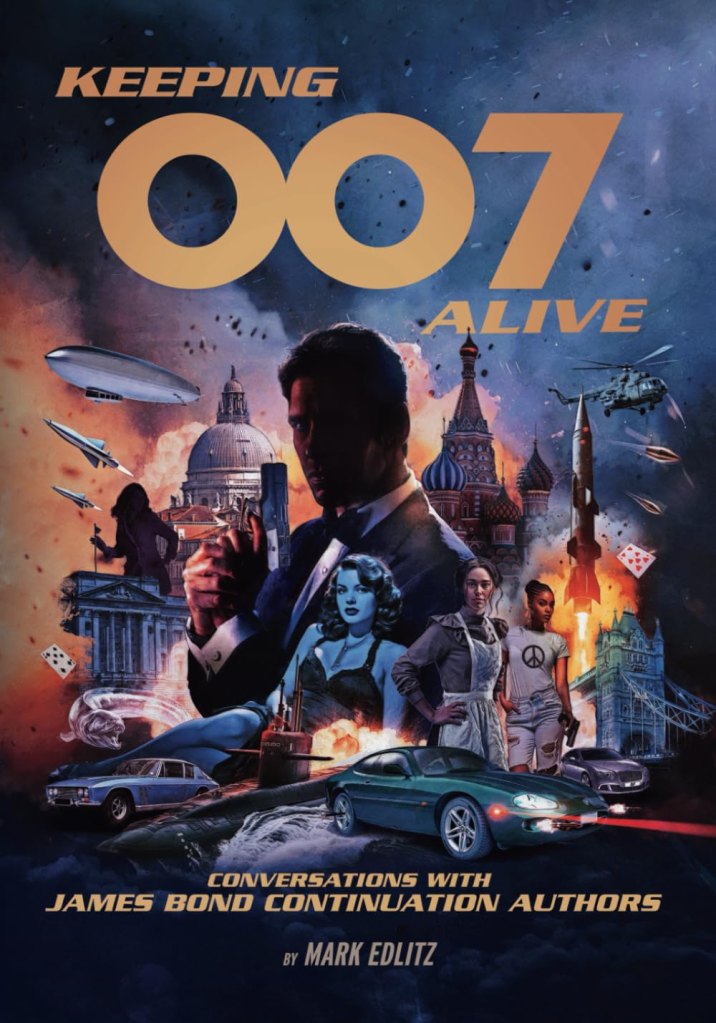
MARK EDLITZ: “We’ve got this period of expansion and if these books aren’t your cup of tea, it’s okay. The Craven one I think seems to be aimed at younger readers, so it’s not meant for old fogies. It’s meant to bring younger people into the Bond fold as an entry point. And then when they fall in love with Bond, they’ll discover Fleming and all these other wonderful continuation novels. It’s a fertile period for James Bond in the literary world.”

Which brings us back to the question that started all of this: How did a character so closely associated with one author survive that author’s death—and then thrive in the hands of so many others? Edlitz believes the answer lies within Fleming’s creation itself.
MARK EDLITZ: “James Bond is both an oblique and protean character. Protean meaning you could do so many different things with a character and put him in an endless series of adventures. And he’s mysterious or oblique enough that both the creators, the writers, and the audience can retain the mystery and fill in some of the blanks themselves. And I think project themselves fairly easily into those adventures because he is both well-defined and mysterious at the same time. So there’s enough room for you, the audience member or the reader, to almost imagine yourself in those adventures.”
Perhaps that’s why there has never been—and probably never will be—one definitive answer to how a writer should continue Ian Fleming’s James Bond. The only thing one can say for certain, as they do at the end of every 007 film—including the one in which he died—James Bond will return.
Conversation
All comments are subject to our Community Guidelines. Woman's World does not endorse the opinions and views shared by our readers in our comment sections. Our comments section is a place where readers can engage in healthy, productive, lively, and respectful discussions. Offensive language, hate speech, personal attacks, and/or defamatory statements are not permitted. Advertising or spam is also prohibited.