The James Bond Actors You Never Knew Were in the Military: All About Their Service Before 007 Fame
Before the tuxedos and Aston Martins, this Memorial Day, remember the James Bond actors who wore real military uniforms

Key Takeaways
- Sean Connery served in the Royal Navy years before becoming James Bond.
- Roger Moore’s military service helped shape his famous Bond persona.
- Several actors tied to James Bond brought real military experience onscreen.
Long before they introduced themselves as “Bond, James Bond,” several of the actors who played 007 had already worn real military uniforms. For men like Sean Connery, Roger Moore and David Niven, military service wasn’t preparation for a role, but instead just a part of life before Hollywood came calling.
And for the record, none of them were actual secret agents, their military experiences ranging from routine service assignments to genuine wartime duty, but those years undoubtedly helped to shape the confidence, discipline and authority audiences later associated with James Bond. And in some cases, the contrast between the men they were and the suave superspy they would eventually portray makes their stories even more fascinating.
Inside Sean Connery’s military service

Before becoming the first official cinematic James Bond in 1962’s Dr. No, Sean Connery’s early life was far removed from tuxedos, Aston Martins and martinis. Raised in a working-class household in Edinburgh, Scotland, he left school young and worked a variety of jobs, including delivering milk and polishing coffins. “At 16, he enlisted in the Royal Navy,” offers the late actor’s official website. “Like many young men in the Navy, he opted for a tattoo. However, unlike many tattoos, his were not frivolous. His tattoos reflect two of his lifelong commitments: his family and Scotland… One tattoo is a tribute to his parents and reads, ‘Mum and Dad,’ and the other is self-explanatory: ‘Scotland Forever.’”
The Bellybuzz website adds, “Sean signed up for 7 years in the Royal Navy plus another 5 in the Volunteer Service, where he trained near Lochinver, Scotland. After his initial training, he was moved down to Portsmouth, where he’d serve in a gunnery school and in an anti-aircraft crew. He was later assigned as an Able Seaman on the HMS Formidable. After two years, at age 19, he was diagnosed with peptic ulcers and discharged with a disability pension.”

While Connery’s military career was relatively brief, it helped shape the physical confidence and hardened edge he later brought to Bond. When audiences first saw him as 007 in Dr. No, Connery didn’t come across like a polished aristocrat. He looked dangerous, experienced and self-assured, which are the qualities that helped redefine the Bond character for generations.
Sean Connery’s Bond films: Dr. No (1962), From Russia With Love (1963), Goldfinger (1964), Thunderball (1965), You Only Live Twice (1967), Diamonds Are Forever (1971), Never Say Never Again (1983)
Roger Moore: Learning showmanship in uniform
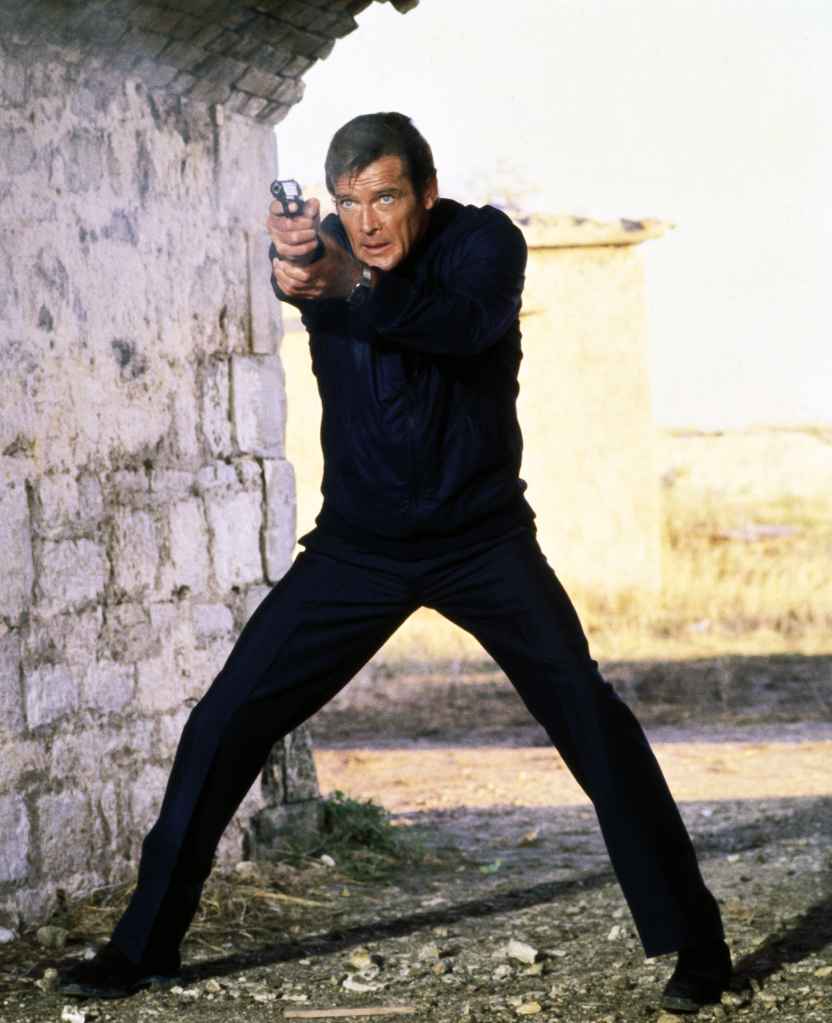
By the time Roger Moore took over the role in the seventh 007 adventure, 1973’s Live and Let Die, James Bond had evolved into a smoother, more humorous and more playful figure. Off-screen, however, Moore also came from a generation where military service was considered routine.
At just 18 years old, and with the Second World War newly over, Moore was conscripted for Britain’s mandatory national service. In September 1946, he was commissioned as a second lieutenant in the Royal Army Service Corps and eventually became part of the military’s Combined Services Entertainment division. Rising to the rank of captain, he was stationed in West Germany, where he oversaw a depot that helped coordinate entertainers performing for British troops moving through Hamburg.
In many ways, Moore’s military experience mirrored his Bond persona: polished, confident and unflappable without taking itself too seriously. Over the years, he often discussed his service with humor, acknowledging that his time in uniform was hardly the stuff of gritty war movies.
Roger Moore James Bond films: Live and Let Die (1973), The Man With the Golden Gun (1974), The Spy Who Loved Me (1977), Moonraker (1979), Octopussy (1983), A View to a Kill (1985)
George Lazenby: The mechanic who became Bond
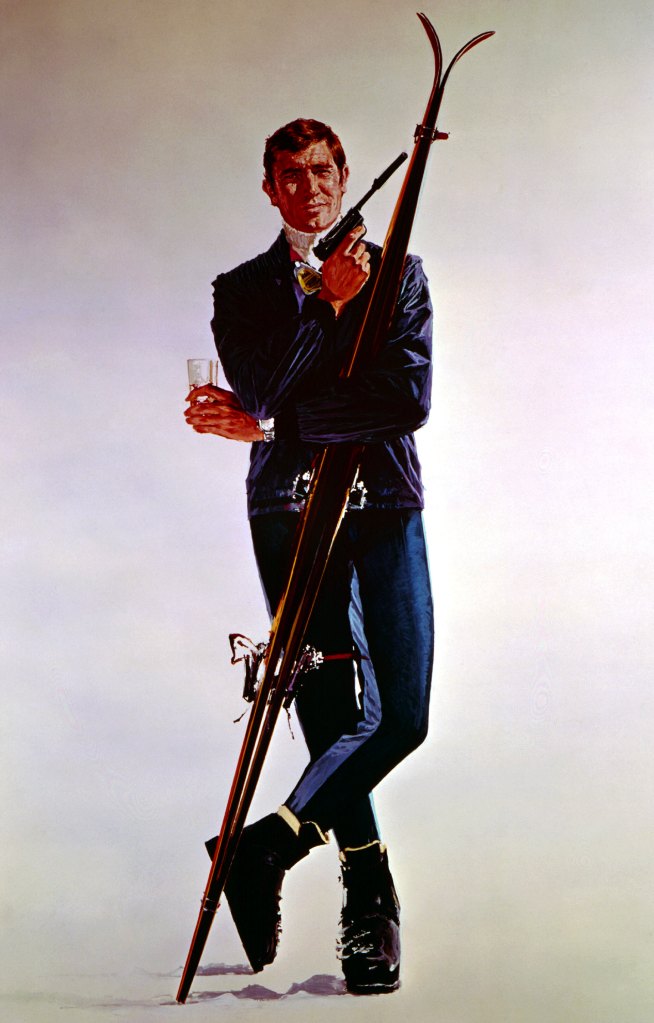
Compared to Connery and Moore, George Lazenby remains one of the most unusual figures in Bond history. Before landing the role in On Her Majesty’s Secret Service, he had no professional acting experience. Instead, the Australian-born future Bond worked a variety of jobs and served in the Australian Army.
Elaborating a bit is the website Mi6, which notes, “He rose quickly to the rank of Sergeant, gaining expert skills in unarmed combat. When his spell of four months in the force had ended, he moved to the Australian capital, Canberra, where he took up a variety of odd jobs.”
Lazenby’s blue-collar background helped give his Bond a different feel from the actors surrounding him. While Connery projected raw confidence and Moore exuded effortless sophistication, Lazenby often felt more physical and grounded. And while his military experience may not have been extensive, it did fit surprisingly well with the more vulnerable and human interpretation of Bond seen in On Her Majesty’s Secret Service, a film that has gained increasing appreciation over the years.
George Lazenby’s James Bond film: On Her Majesty’s Secret Service (1969)
David Niven: The Bond actor closest to Ian Fleming’s world

Of all the actors associated with James Bond, David Niven arguably had the strongest real-world connection to the kind of British military background that inspired Ian Fleming’s original character. Long before appearing in the 1967 spoof version of Casino Royale, Niven served in the British Army during World War II, eventually rising to the rank of lieutenant colonel.
But before that, beginning in 1928, he attended the Royal Military College at Sandhurst, where he developed the polished “officer and gentleman” image that would later become one of his trademarks. Hoping to join either the Argyll and Sutherland Highlanders or the Black Watch, he jokingly listed his third preference as “anything but the Highland Light Infantry,” objecting to their tartan trousers instead of kilts. Ironically, upon graduating, he was commissioned as a second lieutenant in the Highland Light Infantry on January 30, 1930.
Niven served for two years in Malta before a brief posting in Dover. Decades later, during a 1956 appearance on the game show What’s My Line?, Niven unexpectedly reunited with a former enlisted man from his Malta days. Upon realizing the guest had served under him, Niven jokingly asked, “Did you have the misfortune to have me as your officer?”

Despite his success in the military, Niven eventually grew restless with peacetime army life. Promoted to lieutenant in 1933, he saw little opportunity for advancement and chafed under military routine. According to one famous story, his breaking point came during a long lecture on machine guns that threatened to make him late for dinner with a young woman. When the major general conducting the lecture asked if there were any questions, Niven reportedly replied, “Could you tell me the time, sir? I have to catch a train.” Not long afterward, on September 6, 1933, Lieutenant David Niven resigned his commission.

David Niven’s James Bond film: Casino Royale (1967)
The other James Bond actors

By the time later actors like Timothy Dalton, Pierce Brosnan and Daniel Craig stepped into the role, the world and Bond himself had changed. Dalton brought a more intense and emotionally grounded interpretation drawn largely from Ian Fleming’s novels, while Brosnan and Craig represented increasingly modern versions of the character shaped more by cinematic realism and physical training than firsthand military experience.
But for several of Bond’s earliest stars, military service was simply part of growing up in their era. Long before they carried Walther PPKs on screen, they had already experienced life in uniform, something that may help explain why audiences found them so believable as the world’s most famous secret agent.
Conversation
All comments are subject to our Community Guidelines. Woman's World does not endorse the opinions and views shared by our readers in our comment sections. Our comments section is a place where readers can engage in healthy, productive, lively, and respectful discussions. Offensive language, hate speech, personal attacks, and/or defamatory statements are not permitted. Advertising or spam is also prohibited.