Nikki DeLoach Reveals the Hallmark Movies That Changed Her Life (EXCLUSIVE)
Plus, learn about her early days on 'The Mickey Mouse Club' and how she's managed to stay grounded since then

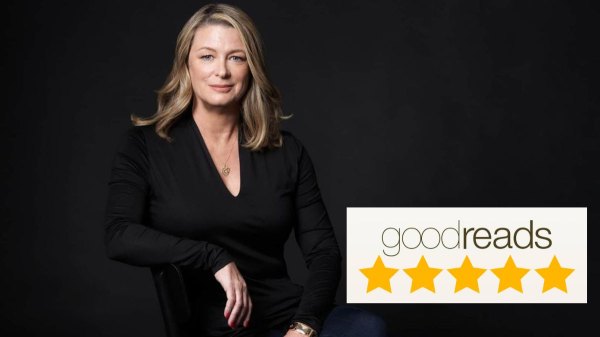
With over 20 Hallmark credits to her name, Nikki DeLoach is one of the channel’s most beloved stars. The actress, who got her start at a young age as a Mickey Mouse Club cast member (alongside the likes of Christina Aguilera, Ryan Gosling, Britney Spears and Justin Timberlake) and starred in the teen comedy series Awkward, has been a warm and relatable Hallmark presence since 2015, and she just debuted her latest Christmas movie, Our Holiday Story.
In addition to her acting career, DeLoach has also written and produced several films, and she’s passionate about charitable causes, working with The Alzheimer’s Association and Children’s Hospital Los Angeles. She also works with Mind What Matters, an organization dedicated to caregiving, and cohosts their podcast of the same name. DeLoach took some time out of her packed schedule to speak to Woman’s World about the charming way she got started with the Hallmark Channel, the movies she holds closest to her heart, how she celebrates the holidays offscreen and more.

Woman’s World: How did you first become involved with Hallmark?
Nikki DeLoach: I actually became involved with Hallmark because of my grandmother. I was on Awkward at the time, and it wasn’t exactly the most family-friendly programming. It was a comedy and it was a little more racy and edgy in terms of the jokes and the storytelling. My grandmother, who’s always been my biggest fan, called me and said Awkward was hard for her to watch. She said, “I just want you to do one of those nice, sweet Hallmark Christmas movies,” and of course I’d heard of Hallmark, but I didn’t even know they made movies. I had no idea about the channel.

I watched one and then reached out to my agent and said, “My grandmother really wants me to do a Hallmark Christmas movie. Is there any way that you could try and facilitate that?” They called Hallmark and the next thing I knew, I was in Utah doing my first Christmas movie, Christmas Land with Luke Macfarlane. It was the fastest turnaround I think I’ve ever had on a movie. I was in my hometown in South Georgia when it aired, and the reaction from these hometown people who had supported me in my career for my whole life was so different. They’d watched everything and yet I had never gotten this reaction from them.
I got really curious about the why, so I sat with it, I watched some more Hallmark movies, and then it just hit me why people love them so much. You get to escape for 90 minutes and feel like at the end of the day, everything’s going to be okay and there’s going to be a happy ending.

WW: Is the escapism of Hallmark movies something that draws you in as an actress?
ND: I always say that the world of Hallmark is like magical realism, and that’s always been one of my favorite genres to read. When I was in college, I loved Gabriel García Márquez and all of those authors that really knew how to bring magical realism to life. So I started to understand it.
These movies make people happy. They make them feel safe. They make them feel joy, often in a world where it’s hard to find joy, it’s hard to feel safe and it’s certainly hard to feel like at the end of the day, you’re going to get your happy ending and everything’s going to be okay. It’s like if you’re in a desert, Hallmark is the water that you stumble across.
WW: How did you start writing and producing Hallmark movies?
ND: I went into the network, and I was a creative executive at a production company. I had already begun to produce things. So I decided that my next step at Hallmark would be to begin producing movies for them. After doing my first Hallmark movie, I had a meeting with the higher-ups and I brought in three pitches that I had developed and two of them moved forward.
After doing my first movie for hire I started to produce for them and then I started to write for them. In terms of moving up the ladder, our audience very much connects with people who are authentic, and who believe in the messaging of Hallmark as much as they believe in the messaging of Hallmark.
I believed in the work that I was doing and I knew that it was important. The stories that we were telling our audience and the way that they impacted them and made them feel mattered to me. It was never just a paycheck.

WW: What is the behind-the-scenes aspect of these movies like?
ND: It’s such a delight. Granted, some of them are extremely hard, I’m not going to lie. You have 15 days, and that is not nearly enough time to make a movie. Sometimes it’s even 13 or 14 days. The budgets are not big, so you’re working with skeleton crews who work their butts off from the time their feet hit the ground in the morning to when they go to sleep at night. It is hard work, but it is joyous work, and in the three weeks of making it, you also get to escape into this world where everything’s going to be okay.

WW: You got your start as a child star on The All-New Mickey Mouse Club. What was it like being part of the show and being in the spotlight so young?
ND: I was so lucky to be in The Mickey Mouse Club. It was everything I could have ever dreamed of—I started watching that show a year prior to auditioning and when I watched the show for the first time, I said to my mom, “I could do that! I want to be on that.” I decided I was going to be on The Mickey Mouse Club one day. I didn’t know how, growing up in South Georgia in a town that had one traffic light, but it was a dream come true for me and the experience itself was even more incredible than I possibly could have imagined.
We were so fortunate to have leaders like Dennis Steinmetz, who was one of our main executive producers, and then we had the staff that dealt with us on a daily basis to make sure that we were where we needed to be. They just let us be kids, so I didn’t have that experience that a lot of people have where my childhood was stolen from me. I had my grandmother there with me and she was such a cheerleader and so protective of me.

WW: How did you manage to stay grounded while growing up in public?
ND: I’ve had many more failures than I’ve had successes. I’ve been told no 10 times more than I’ve been told yes. I’m still friends with a lot of the people I went to preschool with. I’ve never seen myself as somebody that’s better than anybody else. I’ve always thought everybody is equally important. Everybody matters the same, no matter what you do, no matter how much money you make, no matter how successful you are in terms of the way that our capitalistic society determines success. I do not measure success by how much money I have or how many projects I have on IMDB.
Success for me now is defined as being a safe space for myself and the people in my life and being a person that people can depend on and who shows up for others. The other stuff doesn’t really matter. You can lose that tomorrow and it doesn’t make you a better person. It just means that you got a little bit luckier than the next person. For the most part, everybody works so hard to pay their bills and get through the day and support their kids and do all the things, and some of us get a little luckier than others in terms of the breaks we might get.

Still getting to do what I love to do—it’s a miracle to have a 30-plus year career. The fact that I’m still doing the thing that I wanted to do when I was 4 years old is mind-blowing. How is that possible? I’m so lucky. It didn’t come without losses and suffering and pain and trauma and all the things that go with it. It has been one of the hardest things I’ve ever had to do, but I’m also so fortunate. So staying grounded, it’s partly who I am, partly faith and also partly experiencing rejection and failure.
WW: Which of your Hallmark movies are closest to your heart?
ND: One of them is Taking the Reins. I’m so proud of that movie because it was the first one that I was able to develop and produce with my writing and producing partner, Megan McNulty. We started in acting class together in our 20s. I remember the first day of filming—it was a scene with both of us, because we both ended up in the movie, which was incredible—the cameras were about to roll, and I looked at her and said, “Megan, can you believe back when we were in our 20s and we were broke acting students doing a scene for the 12 people in class, and now we’re on set doing a scene with each other, and it’s a movie that we developed?”
It was also one of the hardest movies I’ve ever had to make because my dad was dying. I had to go away for three weeks to do this movie and wrapped it at 4:30 in the morning. I went home and went to bed and woke up to a bevy of texts and calls from my mother, and it was the end. I rushed to the airport, I flew home and I made it to my dad’s bedside to say goodbye to him.
The movie was a love letter to my dad because there was a father-daughter story in it. We were able to get my dream actor, Corbin Bernsen. It was an excruciating time of anticipatory grief, and the fact that I was able to get up every day and go to set and put one foot in front of the other and lead a crew of people as a producer and the lead actor on that movie—I was really proud of myself. That movie will always be really special for those reasons.
I’m also proud of the two movies I’ve gotten to do about grief, Five More Minutes and The Gift of Peace. I filmed Five More Minutes five weeks after my dad had passed. At first, I had said no, I didn’t want to do it, and then something kept tugging at my sleeve. I’m really glad I did go do it, because I was in deep despair and grief, and the movie taught me to find hope. It gave me the courage to believe that even though my dad is physically gone, he’s never going to fully leave me. He’s there somehow.
The Gift of Peace was a movie about a grief group, and I played a character who was very much stuck in her grief. I filmed that a year later, and I was a person who was stuck in my grief. I wasn’t celebrating life. I couldn’t find the joy, and I felt like I was in quicksand every day. I went and made that movie, and it really taught me the gift and the power of sharing my grief with other people, and not living in isolation. It got me unstuck. Art imitates life, life imitates art. Those were two movies where my life was very much inside of that art.

WW: Having been in so many Christmas movies, how do you celebrate Christmas in real life?
ND: Hallmark has influenced the way that my family experiences Christmas. We go to the Christmas tree lot, we do the cookie decorating, we do the Christmas pajamas, we do all the lights, we watch all the movies, we make gingerbread houses. Having kids, it’s been really cool to do all of that because I didn’t necessarily do all those things when I was a kid.
On Christmas Day, we do nothing. We do not get out of our PJs. We do not put on dress clothes and go and have a Christmas brunch. We do not clean up. Christmas Day is the one day out of the year where I just do nothing. We enjoy the day together as a family and veg out.
Sometimes the holidays stress people out. I’m stressed out all year long trying to make deadlines and make sure my kids are safe and navigating hard things in the world, so I don’t want that for the holidays. I choose purposefully to not experience that during the holidays and instead just surrender to the moment and let it be joyful and amazing and relaxing.

Conversation
All comments are subject to our Community Guidelines. Woman's World does not endorse the opinions and views shared by our readers in our comment sections. Our comments section is a place where readers can engage in healthy, productive, lively, and respectful discussions. Offensive language, hate speech, personal attacks, and/or defamatory statements are not permitted. Advertising or spam is also prohibited.