Gil Gerard Has Passed Away at 82: Remembering the ‘Buck Rogers’ Star Who Defined ’70s Sci-Fi TV
From Arkansas chemist to TV hero: a look back at Gil Gerard’s journey, 'Buck Rogers' stories and heartfelt wisdom

Gil Gerard, best known to a generation of television viewers as the star of Buck Rogers in the 25th Century, died on December 16, 2025, at the age 82. While his career extended well beyond that single role, Buck Rogers remains the project most closely associated with his name, anchoring his place in late-1970s sci-fi television and continuing to resonate with fans decades after the series ended.
His path to that role was anything but typical. He did not begin as an actor, his early life and education pointing in a very different direction, and his eventual decision to pursue acting came after a deliberate break from a more conventional professional path. Once he entered the business, however, he built a steady résumé that led him from daytime television to primetime, culminating in the role that would define his public legacy.
What follows is a look back at Gerard’s life and career, from his early years and pre-Buck Rogers work through the series that made him a familiar face, the projects that followed and the lasting relationship he maintained with fans who never forgot his version of Buck Rogers.
Key moments in Gil Gerard’s life and career
- Gil Gerard’s early life and career shift — from a mathematics and science background in Arkansas to a late decision to pursue acting full time
- His rise in television during the 1970s, including his breakthrough role on The Doctors and key guest appearances that led to prime-time visibility
- The making of Buck Rogers in the 25th Century — how the series came together, why Gerard initially turned it down, and what ultimately drew him to the role
- Behind-the-scenes challenges on Buck Rogers, including unfinished visual effects, script issues, and tonal changes between seasons
- Gerard’s career after Buck Rogers, with detailed looks at Sidekicks, E.A.R.T.H. Force, and his later television work
- Personal life, marriages, and relationship with fandom, grounded in Gerard’s own words
- His legacy in science-fiction television and how Buck Rogers endured long after the series ended
- Final reflections from Gerard himself, including a candid closing quote on longevity, legacy, and surprise at the show’s lasting impact
Gil Gerard’s early life before ‘Buck Rogers’
Gil Gerard was born on January 23, 1943, in Little Rock, Arkansas, and spent much of his early life far removed from the entertainment industry he would later enter. He attended the University of Central Arkansas, where “I majored in mathematics,” he’s said, “minored in chemistry and biology and graduated neurotic.”
He nonetheless put his education to good use: “I was an industrial chemist. I was on two advisory task forces to the governor of Arkansas and I was kind of bored. I was considered one of the young Turks in Arkansas, which I don’t know if that’s good or bad, but I thought, ‘Well, what do I really want to do? What do I want to look back on in my seventies with some pride?’ Acting was the one thing that came up for me, so I resigned from all the various positions. I had returned my company car, sold my furniture, moved to New York and started driving a cab. That was in 1969. And from 1970 until today, I had made a living solely from this business, which is kind of nice.”
His first claim to fame as a thespian was as Dr. Alan Stewart on the daytime soap opera The Doctors, which he remained a part of for two-and-a-half-years from 1973 to 1976. Among his notable guest appearances were roles on the original Hawaii Five-0, The Rockford Files and Little House on the Prairie. By the late 1970s, Gerard had become a familiar face to television audiences, even if he wasn’t yet a household name—though obviously he had done enough to capture the attention of Buck Rogers in the 25th Century’s casting department.
The making of ‘Buck Rogers in the 25th Century’ (1979–1981)
Buck Rogers in the 25th Century premiered on NBC in 1979, following the success of a theatrical pilot film released earlier that year. Developed by Glen A. Larson (creator of Battlestar Galactica), the series was a modern reimagining of the classic Buck Rogers character, blending space adventure with a contemporary sensibility designed to appeal to audiences recently impacted by the original Star Wars. Set in the year 2491, the show followed 20th-century astronaut Buck Rogers after he is recovered from deep space and thrust into a future Earth rebuilding itself after centuries of conflict and ecological collapse. The series combined action, humor, and romance, positioning Buck as both an outsider and a moral compass in a highly structured future society.
As to how he was cast in the lead, back at the time, Gerard admitted to Starlog magazine, “It wasn’t easy. I had just finished a serious acting job, a TV movie called Killing Stone. I saw my career going in a direction I wanted. I had the idea that Buck Rogers was comic book and I just didn’t want to get involved with it. I turned it down without reading it… twice.”
That being said, his agent called him and encouraged him to read the script, emphasizing that it was not what he thought it was. “It’s a dynamite script,” Gerard enthused. “It has a lot of good stuff in it. The humor of the character appealed to me especially. And he is vulnerable, not afraid to show that he’s confused. He’s strong, but he can show weakness. He’s a human being, not some super-plastic figure without feelings.”
That was then, though flash forward to 2017, when he was asked about the most difficult part of the show and responded, “Initially it was the crappy scripts, which I had to work on and rewrite on a daily basis. One of the hardest parts was that the special effects weren’t done in advance of shooting a scene. Let’s say we were on some kind of journey—like a journey to Oasis—and we ran into a monster. I would ask, ‘Where do we look? Is it on the ground? Is it here? Is it up in the air? How big is it?’ And the answer would be, ‘We don’t know. It hasn’t been created yet.’ So all we could do was say, ‘Okay,’ then look somewhere and react—’Oh my God, what’s that?’—and then look somewhere else and do it again, just trying to make it fit whatever was going to be added later.
“It was the same thing with the Starfighter. The effects weren’t set up at the time, so in the middle of a fight scene, if my line was something like, ‘Watch out,’ I’d say, ‘Watch out, watch out, watch out,’ because I didn’t know where it was coming from. I tried to cover it as best I could and think of all the possible angles it could be coming in from. That was the hardest part—dealing with special effects that didn’t exist yet. The guys who did the effects were incredible, bar none. Unfortunately, they were always compared to Star Wars, which was the big deal. And I used to say to people, ‘Look, Star Wars took two or three years to do this stuff.’”
Over its two-season run, the series underwent notable tonal and structural shifts. The first season emphasized colorful space opera, humor and episodic adventures, pairing Buck with Wilma Deering (Erin Gray) and the robot Twiki (voiced by Mel Blanc). In its second season, the show adopted a darker, more militarized tone, relocating much of the action to a starship setting and placing Buck within a more conventional command hierarchy. While the change reflected network and creative attempts to mature the series, it divided viewers and ultimately failed to sustain ratings and was canceled.
Gil Gerard’s life and career after ‘Buck Rogers’
After Buck Rogers in the 25th Century ended its two-season run in 1981, Gerard continued working steadily in television, though he never again landed a role that matched Buck’s cultural visibility. Like many actors closely associated with a signature character, he found himself balancing audience recognition with the industry’s desire to see him in different contexts. Rather than disappearing, he transitioned into a mix of television movies, guest roles and short-lived series, maintaining a consistent screen presence throughout the 1980s and early 1990s.
His most significant post-Buck Rogers starring role came with Sidekicks (1986), an NBC action-comedy series in which Gerard played Barry Gabrewski, a private detective paired with a young, computer-savvy partner played by Ernie Reyes Jr. The show blended crime-solving with martial arts elements and light humor, reflecting mid-1980s television trends. It lasted one season.
In 1990, Gerard starred in the CBS series E.A.R.T.H. Force, which stands as his final regular television series role. The show followed an elite environmental task force combating ecological threats using advanced technology, positioning him once again as an action-oriented lead. Despite its timely environmental themes, E.A.R.T.H. Force had a very brief run and failed to gain traction.
Gil Gerard’s personal life off the screen: marriages and family
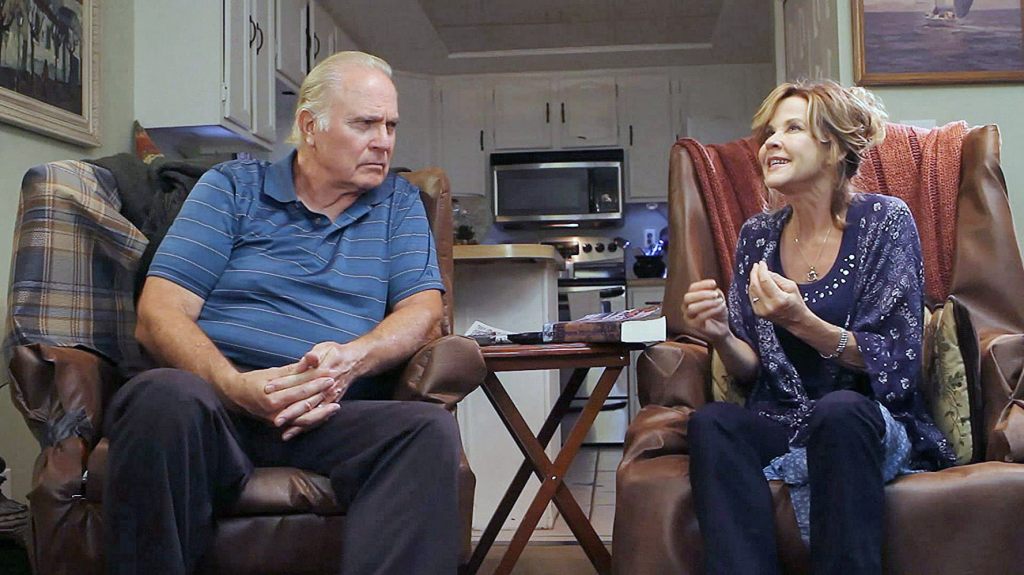
In 1979, Gerard married actress Connie Sellecca, who was rising to prominence in her own television career. The marriage lasted until 1987, and the couple had one son, Gilbert Gerard Jr. During this period, Gerard was at the height of his public visibility, balancing family life with the demands of a television career.

Later in 1987, he married Bobi Leonard, though that marriage was short-lived, ending in divorce two years later.
‘Buck Rogers’ legacy: Gil Gerard’s final message to fans
In his later years, Gerard largely stepped back from acting, focusing on personal interests and maintaining a lower public profile. Nonetheless, his legacy is inseparable from Buck Rogers in the 25th Century, the role most closely associated with him. Gerard embraced that connection rather than distancing himself from it, maintaining a strong relationship with fandom through conventions and similar appearances.
“Buck Rogers was a job,” he said from a convention stage in 2017. “I did the job, it ended and I went on to other things. I could have had all the wardrobe and the props, but at the time I thought, ‘What am I going to do with it?’ I had no concept of longevity. To me it was a job and it was over. But the fact that there’s anybody standing here besides me, 30-something years later, is amazing. I never had any idea that it was going to have the legs that it does, but it’s gratifying. It’s nice to know that something I did so long ago is still appreciated.”
Conversation
All comments are subject to our Community Guidelines. Woman's World does not endorse the opinions and views shared by our readers in our comment sections. Our comments section is a place where readers can engage in healthy, productive, lively, and respectful discussions. Offensive language, hate speech, personal attacks, and/or defamatory statements are not permitted. Advertising or spam is also prohibited.