MeTV Kicks Off Its Golden Girls of Summer Marathon With Bea Arthur’s ‘Dorothy Week’
Behind Dorothy's sharp wit was a much more vulnerable and sensitive Bea fans rarely got to see—here's why we love Dorothy

Key Takeaways
- Near-miss casting: Bea Arthur initially turned down the role due to recent television burnout.
- On-set tears: The star nearly walked off the series over cruel jokes looks about her looks.
- MeTV June special: A full week of iconic Dorothy-centric episodes kicks off this week.
June belongs to The Golden Girls on MeTV. Throughout the month, as part of its Golden Girls of Summer programming, the network is devoting four weeks to the beloved sitcom, celebrating the characters who helped make the series a television classic. Each week focuses on a different Golden Girl—Dorothy, Rose, Blanche and Sophia—through a collection of memorable episodes, classic one-liners and standout moments that remind viewers why audiences continue to fall in love with these women decades after the show first aired.
First up is Dorothy Zbornak. Today, of course, it’s impossible to imagine anyone other than Bea Arthur playing Dorothy, particularly considering that her deadpan delivery, razor-sharp wit and ability to cut through nonsense with a single look became one of the defining elements of the series. Yet according to author Jim Colucci, whose book Golden Girls Forever remains one of the most detailed examinations of the sitcom ever written, Arthur very nearly passed on the role that would become one of the most beloved of her career.
“It’s funny, but when the first script was written, in the stage directions it described Dorothy as a ‘Bea Arthur type,'” Colucci recalled. “Not that it meant she was eager to sign on. Everybody remembers Bea, maybe through her agent, turning it down, because she had been burned by television. She had done that short-lived sitcom, Amanda’s By the Sea, and she was having personal problems. She just didn’t want to go back into the grind.”
Arthur herself remembered things somewhat differently. According to Colucci, she believed she learned about the project late in the process and only hesitated briefly. “She thought that Rue and Betty were going to be switched the way they were on The Mary Tyler Moore Show and Maude, where Betty would be the man-hungry one and Rue would be the mousier one,” Colucci said. “She didn’t want to retread that same territory and Rue had to talk her into it, but that was only one beat where Bea remembers not wanting to do the show.”
Whatever the exact details, there was a moment when Arthur’s participation wasn’t guaranteed, leading series creator Susan Harris to consider another actress entirely. “Susan had her heart set on Bea,” Colucci explained, “but they did do a brief, disastrous audition with Elaine Stritch when it looked like they couldn’t get Bea and then eventually talked Bea into it.”
Years later, Stritch would famously joke about missing out on television history. “I blew it. I blew it. I didn’t get the job,” she admitted. “I blew a $35, $40 or maybe even $50,000 per episode job. I blew it. A multibillion-, zillion-dollar, international, syndicated residual-grabbing, bofferooni, smasherooni, television situation comedy titled The Golden Girls.”
Why we love Dorothy
Fortunately for television audiences, Arthur ultimately agreed and the result was Dorothy Zbornak, a character who anchored the series with intelligence, skepticism and a wonderfully dry sense of humor. Surrounded by Rose’s innocence, Blanche’s romantic adventures and Sophia’s nonstop wisecracks, Dorothy often served as the audience surrogate, reacting exactly as viewers might react to the chaos unfolding around her. In fact, these are some of the things that audiences love most about the character:
She always said what everyone else was thinking: Whether she was reacting to one of Rose’s St. Olaf stories or Sophia’s latest scheme, Dorothy often voiced exactly what viewers were thinking.
Her sarcasm was an art form: Dorothy could deliver a devastating one-liner with nothing more than a raised eyebrow and perfect timing. Few sitcom characters have ever wielded sarcasm so effectively.
She was the most grounded of the four: While Blanche chased romance, Rose lived in her own world, and Sophia stirred up trouble, Dorothy was usually the voice of reason, trying to keep everyone on track.
She was so intelligent: As a substitute teacher, Dorothy valued education, critical thinking and common sense. She rarely let nonsense go unchallenged.
She never backed down from a fight: Whether confronting a dishonest politician, a rude doctor or an unfair employer, Dorothy wasn’t afraid to stand up for herself—or for others.
Her relationship with Sophia was hilariously real: The mother-daughter dynamic between Dorothy and Sophia felt authentic because it mixed love, frustration, embarrassment and loyalty in equal measure.
She had a big heart beneath the tough exterior: Dorothy often pretended to be cynical, but some of the show’s most emotional moments revealed just how deeply she cared about her friends and family.
She helped tackle serious issues: Through Dorothy, The Golden Girls addressed topics like ageism, chronic illness, divorce, healthcare and women’s rights with honesty and humor.
She was relatable: Unlike Blanche’s glamorous adventures or Rose’s often unbelievable stories, Dorothy’s struggles with work, relationships and self-confidence felt familiar to many viewers.
Her happy ending felt earned: After years of disappointments, bad dates and putting everyone else’s needs ahead of her own, Dorothy finding love and happiness in the series finale remains one of the most satisfying endings in sitcom history.
Meet the real Bea Arthur
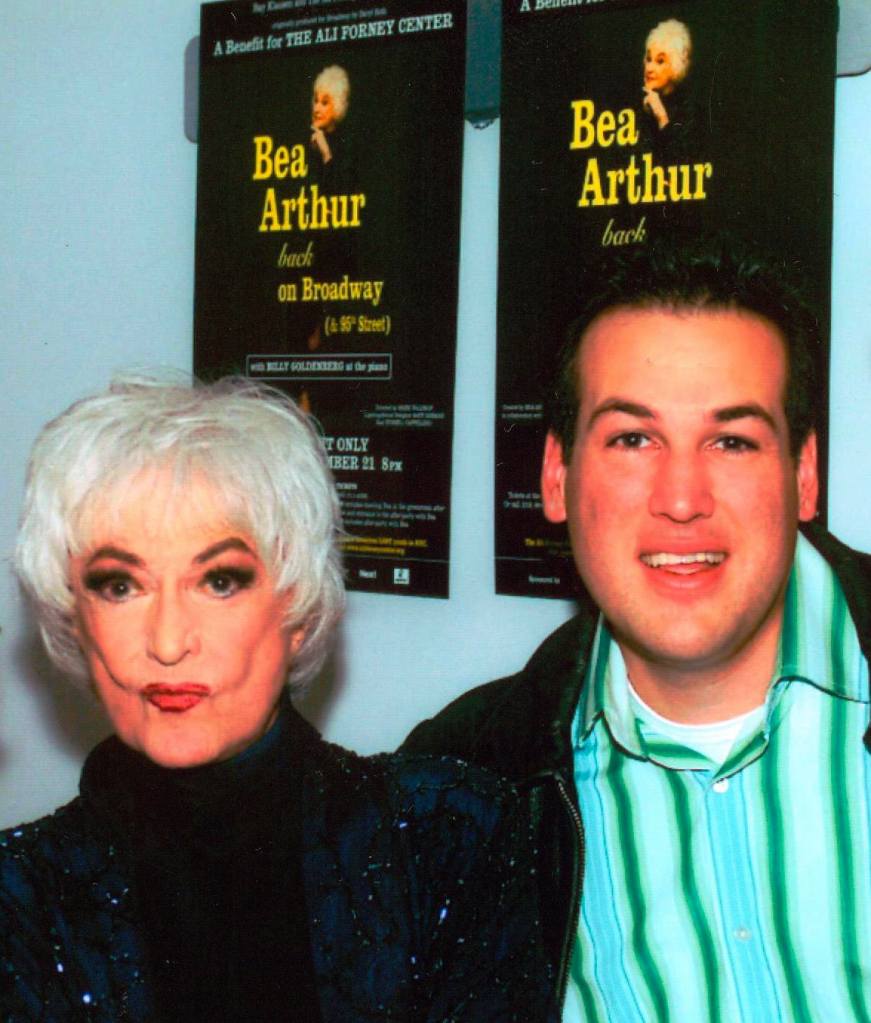
According to Colucci, what we saw of Dorothy on screen actually contributed to one of the biggest misconceptions about Arthur herself. While researching Golden Girls Forever, he interviewed all of the cast members except Estelle Getty, whose declining health prevented an interview. Arthur, however, proved to be the most challenging to secure. “I was given by the Actors’ Guild what they called a reference number, which turned out to be Bea’s home phone number,” he recalled. “When I called and I got the answering machine that says, ‘I can’t come to the phone right now,’ I stammered my way through leaving a message. It was, like, ‘Oh my God, I’m leaving a message on Bea Arthur’s machine.’ I managed to stammer out that I wanted to talk to her and she initially kept turning me down, because she said it wasn’t the happiest time in her life and she doesn’t like looking back.”
One memorable conversation came while Colucci was sitting in the Beverly Hills Public Library. “I’m having a phone call with Bea in the middle of the library and people are yelling at me to shut up and finally I just screamed at them, ‘F–k you, it’s Bea Arthur!’ That shut everybody up and Bea laughed.”
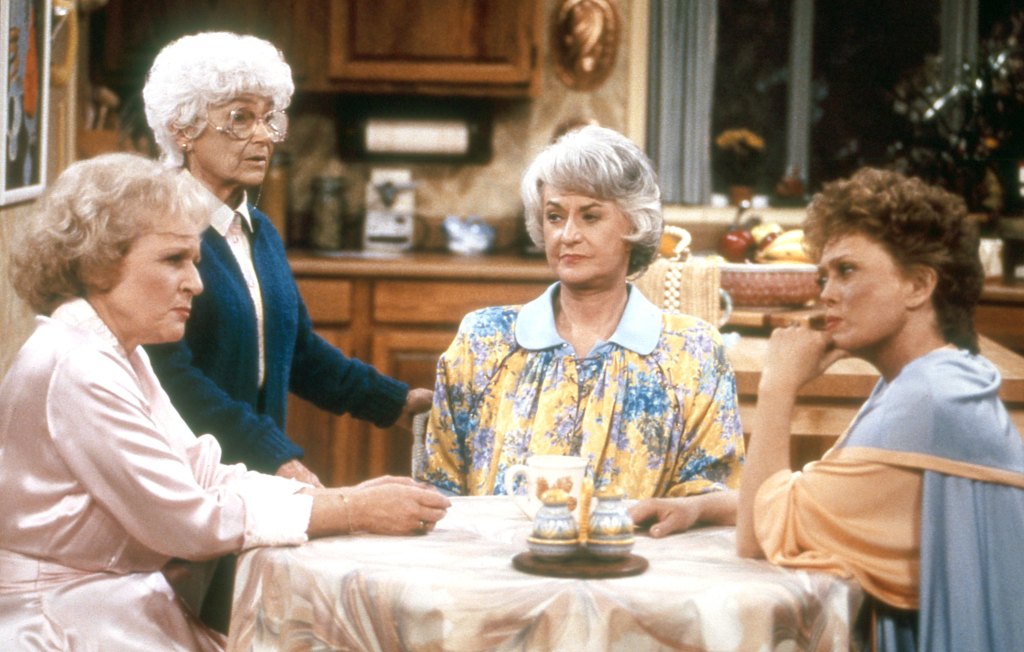
Eventually, Arthur agreed to the interview, but only under one condition. “She had made a pact with me that she’d do the interview if I stayed and had a drink with her.”
The experience left a lasting impression. “There are just moments where Bea Arthur’s got her bare foot up on the coffee table and you’re splitting a bottle of wine with her, making small talk, where you think, ‘This is surreal. I never thought this would happen as a fan.'”
Those hours together revealed something Colucci believes many people misunderstood: “People thought the way to interact with Bea was to be rough with her, because her characters were loud and tough and she was tall and she seemed tough. The irony is that it could not be further from the truth. Although she did have an imposing exterior, she was such a vulnerable mushball on the inside—if you recognized that and treated her kindly, but yet without BS, because she didn’t like BS and wouldn’t tolerate it. You just had to be a straight-shooter. That was the key to her heart.”
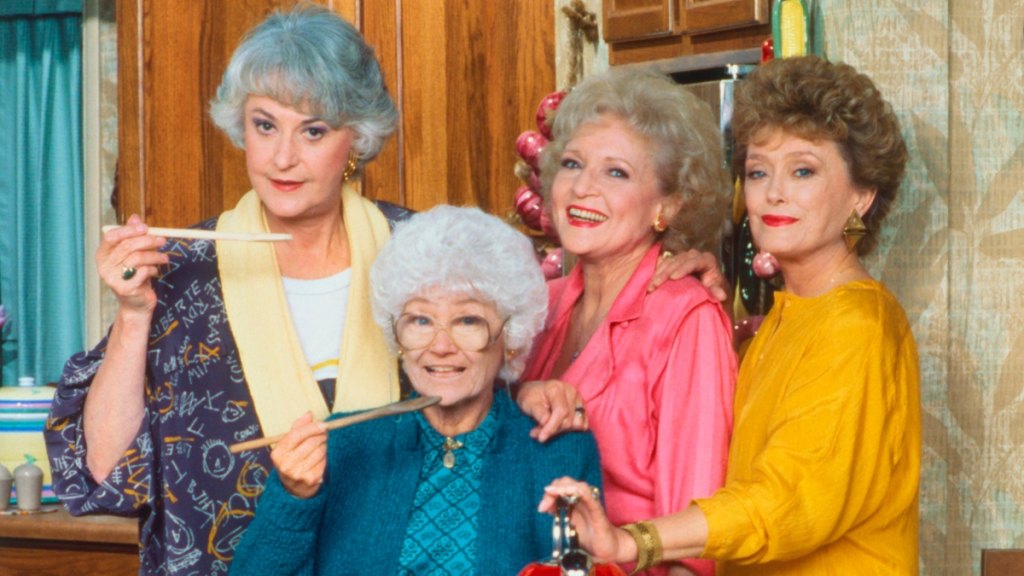
“I felt like, although even in the first hour of our interview she was kind of closed up, she really opened up to me by the end of three or four hours together. We ended up with a hug, which I hadn’t ended any of the others with. I felt like she had really shown me her true self and it was almost like making a friend over four hours, which doesn’t normally happen.”
Why did Dorothy leave ‘The Golden Girls’?
There were periods where Bea Arthur wanted to quit The Golden Girls, and while she would ultimately stay until the end of the show’s run, there was a great deal of pain along the way over the steady stream of jokes aimed at Dorothy’s appearance. According to Colucci, those jokes eventually reached a breaking point.
“She wanted out. She was sick of it,” he said, citing an incident that occurred during the fourth season. “It came to a head one time when she cried at a table read over jokes. It was brand new writers on the show and they were so excited for their first table read and they thought, ‘Oh, we’re going to get all these laughs.’ And it’s calling Bea ugly, ugly, ugly, ugly, and she started to cry. She walked out and said, ‘That’s it. I’m going to quit.'”
The reaction immediately got the attention of the show’s producers and writing staff. “At that moment, the writers and producers vowed, ‘Okay, no more Dorothy bashing. We’re going to cut back on all the ugly jokes on Bea because we’re going to lose her.’ It took four years for it to come to a head for her to finally … I mean, she probably let her displeasure be known in some more subtle ways, but she finally had to really break down over it.”
How to watch ‘The Golden Girls of Summer’ on MeTV’s ‘Best of Dorothy’ Week
Monday, June 8
10:00 pm ET/PT—“Guess Who’s Coming to the Wedding?” When Dorothy’s daughter Kate gets married, Dorothy must confront her ex-husband Stanley, who walked out on their 38-year marriage for a younger woman.
10:30 pm ET/PT —”The Operation”: Dorothy is afraid to have an operation for a benign growth on her foot.
Tuesday, June 9
10:00 pm ET/PT—“Forgive Me, Father”: A teacher to whom Dorothy is attracted turns out to be a priest.
10:30 pm ET/PT—”Dorothy’s Prized Pupil”: One of Dorothy’s students writes a prize-winning essay on what it means to be an American. After this, the Department of Immigration and Naturalization Services reveals that the boy is in the country illegally.
Wednesday June 10
10:00 pm ET/PT—”Dorothy’s New Friend”: Dorothy’s friend, local author Barbara Thorndyke, treats Rose and Blanche condescendingly.
10:30 pm ET/PT—”Comedy of Errors”: After a high school classmate dies unexpectedly, Dorothy decides to fulfill a long-forgotten dream of being a stand-up comedian.
Thursday June 11
10:00 pm ET/PT—“Feelings”: Dorothy attracts severe criticism for refusing to pass a star football player in the high school English Literature course which she is teaching.
10:30 pm ET/PT—”Questions and Answers”: Dorothy learns that auditions for the TV game show “Jeopardy!” are coming to Miami, and she plans to try out for it. Later, she dreams of a bizarre game of Jeopardy! This pits her against Rose and her neighbor, Charlie Dietz.
Friday June 12

10:00 pm ET/PT—”One Flew Out of the Cuckoo’s Next Pt. 1″: As Dorothy and Lucas prepare to get married, they try to persuade Sophia to come live with them in Atlanta.
10:30 pm ET/PT—”One Flew Out of the Cuckoo’s Next Pt. 2″: Dorothy and Lucas’ plot to get even with Blanche leads to a surprise wedding.
Conversation
All comments are subject to our Community Guidelines. Woman's World does not endorse the opinions and views shared by our readers in our comment sections. Our comments section is a place where readers can engage in healthy, productive, lively, and respectful discussions. Offensive language, hate speech, personal attacks, and/or defamatory statements are not permitted. Advertising or spam is also prohibited.