Art Carney Was ‘The Honeymooners’ Unsung Hero—Fighting His Demons, He Achieved Comic Genius (EXCLUSIVE)
He suffered from depression off-screen—but as Ed Norton, he changed the face of TV comedy forever

Art Carney’s name doesn’t come up nearly as often as Lucille Ball, Jackie Gleason or Ed Sullivan when people talk about the early days of television, but for Michael Starr, that’s exactly the problem. A longtime New York Post writer and author of, among others, Art Carney: A Biography, grew up on “the Classic 39” episodes of The Honeymooners and couldn’t help noticing that the guy in the sewer worker’s cap was doing far more than just feeding Jackie Gleason punchlines.
“I always felt he was sort of an unsung talent, especially in the early days of television,” Starr says. Gleason was “The Great One,” the name on the marquee, the larger-than-life personality in the gossip columns, but Carney was the one quietly grounding him. “Art was the one who won all the Emmy Awards for The Jackie Gleason Show. Gleason never won, as far as I know. Or if he did, he won one. Art won four or five.”
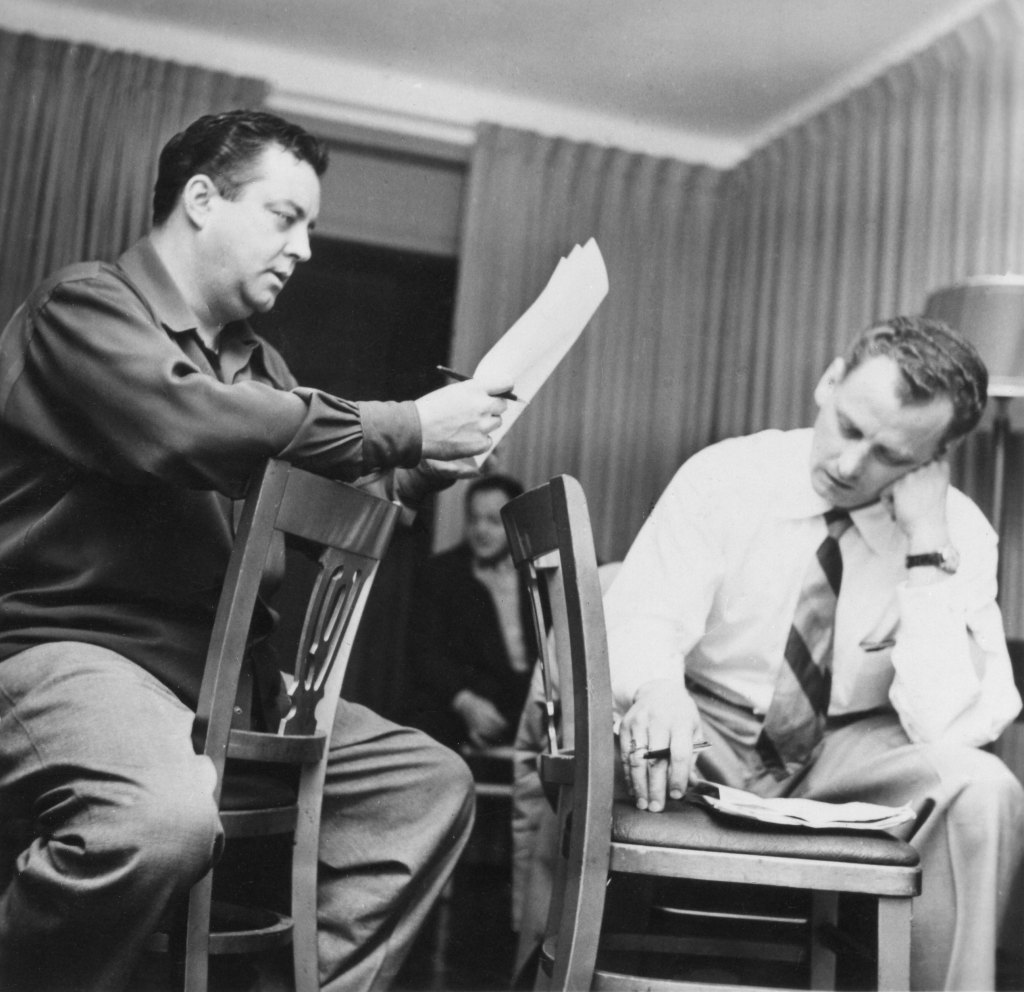
You can still see why when you watch those episodes today. “There’s rarely a bad moment in any of those episodes, and Art is a big part of that.” Playing Ed Norton—a sewer worker who somehow managed to be both completely ridiculous and oddly real—Carney radiated what Starr calls “personal angst” under the goofiness. “It was a silly character, Ed Norton, but he was quite funny and vulnerable at the same time. And what a foil he was for Jackie Gleason.”
People talk about Martin and Lewis or Abbott and Costello; Starr firmly believes you have to put Gleason and Carney in that same conversation, even if their most famous run was essentially one season, 1955–56 (not counting all of those Honeymooners skits on The Jackie Gleason Show).
The nice guy nobody really knew

When Starr set out to write the book, he thought he had a decent handle on who Art Carney was. What surprised him most wasn’t the talent, but rather the combination of how beloved Carney was and how little anyone really knew him. “First of all, how well liked he was,” the writer says of those he spoke to about him. “Nobody had a bad word to say about Art Carney. And it was always the same thing: how much of a nice guy he was, how professional he was, yet at the same time how they really never felt they knew him very well, because he was a very private person.”
Starr tracked down people like producer Jack Philbin, Morey Amsterdam, Al Lewis and Phil Leeds. Over and over, he heard the same paradox: Carney was adored, but distant. He’d show up, do the work, be unfailingly professional and then disappear back to his family in Westchester, New York, instead of holding court like Gleason did in Manhattan bars and nightclubs.
He came away convinced that, on some level, Carney never really wanted the celebrity that attached itself to him. “I don’t think he regretted his celebrity, but I think maybe in a way he did,” he says. “It was happenstance. He ended up on The Jackie Gleason Show and they became this huge starring team, but he was really a shy guy and a bit of a recluse. And he was an alcoholic,” a combination that would shape his life and career.
The lost Ed Norton spinoff

One of the more telling episodes in Carney’s story is the short-lived attempt to spin Ed Norton off into his own series during the Miami Gleason years. CBS, Gleason and his writers thought there might be more to do with Norton beyond the Kramden apartment. They shot a pilot in the Miami Auditorium, produced by Gleason’s company and written by his regular writing staff, with Al Lewis, Phil Leeds and Ron Carey in support. On paper, it should have worked. In practice, it was a disaster.
“Art was drunk during the filming of this pilot,” points out Starr. “He was dropping the script and blowing his lines, and it was one of the few times he sort of let his guard down.” Phil Leeds, who co-starred, was blunt with Starr: Carney “f**ked it up… He was a brilliant talent, couldn’t remember his lines, didn’t know if it was the booze or the pills,” and Leeds didn’t think Carney had enough confidence in himself to carry a show.
They tried to work around it. At one point, Starr says, Carey’s character came in with a clipboard so Norton could read off it, but the “clipboard” was just loaded with Carney’s dialogue so he wouldn’t forget. The audience sensed something was wrong. “People thought they were in an insane asylum,” Starr recalls someone telling him. “Nobody was laughing. It was like a giant mural with people painted in their seats.”

Looking back, he believes that more than addiction, it was psychology. “I do think that,” he says when asked if Carney sabotaged his own chance. “He didn’t want to be the star of the show, but he went along with the plan to do the spinoff for CBS. Drinking heavily during the shooting of that pilot — if you want to look at it from a psychological angle, then, yes, self-sabotage. Ruining it, but probably deep down glad that he did, because then he didn’t have to carry a show by himself.”
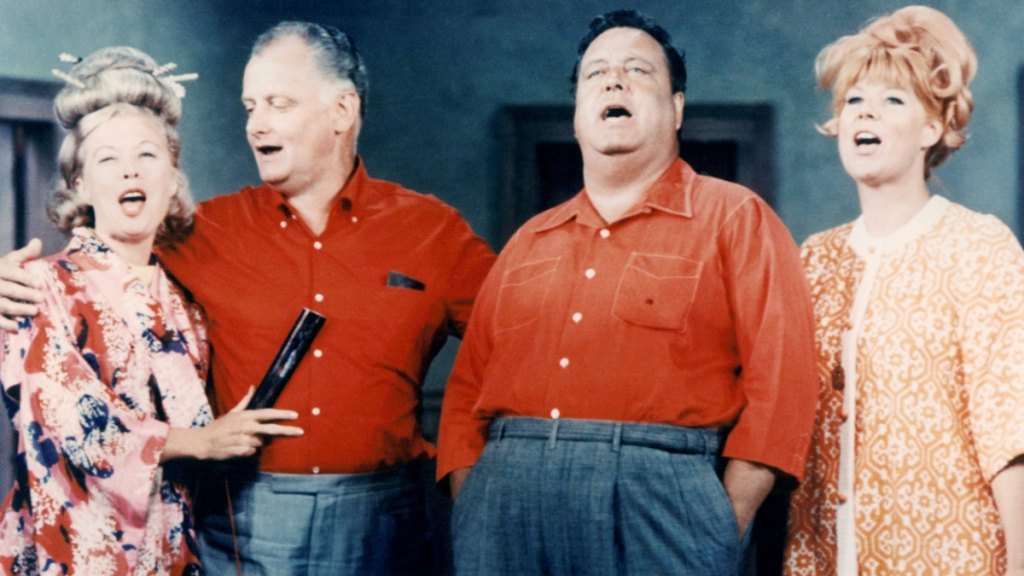
And he didn’t have to lose the one thing he did seem to rely on: that chemistry with Gleason. Even in the later color Honeymooners “musicals” from Miami, and the ’70s specials, Starr sees the spark. “They were obviously older and paunchier, but you could still see the spark between them,” he says. Off camera, they weren’t friends; on camera, it was still magic.
A war hero with a limp, a hearing aid and real dramatic chops
Because Ed Norton looms so large, it’s easy to forget just how much else Carney did — and how much he brought to those roles physically and emotionally. He was a World War II veteran who was seriously wounded in France a few weeks after D-Day. “He was shot in the leg and spent a lot of time in the hospital recovering,” Starr says. One leg ended up shorter than the other. “If you watch him closely, even as Ed Norton, you can see a limp.” Later in life he wore a hearing aid. Casting directors used all of that.
In Robert Benton’s The Late Show, Carney plays aging private eye Ira Wells. “He was older than Art was at the time, but Art at that time had a hearing aid, and he limped, and he just looked old,” Starr notes. “He was older than he really was, kind of like they aged up Redd Foxx when he started to play Fred Sanford. So, I think his war service and the limp and his hearing aid definitely contributed to his acting persona in a weird way.”
Carney also worked extensively in live TV drama in the 1950s, including Playhouse 90. Starr points to “Call Me Back,” essentially a one-man show in which Carney played an alcoholic waiting for a phone call, as proof of how deep he could go. “He really, for a man who had no classical training and had never taken an acting class, was able to plumb the depths of his acting talent and really come up with some gems along the way.”
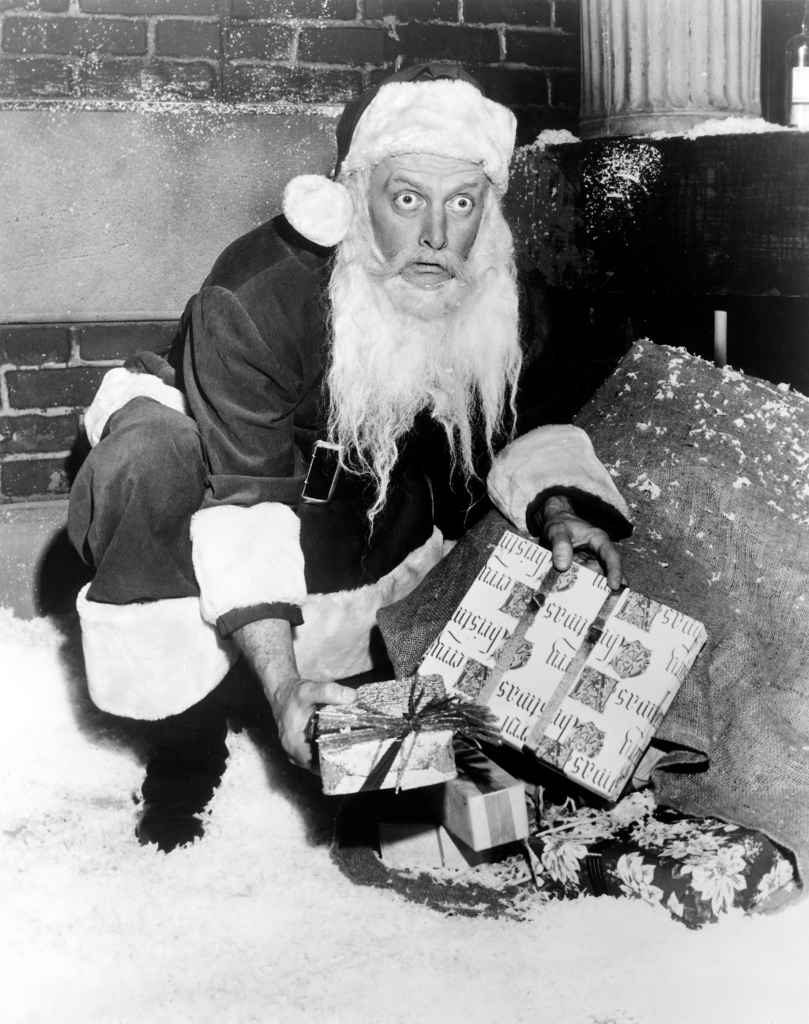
Even his most famous dramatic TV turn, the Twilight Zone episode “Night of the Meek,” circles back to his demons. Carney plays a broken-down, alcoholic department store Santa who stumbles into a shot at redemption. “It’s one of those classic Twilight Zone episodes… wistful and melancholic,” Starr says. He loves how Carney taps into that sadness. “He’s great in that and very believable. And of course, when you’re being written for by Rod Serling, that helps.”
Then there’s 1974’s Harry and Tonto — the movie that stunned Hollywood by handing Carney an Oscar over the likes of Nicholson and Pacino. “One of the amazing things to me was that he won,” Starr says. “People forget that because they always think of him as Ed Norton.” When Harry and Tonto came out, Carney was playing a man about 20 years older than himself, and doing it so naturally that audiences accepted him as a lonely, aging widower without question.
Behind that triumph, though, was the same self-doubt and depression that haunted him. Starr recalls a story from Jackie Gleason Show co-star Sheila MacRae about visiting Carney after the win. “He’s sitting in his bathrobe with his Oscar, saying, ‘What am I going to do now? How am I ever going to move on from this and top this?’”
Alcoholism ran in his family, and his own drinking went back to his days with the Horace Heidt Orchestra in the late ’30s and early ’40s. “He was already belting back a few for breakfast,” Starr says, and Carney himself admitted that’s probably where it started.
‘The Odd Couple,’ Walter Matthau and a breakdown

By the mid-1960s, all of that caught up with him in a very public way when he took on the role of Felix Unger in the original Broadway production of Neil Simon’s The Odd Couple opposite Walter Matthau.
Art was “a disciplined performer who would learn his lines, hit the marks, all that sort of thing,” Starr says. Matthau was the opposite: a ham who loved to improvise, throw in unscripted lines and steal scenes. He spoke to actor Paul Dooley and others who were in the show. “Art did not like that, nor did he like Walter very much,” he says. The combination of Matthau’s style, the pressure of a hit play and Carney’s own heavy drinking became toxic.

“He basically had a sort of mini nervous breakdown and had to leave,” Starr says. Eddie Bracken replaced him; Matthau stayed, went on to win the Tony as Oscar Madison and then starred in the film version Carney couldn’t get insured for. Carney checked himself into a sanitarium in Connecticut, dried out, took time off and eventually reunited with Gleason on television — but it was a clear example of how fragile he was when pushed into the center of the spotlight.
Starr thinks Carney could absolutely relate to Felix’s melancholy. “His wife leaves him and he’s contemplating suicide at one point,” he says. “I think he could tap into that.” At the same time, Carney was living alone in a Sixth Avenue hotel, drinking, watching his first marriage fall apart. “It was a bunch of things that added up to a recipe where nothing good could come of this.”
Love, divorce, demons… and ‘What’s for dinner?’

Carney’s personal life tracked closely with those ups and downs. He married his first wife, Jean, had three children and seemed to be living the midcentury American dream from the outside. Inside, he was, as Starr puts it, “a tortured soul.”
He and Jean divorced around the time of The Odd Couple breakdown. Carney married Barbara Isaacs, who worked for David Susskind. Starr believes Carney was still with Barbara when he won the Oscar. Eventually, though, that marriage ended too. Getting sober and getting older pushed him back toward the woman who’d known him before the fame, the Emmys or the Gleason circus.
“The story goes that he went back to Connecticut, where his wife was, knocked at the door and said, ‘What’s for dinner?’” Starr says, laughing. “That’s the story they tell anyway.” They remarried and stayed together until his death.
It’s the kind of small, human moment Starr clearly likes—consistent with the quiet, private figure who went home to the suburbs when Gleason held court in Manhattan, and who never quite seemed comfortable with the level of fame he achieved.
An underappreciated giant

If there’s a throughline to Michael Starr’s take on Art Carney, it’s that the man was bigger, deeper and more important than the one role he’s now almost exclusively remembered for.
Performers like that, he points out, don’t come out of nowhere. Before The Jackie Gleason Show and The Honeymooners, there was the Horace Heidt Orchestra, radio work, the film Pot o’ Gold with Jimmy Stewart, years of mimicry and announcing, and countless live TV appearances. Later, there were character parts on Alfred Hitchcock Presents, Batman (as the Archer), unsold pilots like The Snoop Sisters and deeply felt movie work in the aforementioned Harry and Tonto and The Late Show.

You can see Carney’s fingerprints even in shows that came long after. Once Seinfeld took off, Starr heard people compare the way audiences reacted to Michael Richards’ entrances as Kramer to what used to happen when Norton bounded into Ralph and Alice’s apartment, shooting his cuffs and fussing with props. They literally had to pause for the applause.
For Starr, that’s part of the legacy, but it isn’t the whole thing. “I think Art’s legacy is as one of the premier TV comic geniuses and as one of the performers who, in the early days of television, helped the medium establish itself,” he says. “I just think he’s an underappreciated performer in the pantheon of show business.”
Conversation
All comments are subject to our Community Guidelines. Woman's World does not endorse the opinions and views shared by our readers in our comment sections. Our comments section is a place where readers can engage in healthy, productive, lively, and respectful discussions. Offensive language, hate speech, personal attacks, and/or defamatory statements are not permitted. Advertising or spam is also prohibited.