Inside the Casting of ‘Star Trek: The Next Generation’—How the Iconic Crew Almost Didn’t Happen
From surprise auditions to onset secrets, the cast and crew share how this TV family truly began

From the moment Star Trek: The Next Generation moved from concept to reality in 1987, everyone involved understood that casting would determine whether the franchise truly lived on or merely traded on nostalgia. The original Star Trek owed much of its longevity to an almost alchemical pairing of actors (William Shatner and Leonard Nimoy among them) and characters, and any successor would face the near-impossible task of recreating that balance without imitation.
For The Next Generation to work, the creative team didn’t just need strong performers; they needed the right people in exactly the right roles. Bringing in veteran casting director Junie Lowry-Johnson signaled that the producers were taking that challenge seriously—and betting that lightning could, in fact, strike twice.
Even so, the eventual lineup audiences came to know was far from inevitable. Early casting discussions reveal just how different the series might have looked if circumstances had shifted slightly. For the crucial role of Captain Jean-Luc Picard, names under consideration included Mitchell Ryan—who would later appear memorably as Riker’s estranged father in Season 2’s “The Icarus Factor”—as well as Roy Thinnes (star of the ‘60s sci-fi series The Invaders), who emerged as a serious contender and, for a time, they were widely regarded as the front-runners.
Perhaps the most fascinating possibility, however, was the studio’s strong interest in Yaphet Kotto. A commanding screen presence with undeniable gravitas, Kotto had already left an impression as the James Bond villain Kananga in Live and Let Die and as the doomed space trucker Parker in Ridley Scott’s Alien. Casting him as the captain of the Enterprise would have radically reshaped the visual and cultural identity of Star Trek at a pivotal moment—an alternate path that speaks volumes about both the ambition and uncertainty surrounding The Next Generation as it prepared to boldly go forward.
RICK BERMAN (executive producer, Star Trek: The Next Generation): “The fans of the original series already had a somewhat jaundiced eye when it came to this new series, because they felt, how can you put a new captain at the seat of the Enterprise? Bill Shatner, that’s Captain Kirk. And when they heard it was going to be a 40-year-old bald Englishman, they kind of went nuts.”
ROBERT H. JUSTMAN (supervising producer, Star Trek: The Next Generation): “My wife and I were attending a UCLA extension course on humor and one night there were going to be two actors who were going to read from Shakespearean comedies and Noel Coward. There were a woman and a man and the man was Patrick Stewart. My wife and I were sitting there and Patrick looked familiar, but I hadn’t placed him as Serjanus from I Claudius or from Tinker, Tailor, Soldier, Spy and shows like that. Patrick sat down, pushed up his jacket sleeves to display his massive forearms, and commenced to read. He spoke a few sentences and I was thunderstruck.”
“I turned to my wife, Jackie, and I said, ‘I think I found our new captain!’ I’d been back at Paramount preparing the show for a month or two at the most, but I was so impressed with what I saw and heard that night, the next day I called SAG and found out who Patrick’s agent was here in town, because he was over from London just for this, and got hold of the agent and made arrangements for Patrick to visit with Gene and me at Gene’s house the following Monday. Patrick came in his rental car, and we sat around for 30-40 minutes, and then he made his goodbyes and left to fly back to England. After he drove away, Gene closed the door and turned to me and I will quote him exactly. He said, ‘I won’t have him.’”
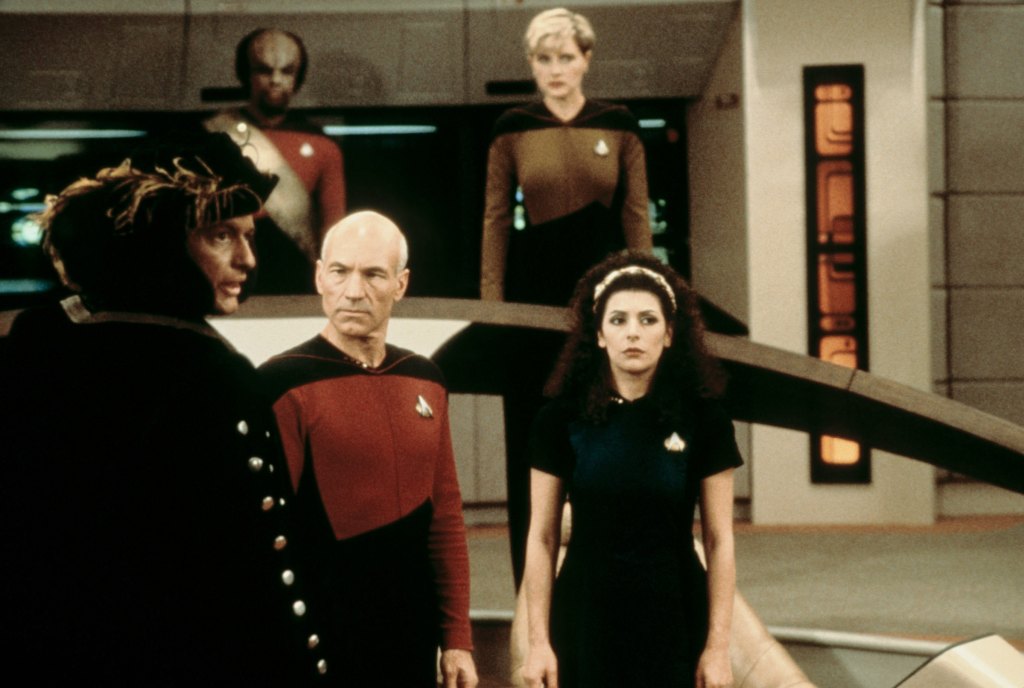
RICK BERMAN: “I met Patrick Stewart and said to Bob Justman, ‘We have to convince Gene to use this guy’ and Bob said to me, ‘We can’t. When Gene makes up his mind, it’s a waste of time to try and change it.’ But in my case, ignorance was bliss. I didn’t believe that.”
ROBERT JUSTMAN: “No matter what I said, he was adamant, and the reason was because the character he had created in his own mind was a very hairy Frenchman, so we embarked upon a campaign that lasted for some months, and when Rick Berman came on the show and became supervising producer with me, Rick jumped all over it, too, and said, ‘He’s perfect!’”
RICK BERMAN: “I was the guy who basically bugged Gene into realizing that Patrick was the best Picard.”
GENE RODDENBERRY (Creator, Executive Producer, Star Trek: The Next Generation): “Bob Justman, who has been with me since day one, suggested Picard’s identity. He had gone to UCLA and had seen this man he wanted as Picard. He presented him to me, and my first reaction was, ‘I don’t want a bald man.’ In his wisdom, Justman kept his mouth shut and let me grow accustomed to him.”

RICK BERMAN: “He finally agreed, though he said, ‘But when we bring him to the studio for the final audition, I want him to wear a wig, because I don’t want this guy going in bald.’ So, Patrick made a phone call to London and got a very, very good wig made by one of the best theatrical wig makers in England. And he had the wig sent over. Patrick came in and somebody was there to help him put on the wig. We brought him to read for John Pike at the studio. It was Patrick and Stephen Macht. A very good actor, but not in Patrick’s league for this role. They both read and at the end Pike said, ‘Go with the English guy, but lose the wig.’ And that was the best three words we could have heard. He knew that Patrick was bald and he had seen all the photographs of him and we had played him a tape of Patrick’s clips. That was the greatest sales point for The Next Generation.”
Prior to assuming the captaincy of the starship Enterprise, Patrick Stewart appeared in a number of well-regarded BBC productions, including I, Claudius and Smiley’s People. On stage, he won the prestigious London Fringe Award for Best Actor for his performance in Who’s Afraid of Virginia Woolf and an Olivier Award for his performance in Shakespeare’s Anthony and Cleopatra.
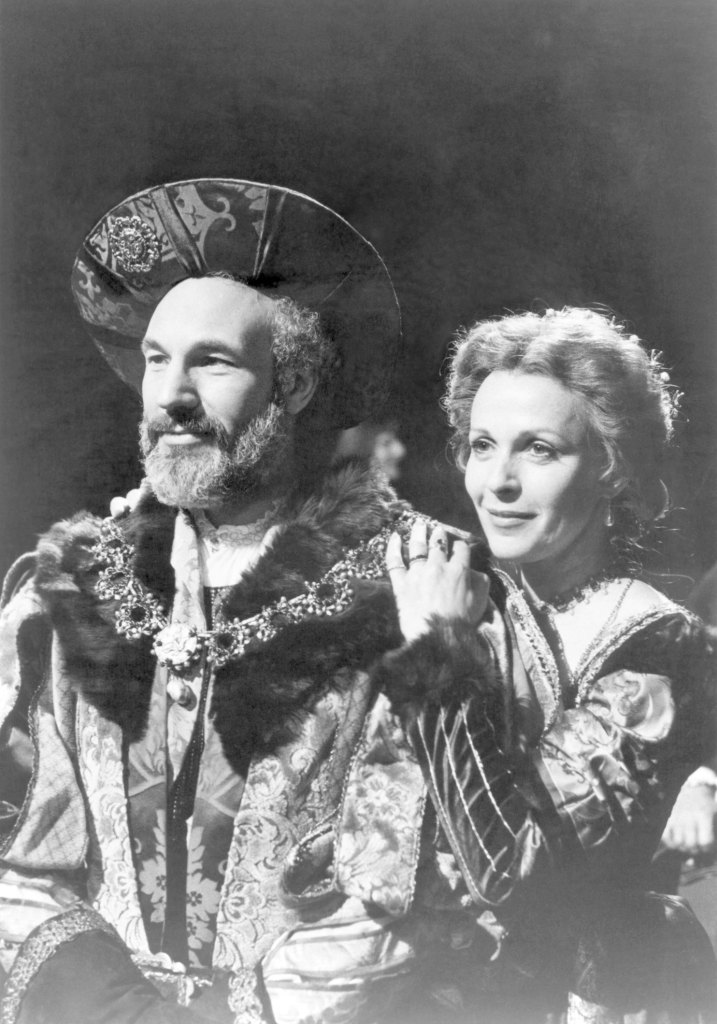
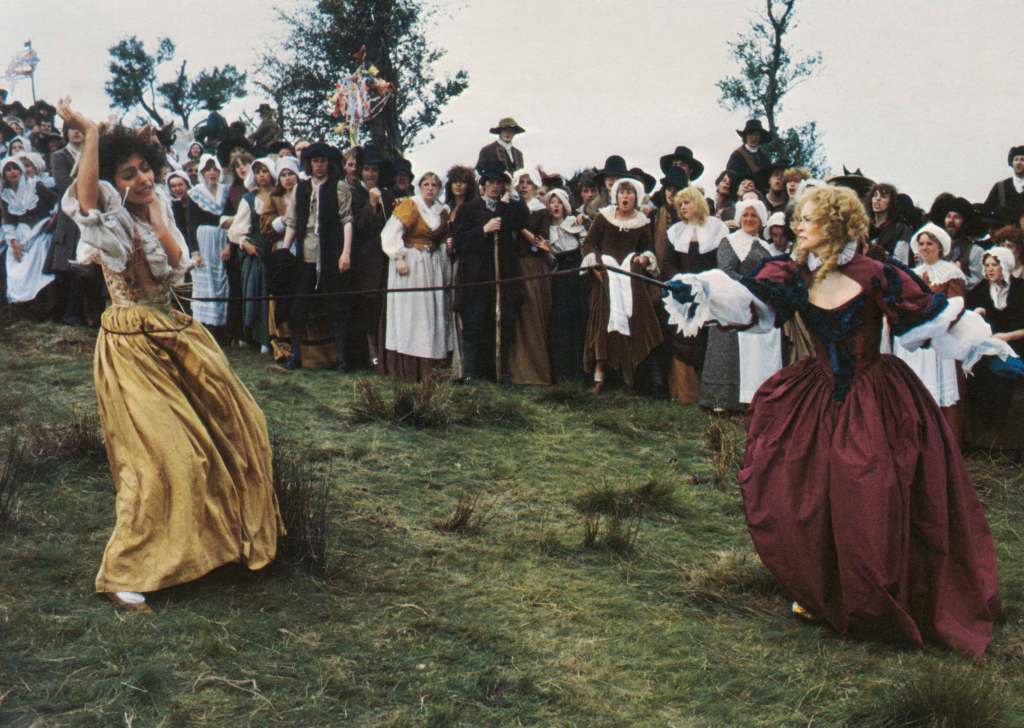
The actor, who plays a Frenchman on the show, grew up in the small English town of Mirfield and for 25 years was an Associate Artist of the Royal Shakespeare Company. His film credits include David Lynch’s Dune, Tobe Hooper’s Lifeforce, John Boorman’s Excalibur and the role of the Duke of Suffolk in Lady Jane. Since assuming the role of Captain Picard, Stewart appeared in Steve Martin’s L.A. Story and later helped define another franchise playing Professor Charles Xavier in the X-Men movies while continuing to star in a one-man version of A Christmas Carol.
PATRICK STEWART (Actor, “Captain Jean-Luc Picard”): “As a friend of mine put it when I accepted the job, how do you think it will feel playing an American icon? It did make me a little uneasy, so I’m happy that people accepted the captain as a non-American. The other thing that has pleased me is that people said, ‘You are the crew of the Enterprise and we believe in that crew.’ They refer to the vivid contrast between the previous captain and myself, not in a competitive way, but in that they are so different there isn’t any sense of overlap.”
BRANNON BRAGA (Co-Producer, Star Trek: The Next Generation): “So much of the success of Next Generation was Patrick Stewart, quite frankly. We always used to say the guy could read a phone book and we’d watch him. He just was so good. I always said a Star Trek series is only as good as its captain and Picard was pretty f’n great.”
PATRICK STEWART: “I am truly interested as a human being and as an actor with the use of power. How it is acquired. How it works. I’ve always been quite a political person and I’ve always been fascinated with the use of power in politics. It was always important to me to try and establish and affirm the quiet, but absolute authority he has on the ship and that seemed to be successful. It’s been my lot for years to play a whole list of national leaders, dictators, kings, princes and party bosses, and I’ve never found that tiresome. If you play a king, you get to sit down a lot when the other people are standing. In The Next Generation, I tended to be on my feet all the time.”
For other roles, Bill Campbell — who had starred in The Rocketeer and Michael Mann’s Crime Story — was Roddenberry’s preferred choice for Riker, although Michael O’Gorman was also considered a front-runner for the role along with Jeffrey Combs, later to be a familiar staple of the Star Trek universe as Weyoun on Deep Space Nine and Shran on Enterprise; and Ben Murphy, who had starred in the short-lived ’70s sci-fi series The Gemini Man.

RICK BERMAN: “For the role of Riker, we cast an actor named Billy Campbell, who later did a bunch of other good things, and [John] Pike didn’t like him. He didn’t feel he had a sense of command. He wouldn’t follow this guy into battle. I think it was really more that he didn’t audition that well for the part and that’s when we went to our second choice, who was Jonathan Frakes, who turned out to be a terrific choice.”
JONATHAN FRAKES (Actor, “William T. Riker”): “I auditioned seven times over six weeks for this part. Unlike anything I have ever had to fight for before. The last few auditions I would be sent to Gene’s office prior to going to whichever executive needed convincing on this particular audition. I kept going up the food chain. In Gene’s office, Gene would give me a pep talk and Corey Allen, the director of the pilot, was there. Gene believed that in the 24th century, as he used to say, they’ll be no hunger and there will be no greed, and all of the children will know how to read. He was able to convey his passion about the future and this optimistic, hopeful, gentler, more thoughtful future that we all wish we could live. As a young actor, eager and willing, I really got caught up in his vision. Patrick and I both have said we wish we could be as articulate and rational as Picard and Riker are when they’re in conflict or have some sort of problems to solve. The characters are so smart and so thoughtful and so loyal. This is all part of Gene’s vision of the future.”

In the case of the android Data, Mark Lindsay Chapman and Eric Menyuk, later cast as the Traveler, were well-liked, but the part ultimately went to Brent Spiner who, in his own way, proved as memorable in the role as Leonard Nimoy was as Spock.
RICK BERMAN: “There’s a reference in the pilot to Data being like Pinocchio. He is a character that had no emotions. And because he was not human, he served a purpose similar to that of Spock. Data had no human emotions, but in fact was the most emotional of the group. And he was a little like the characters in The Wizard of Oz. He wanted to be a real boy like Pinocchio, but he also he wanted to have a heart, wanted to have a brain. Brent was so good at it that all the writers felt a great desire to want to write to that character, which is the best thing that can happen to an actor.”
BRENT SPINER (Actor, “Data”): “It was incredible for me, because initially, when I took the part, my biggest fear was that it was going to be the most limited character not only on the show but on television, because the canvas on which I was being allowed to paint was such a narrow one. Ironically, it’s turned out to be just the opposite. It wound up being completely unlimited and if I could have chosen anything to do on a television show that ran as long as this one did, it would have been to have played as many different characters as I could. I just lucked into a part that turned into the most unlimited role on television.”

MELINDA SNODGRASS (Writer, Star Trek: The Next Generation): “I’ve always used Data as the child. Data is exploring what any child does as they grow up. You can allow Data to make a mistake, learn from it and rectify it in a way that if you have someone else to make that mistake, it seems unbelievable because these are such highly trained professionals.”
BRENT SPINER: “I’ve been a professional actor since 1969 and it wasn’t until I got this job that I didn’t have to worry about how I was going to make my bills and that has been an incredible luxury and it has relaxed me a great deal. There’s the tension that so many actors are under to just get a job and express the talent inside of them, but the practical reality of making a living is so intense for most actors and it was for me as well. It’s the money that’s made the difference. Otherwise, I don’t think I’ve changed a bit as a result of this experience. It was a wonderful job.”
For Tasha Yar, Enterprise head of security, Julia Nickson, who would later be cast in Babylon 5, was well-liked, as was Rosalind Chao, who would later earn a recurring role on the series as Keiko O’Brien, the eventual wife of Chief Miles O’Brien. The role would ultimately go to Denise Crosby, whose previous credits included 48 Hours and Curse of the Pink Panther.
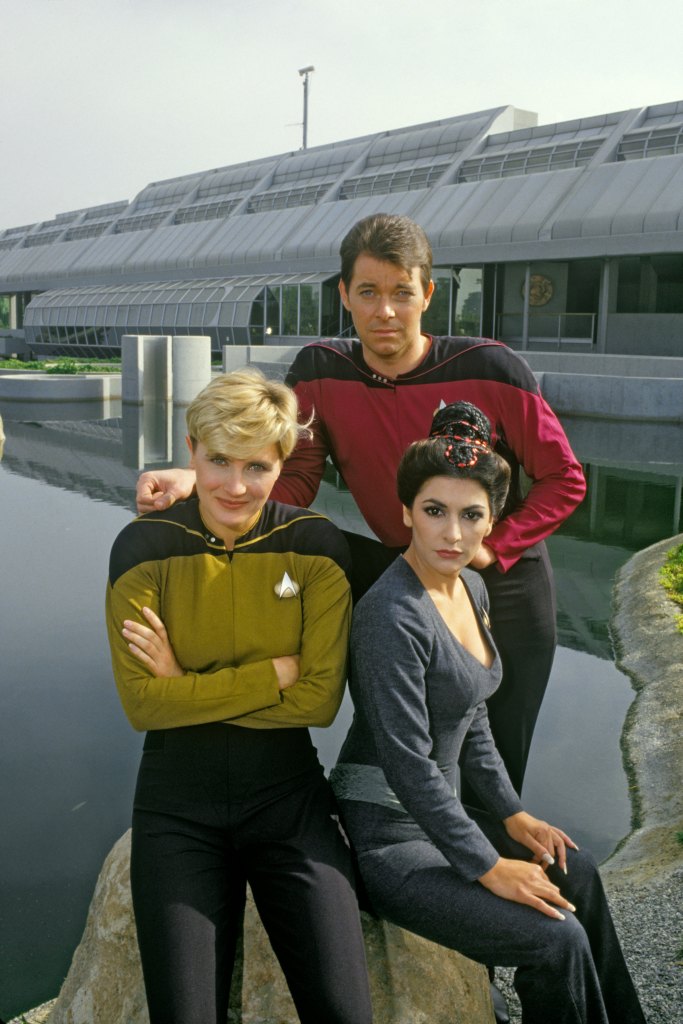
DENISE CROSBY (Actress, “Tasha Yar”): “They originally envisioned Tasha as more butch. In the ’60s, there really weren’t too many roles like that. There were things, for instance, like Julia, in which Dianne Carroll played a single working mother living on her own, and I think that was revolutionary. If you look back at that, it was amazing because women were very much struggling with being pregnant in the workforce and trying to raise kids, as they still are. What I liked about Tasha is she’s strong physically and direct and is comfortable with who she is. I envisioned Tasha as what I brought to it. I sort of like the quality that she could be attractive and sexy and still be able to kick the sh*t out of anyone. My grandfather [Bing Crosby] was a Hollywood legend. Growing up with that wasn’t exactly normal or typical, and I think that helped me understand Tasha’s imbalance and insecurities.”
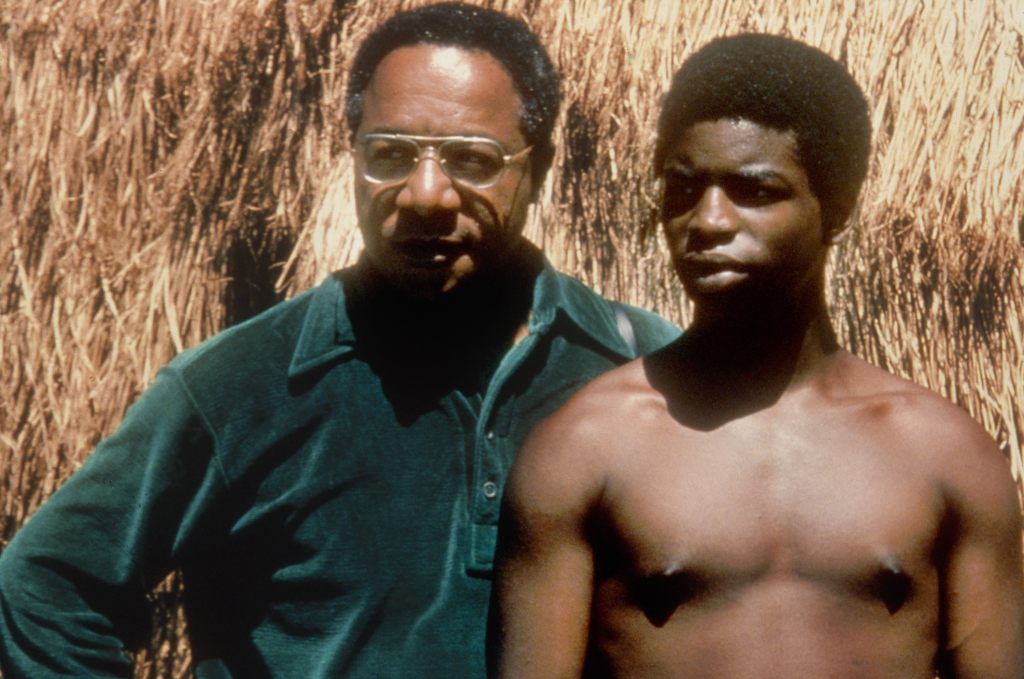
Ironically, the helmsman of the new Enterprise was Geordi La Forge, who happens to be blind. He is, however, able to see via a hi-tech prosthetic device. Among those being considered for the part were Tim Russ, later cast as Tuvok in Voyager; Kevin Peter Hall and, perhaps most amusingly in retrospect, Wesley Snipes. In the end, the part went to LeVar Burton, at the time best known for his role as Kunte Kinte in Roots.

LEVAR BURTON (Actor, “Geordi LaForge”): “Bob Justman produced a television movie that I was in, Emergency Room, and when it came time to cast Next Generation, he made sure that I came in. I liked the old show an awful lot and when I heard Gene Roddenberry was also doing this one, I knew the show would be done with dignity and taste and integrity. Those are the sort of projects I’ve tried to do in my career. It’s in keeping with what I want for myself as an actor. I have always, above all else, wanted to do good work and Star Trek certainly represented an opportunity to do good work. I like Geordi for a lot of reasons. First of all, his energetic attitude is much more loose than that of a lot of other characters. He has a sort of cynical sense of humor and I like that about him. I liked the opportunity to play a character who is handicapped, yet that handicap has been turned into a plus for him and there are all the emotional issues that go along with that.”
DAVID GERROLD (consulting producer, Star Trek: The Next Generation): “At one point, Gene said, ‘I want to have a disabled crewmember.’ So, I prepared a memo listing various disabilities. A guy in a wheelchair, mentally challenged with an electronic brain as a prosthesis; blind… things that would be visual, yet at the same time would give us something that would be an identifiable disability. Gene focused on blind. I envisioned Geordi La Forge with some kind of eye treatment; maybe just a couple of enlarged lenses that you put over the actor’s eyes.”
GENE RODDENBERRY: “[It’s] a prosthetic device which gives only fair eyesight, but results in telescopic and microscopic vision. More than that, it gives him some ‘sensor’ abilities not unlike what the tricorder gave our people in the first series.”
LEVAR BURTON: “I love the opportunity to do these stories with this group of actors, producers and writers and to provide entertainment that makes you think once in a while. That’s what I built a career on, and I was really happy to be able to do it in this framework. I appreciated Gene Roddenberry’s approach to science fiction. Gene’s vision of the future has always included minorities—not just blacks, but Asians and Hispanics as well. He’s saying that unless we learn to cooperate as a species, we won’t be able to make it to the 24th Century.”
RICK BERMAN: “In the case of Marina Sirtis and Denise Crosby, we selected them for the opposite roles and Gene said, ‘I want Crosby to play Tasha and I want Marina to play Troi.’”
DAVID GERROLD: “Bob Justman and I spoke about a person aboard a ship who serves the function of an emotional healer. Not a chaplain, because we have moved beyond mere ritual, but someone who serves as a ‘master.’ His/her job is to support those aboard the ship in the job of being the best they can be. That would eventually become Deanna Troi.”
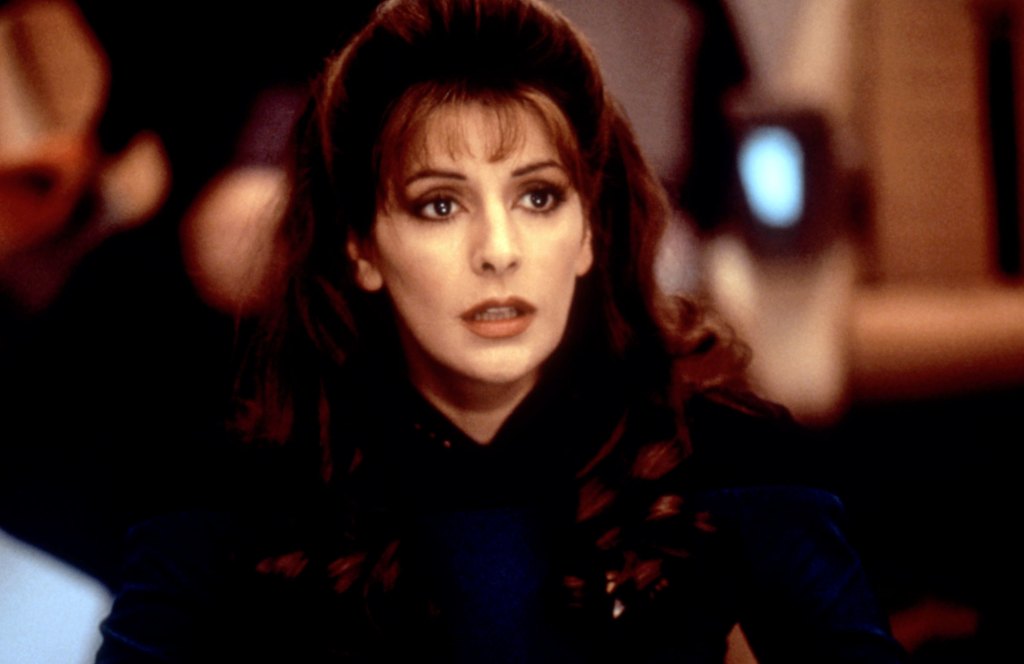
MARINA SIRTIS (Actress, “Deanna Troi”): “This is the kind of life you dream of as an actor—to be on a show that gets so much publicity and attention. The bad part, which is outweighed by the good part, is that you’re following a legend, so it suddenly hit me a week before the pilot aired that if it didn’t work out, we were going to be destroyed. Fortunately, that didn’t happen. If I had sat and thought about it logically, I would have known that wasn’t going to happen. But if you look up actress in the dictionary, it says ‘insecurity,’ so that was basically what it was.”
“The characterization and look changed after the pilot; we felt the character was a little bit too intense and there wasn’t enough range in Troi. Basically, we were concentrating on her Betazoid abilities. I worked more on developing the human side of her, which is far more interesting to play. It was difficult to watch the pilot with my hands over my eyes. I didn’t feel it was working really well. Personally, knowing what I can do as an actress and seeing what was up there, I wasn’t happy.”
BRANNON BRAGA: “A therapist on a ship full of characters that supposedly had gone beyond human foibles and no longer succumbed to petty jealousy and anger? Why is there a therapist on board?”
MARINA SIRITS (Actress, “Deanna Troi”): “There wasn’t enough range in Troi. All she seemed to be feeling was a lot of anguish. In the first couple of seasons, the [writer] turnover was so immense that I don’t think they could ever get a hook. They were here for 10 minutes and then they were gone, which wasn’t really long enough to kind of establish any kind of continuity or character development in their scripts.”
TRACY TORME (Creative Consultant, Star Trek: The Next Generation): “I’m not really sure that the Deanna Troi character ever fully worked for me. I liked Marina very much as a person, but that character was a little soft for me and touchy-feely. I thought there was a little too much of that in the show, in general.”
MARINA SIRTIS: “If you go back to ‘Encounter At Farpoint,’ where I was dressed in the cosmic cheerleader outfit with the ugliest go-go boots ever designed, I was about 20 pounds heavier. Imagine a potato with matchsticks sticking out of it and that was my shape. After the first episode, they decided the outfit didn’t suit Troi’s character, because she was cerebral and kind of elegant. They decided they would design something more flattering, so they came out with the ugly grey spacesuit and they put a belt in a lighter colored fabric exactly where my fat was. Unfortunately, what happens if the girls have cleavage, they cannot have a brain because the two don’t go together. So, when I got the grey spacesuit and got cleavage, she lost her brain matter. That was a shame, because originally, Troi was not supposed to be the chick on the show. Gene [Roddenberry] said she was intended to be the brain on the show, which you would never know from watching it. She was supposed to have equal the intelligence of Spock.”
Meanwhile, actress/choreographer Gates McFadden beat out sci-fi favorite Jenny Agutter (Walkabout, Logan’s Run, An American Werewolf in London) for the role of Dr. Beverly Crusher, the starship’s newest chief medical officer.

DAVID GERROLD: “One day during lunch, I kept talking about Beverly Crusher, who was the ship’s schoolteacher, and in the middle of this, I said, ‘We don’t have a ship’s doctor yet, why don’t we have Beverly Crusher be the ship’s doctor?’ I wish I’d tape-recorded the conversation, because everybody said, ‘Nah, that doesn’t work,’ and then they started discussing it. [Producer]Eddie Milkis said, ‘You know, that saves us a character. If Beverly Crusher is the ship’s doctor, then we don’t have to create a ship’s doctor.’ Then Bob Justman said, ‘No, that makes it harder for the captain to have this relationship with Beverly Crusher that we want to have. On the other hand, the fact that it’s harder to have this relationship puts more tension… You know, Gene, that’s not a bad idea.’ And then Gene started discussing it. By lunch, Beverly Crusher was the ship’s doctor.”
GATES MCFADDEN (Actress, “Dr. Beverly Crusher”): “It is an ensemble show and I liked the other people who were cast. I felt the producers really wanted me to be a part of it and it was nice to be wanted. I was also impressed with Gene Roddenberry. There were some philosophical points of view presented and that was always going to be a part of it. It wasn’t just another evening soap. Comedy is my favorite thing to do and I auditioned for the part thinking it was a very funny part, because they gave me ‘The Naked Now.’ I thought she was going to be a hilarious character and I ended up with the straightest and most serious character of all.”
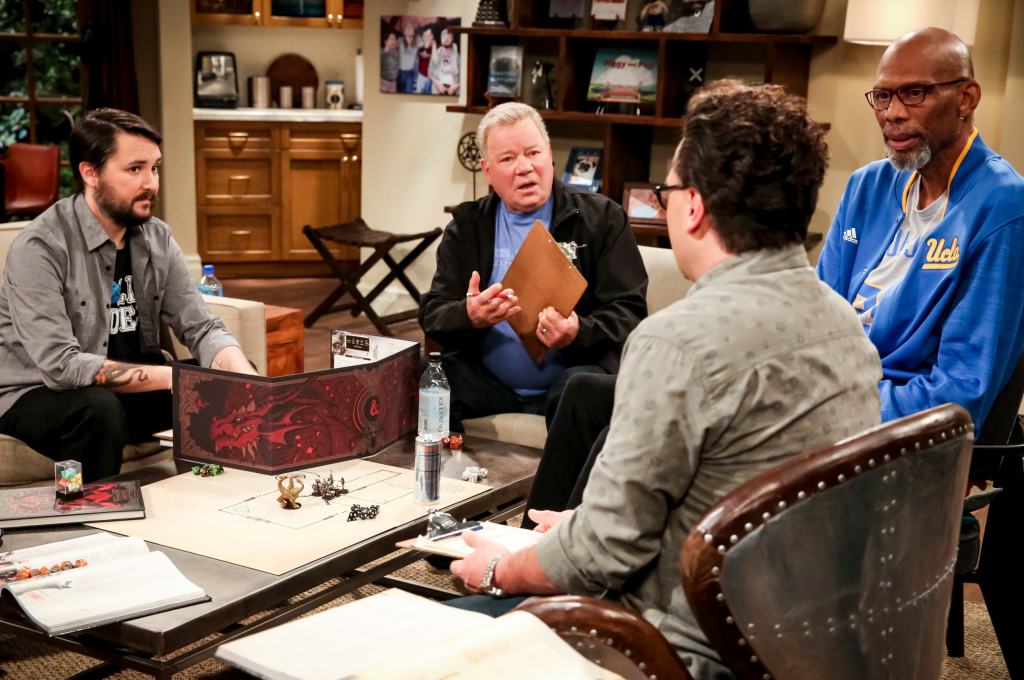
WIL WHEATON (Actor, “Wesley Crusher”): “I was a Trekkie. Not in the sense I could say in Episode 33, in the fourth hour, in the second minute, Spock’s fourth line was… I loved the show, but I never sat there and thought about someday I could be on it. They called me and said they’d like to see you for Star Trek. It was sort of like the kid who always wanted to be President and is in the White House and gets to meet the President. I justified my purchases of any Star Trek items as a business expense, researching my character. Thank you very much… write that off.”
“Wesley was a teenager with the intellect of an adult and it’s not his fault. He doesn’t try to prevent his intellect from showing. A lot of the time, he comes across as smart-ass. He doesn’t mean it. The viewers could feel for Wesley because he comes onto a Galaxy-Class Enterprise with all this incredible stuff and you walk onto this ship and go, ‘Wow!’ When people came on the set, I’m, like, let me show you my ship like I’m showing off a new car.”
TRACY TORME: “There was definitely a sense that they were probably going to not stick with Wil. The fans were always sniping about the Wesley character. They just didn’t like it. I even had a show where there’s some unbelievable scientific problem and they go to him and people criticized me for it. Why would they go to a kid? It is kind of ridiculous.”
DAVID MCDONNELL (Editor, Starlog Magazine): “I don’t believe the producers anticipated the hostility poor Wil Wheaton would face because they wrote his character so he’d be perceived as the ‘Wesley saves the ship’ teen annoyance.”

WIL WHEATON: “When I finally did leave Next Generation when I was 18, for the first time in my life I didn’t have to be going to the set every morning at six and I didn’t have to wear a haircut I didn’t want and I could have a life of my own. And I really wanted to live a life of my own. I had this opportunity to go and work for a computer company, so I did and then I sort of missed acting and came back after a couple of years. I’m, like, ‘OK, I’m ready, let’s go,’ and the entertainment industry is, like, ‘I’m sorry, who are you?’”
The Next Generation ensemble would not have been complete without the casting of Michael Dorn. Originally conceived as a recurring role, Dorn’s Klingon character, Worf, in fact proved so popular that not only did he join the weekly ensemble as a series regular, but his tour of duty was extended to include Deep Space Nine following the end of The Next Generation. The irony of the situation is the fact that initially, Roddenberry was completely against the idea of including the Klingons at all.
ROBERT JUSTMAN: “We would portray the character as loyal to the Federation, but subject to some suspicion by certain of the other crewmembers. If the Klingon were part human, he—or she—might suffer emotionally because of this unfair prejudice. Perhaps the audience might also wonder if there is, in fact, something there that doesn’t quite add up. This character might possibly have afforded us the air of ‘mystery’ which always was part and parcel of Mr. Spock.”
DAVID GERROLD: “Gene was adamantly against this. He said, ‘Nope, I don’t want to do anything with Klingons,’ so I dropped the idea.”

DOROTHY FONTANA (writer/producer): “Roddenberry just felt that Klingons were totally black hats, the development coming from the way they were treated in the movies. He didn’t like that, but then suddenly there was a Klingon on the bridge.”
RICK BERMAN: “Originally, Michael Dorn wasn’t even guaranteed all episodes in the first season and I feel that Michael as an actor and the character of Worf grew more than any other one of our characters or actors. It’s a shoo-in character; what’s more delightful than a Klingon onboard the Enterprise?”
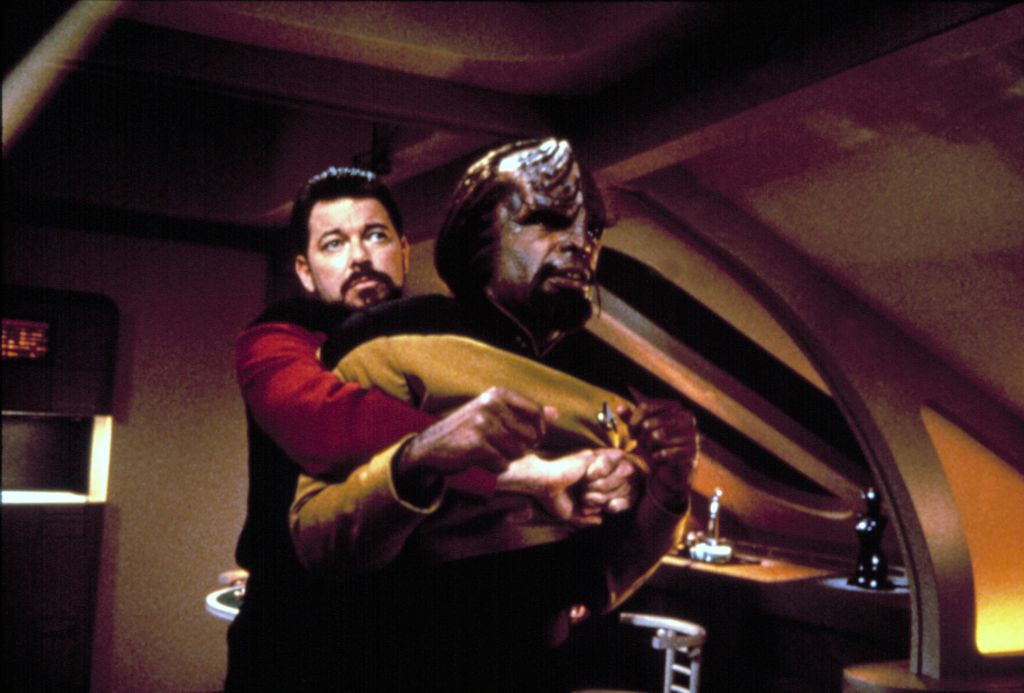
MICHAEL DORN (actor, “Worf”): “I used my voice a lot. It’s gotten a lot deeper and gone deeper and deeper since the shows went on. It’s funny, when I got the job and before I started filming, I went up to Gene and I said, ‘What do you want from this character? I mean, what do you envision? Who is he?’ He said one of the smartest things you can say to an actor: ‘Forget everything that you’ve seen or heard or read about Klingons and just make it your own.’ I said, ‘Great. That’s like nirvana, to be able to just go ahead and build a character from the ground up.’”

JERI TAYLOR (Executive Producer, Star Trek: The Next Generation): “Worf is the person to whom you can give some prejudices and attitudes and misunderstandings, because he comes from a culture that is so different. Every series needs that and on TNG, Worf was that person.”
MICHAEL DORN: “Klingons weren’t exactly evil, as they were totally aggressive. I approached the role initially with that attitude. They likened it to after World War II and how the Japanese and the Americans worked so closely together after being bitter enemies.”
“What they did when they hired us is they hired eight really creative and strong-willed people. A lot of times you want to go, “Why isn’t it like this, why don’t you do that?”—but that’s par for the course. We do the work and do it the best we can, and along with the writing, I think our performances made the series successful. Working with these actors has been just a catharsis for me. I’ve taken something from each actor, something I admire and that’s really cool and you really sort of can’t help but meld into one.”
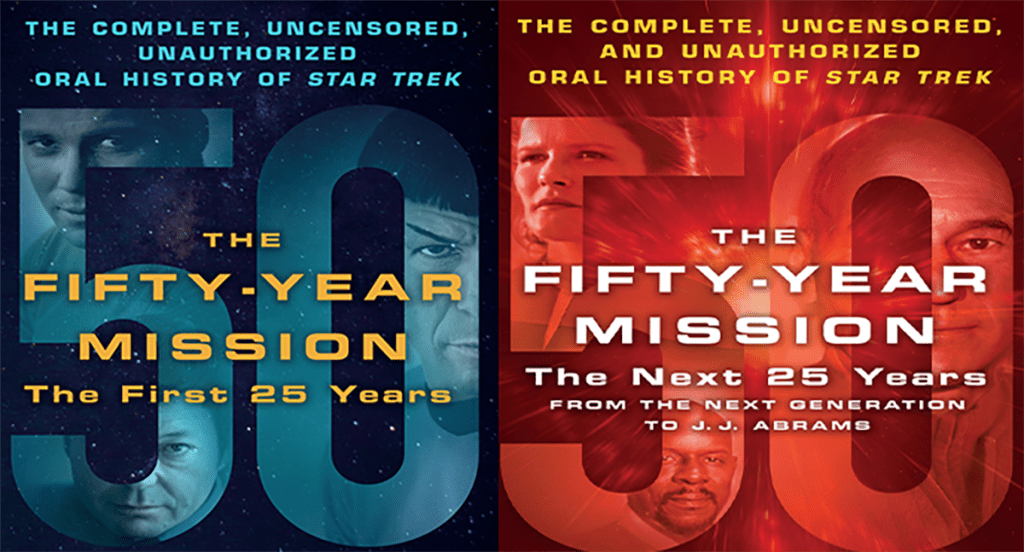
To experience the full history of Star Trek, check out the two-volume The Fifty-Year Mission, which extensively covers the first five decades of the franchise, from The Original Series through The Next Generation, Deep Space Nine, Voyager and Enterprise, as well as every movie, including the features starring Chris Pine and Zachary Quinto. Volume One is HERE, Volume Two HERE.
Conversation
All comments are subject to our Community Guidelines. Woman's World does not endorse the opinions and views shared by our readers in our comment sections. Our comments section is a place where readers can engage in healthy, productive, lively, and respectful discussions. Offensive language, hate speech, personal attacks, and/or defamatory statements are not permitted. Advertising or spam is also prohibited.