Karen Valentine, 78, Shares Memories of ‘Room 222,’ Her Emmy Win and Unexpected Rise to Fame
She opens up about her breakout role, early setbacks and the career that followed

Key Takeaways
- Karen Valentine, 78, reflects on the role that launched her career
- 'Room 222' stood out for tackling real issues and was ahead of its time
- Valentine recalls early struggles before finding success in television
If you grew up watching television in the early 1970s, there’s a good chance certain nights of the week felt a little bit more magical than the others. Saturday nights on CBS delivered a run of shows—All in the Family, M*A*S*H, The Mary Tyler Moore Show, The Bob Newhart Show and The Carol Burnett Show—that defined an era. Meanwhile, Fridays on ABC offered a completely different, but equally memorable, mix: The Brady Bunch, The Partridge Family, Room 222, The Odd Couple and Love, American Style.
Looking back, it’s hard not to marvel at just how stacked those lineups were—especially now that several of those beloved series, including Room 222, are celebrating their 57th anniversaries — the latter of particular significance to actress Karen Valentine among them.
KAREN VALENTINE (actor, “Alice Johnson,” Room 222): “I remember when Room 222 turned 30, and I thought that was pretty amazing. And now? It’s pretty unreal. It’s, like, where did the time go?”
Debuting in 1969 and running through 1974, Room 222 used the setting of Los Angeles’ fictional Walt Whitman High School as a backdrop for stories that felt far more grounded in reality than most television of the time. At the center was history teacher Pete Dixon (Lloyd Haynes), whose calm, thoughtful approach to both teaching and life set the tone for much of what unfolded. Around him were guidance counselor Liz McIntyre (Denise Nicholas), who also happened to be his romantic partner, and principal Seymour Kaufman (Michael Constantine), often caught in the middle of the school’s day-to-day challenges. While the faculty anchored the series, the storytelling regularly shifted outward, giving students their own voices and spotlighting the issues they faced both inside and outside the classroom.
Just as notable was the talent shaping the series behind the camera. Room 222 came from James L. Brooks, who would soon redefine television with The Mary Tyler Moore Show and later Taxi, while executive producer Gene Reynolds brought a steady creative hand that would also help define M*A*S*H. Together, they helped craft a show that balanced character, humor and social relevance in a way that felt quietly groundbreaking for its time.
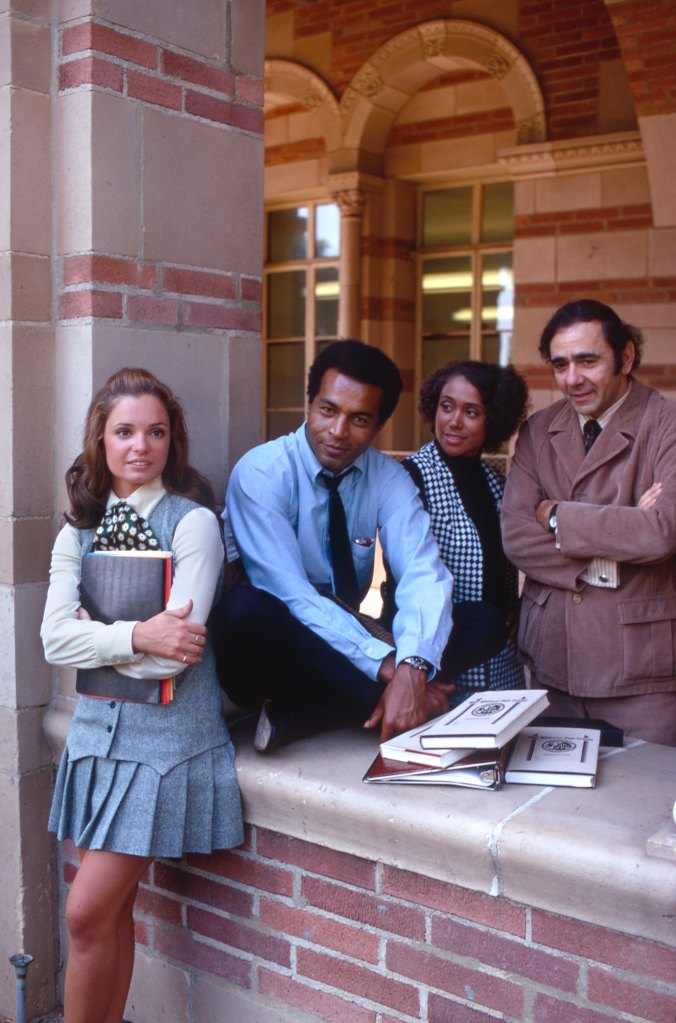
KAREN VALENTINE: “Room 222 just started so many things for me. It was the most amazing way to enter the business. Top-notch all the way and an amazing combination of people. It was a show where the stars just aligned. And for me, I remember going on an audition and meeting with a casting director at 20th Century Fox. I walked in and he didn’t even look up from his paper. He said, ‘How tall are you? What is the color of your eyes?’ and all the usual sort of questions you get asked, and, then, ‘Okay, thank you very much.’ I was dismissed, and I thought, ‘Well, I don’t think that went so well.’ Six months later I got a call from my agent saying, ‘You have a callback,’ and I asked, ‘For what?’ ‘Room 222.’”
“I went out and met with Gene and Terry Becker, who was associate producer of the show, and I had my audition with Gene. When I got the script, I went, ‘Oh my God, this is really good. This is fun. This is today.’ It felt so right. And I remember when we did the pilot, everything just seemed to flow together perfectly with it.”
Heading to class
To fully appreciate what Room 222 was doing, it helps to remember what television looked like at the time. Network schedules were still dominated by familiar formulas, and while there had been important breakthroughs—Julia, starring Diahann Carroll, and I Spy, featuring Bill Cosby alongside Robert Culp—those examples were still the exception rather than the rule. Against that backdrop, a series centered on an African-American teacher in a racially diverse high school setting immediately stood apart. Complicating things further was the way the show was positioned. ABC classified Room 222 as a half-hour comedy, a decision that came with the expectation of a laugh track. But the tone of the series didn’t lend itself to punchlines or traditional setups, creating a disconnect between what the network thought it had and what the show was actually trying to be.
KAREN VALENTINE: “At one point Gene Reynolds fought to get rid of the laugh track. He said, ‘People will know when to laugh. These aren’t set-em-up jokes. It’s humor. It’s character. It comes out of the situation.’ And so he fought for that and losing the laugh track, I thought, was the best thing that happened for the show.”
Part of what made Room 222 feel so real was the extra step taken behind the scenes: Before writing a single script, the writers were sent into actual classrooms to observe what was really going on.
KAREN VALENTINE: “The research was done. The writers were actually going to classes, being in the school and touring the school so that they were in the milieu of what was going on in those days. We did shows about Vietnam, we did shows about teenage pregnancy, kids that wanted to drop out of school, kids trying to make something happen and trying to get kids to study more—giving them money and certain perks depending on their grades. It was an amazing, innovative show that way, and I thought it really spoke to students. And I remember teachers loving it as well. It had a light touch, so it wasn’t preachy, but it also had its serious moments. It ran the gamut, which is why it was so good. You never felt you were saying lines that didn’t work.”
‘Room 222’ in session
Valentine remembers the production operating on a seven-day cycle, starting with a table read that invited feedback from everyone involved. Based on those discussions, the writers would head off to rework the material, often coming back later that same day with revisions in place.
KAREN VALENTINE: “Then we would block it, so it was sort of like rehearsing a play in a way. We would go from set to set and do the different scenes. Then, on the second day of a particular show, we would film. So we kind of knew what we were doing at the get-go just from those table reads. It was very beneficial to the work.”
There’s little doubt that Room 222 proved to be a major turning point in Valentine’s career—during its very first season, she earned an Emmy nomination and went on to win for Best Supporting Actress.
KAREN VALENTINE: “It was kind of mind-blowing to have that happen so soon, so quickly, and to meet Carol Burnett and her saying, ‘Well, congratulations for this.’ It was, like, ‘Thank you.’ But that Carol Burnett would know me? Just incredible. I remember I was taking singing lessons at the time and I went to my singing class. Also taking lessons was Gregory Peck; I think he was doing Man of La Mancha. When he walked by, I was at the teacher’s piano and he saw me through the window and kind of mimed, ‘You did it!’ I was, like, ‘Oh my God. It’s Gregory Peck!’ How was it that I had the fortune to meet these stars and talented people from the get-go?”
Her early days
Born on May 25, 1947, in Sebastopol, California, Valentine’s path into acting—and especially television—began in an unexpected way when she entered the Miss Teenage America Contest representing nearby Santa Rosa. Traveling to Dallas for the competition, she ultimately took home the top prize.
KAREN VALENTINE: “During the week you performed, you’re interviewed and you do all those things that you do. When it aired, we did a show, just like Miss America or Miss California. It all leads up to Miss America and I did a pantomime to Eydie Gorme’s ‘Blame it on the Bossa Nova,’ and it went over really well. They gave me a talent award, which they presented to me live on air, which I was not expecting. In those days, there were talent agents attending these things and a talent agent from CBS was there. Backstage he said to me, ‘You’re going to get a very big surprise, so don’t be shocked.’ Then, boom, we were pushed out on stage waving flags or whatever our number was and in the show, Bud Collyer, who was the host, stopped the show and said, ‘We have received a note from Ed Sullivan, who was watching this show, and he wants me to announce that she will appear on The Ed Sullivan Show two weeks from tonight.’ And the crowd went crazy. All the girls jumped on me and hugged me. It was like the biggest shock in the whole world. Two weeks later, lo and behold, we flew to New York and I was on his show. And he liked me enough that he invited me back!”
A staple of network television from 1948 through 1971, The Ed Sullivan Show served as a major showcase for performers, famously introducing acts like Elvis Presley and The Beatles to American audiences. For Valentine, her first appearance saw her reprise the pantomime routine that had won her the Miss Teenage America title. By her second visit, however, the stakes were higher—she was backed by dancers and a full orchestra for “You Can’t Get a Man with a Gun.” The pressure proved overwhelming; she struggled to find her opening note and, after making it through rehearsal, sank into her seat, mortified.
A helping hand from Harry Belafonte
Reassurance came from an unexpected place when “Day-O (The Banana Boat Song)” singer Harry Belafonte made his way over, sat beside Valentine and asked if she was nervous. When she admitted that she was, he told her, “We’re all nervous.” Gesturing toward the stage where the Kessler Twins were performing, he added, “You see them? They’re nervous.”
KAREN VALENTINE: “I said, ‘They don’t look nervous to me.’ He said, ‘Well, they are. Believe me.’ Harry Belafonte’s kindness was very uplifting and helped me build some confidence, but it was still nerve-wracking. When it was time for the show, he came out of his dressing room and started vocalizing. He kneels down in front of me, holds my hand and says ‘I’m so nervous. Hold my hand and give me strength.’ And I’m just, like, overwhelmed and giggling like a schoolgirl. So this was my introduction to showbiz.”
The stretch between The Ed Sullivan Show and Room 222 wasn’t without its challenges. After finishing high school, Valentine relocated to Los Angeles, taking on a variety of odd jobs while trying to break into acting. During that period, she crossed paths with game show producer Chuck Barris, leading to appearances on Dream Girl of 1967 (“It was a show that I barely remember doing”) and later The Dating Game, where she found herself questioning three unseen bachelors before choosing one for a date. What seemed like lighthearted entertainment to Valentine, however, was taken a bit more seriously by her eventual pick.
KAREN VALENTINE: “That was awful, because the guy thought that this was really going to be a date, right? The Dating Game got more serious later where people would be sent on trips. I only got to go to the Ambassador Hotel to see a show, but the guy thought we were going to make out in the limo and it was, like, ‘You know this is a first date, right?’ It was so sleazy. You’d go to dinner and then to a show, which is the prize I won, but the guy thought this was serious. I wanted to get out of the date. You know, ‘Save the money, who needs to go on a date? Let me do another show. Give me a shot at acting or something.’”
Valentine’s career took a key step forward in 1969 when she starred in the TV movie Gidget Grows Up (“She should never grow up,” the actress proclaims), a project that soon led her to Room 222. Looking back, she credits the series for giving its characters a sense of progression and change, an approach that wasn’t commonly seen on television at the time.
KAREN VALENTINE: “There was an episode called ‘Alice in Blunderland,’ in which they made me an English teacher and had me teaching a class on my own. Before that I was always in the back of the class listening, learning and observing. Then I had to teach a class with Pete Dixon, because he was my mentor, so he sat in the back of the class and I taught. As a student teacher, I didn’t have a lot of confidence, so he thought, ‘Well, it’s time you do it on your own.’ He left the room and everything gets out of control. The episode was really well written and the emotional ride I took had me coming out the other end a little better, but still a way to go as a teacher.”
“The series gave different characters time in the spotlight,” Karen continues. “Specifically, I remember the relationship between Pete and Liz that developed, and their romance. There was an episode involving Mr. Kaufman’s son, the students would have shows focused on them. And, as a team, the four of us in the teacher’s lounge or the cafeteria were meeting up to discuss problems and getting four different points of view. That was always kind of in the mix, too.”
School lets out… permanently
While Room 222 didn’t come out of the gate as a ratings hit, it found its footing over time and earned strong support from critics. By its fourth season, however, viewership had dropped off significantly, leading ABC to cancel the series mid-year—a decision that caught the cast and crew off guard.
KAREN VALENTINE: “Why things changed, I have no idea. ABC did have the kindness to come and tell us before we read it in the papers, because that’s how things were cut in those days: You just didn’t come to work the next day. But they did have the wherewithal to give us the word that it was happening, and it was sad … well, it’s always sad, but especially when you feel you have a good product and a good show, for it to be taken away. But in the end, the network made the decision to go in a different direction. That’s what they always say, ‘We’ve decided to go in a different direction.’”
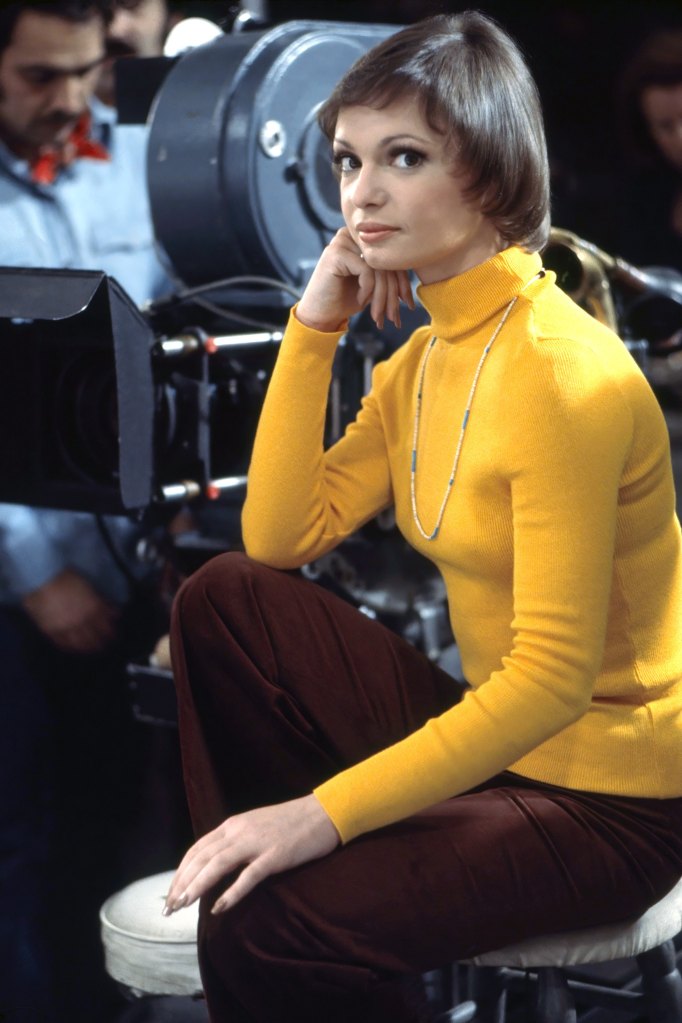
In the season after Room 222 came to an end, Valentine transitioned into a starring role on the television series Karen, though it failed to resonate with audiences in the same way her previous show had.
KAREN VALENTINE: “It was a half-hour, one-camera show with a hybrid tone, part dramatic and part comedic. Room 222 was also built on that model, but it dealt with school and student issues. Karen, created by Larry Gelbart and Gene Reynolds, used controversial political stories that were a savvy, humoristic reflection of then current headlines, post Watergate. The original opening titles were a take-off of the opening of the film Patton. Instead of George C. Scott, you had me marching up to an American flag background. Really clever, but never aired. It was changed to me riding a bicycle around D.C. The network envisioned something softer, more romantic and personal, and not too complicated, as opposed to an issue-oriented drama/comedy in the political arena. I’d say it was ahead of its time.”
Numerous TV guest appearances and TV movies, as well as a few feature films, followed, representing new directions for her.
KAREN VALENTINE: “Movies were a different animal, for sure. You’re doing a lot of waiting around and then it’s a whole other technique. I did a couple of Disney films, one of them being The North Avenue Irregulars, which had a great cast. What I really enjoyed doing was the TV movie Muggable Mary, Street Cop, because it was such a departure for me. I played a New York decoy cop—the first female decoy cop—and it was a real story. I did a couple of other dramatic things, including a Starsky and Hutch, which was a forerunner to Fatal Attraction. I’ve got a crush on Hutch and I’m showing up where I shouldn’t be showing up and become a problem. On top of that, I always took summers to do summer stock and be on stage. I loved the theater a lot.”
Although Valentine went on to a wide-ranging career after Room 222, the connection to the series has remained strong—for her as well as for the fans who continue to embrace it.

KAREN VALENTINE: “I think for a lot of people it’s a part of their childhood and something they relate to. The Paley Center in Los Angeles did a tribute to Room 222 and we were on a panel. It was Michael and Denise and myself, Gene Reynolds, Jim Brooks and it was packed. There were people in the audience who stood up and talked about the show and what it meant to him. Hearing those stories, I think that’s part of it. The other thing is, how did Ted Turner know that old movies were going to be as popular as they are now? That channel—TCM—is going like gangbusters. There’s just a nostalgia factor that attracts you. It reminds people of good times, of wonderful times, and if they were having bad times, it was an escape from those things.”
And, personally speaking, the memories of Room 222 bring with them nothing but sheer joy and pride.
KAREN VALENTINE: “Working with all of those people and to have that kind of experience the first time out—the show just brings back the fondest and best memories in the world to me. It also kind of spoiled me, because it set the bar really high. So when other things come to you, you think, ‘What is this?’ It was different, you know? But I was fortunate that I did get material that was pretty fun and well done. But to have your first thing be something that was so special and groundbreaking, and that you felt meant something and was affecting people—how do you top that?”
Conversation
All comments are subject to our Community Guidelines. Woman's World does not endorse the opinions and views shared by our readers in our comment sections. Our comments section is a place where readers can engage in healthy, productive, lively, and respectful discussions. Offensive language, hate speech, personal attacks, and/or defamatory statements are not permitted. Advertising or spam is also prohibited.