Why the ‘Columbo’ Cast, Led by Peter Falk, Was the Secret to TV’s Most Brilliant Detective Show (Exclusive)
Explore how the rumpled LAPD lieutenant used humility and 'just one more thing' to topple villains

From the moment he shuffled onto television screens in a rumpled raincoat, cigar dangling from his fingers, Columbo—in the form of actor Peter Falk—announced that he was going to play by different rules. At a time when television detectives were either suave geniuses or hard-boiled tough guys, Columbo‘s leading man looked like someone who had wandered in from the wrong series. He was forgettable by design—and that was the point.
Debuting in 1968 as part of The NBC Mystery Movie, Columbo flipped the traditional whodunit inside out. The audience almost always knew who committed the murder and how they did it. The pleasure didn’t come from solving the crime before the detective did, but from watching how this seemingly unassuming LAPD homicide lieutenant would quietly, patiently, and relentlessly dismantle the killer’s confidence. Each episode became a chess match between arrogance and persistence—one that relied heavily on the unique chemistry between Columbo and the rest of the Columbo cast.
What made Columbo (currently airing on Cozi TV) endure wasn’t just its clever structure, but its deep understanding of character. The show thrived on contrast: the scruffy, working-class detective versus polished, powerful professionals who believed themselves untouchable. Doctors, lawyers, conductors, writers—members of the Columbo cast who were often the smartest person in the room—consistently underestimated the man who kept asking “just one more thing.” And that mistake proved fatal every time.
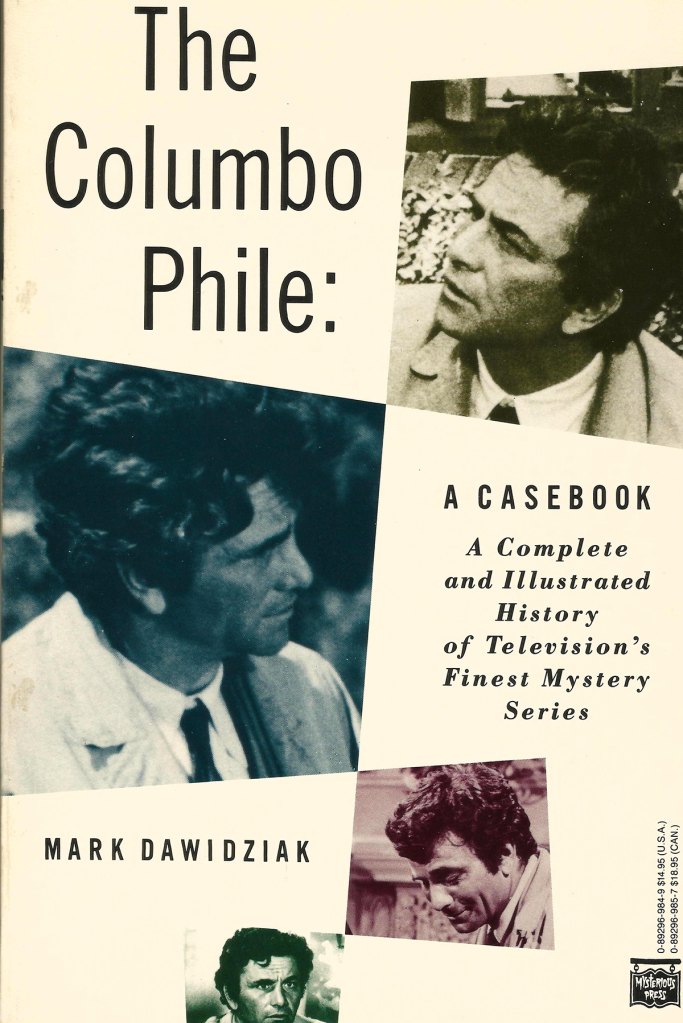
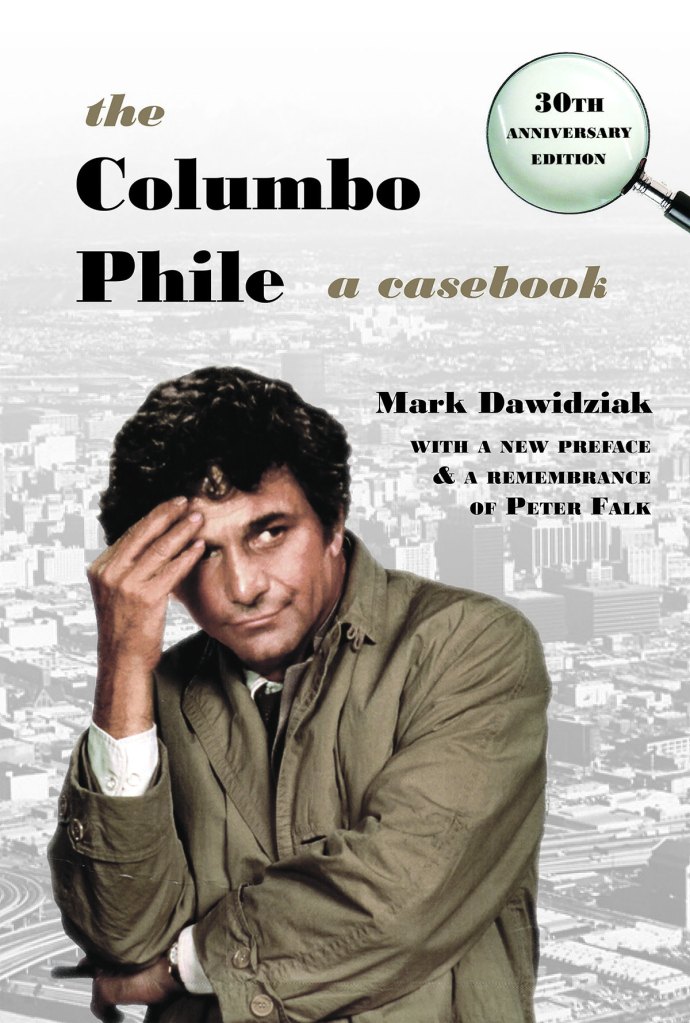
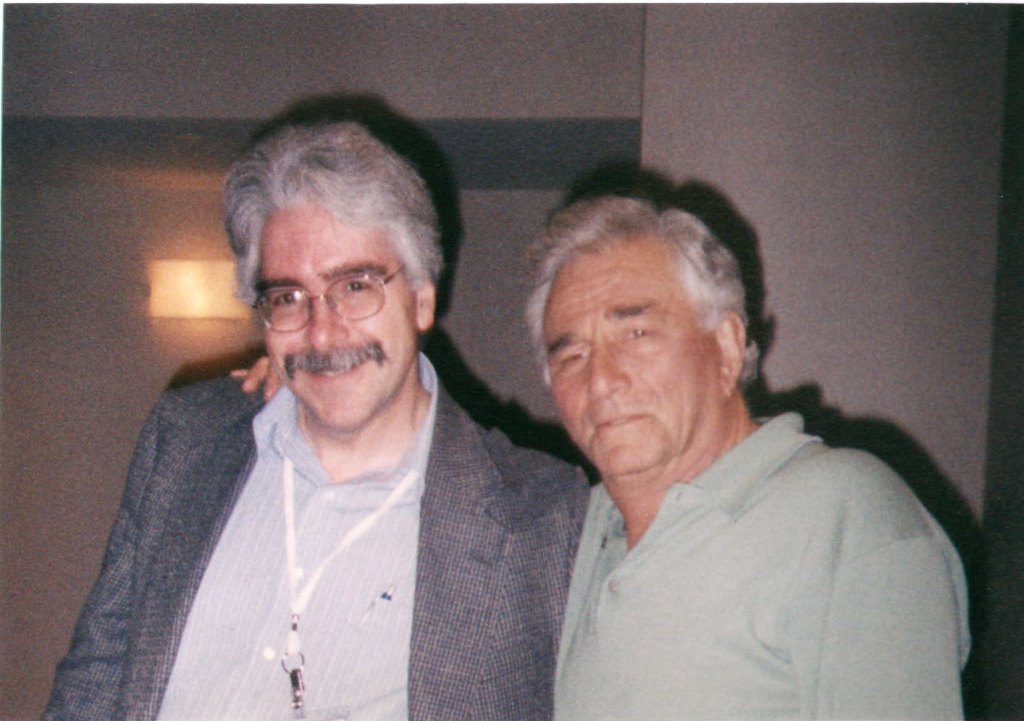
Over the decades, fans have debated everything from whether Columbo’s cases would hold up in court to the idea that his gentle demeanor masked a sharper edge. But as Mark Dawidziak, author of The Columbo Phile: A Casebook, makes clear, those questions often miss the larger point. Columbo was never about legal procedure, but about personality, psychology, and the quiet satisfaction of watching humility outlast hubris.
In the comments that follow, Dawidziak digs into why Columbo worked—how its creators shaped unforgettable villains, why its format was so daring, and what made this unlikely detective, and the cast that surrounded him, one of television’s most enduring icons.
What makes a good ‘Columbo’ opponent?
MARK DAWIDZIAK: “I think you can start with the guest star who everybody sort of agreed was the perfect Columbo guest star—Jack Cassidy. I can’t remember whether it was Levinson and/or Link who said it, because they always said they were speaking for each other—but one of them used the word preening arrogance to talk about Jack Cassidy. And it was such a perfect description of what he brought, because it always worked better when the murderer was so sure of himself, so smug in his confidence that he was going to get away with it and that the last person who is ever going to undo him, the last person who’s ever going to catch him, is this shabby little homicide detective working for the LAPD. That matchup of the scruffy, everyday man against this rich, successful, powerful and extraordinarily arrogant murderer was perfect.”
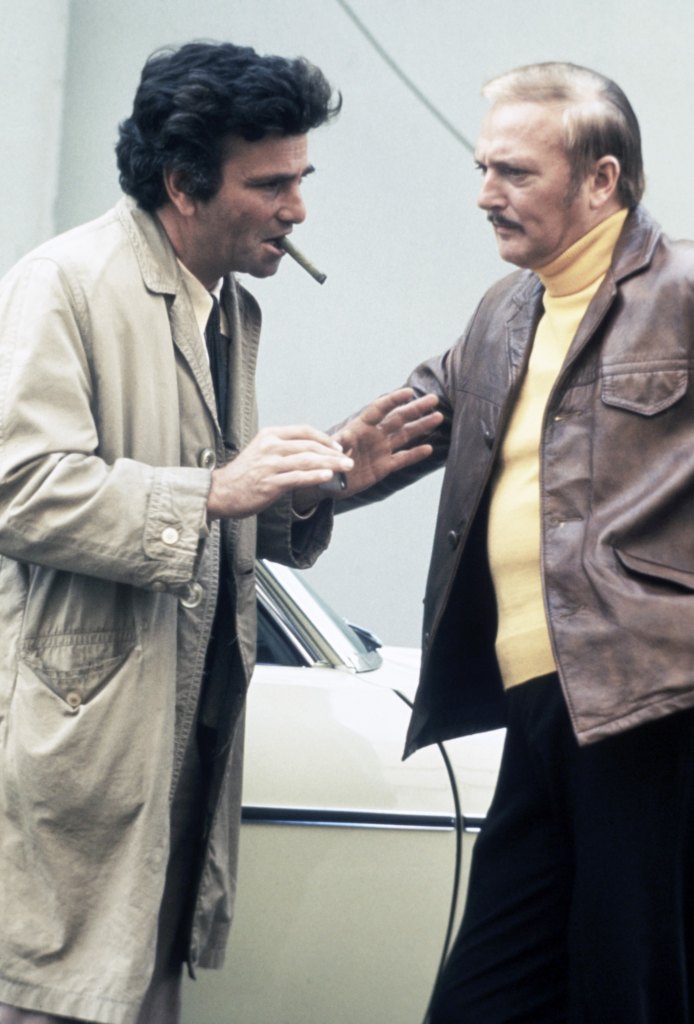
“But there are a lot more variations in the murderers than I think a lot of people realize. They tend to think all the murderers were kind of arrogant, but that’s not true. Some of the murderers had a lot of nice shadings. Take Ruth Gordon as the mystery writer in Try and Catch Me. She’s confident, too, but in such a different way. She’s charming. She’s very sweet. She’s grandmotherly. But Jack Cassidy—they thought, ‘This is the perfect type of Columbo murderer. He is so sure that Columbo can’t catch him that the audience is sitting at home thinking, I know he’s going to catch him, but how in the world is he ever going to catch him? And then there’s this delicious wonder, because most of us in our lives are closer to Columbo than we are to the murderers. Most of us are not rich. Most of us are not privileged. Most of us do not go through life with that kind of arrogant confidence. Like Columbo, we get there by keeping our head down, by hard work and by determination.”
Columbo and Sherlock Holmes
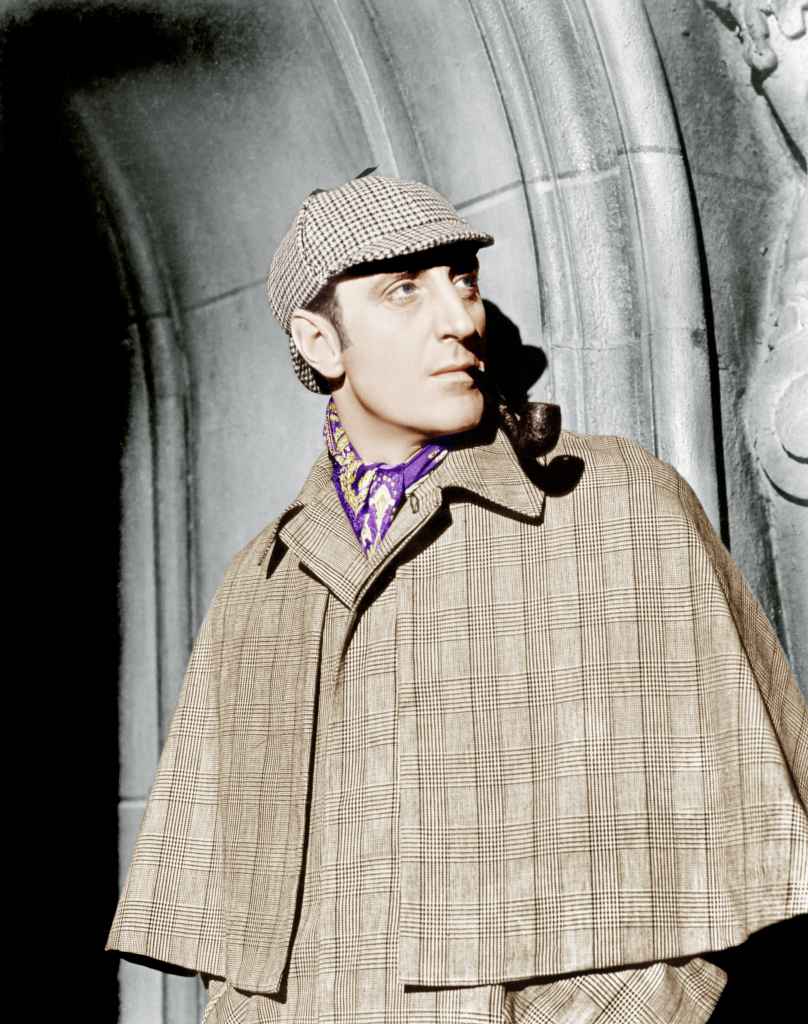
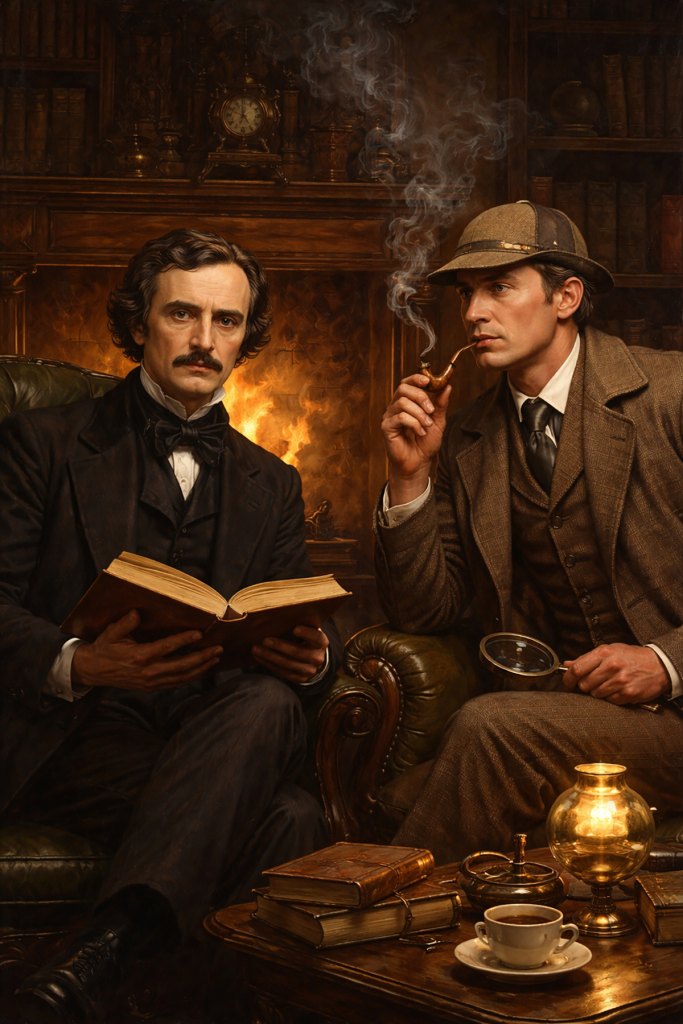
MARK DAWIDZIAK: “The detective who is sort of the prototype detective in the British school of mystery is, of course, Sherlock Holmes. And Sherlock Holmes is sort of like a Columbo murderer in that he’s arrogant, he’s supremely confident and he would look down his nose at Lieutenant Columbo. He is everything Columbo isn’t, and he is, in many ways, everything that the Columbo murderer is. But the interesting thing is that, as fascinating as Holmes is—and Holmes is an endlessly fascinating character, it’s why we still talk about him and he’s one of the great literary creations of all time—he’s hard to identify with because he is so smart. Holmes comes on the scene and everybody turns to Holmes. He’s going to see what nobody else sees. And Columbo’s going to see what nobody else sees, either, but the difference is that nobody’s going to see him seeing it. He’s the last person you’d expect to see what nobody else does and, in fact, he invites people to underestimate him, which is going to be the undoing of every Columbo murderer out there. They all make the same mistake. And the mistake is the belief that this shabby guy in this shabby raincoat with this cheap cigar is never, ever going to be able to catch me.”
“There is something wonderfully delicious about that kind of resolution. When you see Columbo, this everyman, every guy, going up against these really superior types, there’s something we can all relate to. In high school, at work with a boss, with a neighbor—we’ve all known that kind of person who looks down his nose at the rest of the world or has an assumption of superiority because of who they are, not what they are. And Columbo is the real goods. And again, we relate to that.”
Columbo’s view of his opponents

MARK DAWIDZIAK: “When Columbo first came on, there was a piece written for The New York Times by Jeff Greenfield where he talked about class warfare. He talked about how Columbo works on the level that he is blue-collar and he’s always going after what we would call today one-percenters, and that people love to see the wealthy taken down. That kind of misses the point. It’s not that they’re wealthy—it’s that they are arrogant and smug about it. If these were wealthy people who were giving to charities and were good people, Columbo wouldn’t have any problem with them. Rarely does he work up an active dislike for a murderer. It happened once or twice—with Leonard Nimoy as a surgeon in A Stitch in Crime. He loses his temper with him, which Columbo rarely does. And with the Robert Conrad character in Exercise in Fatality, he actively dislikes him. But that’s rare. Most of the time, Columbo actually kind of likes the murderers. He finds them fascinating and enjoys talking to them.”
“There’s the wonderful scene at the end of Murder Under Glass with Louis Jordan as a chef who’s the murderer, and he’s been caught. He says to Columbo, ‘I admire you—you’re very good at what you do—but I don’t like you very much.’ And Columbo says, ‘I’ve been thinking the same thing about you. You’re a very perceptive food critic. You’re the best at what you do, but I don’t like anything else about you.’ But there are times you can see that there’s regret.”
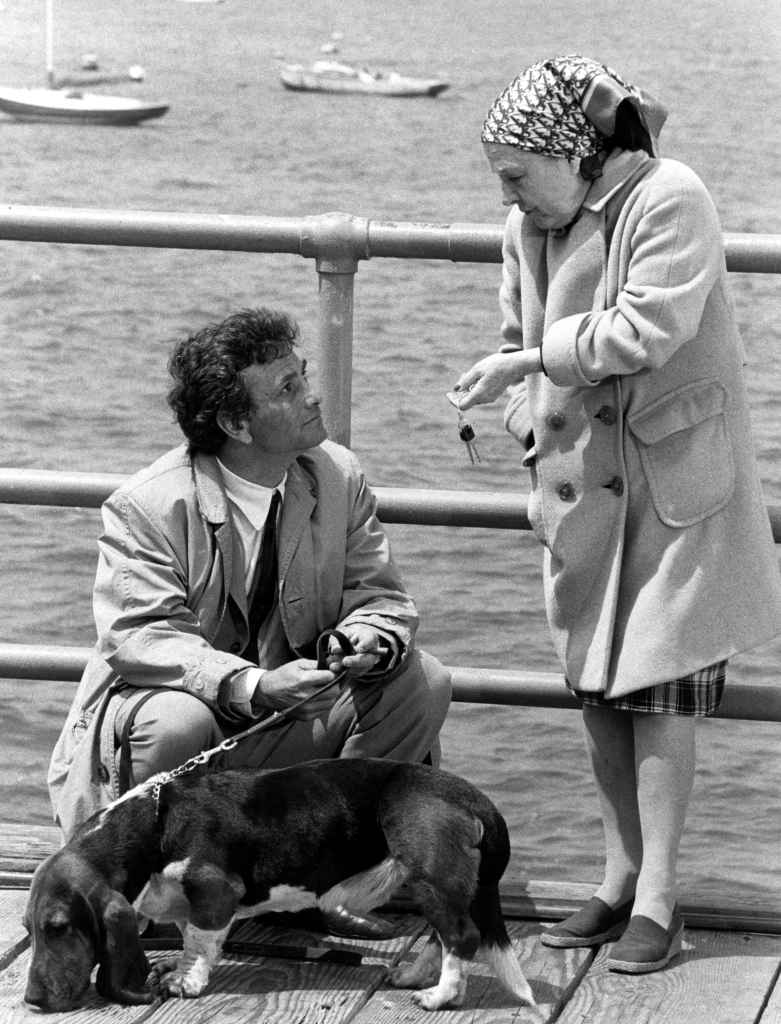
“There’s this wonderful moment in the one with Ruth Gordon, because you feel sympathy for her and you’re fairly certain that the nephew she kills—and it’s a nephew by marriage—murdered her beloved niece and got away with it. And Columbo gets it. There’s a point where he’s closing in on her—he hasn’t got her yet, but he’s closing in—and she says to him something like, ‘You’re a very kind man,’ because he is understanding. And he does understand her. Then she says, ‘You’re a very kind man,’ and he looks at her and says, ‘Don’t count on it, Mrs. Mitchell. Don’t count on it.’ He knows he’s going to do what he has to do.”
How Columbo deals with other cops
MARK DAWIDZIAK: “In Ransom for a Dead Man with Lee Grant, there’s a wonderful scene where he’s built up reason to think that Lee Grant is not saying everything she knows. He hasn’t figured it out yet by a long shot, but Harold Gould plays the lead FBI agent, and Columbo is bringing up everything that’s bothering him about the case. Harold Gould clearly thinks this guy is just a nuisance.
“Finally, he says to him, ‘If you keep harassing Mrs. Williams, you’re going to have to answer to us.’ Columbo looks at him, and because when he needs to show the grit, he does. He looks at Harold Gould and says, ‘This isn’t a kidnapping anymore. This is a murder. And I kind of think that’s my department.’ He’s telling him to back off, and it’s a great scene where, without going over the top, he’s proving his grit. When he has to, he does.”
Are his cases legally sound?
MARK DAWIDZIAK: “Columbo fans have always played this game about whether Columbo’s cases would hold up in court or not. And I made that point very clear in the original book, which is that Columbo is a fantasy. There is no police detective like Lieutenant Columbo in the LAPD. He wouldn’t be allowed to exist in the LAPD. Columbo is a mystery game. It’s not a case of, ‘Will these people get off on technicalities?’ It’s the point of finding the clue that results in the undoing or unmasking of the murderer.”
“If you’re going to break down the mystery field, you sort of have the British school of mysteries, which is odd because really an American created it. Poe created it with the C. Auguste Dupin character and The Murders in the Rue Morgue and The Purloined Letter, and Holmes is based directly on Dupin. So really, an American creates it, but it’s the Brits who develop this kind of school of mystery—Agatha Christie, Doyle, Dorothy L. Sayers. And that’s what those are. They’re puzzles. Nobody ever said, ‘Do Sherlock Holmes cases hold up in court?’ No. It’s about Holmes solving the mystery, the puzzle. That’s the British school.
“And then in the 1920s, along comes Black Mask magazine, the pulp, and specifically Dashiell Hammett, and he creates the American form of the mystery story. This is basically the hardboiled detective, either a police detective or a private detective. You discover the case as he discovers it. You see the clues. You follow him on his investigation. And as he learns, you learn what’s going on. He doesn’t get there through brilliance. He doesn’t get there through this incredible ability to analyze. He gets there by doing his job and following his nose until the resolution is there, and he usually gets his teeth kicked in a couple times along the way. This is kind of the American school. So the neat thing about Columbo is it takes a distinctly American character—a blue-collar, nose-to-the-ground, bulldog character—and puts him in the British school of mystery storytelling, because that’s very smart. Everything about it is very British except the character and the settings.”
Why the ‘Columbo’ format works
MARK DAWIDZIAK: “Columbo is a character-driven story on two levels. One is Columbo himself, who is a great character. You are invested. If you are not utterly charmed by this guy and don’t want to be in his company, you will not come back. So it passes the test that way. But then it passes an even sterner test, because the next level of character is the guest murderer, and that differs every week. They had to reinvent the wheel every week and come up with a guest star who played well against Peter’s character. And then it was an open mystery, where they showed you the murder, they showed you the murderer planning the murder, doing the murder and they showed you the clue that was going to undo him.”
“They dared you to spot the clue that was going to undo him because it was right there in the open. Everything was done in the open. And the open mystery has been around since the early 20th century. They’re extraordinarily hard to do, because you’re telling people who the murderer is. You’re basically not asking who did it—you’re asking how is he going to catch him? And so they had to reinvent that wheel every single time they did it, which is why Columbo couldn’t have been done every week. It’s just too rich a brew to try to repeat on a weekly basis. If it hadn’t been for the Mystery Movie format, where it rotated and was on every four weeks, they would’ve never been able to do Columbo.”
‘Murder by the Yellow Pages’
MARK DAWIDZIAK: “Levinson and Link always defined the process as ‘murder by the Yellow Pages,’ because they would do it by professions. You had to come up with a great profession first—and the murder could take place in that world, and yet this person could be fabulously successful, famous, wealthy. Week to week, you look at who the murderer is. The first one is a psychiatrist. The second is a high-powered lawyer. The third is a mystery writer. The fourth is a high-powered private detective, an art critic, a symphony conductor—they were going by professions. That was crucial to how the murder would take place and be committed, but also to how they would then create a character. And once you create a character and say, ‘Okay, the murderer is going to be a temperamental symphony conductor—a brilliant symphony conductor—who can we get to do this?’ And then you go and get John Cassavetes to play that part. So you have to match the profession to the character and then go find the right actor to do it.”
“And for somebody like Nimoy as a surgeon, they were lucky to get him. I interviewed Nimoy for the book, and he said that he was under contract at Universal at that time and didn’t want to just do the heavy of the week every week under his contract. When it came time to do a Columbo, that was very high-end. He was very interested in that because that meant playing tennis against Peter Falk.”

“They always said the one rule was that there was a lot more latitude in Columbo murderers than people give credit for, because the thought was that you need somebody who is very sophisticated, polished, and somebody with a lot of erudition—that is the perfect Columbo murderer. But they actually had a lot more width than they sometimes gave themselves credit for, because it wasn’t Jack Cassidy every week. In fact, Robert Culp played a murderer three times, and Robert Culp is a very different type of actor. He had that kind of confidence and brilliance, but it was a very different vibe than Jack Cassidy. And if you look at all the various murderers they had, some of the best don’t look alike, don’t sound alike, don’t remind you of each other. Donald Pleasence in no way, shape, or form reminds you of Gene Barry. The murderers come in all shapes and sizes.”
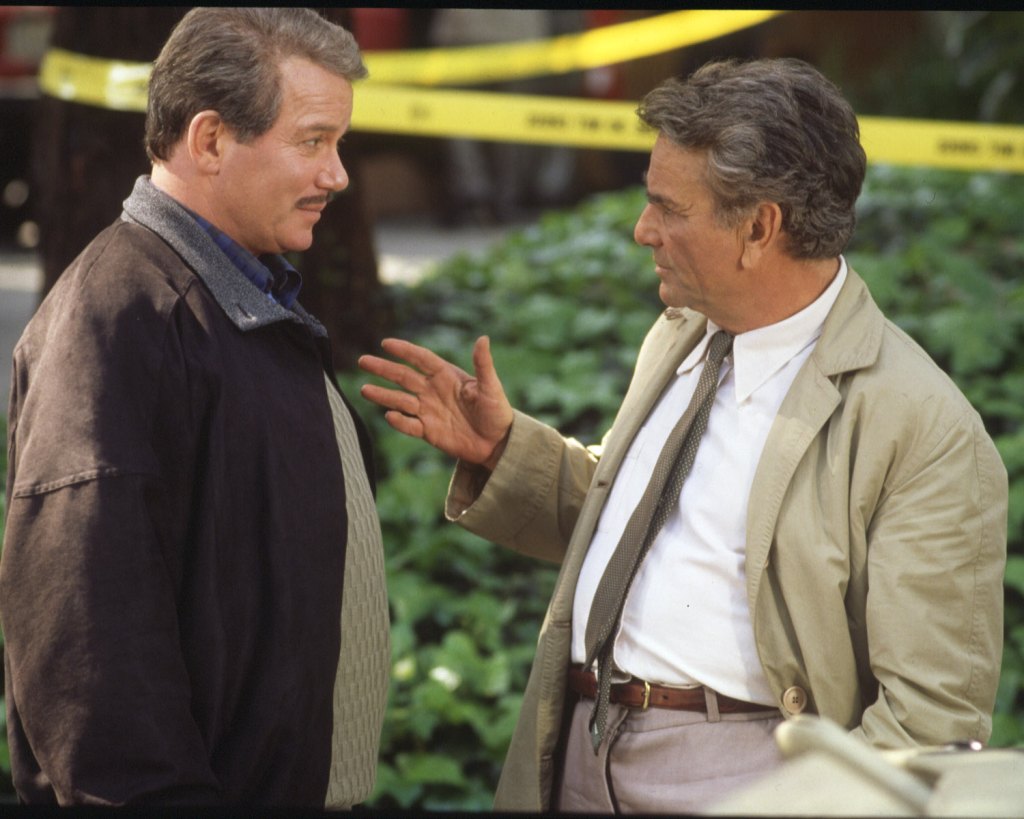
“The one hard-and-fast rule was that they couldn’t cast somebody who was every bit as blue-collar as Peter. You wouldn’t get Ed Asner, Jack Klugman or Ernest Borgnine to play the murderer. These would not be good choices. The one time they broke the rule was in the ’90s revivals, when George Wendt played the murderer. It was very bad casting, because ‘Norm’ from Cheers is as blue-collar as it gets. They broke their own rule, and they shouldn’t have.”
Why does Columbo endure so many years later?
MARK DAWIDZIAK: “I suppose there are many reasons he remains so appealing, almost 60 years since Peter Falk first donned the famously rumpled raincoat. For one, he is a delightfully charming fellow with no hint of pretense or snobbery. We sense that we would be perfectly comfortable in his presence because, well, we are perfectly comfortable in his presence. There’s nothing off-putting about Columbo, and yet, he’s brilliant—as a detective, he’s every bit as masterful as Sherlock Holmes or Hercule Poirot, but he has none of their arrogance or condescension. He’s also enormously relatable. He’s a genius who also is an everyman who loves his chili and hardboiled eggs, his car and his dog, bowling and beer, his cigar and his wife.”
Conversation
All comments are subject to our Community Guidelines. Woman's World does not endorse the opinions and views shared by our readers in our comment sections. Our comments section is a place where readers can engage in healthy, productive, lively, and respectful discussions. Offensive language, hate speech, personal attacks, and/or defamatory statements are not permitted. Advertising or spam is also prohibited.