The Lost Chapter of ‘Star Trek’: Meet the Man Who Almost Replaced Spock in the 1970s
Inside the remarkable story of the young performer chosen to take over Spock’s place on the Enterprise
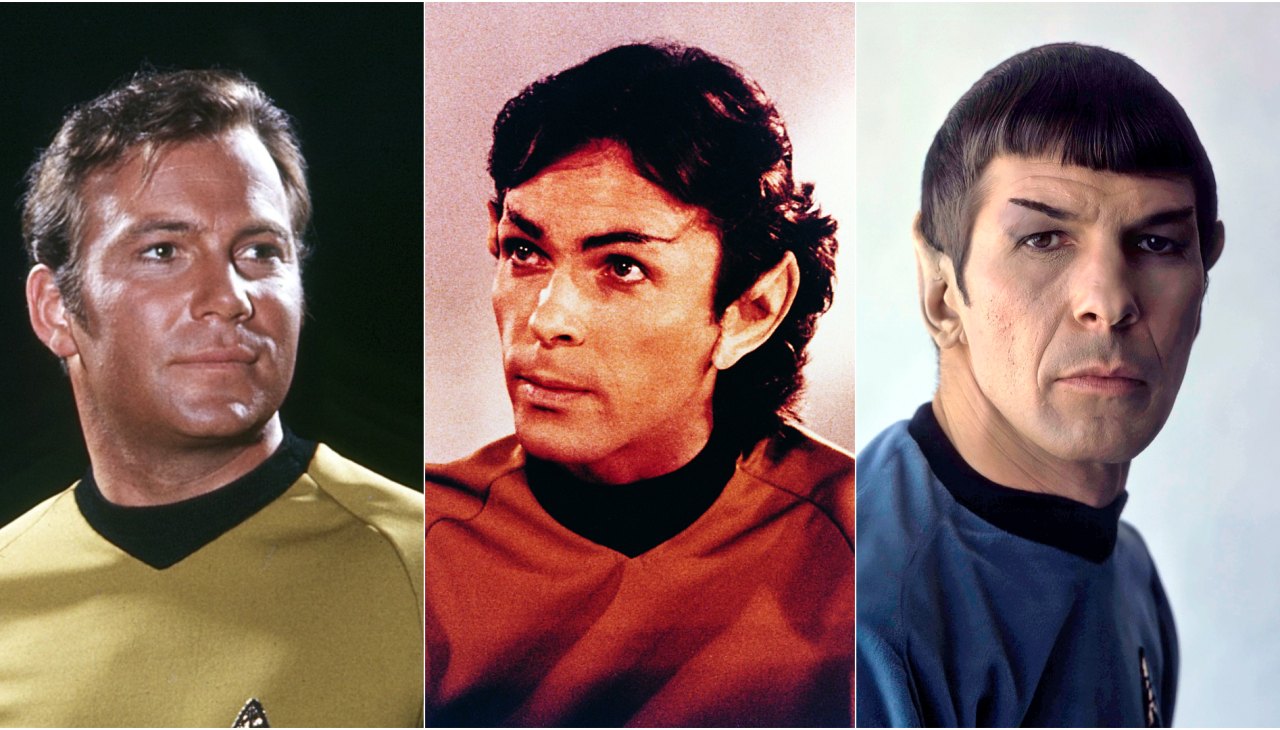
So profound is the impact of Star Trek that it has forever altered the careers of the actors who first brought the Enterprise crew to life (Leonard Nimoy, known so well as Star Trek‘s Mr. Spock is a perfect example). Their performances became so iconic, so culturally embedded, that for years the prevailing belief was simple: Star Trek couldn’t exist without them. That assumption held so firmly that when Star Trek: The Next Generation was announced in the mid-1980s, the earliest reaction was skepticism—could an all-new cast really carry the weight of a legacy that large?
TNG ultimately proved it could, emerging as a ratings and critical success that broadened the franchise and finally dispelled the notion that only the original cast could make Star Trek work. But more than a decade before Picard and company stepped onto the bridge, the franchise had already been poised for a similar test with a project that nearly became the next step in televised Trek: the proposed syndicated series Star Trek II, known internally as Phase II, and sometimes referred to by fans as “The Lost Generation.”
By the mid-1970s, the entire original cast had agreed to reprise their roles—everyone except Leonard Nimoy, who declined to return as Spock. For Gene Roddenberry, that obstacle wasn’t the end of the plan; it was an opportunity to expand it. He created three new characters, one of whom was intentionally designed as Spock’s successor. His name was Xon, envisioned not as a half-human outsider wrestling with emotion, but as a full Vulcan who wanted to understand feelings. The twist was elegant: instead of suppressing emotion, Xon would study it, giving writers a new lens through which to explore the human condition. Every completed script for Star Trek II included him. His presence wasn’t optional—it was foundational.
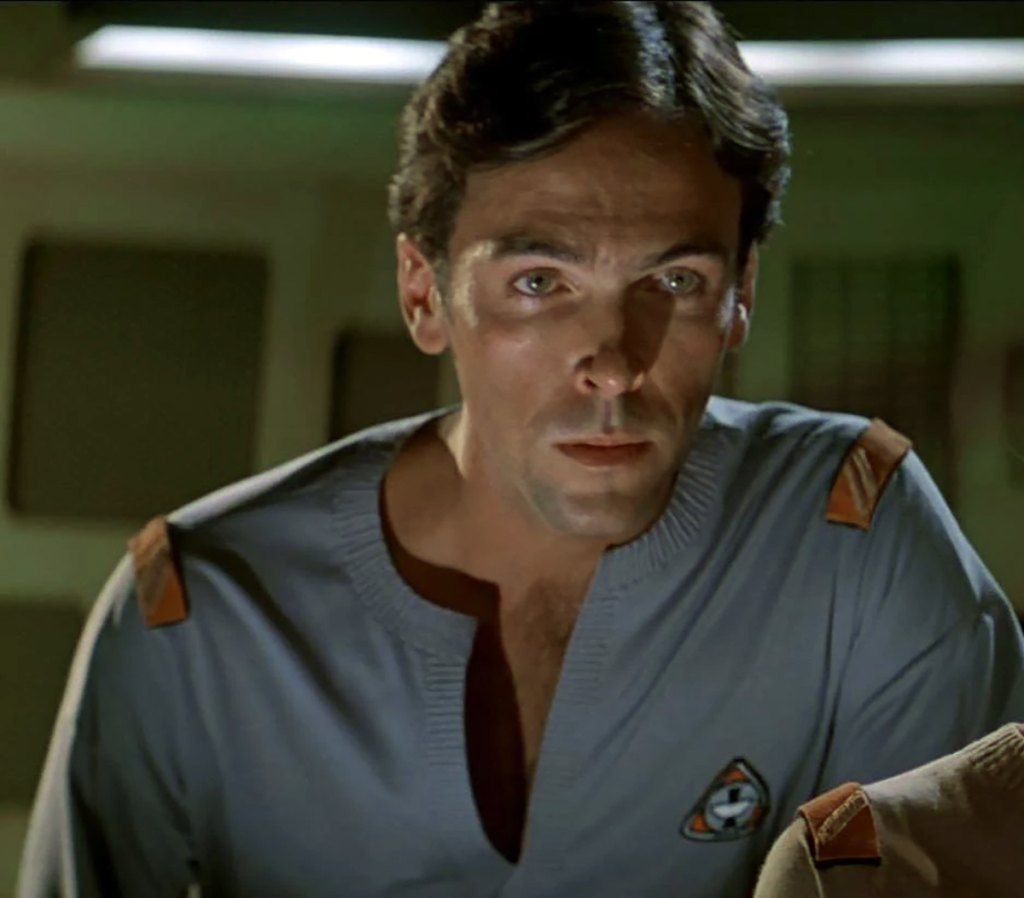
David Gautreaux is Xon
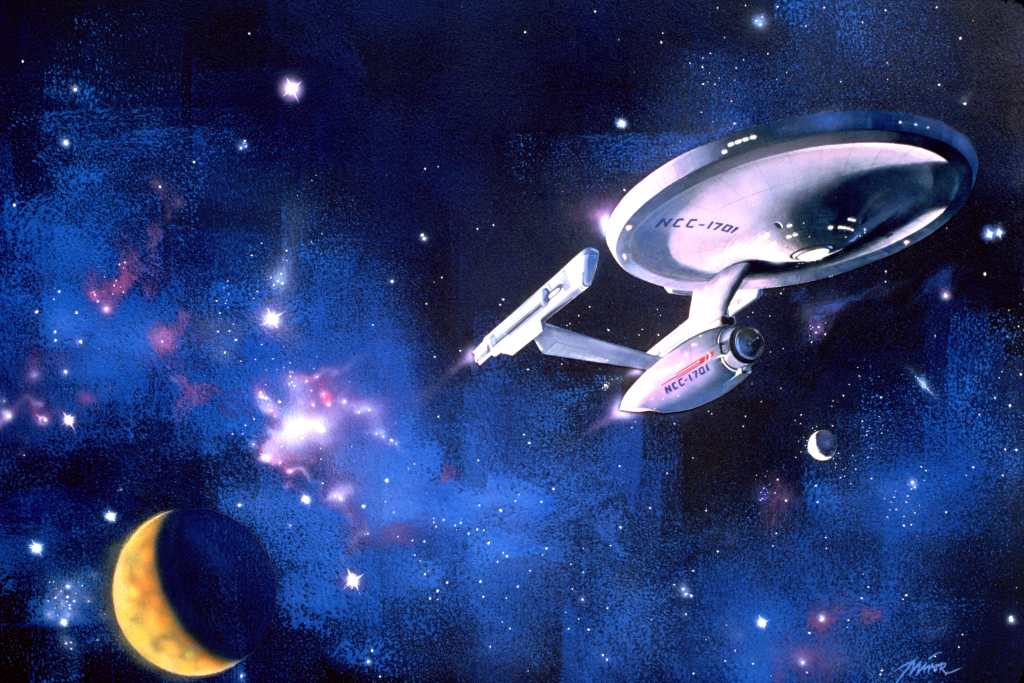
To portray Xon, Roddenberry and producer Harold Livingston cast David Gautreaux, who would become part of the Star Trek company for more than a year and a half. Sets were being built, scripts rewritten, and momentum was gathering when the project abruptly pivoted. The planned series morphed into what would eventually become Star Trek: The Motion Picture. Through most of that transition, Gautreaux remained cast as Xon. But once Nimoy agreed to return as Spock, the role that had been designed to replace him was no longer required—and Gautreaux made the difficult choice to request release from his contract.
Gautreaux remembers the moment the situation came to a head. “I was doing a play at the time,” he recalls, “trying not to think that I was going to be playing an alien for the rest of my life. Then, I spoke to Gene Roddenberry and said, ‘What’s the story? Did you see that Leonard Nimoy is coming back to play his character? What’s going to happen to Xon?’ He said, ‘Oh, Xon is very much a part of the family and you’re very much a part of our family.’ I responded, ‘Gene, don’t allow a character of this magnitude to simply carry Mr. Spock’s suitcases on board the ship and then say, “I’ll be in my quarters if anyone needs me.” Give him what I’ve put into him and what you’ve put into him. If he’s not going to be more a part of it and more noble than that, let’s eliminate him.’ They continued with the idea of Xon right up to September 1978.”
Born June 28, 1951, in Central Falls, Rhode Island, Gautreaux was still a relative unknown when Star Trek entered the picture. He had begun building a career as a working actor, but he wasn’t yet a familiar face to television audiences; the second Star Trek series represented the kind of breakout opportunity that can redefine an entire career. At a time when the original cast still loomed large in the public imagination, the idea that a new Vulcan science officer might step onto the bridge in Spock’s place meant that whoever landed the role of Xon would instantly become central to the franchise’s future.
Stepping onto the bridge of the ‘Enterprise’
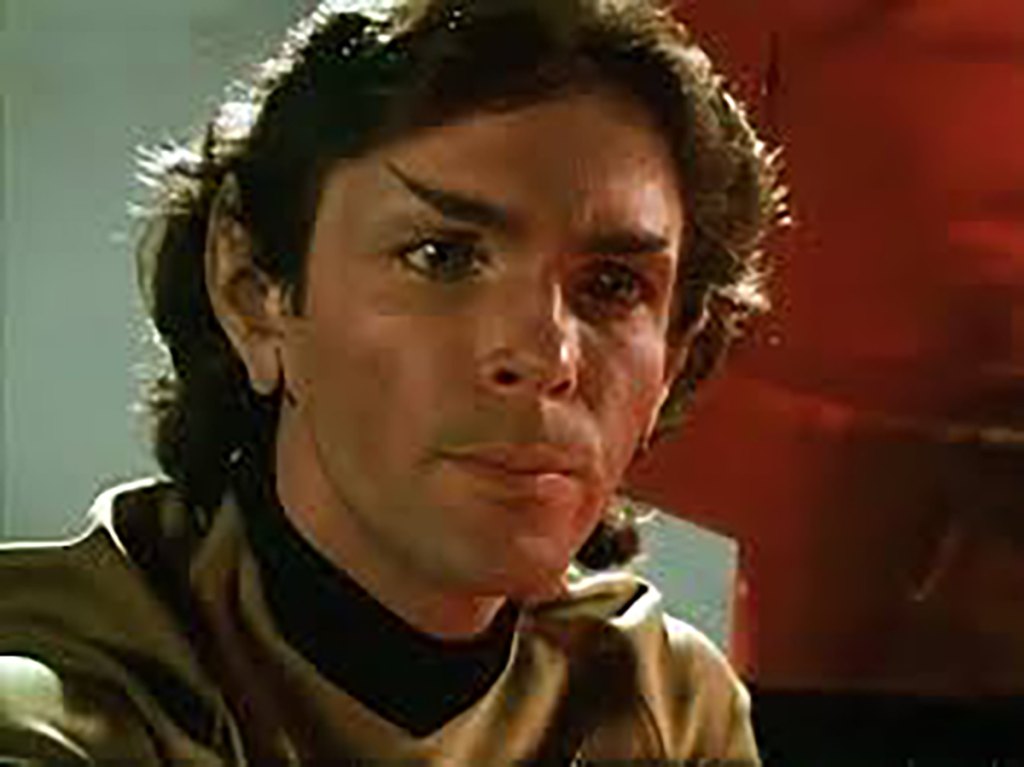
Gautreaux’s involvement began about a year earlier, when he tested for the role along with hundreds of other hopefuls and ultimately landed the part. His casting came several months after pre-production on Star Trek II had begun, which meant that scripts for the new series had already been written and preparations were underway for the two-hour premiere, “In Thy Image.”
He recalls the shock of stepping onto the Star Trek II set for the first time—an experience that felt less like joining a television production and more like walking into a fully realized future. “I remember walking on the soundstage and they had, of course, rebuilt the Enterprise,” he explains, “and I couldn’t get over how everything was ¾-inch plywood. They intended this baby to fly for about seven years, which is different from a movie set designed for the moment.”

At that point, the plan was clear: Star Trek II would begin with the two-hour premiere, “In Thy Image,” and then launch into weekly hour-long episodes. Gautreaux was already deep into the world of Xon when the studio abruptly changed course. “The day that I was actually cast and arrived at the studio, they announced that they were not making the pilot, that they were actually making a feature film. The series was put on hold. We had to go through a lot of renegotiations of contracts with the actors on pay-or-play. If they hire you to do something and they don’t do it, they must still pay you. So, we all had to be paid for the pilot, which was never shot, and rehired to do the feature.I had been placed on some kind of five-or six-year TV series contract, so when I resigned, I had to negotiate another television contract. Their plans were to do the feature and then go ahead with the series itself.

“When I was first cast as Xon,” he continues, “a fair amount of the fans reacted very strangely. Somebody recently told me that actors in soap operas place themselves in serious jeopardy if (in the show) they antagonize the fans’ favorite character. They, the actors on the street, can become the object of the fans’ wrath. That does happen in this business. When Star Trek II was announced and I was essentially announced as the replacement for Spock, I received some really strange letters from people saying, ‘Don’t drink the water,’ or somebody was going to drop LSD in my Coca-Cola. It was like poison pen letters because Spock was God to these people. As a result, I told the publicity team at Paramount, ‘This is not about my being afraid, but I think it’s really wise that we keep me completely hidden from all the pre-publicity. I don’t want to go to cons, I don’t want to be appearing in magazines. Let the movie come out and let everything swing for itself.’”
Nor was he stepping into the role as a dedicated fan. Until the moment he was hired, Star Trek had never been part of his life—not in any meaningful way. That changed only after his contract was signed. “I never watched the show. I bought a television two weeks after I was actually signed for the role, because I was given an advance large enough to actually do something like that. I was a hard-working-but-not-making-much-money kind of actor. I just thought I had better start watching the series and catching up with this incredible history. Much of the time, I would watch the show and say, ‘I don’t get it,’ not thinking of what it would have looked like if I had seen it in ’67 or ’68, and compared to the television of the time. Star Trek was so revolutionary, but to be looking at it in 1978, I didn’t think that much of it, although it did carry a large philosophical leap of faith that was wonderful.”
Discovering his inner Vulcan

As he worked his way through the original Star Trek episodes, Gautreaux began developing a clear sense of what exactly made a Vulcan. He didn’t want Xon to be a loosely sketched successor to Spock; he wanted him to stand as a fully realized representative of the species, shaped not by imitation but by an internally consistent philosophy. That commitment deepened once he read Harold Livingston’s early draft of “In Thy Image,” which introduced Xon as a young Vulcan who beams aboard from a meditative monastery in the Gobi Desert—so fresh from his ascetic life that he “smells rather strongly.” The detail delighted him, signaling a character who lived closer to Vulcan discipline than his human crewmates could ever imagine.
“I actually went off on a meditative trek and fasted for 10 days,” he reveals. “I allowed my hair to grow long. I started researching to be a Vulcan with no emotion. For an actor, that’s death. I was looking at it from an actor’s point of view, which is how do you appear as having no emotion without looking like a piece of wood? That was my objective, and I went to several coaches. Jeff Corey is the one who gave me the key of how I could actively play the purest pursuit of logic as being my primary action. Then, I felt I needed a physical equivalent. I followed the teaching of Bruce Lee, who taught about dealing with emotions and a freedom from emotions that allowed you to live in a nonviolent world. That’s really what Bruce Lee was all about, despite the impression his films gave.”
This approach gave him a way to differentiate Xon psychologically and physically. Bruce Lee’s philosophy—centered on not allowing emotional energy to “stick”—offered a model for how a Vulcan might process irritation, foolishness, or antagonism from volatile humans.

“His methods, his training and his students existed in a nonviolent life. The way to do that was to not let anything ‘stick.’ If somebody hits you, it doesn’t stick, it just flies through you. So, with a Vulcan dealing with ‘lame brain’ human beings… if they said something that was particularly stupid or, in the case of Dr. McCoy, particularly antagonistic, because of the training I had gone through, it would not attach itself. The idea is that a Vulcan is pursuing something much larger than what’s around him at that moment.”
The work wasn’t academic to him; he was eager to apply it. “In all honesty,” he says sincerely, “I was looking forward to playing Xon.”
Xon’s voyage winds down

Despite rehearsals, costume fittings, and months of preparation, the project once known as Star Trek II—now a feature film—became mired in what Gautreaux describes as a string of “never-ending” delays. Production was first scheduled for January 1978, then pushed to April and finally to June. By the time June arrived, a major shift had taken place behind the scenes: Robert Wise (director of The Day the Earth Stood Still, West Side Story and The Sound of Music, among others) had been hired to direct. According to Gautreaux, Wise’s arrival coincided with Gene Roddenberry beginning to withdraw, at least creatively, from the film.
“This is supposition on my part, but I don’t think Gene liked the direction that Paramount was taking the feature,” he opines, “and I don’t think he was happy with the choice of director. Robert Wise is a very powerful man in Hollywood. He’s a five-time Academy Award-winning director. He’s a man of great esteem and if I was him when I arrived on the set, I would instantly remove anybody who had a different point of view.
“When you’re that powerful a director, you can walk on the set and say, ‘There is no producer, there is no more executive producer. The writer has done his work. Everyone else, go home. This is my picture.’ That’s the way it is in Hollywood. Wise had certainly risen to that level, and I’m sure if there were interferences, it was the usual power struggle that goes on between two powerful men: someone who has developed a concept and the other person who is hired to shoot it. I think Paramount thought they needed a wise and elderly hand to wrestle this project, and they ended up wrestling it right to the ground. In my eyes, it never took off. It made tons of money, which is wonderful and surprising compared to the energy of the other films.”
Gautreaux stresses he harbors no bitterness, but he does believe that Wise played a key role in convincing Leonard Nimoy to return as Spock—something that upended the entire future of the Xon character. Nimoy had been engaged in a merchandising-related lawsuit with Paramount, but Wise’s involvement, Gautreaux says, seemed to accelerate a resolution. “When Leonard saw the carrot being dangled out in front of him, and this is what he admitted to me himself,” says the actor, “when they had recast the role, he felt much more aggressive about settling the lawsuit and getting back into it himself.”

That admission came years later, during a private meeting Nimoy requested when he was casting 1984’s Star Trek III: The Search for Spock. Gautreaux entered the meeting thinking Nimoy wanted to discuss a role; instead, the encounter became unexpectedly personal.
“Leonard and I had a meeting once when he called and asked me to come down to Paramount. I thought it was because of Star Trek III. He had many roles to cast, and he wanted to meet with me. We had a nice long conversation, which is on videotape because he recorded all of his conversations; it helps him remember actors. We chit-chatted for a good period of time, and then he came in with what I call the slider, which was, ‘How did you feel…how did it affect you…essentially, what did it do to your life when I came back and played Mr. Spock, thus removing your character?’
“I looked at him and was wondering if he was trying to purge himself of something he had felt all this time. I asked him what he meant by that, and he said, ‘Well, you were a young man and this was a very big moment in your life. Did I remove that moment?’ I looked at him, with a thousand thoughts running through my head. My response was, ‘Look, I was young, but I wasn’t brand new. I had been in this business, primarily in the theater, for a good long time. For me, Xon was or was not to be.’ He said, ‘That’s very good. I was hoping you would say something like that.’ I had no idea that he had put that much investment and thought into the belief that he had upset my life.”
Life beyond ‘Star Trek’
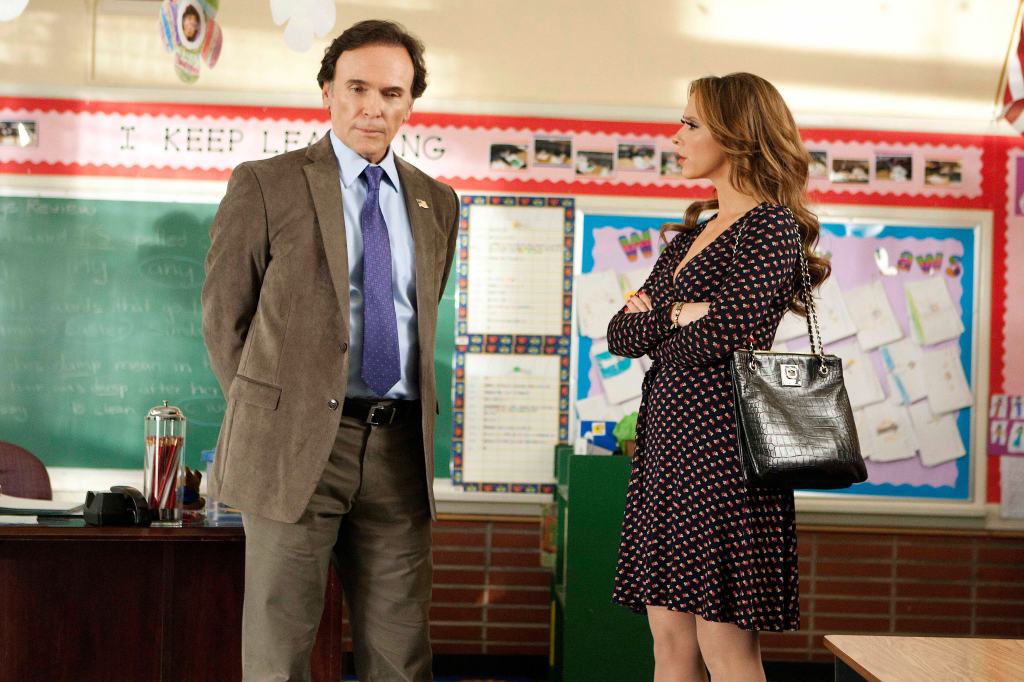
In the end, Gautreaux made a choice that few actors in his position would have had the clarity—or courage—to make. Rather than continue forward as a diminished version of Roddenberry’s original concept, he asked that Xon be written out entirely. If the character couldn’t fulfill the philosophical and dramatic purpose for which he’d been created, he felt it was better to let him go with integrity. Paramount agreed. Xon vanished from the story, and Gautreaux instead appeared briefly in Star Trek: The Motion Picture as Commander Branch, the Epsilon 9 station officer who reports on V’Ger’s approach. The role amounted to two scenes, but it provided a respectful final connection to the saga that had once so significant to him.
After that, he stepped away from Star Trek—yet he never abandoned the personal evolution that came with preparing to play a Vulcan. In fact, the discipline, meditation and emotional training he undertook for Xon became one of the most enduring parts of his life.
“I have found ways to put that training to use,” he says. “I was an avid bowler at the time, and a pretty consistent 160-170 kind of bowler. Using the principles of an actor working to become a Vulcan increased my bowling to a consistent 220. The primary goal of a Vulcan is to always be removing his energy away from himself and onto the task, which is either the pursuit of logic or the need of the other person for what you have to give them. So, you’re constantly removing the energy from yourself, thus freeing yourself from obstacles. This is what I learned from fasting.
“When we remove three meals a day, plus snacking, get past the third or fourth day, which is the real hump stage, the next 10 days are gravy. You can go on forever as long as you have some water and some freshly squeezed juices for necessary proteins now and again. But you are so clear. You ask for something, and you know exactly what you’re asking for. What you find is that human beings aren’t very good at dealing with straightforward requests. They always want to know about the grey area and the pink area; they don’t want to just give you the black and white. That’s what makes life very silly and full of jokes, and why things don’t get done as well. Vulcans are like Zen and the Art of Archery. There’s no such thing as a target, there’s no such thing as an arrow, and there’s no such thing as a bow. Everything is all one integral motion and there’s no such thing as hitting the target or not hitting the target, because the bow, the arrow and the target are all one. In bowling, you remove at least 50 percent of the effort, which is to do things correctly, and concentrate on the game itself. That kind of concentration can be done on anything you do. I use it all the time.”

Following his brief appearance in Star Trek: The Motion Picture, David Gautreaux continued building the kind of steady, eclectic résumé that defines a working actor’s life. On film, he appeared in the thriller The Hearse (1980), the Meryl Streep–Robert De Niro romance Falling in Love (1984), the political drama Bordertown (1990) and the courtroom thriller The Wrong Man (1993). Television kept him even busier. Throughout the 1980s and early ’90s, he turned up in a wide variety of series, including T.J. Hooker, The Fall Guy, Airwolf, Crazy Like a Fox, Matlock and Murder, She Wrote, as well as a recurring role as Reverend David Guthrie on Falcon Crest. He also appeared in TV movies such as Twist of Fate (1989) and The Diamond Trap (1988).
But screen work was only one part of his career. Gautreaux remained deeply committed to the stage, performing in regional theater, classical repertory and contemporary works for much of his professional life. His theater credits span everything from Shakespeare to modern American drama, and colleagues frequently note that Gautreaux has always regarded the stage as home base. In many ways, his Star Trek chapter became just one brief detour in a career built on versatility, discipline and the kind of longevity that often goes unnoticed but is quietly impressive.
Even after the project dissolved, Gautreaux never viewed the experience as a loss. If anything, he’s quick to stress that the work he invested in Xon—the fasting, the meditation, the physical and philosophical training—left a deeper and more enduring imprint on him than the role itself ever could have.
“I have never personally felt badly, upset or any of those things for not playing Xon,” he says. “I’ve always felt that it was too bad the public didn’t get the chance to see this character, given the preparation I had given to it. But insofar as how it enhanced my own life, they paid me back a hundredfold. Xon took me from a state of physical to a state of metaphysical, which is something that I’ve never lost.”
Conversation
All comments are subject to our Community Guidelines. Woman's World does not endorse the opinions and views shared by our readers in our comment sections. Our comments section is a place where readers can engage in healthy, productive, lively, and respectful discussions. Offensive language, hate speech, personal attacks, and/or defamatory statements are not permitted. Advertising or spam is also prohibited.