How the ‘Smothers Brothers Comedy Hour’ Changed TV Comedy and Challenged CBS Censors
Author David Bianculli on how the Smothers Brothers forever changed political satire on television

Key Takeaways
- The Smothers Brothers proved political satire could thrive in prime time.
- Their battle with CBS reshaped what television comedians could say.
- The show's influence can still be seen in today's late-night comedy.
Today, it’s pretty much expected that late-night hosts like Jimmy Kimmel, the “late” Stephen Colbert and Jimmy Fallon—or the cast of Saturday Night Live—will take aim at the President of the United States, Congress, government policy and just about anything else making headlines. Political satire has become so commonplace that it’s no longer viewed as particularly daring; it’s simply part of television’s comedic landscape. But that certainly wasn’t the case in the late 1960s.
At a time when the nation’s television networks generally avoided controversy, especially during prime time, one series was willing to challenge the status quo week after week. The Smothers Brothers Comedy Hour, hosted by brothers Dick and Tom Smothers, blended music, sketch comedy and increasingly pointed social and political commentary in ways network television had rarely attempted before. In the process, it not only changed the boundaries of what television comedy could say, but also ignited a battle with CBS that ultimately brought the series to an early end.
DAVID BIANCULLI (author, Dangerously Funny: The Uncensored Story of The Smothers Brothers Comedy Hour): “You think about all these people and their political humor, and they’re either on cable or late night. What makes it so amazing to me was that the Smothers Brothers were doing it in the middle of prime time on Sunday nights, then television’s biggest viewing night of the week. And for a while they were among the most popular shows on all of television. I mean, nobody’s really replicated that in terms of satirical political comedy in more than 50 years. So the number of people who are watching Jimmy Kimmel is maybe a couple of million, and then it spreads as far as it does through social media, YouTube and various clips. But for The Smothers Brothers Comedy Hour, everyone was tuning in at one time. Many millions of people.”
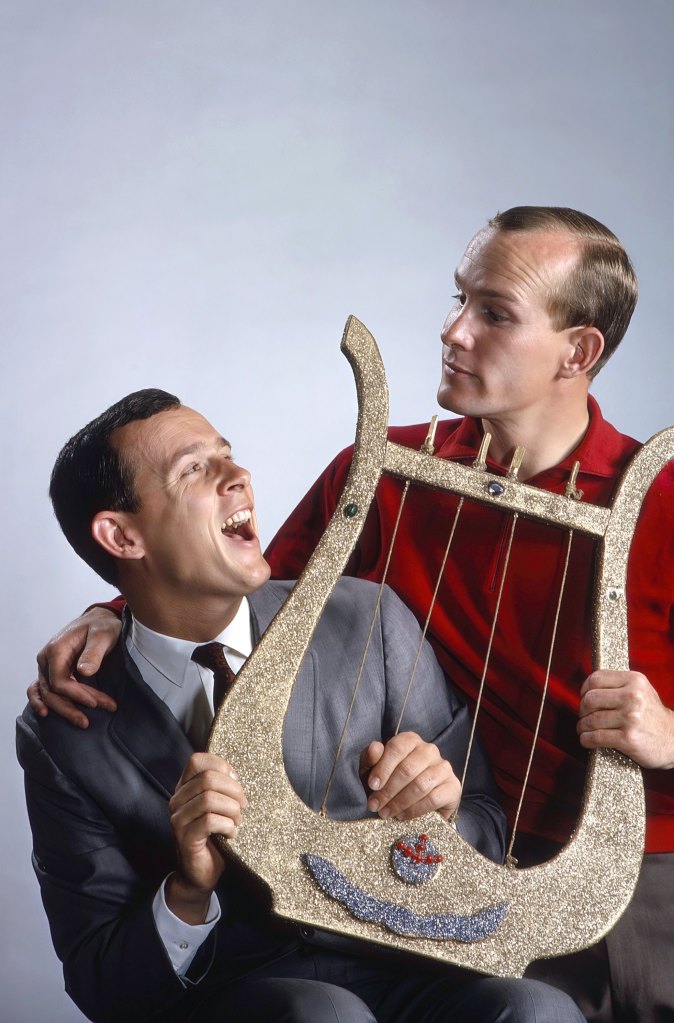
Born in 1937 and 1939, respectively, Tom and Dick Smothers grew up in the shadow of tragedy. Their father, Thomas B. Smothers Jr., a West Point graduate and U.S. Army officer stationed on Governors Island in New York Harbor when the boys were born, died during World War II while being transported from a Japanese prisoner-of-war camp in Fukuoka to another camp in Mukden, Manchukuo.
As young adults, the brothers combined their love of folk music with an offbeat style of comedy, building an act that revolved around sibling rivalry and Tom’s unforgettable refrain to Dick: “Mom always liked you best!”
‘The Smothers Brothers Show’
Their breakthrough came in 1959 with a successful engagement at San Francisco’s famed Purple Onion nightclub, which led to a string of popular comedy albums. National television exposure followed with an appearance on The Jack Paar Show in 1961, and four years later CBS cast them in their first starring vehicle, the sitcom The Smothers Brothers Show. The series featured Dick as a carefree bachelor and Tom as an angel sent to Earth to help guide his brother toward a more responsible life.
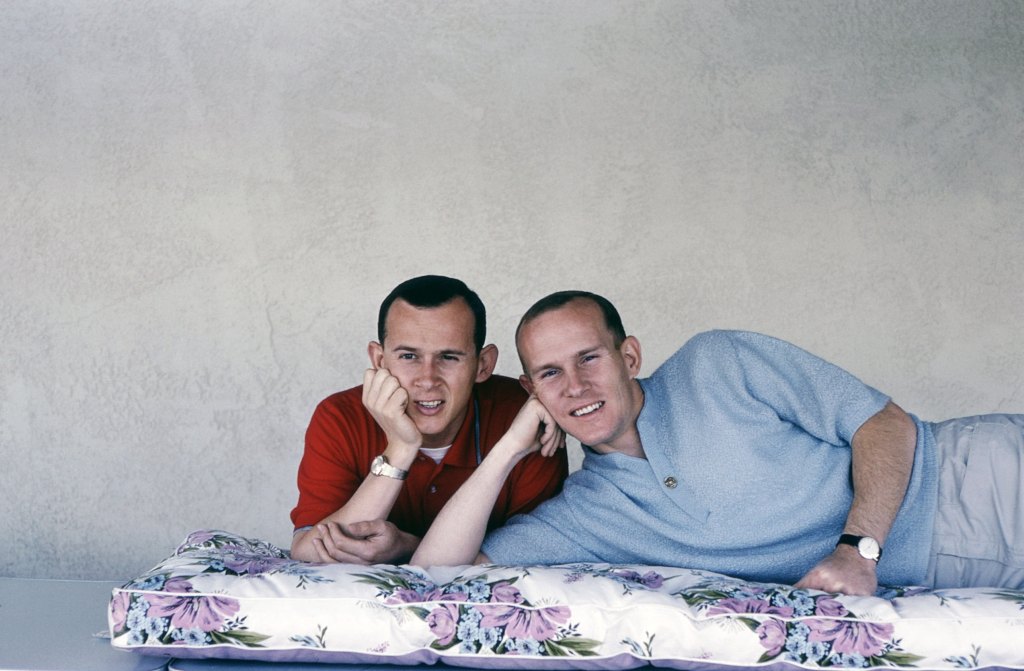
Although the sitcom lasted just one season—largely because it failed to capitalize on the brothers’ winning blend of music and comedy—CBS executives remained convinced they had star potential. Rather than cutting ties, the network offered them a one-hour variety series. When The Smothers Brothers Comedy Hour debuted as a midseason replacement in January 1967, there was little indication that it would soon become one of the most influential—and controversial—programs in television history.
GEOFFREY MARK (pop culture historian): “They’d failed in a sitcom for CBS, but they still had a contract. CBS looked at them as a pair of funny folk singers and gave them a variety show. Nobody expected it to become what it became.”
‘The Smothers Brothers Comedy Hour’ arrives
DAVID BIANCULLI: “It was a mid-season replacement series thrown on by CBS simply because one of the most popular variety shows of a few years before, The Gary Moore Show—which is where Carol Burnett came from—had stopped production a couple of times because Gary needed a rest, but then came back in 1966 on CBS and got killed in the ratings by Bonanza. The Gary Moore Show had been a hit when it premiered in 1959 on NBC, and anything CBS put against Bonanza didn’t work. So when Gary Moore really tanked, they needed a fast replacement. They didn’t have a drama series sitting on the shelf ready to go, so they turned to the Smothers Brothers. The head of programming at the time, Mike Dann, rightly looked at them as what they were: just a couple of young goofball kids making fun of folk music.”
Unlike today, when overnight ratings provide almost immediate feedback, television executives in the 1960s often waited as long as two weeks before learning whether a new series had found an audience. By the time the first ratings arrived for The Smothers Brothers Comedy Hour, which premiered in January 1967, the cast and crew were already taping the third episode.
DAVID BIANCULLI: “That’s when they found out, ‘Oh, people are watching. Then a couple more ratings books came in and they found themselves to be a Top 10 program. Bonanza was also a Top 10 program, but sometimes The Smothers Brothers Comedy Hour actually got higher ratings. They couldn’t dethrone Bonanza, but they brought in a whole new audience of young people. After about three ratings books, they began to realize, ‘Hey, we’ve got some clout here. Let’s do more of what we want.’ And that’s exactly what they did.”
GEOFFREY MARK: “The ratings were phenomenal. They insisted, ‘This is what we do, and this is why we’re delivering you great ratings. Get your hands off the show.’”
DAVID BIANCULLI: “They had designed the initial shows simply to appeal to as many people as possible. That’s why you had Simon & Garfunkel on the same show as Kate Smith. Somebody from old show business and somebody from the new generation, and they didn’t just appear in separate segments like on The Ed Sullivan Show. They put them together in sketches and really capitalized on the contrast. One show had Mickey Rooney and Bette Davis. There was a real diversity in the guests every week.”
“I think it was the 10th show of the first season where they did a long sketch called ‘Billy the Kid’s Birthday. Tom played Billy the Kid and everybody else were the outlaws. Janet Leigh guest-starred as Belle Starr, while Simon & Garfunkel played troubadours who sang about the outlaws. It started like a traditional shoot-’em-up Western where they give Billy a birthday cake, but then they get into a fight and decide they’re going to kill him. Dick Smothers says, ‘Wait a minute! Maybe fighting’s not the answer. Maybe love is the answer.’ Tom decides he wants to ride off with Janet Leigh. Well, you can’t do that on television. You can kill on TV, but you can’t make love on TV. So one of the CBS outlaws says that doesn’t seem right… and kills him. Then it goes back to the troubadours, who sing, ‘Sometimes you want to say something when people don’t expect you to say something.'”
“It was just the weirdest bit of television I think I’d ever seen up to that point. I was 15 or 16 years old, and it was television talking about itself and making you question what was acceptable on TV and what wasn’t. From that show on, they just started doing more and more. They were making fun of the president, they were making fun of the Vietnam War, they were bringing on all these new rock acts and doing blackout sketches about racism. Then one of their supporting players, Pat Paulsen, ran for president. Just brilliant.”
If “Billy the Kid’s Birthday” demonstrated that The Smothers Brothers Comedy Hour was willing to push television’s boundaries, the obvious question became: Where would the brothers go from there? The answer arrived in the form of writer and performer Elaine May, who joined Tommy Smothers in a sketch playing a pair of television censors screening a movie. The audience never saw what was unfolding on the screen before them—only the censors’ increasingly uncomfortable reactions. That alone was enough to alarm CBS, which refused to allow the sketch to air.
Behind the scenes, the battle was becoming about far more than a single sketch. As the Smothers Brothers became increasingly willing to tackle politics, the Vietnam War and the cultural upheaval of the late 1960s. CBS executives found themselves caught between one of television’s biggest hits and mounting pressure from both sponsors and Washington.
GEOFFREY MARK: “It became a push-me, pull-you tug of war between people trying to make the Nixon administration happy and wanting the huge ratings the Smothers Brothers were delivering.”
DAVID BIANCULLI: “In response, Tommy flew to New York, and this was the first time an entertainer went to a serious newspaper to complain about censorship in terms of content. The press loved it and ran with it. So automatically it became ‘CBS vs. The Smothers Brothers,’ and it just got worse and worse, because the network didn’t want viewers to know there were censors—much less that CBS employed them. But every time Tom felt he’d been wronged, he went to the newspapers. This was the height of the ’60s. CBS became the very stern parents and Tom and Dick were the rebellious teenagers. It was just a lot of butting heads.”
“Tom really was young enough to think, ‘I’m right, and I’ll win this.’ That didn’t quite happen. Over the course of those three seasons, you can watch the brothers mature as performers and as people. By the start of the third season, they were actually singing about being censored. They brought on Pete Seeger, but CBS censored the song he wanted to perform. So they went back to the press, and within that same season they were able to bring him back and air the song. They won some fights, but lost others.”
GEOFFREY MARK: “The more Tom and Dick got leaned on, the more they held onto the idea that they had to become even more radical.”
By the third season, The Smothers Brothers Comedy Hour was no longer the Top 10 sensation it had once been. Yet despite the ongoing battles over content, CBS continued renewing the series and, for a time, tolerated the brothers’ increasingly confrontational relationship with the network.
DAVID BIANCULLI: “The more political they became, the more they alienated some of the older audience. By the third season, they weren’t a Top 10 show anymore. They were more like a Top 25 show. But they were still a very popular program and, under almost any other circumstances, they would have stayed on the air. As a matter of fact, they’d already been renewed for a fourth season before CBS fired them. One of the things that happened was David Steinberg came on the show and did a sketch in which he played a minister delivering a sermon. It generated more negative mail than anything else in the history of television up to that point.”
“CBS told the Smothers Brothers they couldn’t bring him back and, if they did, absolutely no more sermons. The short version is that they invited him back very quickly. They did the run-through with the censors there, and there wasn’t a sermon in it—they were just running the show. After the rehearsal, David Steinberg said to Tommy, ‘You know, I sort of expected another sermon.’ Tommy asked, ‘Would you like to do one?’ David was an improv comic, so he said, ‘Okay.’ When they taped the show the next day, they included it—but it never aired. The entire episode never aired, and that was basically it. It was like breaking curfew for the last time. CBS decided it simply wasn’t worth the hassle anymore.”

“On top of that, the CBS executives, advertising executives and programming executives would go to their country clubs in upstate New York, and all their wealthy, conservative Republican friends would ask, ‘Why are you letting those boys do that?’ It became a real issue, and that was the end of The Smothers Brothers Comedy Hour.”
Although The Smothers Brothers Comedy Hour ended its run in 1969, David believes its influence lived on through Saturday Night Live, which premiered on NBC six years later.
DAVID BIANCULLI: “And Lorne Michaels is still there as a very strong arbiter of public tastes. He chooses the guest hosts, the musical guests and all the people who’ve come through Saturday Night Live over the decades. If the Smothers Brothers hadn’t been fired by CBS, in just a few more years their show could have become just as powerful. Even in those three seasons, they were already creating stars. And when people watch the episodes, they’re going to see just how many musical superstars appeared on that show. The Doors were there doing things they never did anywhere else. Jefferson Airplane created the first psychedelic television background with colored oils being dropped behind them while they performed.”

“If they hadn’t been canceled, the show would have gone on to deal with Woodstock and Watergate, and they would have featured artists like James Taylor and Elton John. George Harrison even appeared unannounced simply to support what the Smothers Brothers were doing. And when The Beatles stopped touring and released promotional films for ‘Hey Jude’ and ‘Revolution,’ they only allowed them to be shown on David Frost’s program in the U.K. and The Smothers Brothers Comedy Hour in the United States.”
Looking back more than half a century later, David has little doubt about the show’s place in television history.
DAVID BIANCULLI: “Without them, you don’t have Rowan & Martin’s Laugh-In, which followed about six months later and eventually eclipsed them in popularity. You don’t have Saturday Night Live or the kind of humor it embraced. There are straight lines from the Smothers Brothers to Jon Stewart, Stephen Colbert and Bill Maher. You might not have any of those in quite the same way. If you watch the programs today, most of what they did after more than 50 years will seem pretty tame. But at the time, nobody discussed politics on a comedy show. Certainly nobody spoke out against the Vietnam War or made jokes about drugs in a comedy series before they did. They got there first.”
Conversation
All comments are subject to our Community Guidelines. Woman's World does not endorse the opinions and views shared by our readers in our comment sections. Our comments section is a place where readers can engage in healthy, productive, lively, and respectful discussions. Offensive language, hate speech, personal attacks, and/or defamatory statements are not permitted. Advertising or spam is also prohibited.