When Avery Brooks Was Finally Allowed to Be True to Himself, It Changed ‘Star Trek: Deep Space Nine’ Forever
Unlocking the actor's authentic voice transformed the sci-fi series from a spinoff into a legend

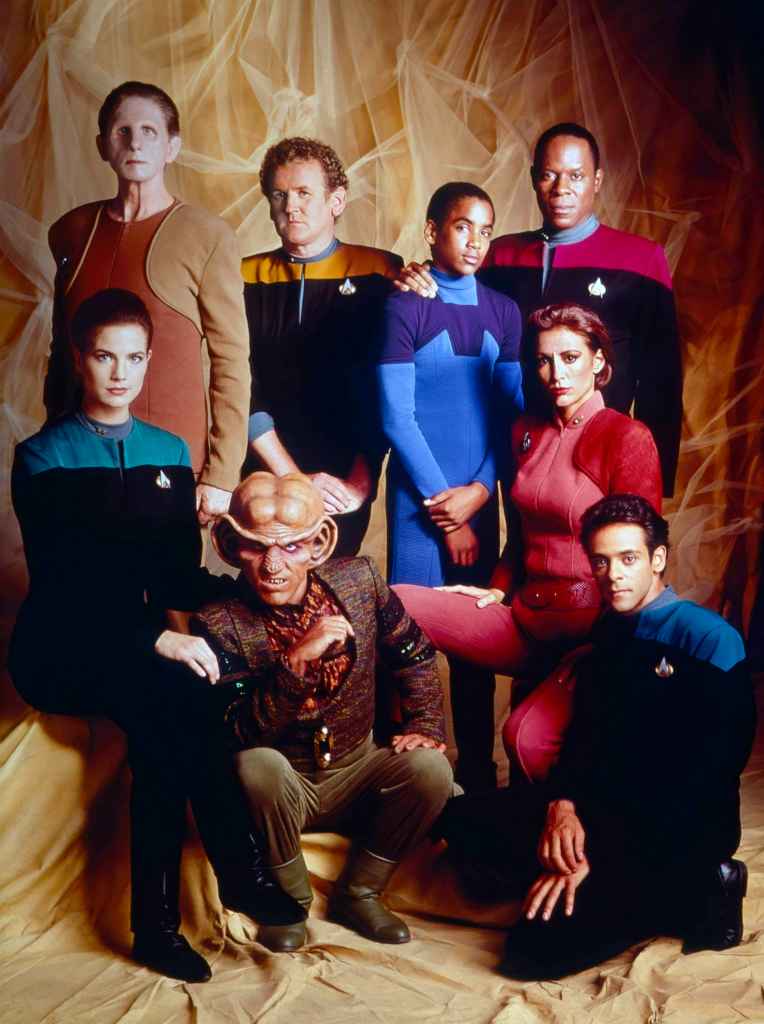
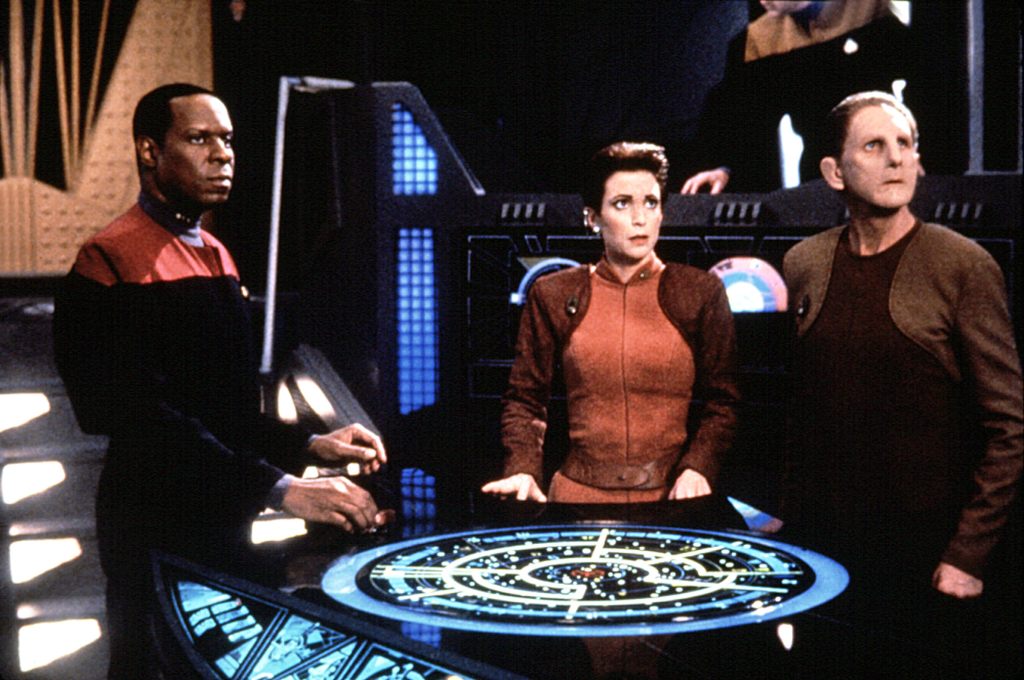
For years, Star Trek: Deep Space Nine occupied an uneasy position within the Star Trek universe. It was frequently treated as the franchise’s red-headed stepchild, the series that broke from the familiar formula of starships boldly venturing into the final frontier. Instead, Deep Space Nine was anchored to a space station, its stories seemingly coming to it rather than the other way around. That perception was never entirely accurate—the show was in constant motion, thematically and narratively—but it persisted long enough to shape how both the series and its central characters were received. No character reflected that evolution more completely than Commander, and later Captain, Benjamin Sisko, portrayed by Avery Brooks.
Recently—aided in no small way by the show’s growing audience through streaming—Sisko has received renewed attention, particularly true in the fifth episode of Starfleet Academy, “Series Acclimation Mil.” In this show, SAM (Kerrice Brooks)—herself an emissary for the Makers—becomes consumed by the mystery of Benjamin Sisko, the Emissary of the Prophets who vanished at the end of the Dominion War. Her search proves unsuccessful, but Professor Illa shares Jake Sisko’s book Anslem, allowing SAM an encounter with Jake (Cirroc Lofton) through its pages. The revelation that Illa is Illa Dax, the current host of the Dax symbiont and a close friend of Sisko, provides the audience with a partial understanding of what happened to him—never full closure, but something closer to emotional resolution.
That framing only emphasizes how complicated the journey of both Brooks and Sisko was during Deep Space Nine’s original run. For much of the show’s early life, Brooks was, in a very real sense, denied the opportunity to fully inhabit the character. The result was a performance that, while compelling, felt constrained—something that changed decisively as the series reached the end of its third season and moved into its fourth. That shift altered not only Brooks’ portrayal, but the way the writers approached Sisko and, ultimately, the identity of Deep Space Nine itself.
From the beginning, the series required a commanding officer capable of anchoring an ensemble cast in the way William Shatner had as James T. Kirk and Patrick Stewart had as Jean-Luc Picard. That responsibility fell to Benjamin Sisko, a character conceived not as a swashbuckling explorer, but as a man shaped by loss.
MICHAEL PILLER (co-creator/executive producer): “Our commander was somebody who’s lived a life of tragedy, in essence, because when Picard was with the Borg as Locutus, and led the Borg on their attack, Sisko was a commander on one of the ships destroyed. He lost his wife and now he’s raising his son by himself and he hasn’t really been able to go on with his life since he lost her. One of the arcs of the first story is some conflicts with Picard and how he gets through some of those things.”
DAVID CARSON (director): “When you have somebody like that who leads the story, he has to come to terms with what has happened to him, otherwise he spends his entire time in a bitter rage, which he doesn’t. This was a buried part of his psyche, but it was nonetheless there.”
WINRICH KOLBE (director): “Anybody who saw the pilot has to be aware of the fact that we had an unwilling leader of the group. Now that was intriguing. If he was unwilling once, even though at the end he said he’s going to fulfill his obligations, there could have been a time bomb in that character. He wasn’t the character who would say, ‘I’m loyalty above all and I’m going down with the ship.’ There was a possibility that he might do something different, totally unexpected.”
RICK BERMAN (co-creator/executive producer): “The key word is ‘presence.’ We needed someone who could match or, hopefully, exceed the sense of presence that Patrick Stewart exuded on a pretty regular basis as Captain Picard. We didn’t want to go backwards; we wanted to go forward in that. We were looking for a good actor, but more than anything, we were looking for someone with that sense of commanding presence, which this guy gave us.”
DAVID CARSON: “We decided that the role could be played either by a white man or a black man, or, as in the case of Picard, by an American or Englishman, or Belgian or German. In fact, we did interview a Belgian actor and a German actor who came over from England. What race or creed he was was very important, but it was never a question of whether or not there was opportunity for everyone, every type of person to play the role. In the end, even though you would expect us to say this, I think all of us can truthfully say that we were able to come down to what we considered to be the best actor for the job.”
“Avery Brooks is a phenomenal actor. I’ve rarely come across an actor with a combination of his incredible depth of ability to portray emotions and feelings, but also his extraordinary technical skill in front of the camera and an amazing strength of performing with the lens. He was a real joy to work with. And the way he senses out a character… He developed his character into a very subtle blend of types of feeling with which he handled himself in different situations. He’s extraordinarily deft and constantly interesting, and I think the character gave him much more ability to have these differences in his psychological makeup than Picard, who was a very much more straightforward character you could probably predict would react in a certain way in different situations. It was very difficult to do with Sisko, and Avery played with delight those opportunities.”
MICHAEL PILLER: “We knew we had found our Sisko. We had been looking for a quality that continued with the heroic leadership potential, but we knew that very big boots had to be filled. We had two great stars in the leadership role in the past, and it was very difficult to find someone who really impressed everybody in the room with the presence of command that Avery did.”
AVERY BROOKS (actor, “Captain Benjamin Sisko): “I wasn’t worried about typecasting, because I had been blessed with a thunderbolt artistically before that moment. I’d done a myriad of things. For example, I’d been doing Paul Robeson for a decade, and those kinds of things I would do to separate myself from the Sisko character. We all hope that we are able to do anything, so sometimes I’m Sisko and sometimes I’m not.”
IRA STEVEN BEHR: “Making Sisko a commander is one of the tragic mistakes of DS9. I’m sure it seemed like a good idea at the time, but what a mistake. To the fans, the hero of Star Trek is the captain and if you’re not a captain, there’s got to be something wrong with you—you’re the star of the show and you’re not a captain and you’re a man already in your 40s? If he would have been in his early ’30s, like they had said he was going to be, it would have been a different matter. Avery didn’t give off that youthful feeling. I remember when they told us they were going to cast Avery, we looked at the audition tape, which I think I still have somewhere, and said, ‘Boy, this isn’t what we thought. Why is he a commander? What happened to the younger guy who was going to have all these doubts and feelings of defeat?’”
MICHAEL PILLER: “In terms of Sisko, we were having a difficult time matching what our ambitions were for the character with the actor. I’ve never actually talked to Avery about this, but in the Roddenberry world, race and color really don’t play a major role except in terms of whether you’re green or an alien, but in terms of humanity, the role of the black man is no different from the role of anybody else. I always felt that was a problem, because I felt a great deal of what Avery had done in the past had used black attitude to define what the roles that he had created and become famous creating were, and there was nowhere to do that in the 24th Century. So, there was a certain kind of anger that he carried around with him as a character that was derived from the fact that Sisko’s wife had died and that he felt a little bit lost in the universe. It also felt a little bit out of character for Roddenberry’s universe, so we were struggling with how to use Sisko in the context of the role of the builder.”
“Ultimately, I think that worked out all right, but it was a struggle at first. We did have discussions with Avery about that as well. I remember writing a long memo to [executive producer] Ira Steven Behr at the end of the first season, saying, ‘Here’s what we need to do with Sisko. Who is this guy, how does he operate as a hero?’ and so forth.”
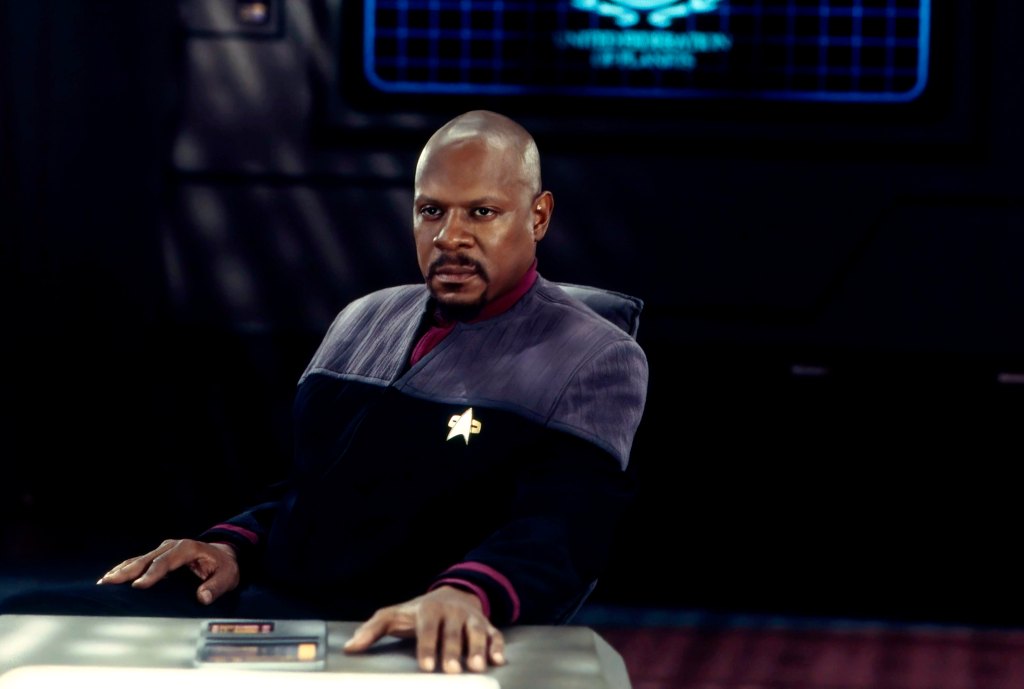
For the first three seasons, Sisko was a deliberately contained character—capable of sudden, explosive reactions, yet marked by the sense that he was holding something back. What that was remained elusive, more felt than articulated. Then, as Season 4 began, everything shifted. Promoted to the rank of captain, Sisko came alive in a way he hadn’t in earlier seasons, his authority and confidence finally aligning. Much of that transformation could be traced to a simple but profound change: Avery Brooks was at last allowed to shed the toupee and grow his goatee, thanks to Ira Steven Behr’s determination to make the actor fully comfortable in the role.
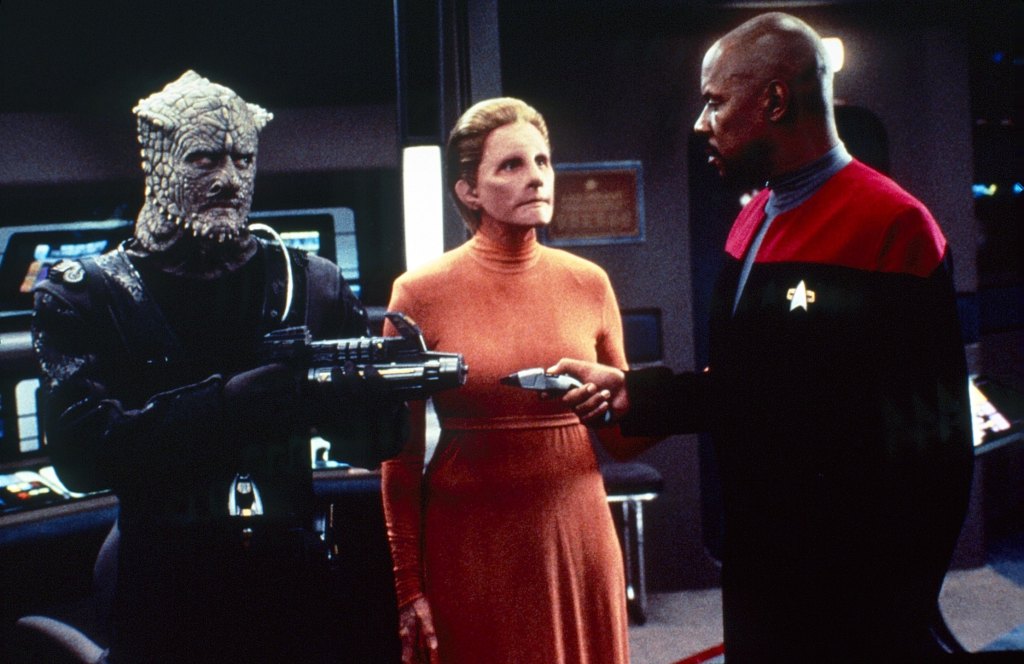
IRA STEVEN BEHR: “Why did we put the guy through almost three seasons of not feeling comfortable? By this point, though, Rick and I were ready to do battle. It was one of those times we were totally on the same page. We got ourselves all revved up. Rick had a cassette with Avery’s look of being bald and with the beard. We went into Kerry McCluggage’s [of Paramount Television] office, ready for this big fight. Rick puts the cassette in and plays this two-minute thing for them. We’re ready for a fight and they said, ‘OK, fine.’”
“That was a really good moment, because we were really looking at each other laughing, going, ‘Wow, don’t you feel like there was a fight in your heart that just didn’t happen?’ We had so many things that we wanted to say that we didn’t get to say. I said, ‘Isn’t it weird that it just happened like that?’ A quiet victory, but why did it have to be a victory anyway?”
ROBERT HEWITT WOLFE (producer): “That’s what Avery looks like, so why shouldn’t you let the guy look like himself? You have a guy who looks in the mirror and doesn’t see himself, because that was so much a part of who Avery was. That look, that persona. As a man, as who he was: this sort of unapologetic, strong figure. You put him in the uniform and you take away that look… I don’t know if he was struggling, but I would say that it was when we started writing to Avery and let Avery look like Avery, the character became a much better character. It let him identify a little more with the character and the key to a good performance, especially in television, where you do it every day, is to be able to really find where you and the character intersect. When you make someone radically alter their appearance in a way they don’t identify with, that can be restrictive. It’s a subtle psychological thing.”
TERRY FARRELL (actor, “Dax”): “Avery wanted that look from day one. For us, the notion of the white man ‘holding us down’ is not a thing, but for Avery it was. I can’t even imagine what the poor man went through with those guys. It’s like they stripped him of his power. But then, as soon as he got to be his physical image and he stopped looking like a black Ken doll—I’m sorry, it’s true!—and got to look like his vision of Sisko, it was like night and day. He was suddenly a powerful cat and it was, like, ‘Whoa, I wouldn’t f**k with him!’ Before, it was like he was being held back, with them saying, ‘You can’t do this, you can’t do that.’”
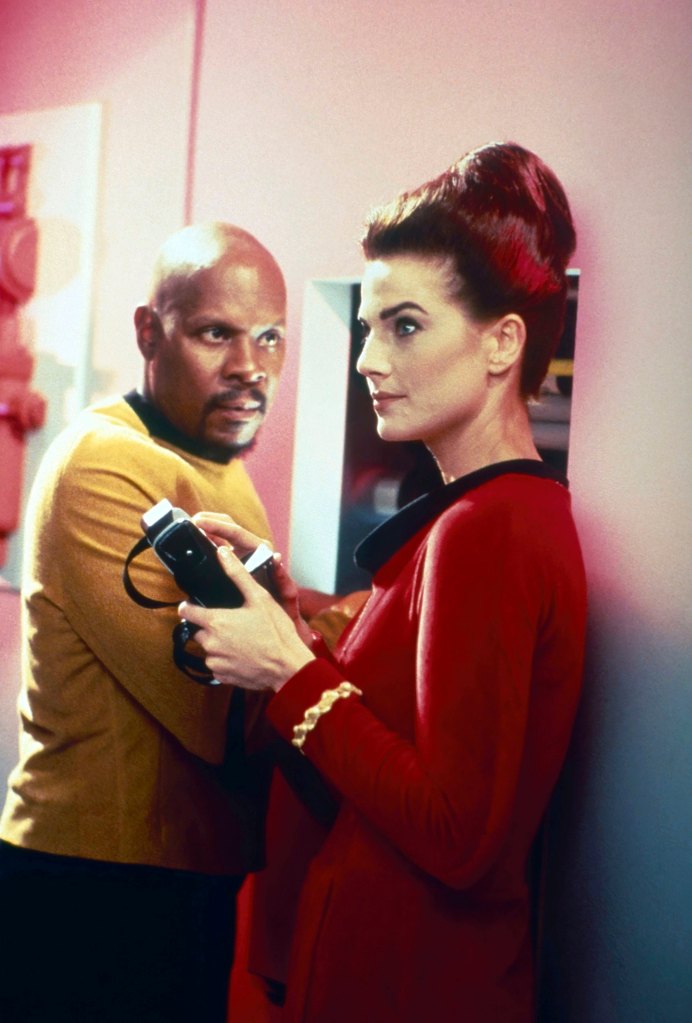
J.G. HERTZLER (actor, “Martok”): “It felt like Avery had a blanket on before that. They wanted something Middle American when they started out and they finally realized it wasn’t right.”
HANS BEIMLER (producer): “He looked like an idiot before that, but nobody would listen. It was a terrible look and combined with the uniform, it made him look like an overgrown kid. Hawk from Spenser: For Hire is what we needed.”
ROBERT HEWITT WOLFE: “If an actor brings a tremendous amount of humor to the part, you don’t want to write them anything but straight lines. You’re wasting a resource. So, Avery’s strength and dignity, but also his jazz brain way of looking at the world, his unpredictability—writing to that really helped make the character more than what he would have been if we would have tried to straightjacket him into what was on the page in the initial form.”

IRA STEVEN BEHR: “As much as he was happy with the beard and the hair and all of that stuff, I think he was f***ing thrilled to be made a captain. With all of it he was more in control of his body and his look, and now he’s got the authority and he’s back in the pantheon of what Star Trek is: a captain.”
RONALD D. MOORE (producer): “There’s a scene in ‘Way of the Warrior’ when Sisko is sitting in a room with a Klingon general and Worf. It’s a tense scene and they’re looking at each other, but you get the impression that Avery is the guy in the room you’ve got to worry about. Sisko, suddenly, is the most threatening presence and the guy who is just going to kick your ass. There are two Klingons with him, and he’s just blowing them away. It really gave him an edgy presence, which is great. He was suddenly a comfortable actor and that made the difference.”
IRA STEVEN BEHR: “One of my great Avery moments is that I was coming out of Rick’s office, coming down the stairs. So, for some reason, of all people, there’s Avery coming up the stairs. I was so jazzed and I said, ‘Avery, they said yes! You can be bald and have the goat!’ I just felt like it was a real victory. I felt it was a three-year struggle we had been through together. And he looks at me and he goes, ‘Oh, OK,’ nods and walks right by. It was, like, ‘Seriously?’”
Conversation
All comments are subject to our Community Guidelines. Woman's World does not endorse the opinions and views shared by our readers in our comment sections. Our comments section is a place where readers can engage in healthy, productive, lively, and respectful discussions. Offensive language, hate speech, personal attacks, and/or defamatory statements are not permitted. Advertising or spam is also prohibited.