Lucille Ball Said Yes to ‘Star Trek’—and It Cost Her Desilu: ‘They Warned Her Not To!’ (Exclusive)
Lucille Ball backed 'Star Trek' against all advice—which changed TV history and her studio forever

It’s one of those Hollywood chain reactions where every link matters. Without I Love Lucy, Lucille Ball and Desi Arnaz would never have formed Desilu Productions. Without Desilu, Ball never becomes a studio executive and without Lucy sitting in the president’s chair, Gene Roddenberry almost certainly doesn’t get the chance to make a strange, expensive and deeply unconventional science-fiction pilot called Star Trek.
That sequence of events began more than 60 years ago, when Ball approved Roddenberry’s first pilot, “The Cage,” at a time when network executives were openly skeptical of the sci-fi genre. Others warned her not to bankroll the series at all, fearing it could push Desilu into financial ruin. From their perspective, the concern made sense: Star Trek was costly, complex and unlike anything else on television. From Lucy’s point of view, however, it was something else entirely: a show with ideas, ambition and the potential for a long future.
In a twist that feels almost poetic in hindsight, both sides turned out to be right. Star Trek did strain Desilu’s finances and ultimately played a role in the studio’s sale, but it also became one of the most enduring franchises in television history, continuing to evolve more than half a century later and now celebrating its 60th anniversary accompanied by the latest spinoff, Starfleet Academy.
Choosing ‘Star Trek’

By the mid-1960s, Desilu was in the middle of a quiet transition, and executive Oscar Katz found himself at the center of it. Looking back, he was blunt about who mattered most in getting Star Trek off the ground.
Oscar Katz (Executive, Desilu): “If I had to pick the three people who had the most to do with getting Star Trek into reality, they would be Gene Roddenberry, myself and an agent at Ashley named Alden Schwimmer. I had problems signing creative people, getting them to pitch projects. Schwimmer said, ‘Let’s get a couple of guys in the long form and the short form, let’s make overall deals with them. Let’s not say, ‘I like this property, I don’t like this property.’ Let’s approach them and say, ‘We’d like you to come to Desilu and would like you to make Desilu your home. The way we’d like to do it, don’t tell us your properties. We’ll make a deal for three properties to be determined.’ In the long form, Roddenberry is the guy he recommended. I knew Roddenberry from previous contacts and we made the same sort of deal with one or two guys in the comedy field.”
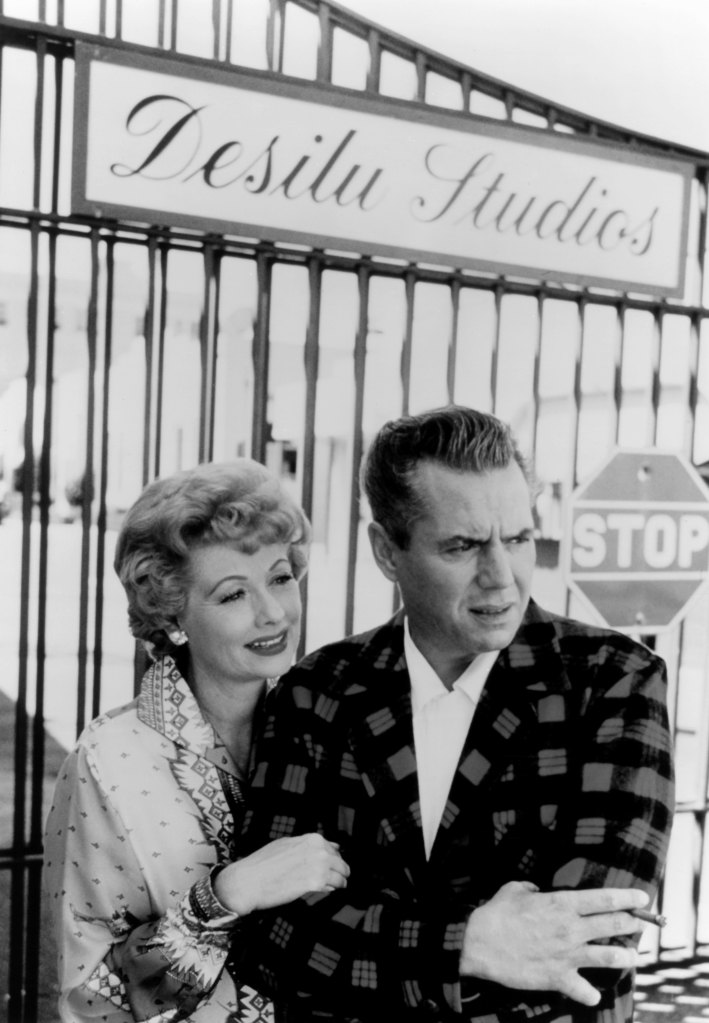
Financially, Desilu survived in two very different ways. As Katz explained, the studio made money from shows it owned outright—“such as I Love Lucy and The Untouchables”—and by renting out space to other producers. “Bing Crosby Productions shot all their stuff there, as did Danny Thomas and Sheldon Leonard,” he said. With three studio lots, Desilu could rely on rising real estate values even as its owned programming shrank. Where Desi Arnaz had once had “seven or eight series on the air that Desilu owned,” that number had dwindled to Lucy’s series (The Lucy Show) and a slate of rentals.
Oscar Katz: “I started working for Desilu in April of ’64 and began to develop programs. April is a late date to begin developing pilots for the fall, so I had a tough time. I think the first year I did three or four pilots, which means that I might have had 15 or 20 projects in earlier stages of development from which the four were selected. They had to be sold to a network in order to get financing. I think all four sailed, but it was hard to attract creative people. Desilu had a reputation for heavy overhead charges, etc. The second year, I did five pilots and of the five three got sold, which is a pretty good batting average. Especially when you consider that two of them were Mission: Impossible and Star Trek.”
Gene Roddenberry’s vision

From the perspective of Desilu President Herbert F. Solow, Star Trek didn’t begin as a sure thing or a fully formed vision. It began with a young writer who had an idea and needed someone to help shape it, protect it and push it into the system.
Herbert F. Solow: “Gene was just a young, eager writer who had an idea, who needed help developing that idea and taking him to a network and getting it sold. The story about me refusing to leave [NBC’s President] Grant Tinker’s office until he gave us a script commitment is absolutely correct. And then I had to work with Gene on the script, because there was no way that a relatively inexperienced pilot writer could sit down and write ‘The Cage,’ which was the ninety-minute script that Gene wrote. He needed what I refer to as a ‘script producer,’ which is the function that I fulfilled. I oversaw the production of the pilot, acting as executive producer, and Gene produced it. He was an eager, hard-working guy, who for whatever I did for him, he did likewise for me.”

Herbert F. Solow: “I maintain all along that if it wasn’t for Gene being a genius at self-promotion and having a massive ego about his work and about Star Trek, it would have died. It would never have come back to life in syndication; it never would have made other series, other movies, it would have faded away. Gene’s promotion of Star Trek would not let it die, so if he was a marvelously talented television writer, the equal of Rod Serling or Steven Bochco, people who had multiple creative ideas, they would be spending time with their newest idea. Gene did not do that. He always stayed with Star Trek or something very similar to it. That self-promotion and ego drove Star Trek into being what it is.”
Gene Roddenberry (creator, Star Trek): “Desilu was the only studio that would take it. The reason Desilu took it was because they had gone five years without selling a pilot and they were desperate. They said, ‘We’ll even try Roddenberry’s crazy idea!’ I think we would have had an easier time with it if we’d been at a bigger studio with more special effects departments and so on, but it probably wouldn’t have ended up much different. We’d have added a few years to our lives, would’ve been all.”
Marc Cushman, author of the These are the Voyages non-fiction trilogy exploring the making of the original Star Trek, believes the answer to why Lucille Ball backed Star Trek—even when her own board advised against it—comes down to where she came from and what she understood about television before most executives did.
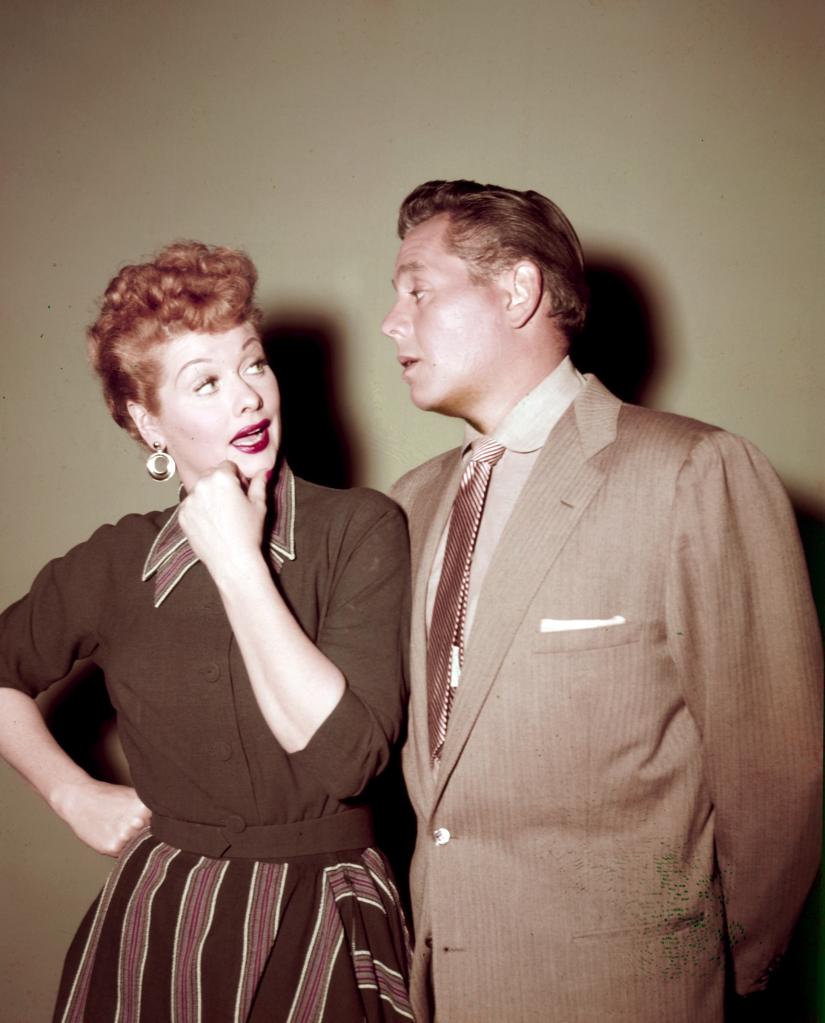
Marc Cushman: “Desilu came into existence because she and Desi Arnaz owned I Love Lucy. It was the first time someone owned the rerun rights to a show. CBS wanted to shoot it live out of New York; they didn’t want to move to Los Angeles, so they said, ‘We’ll pay the difference to shoot it in LA on film.’ Nobody had ever shot a sitcom on film before, and that’s why it still looks so good to this day. It looks like it could have been a movie; it’s clean whereas if you look at The Honeymooners, the faces are kind of stretched because it’s from Kinescope whereas I Love Lucy looks really good for its time period.”
“So they said they would pay the difference and what Desilu wanted was the rerun rights. CBS said okay; no one had ever rerun anything before. Seems like a no-brainer today, but back then no one had done it. Eventually, CBS bought the rerun rights back from Lucy and Desi for a million dollars, which was a lot of money back then. Lucy and Desi take that money, bought RKO and turn it into Desilu Studios and everyone is coming to them and asking them to film their sitcoms the same way they did their own. The company grows, but then the marriage falls apart and Lucy ends up running the studio and by this point they don’t have many shows. Lucy says, ‘We need to get more shows on the air,’ and Star Trek was the one she took on, because she thought it was different. She thought if this thing catches on, it could run in reruns forever and that’s going to be money coming in to Desilu.”

Herbert F. Solow: “I tend to be an optimist about everything. If someone tells us we have to build a bridge from here to Liverpool, I’ll say we can do it, and I’ll find out why we can’t and we’ll do our best to change it. For this little, tiny, dinky studio to go ahead and try to do this kind of show, if I had expressed any doubts or even consciously thought I had any doubts, I don’t think we would have ever done it. I had so many people at the studio, so many old-timers trying to talk me out of it. ‘You’re going to bankrupt us, you can’t do this. NBC doesn’t want us anyway, who cares about guys flying around in outer space?’ The optical guy said it was impossible to do. Everyone said there wasn’t enough time or money, and from the physical production point of view, we can’t attract the talent needed. If you don’t listen to that and stubbornly go into it, that’s the only way we could have got it done.”
As Marc Cushman explains it, Lucille Ball’s decision to move forward with Star Trek was rooted as much in memory as in strategy. Lucy, he says, was consciously trying to run Desilu the way Desi Arnaz had taught her to.
Marc Cushman: “It was his idea to do I Love Lucy in the way they did. He set up the formula, he created the template. But he wasn’t there anymore. He was drinking at that point; he was not leaving his house and was basically just burned out. So she is asking herself, ‘What would Desi do?,’ because she really loved and respected him. Desi would get more shows on the air that they own, not just that they were producing for other companies. So that was her reasoning to do Star Trek—and she felt that this show could, if it caught on, rerun for years like I Love Lucy. And guess what? Those two shows—I Love Lucy and Star Trek—are two shows that have been rerunning ever since they originally aired. The problem was, her pockets weren’t deep enough.”

Robert H. Justman (associate producer, Star Trek): “One of the problems we had in the second season that was highly intensified during the third was budget. In the second season, we were cut down on how much we could spend per show by a sizable amount of money. Despite the fact that there had been cast escalations, so our cast costs were higher. This in turn had an effect on the kind of shows we could do. It was even worse the third season when we got cut down again despite more cast escalations.”
Ralph Senensky (director, Star Trek): “There wasn’t any money. If you saw the soundstage we shot on, you’d be amazed. One of them was the starship interiors, which filled the entire stage and it wasn’t that big a stage to begin with. The other one was the stage where we built everything else we needed. There were so many budgetary limitations, but rather than fight it, you try and find a way to use the imagination and rise above it.”

Marc Cushman: “Paramount took over at the halfway point of the second season and started tightening the budget. Paramount’s attitude to Star Trek was, ‘You’re not going to ruin us like you ruined Desilu.’ Lucille Ball lost her studio because of Star Trek. She had gambled on the show and you can read the memos where her board of directors is saying, ‘Don’t do this show, it’s going to kill us.’ But she believed in it. She moved forward with it, and halfway into the second season, she had to sell Desilu to Paramount Pictures. And once Paramount Pictures came in, they said, ‘We’re going to run this like a business. You’re not going to go over budget anymore.’ Lucille Ball gave up the studio that she and her husband built, it’s all she had left of her marriage, and she sacrificed that for Star Trek.”
Ralph Senensky: “Desilu was like a family. Herb Solow, who was the head of the studio, used to come down and talk with you on the soundstage. He didn’t seem like the other studio heads who never seemed to talk to you. Herb went out of his way to help you. Can you imagine a studio working like that? When Paramount bought the company, it had a lot to do with the demise of the series. A kind of corporate mentality took over. In a way, I think that’s why I resent Paramount having such a hit in Star Trek, because if they had their way, they would have killed it off. It survived in spite of them and now they have this bonanza, making them all of this money.”
Marc Cushman: “Lucy’s instincts were right about Star Trek, that it would become one of the biggest shows in syndication ever. The problem was that her pockets weren’t deep enough. They were losing $15,000 an episode, which would be like $500,000 per episode today. You know, if she could have hung on just six months longer, it would have worked out, because by the end of the second season, once they had enough episodes, Star Trek was playing in, I believe, 60 different countries around the world. And all of that money is flowing in. It’s just that she couldn’t last those extra six months. She was several million dollars shy of being able to hang on, and you couldn’t go out and get bank loans like you can today. And you can’t keep going on credit cards, so she had no choice but to sell.”

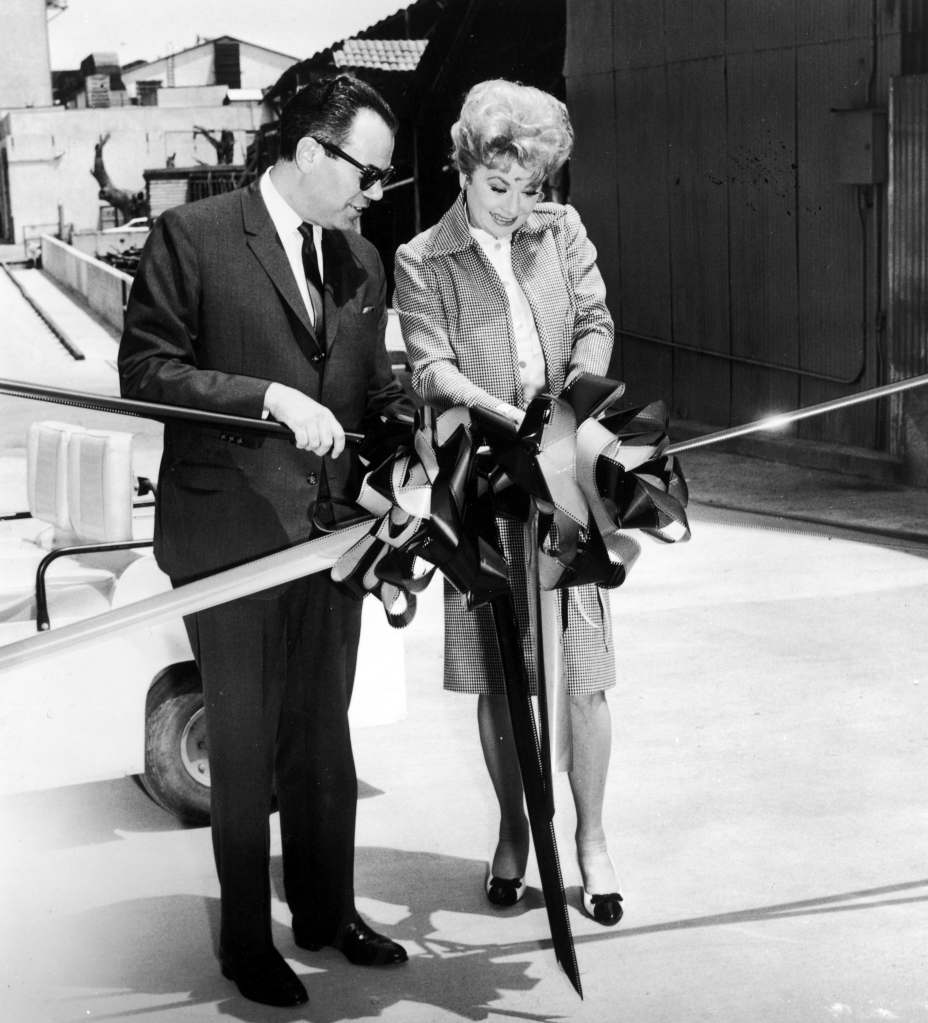
Though Lucille Ball herself was there for the unveiling of the sale to Paramount, which joined the two studios’ backlots, just prior she had flown to Miami.
Marc Cushman: “She ran away because it was so heartbreaking to sign the contract. They had to track her down to get her to do it. There’s a picture of her cutting the ribbon after they’ve torn down the wall between Paramount and Desilu, and she’s standing next to the CEO of Gulf & Western that owns both studios now, and the frozen expression on her face is she’s trying to put on a brave face for the photographer, and trying to fake this smile for the camera and you know it’s just killing her. But she was right. One hundred percent. The two most rerun shows in the history of TV are I Love Lucy and Star Trek.”
Conversation
All comments are subject to our Community Guidelines. Woman's World does not endorse the opinions and views shared by our readers in our comment sections. Our comments section is a place where readers can engage in healthy, productive, lively, and respectful discussions. Offensive language, hate speech, personal attacks, and/or defamatory statements are not permitted. Advertising or spam is also prohibited.