William Shatner Connects ‘Star Trek’ and ‘The Twilight Zone’ to the Time He Became the Wizard of Oz (Exclusive)
The actor looks back on his legacy roles, their cultural impact and enduring optimism

There’s a lesson to be learned when sitting down with William Shatner: whatever you say, assume he’ll remember it—and possibly turn it back on you later. During a conversation in 2018 about his then-new animated project, The Steam Engines of Oz—in which he voices the Wizard—things start out pleasantly enough. Asked his opinion of the film, he offers that it’s entertaining, the characters likable and that it’s generally quite charming, even if parts of the animation feel… well, a bit… eh.
“How do you spell ‘eh’?” Shatner asks, amused. The answer—”e-h”—satisfies him, and the discussion moves on. Or so it seems. Until later, when the inevitable question of what he considers the project’s greatest strength is asked. “I thought it was the animation,” Shatner replies without hesitation.
It’s the kind of perfectly timed comeback that reminds you who you’re dealing with. The response triggers an involuntary, embarrassingly loud laugh from the other side of the conversation, followed by an appreciative acknowledgment of having been thoroughly—and deservedly—outplayed.
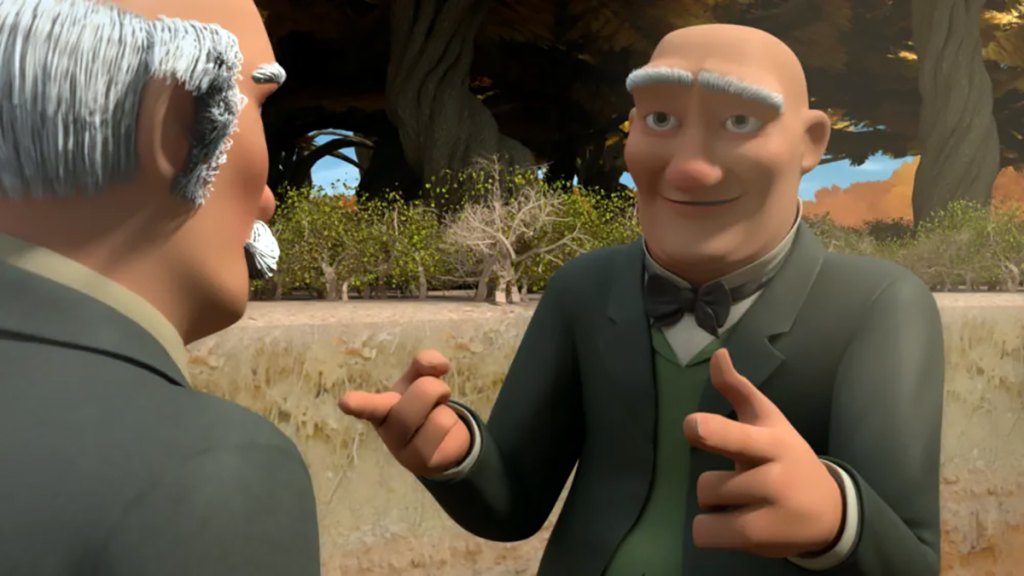
Adapted from the Arcana Comics graphic novel, The Steam Engines of Oz takes place roughly a hundred years after Dorothy Gale’s famous journey to Oz—and makes it clear that time has not been especially kind to the Emerald City. The story follows a young engineer named Victoria, who finds herself teaming up with some familiar figures: the Scarecrow, a Lion who has long since shed his cowardice, a group of surprisingly formidable Munchkins and the Wizard himself. Their mission is a crucial one—recovering and restoring the Tin Man’s heart in hopes of undoing his rise as a ruthless ruler.
His next stop… ‘The Twilight Zone’

In that sense, the film fits squarely into the long tradition of reimagining the fantastical world created by L. Frank Baum, a universe that continues to invite reinterpretation and inspire new generations of storytellers.
William Shatner: “Part of the appeal of Oz as a whole is the adult knowledge that behind everybody lurks somebody else. That’s as intriguing a truth as some of the stuff that I’ve done that I have no explanation for why they remain such perennials. Star Trek is one example, of course, but what is the reason that a couple of episodes of The Twilight Zone I’ve done are always among the most popular and played all the time?”
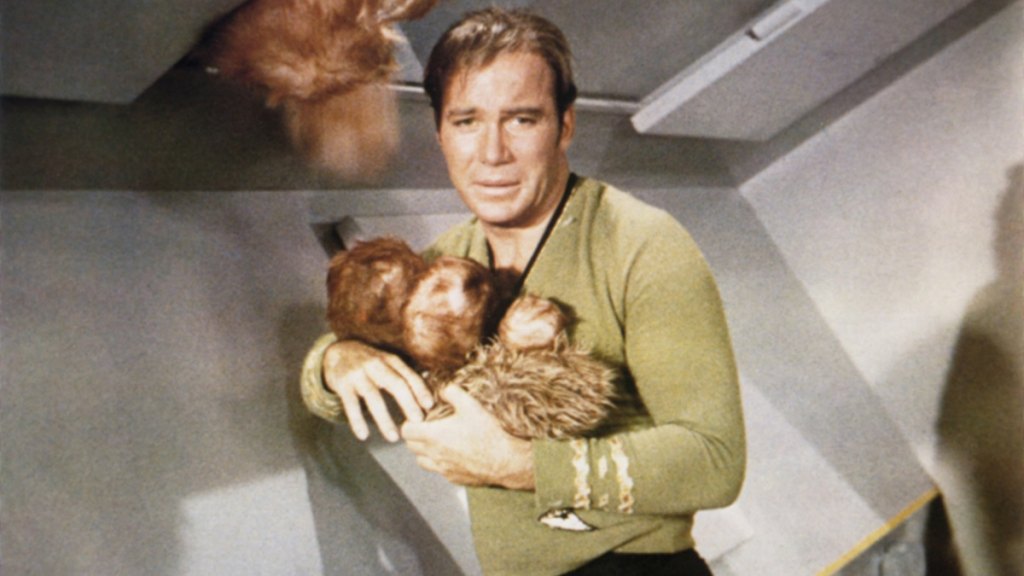
He’s referring, of course, to his appearances on The Twilight Zone, most famously “Nightmare at 20,000 Feet.” In that episode, Shatner plays a man recently discharged from a sanitarium who becomes convinced there’s a gremlin clinging to the wing of the airplane he’s riding on, sabotaging the flight. As his panic escalates, everyone around him assumes he’s relapsing—until the final moments quietly confirm that he was right all along.
He returned to the series in “Nick of Time,” this time portraying a newlywed who becomes unnervingly dependent on a fortune-telling machine, refusing to make even the smallest decision without consulting it. In both cases, Shatner’s characters aren’t undone by monsters or machines so much as by fear itself—an idea that clearly stayed with him long after the cameras stopped rolling.
William Shatner: “There are eternal truths in each of them. Truths like the fear of flying, or someone who is superstitious and can’t get beyond the superstition. And, again, L. Frank Baum’s truth of other people lurking behind the one that’s presented to society. That’s intriguing, and is perennial, because every child of three or four knows that you present one face to daddy and mommy, and another to Billy.”
He’s off to be the Wizard…

When talking about the appeal of voicing the Wizard, Shatner points back to the performance that defined the role for generations—what actor Frank Morgan brought to the character in 1939’s The Wizard of Oz. Rather than playing the Wizard as a straightforward authority figure, Morgan infused him with warmth, humor and a very human sense of vulnerability, qualities that Shatner clearly saw as essential to any interpretation of the part.
William Shatner: “When we meet him, Frank Morgan is playing Professor Marvel, the carnival mind reader. Then he’s the Emerald City gatekeeper, the coachman in Oz and the palace guard—all before we see him as the Wizard. What a wonderful character actor. And The Wizard of Oz, of course, is one of the great classics which has been with me for a long time, both in my life as a youngster and then taking it through the next few generations.
“The Steam Engines of Oz is a charming story that I feel holds the audience’s imagination in the same way that this guy on the wing of the airplane did. If you were to analyze the story, you might say that it’s impossible or ridiculous, yet because it holds that element of truth, you’re swept right along and suspend your disbelief.”
Needless to say, Shatner has a long history tied to the world of sci-fi—leading, of course, from The Twilight Zone to the original Star Trek and its various film sequels—so the real question is whether or not he views the realm of Oz as something truly distinctive.
William Shatner: “Well, for me, as an actor, it’s the reality of the role you’re trying to play, because all of them are needful of reality. So, the heart of it needs to be absolutely real, because if it’s not, you lose that disbelief.

“The same thing with science fiction, although science fiction can be based on a great deal of reality. Discerning the fantasy from reality is very difficult, because there are many scientific rules that are accepted in science fiction that makes it almost like real life.
“Think of the Matt Damon movie The Martian. He had to cultivate and live on Mars for a year by himself. That has a great deal of reality to it, because the guy who wrote the story was an agronomist. He knew how to grow food in soil that doesn’t ordinarily allow it. So here was a guy on Mars having a garden, which goes beyond the ability of what we can do, yet you accept it as real because of the truths.
“In horror films, the guy’s coming for you without a head or something, and every so often you say to yourself, ‘That can’t really happen,’ because it hasn’t happened, right? But it’s all out of the dark corners of the human mind, so it has a reality — but also an unreality in daylight. You need that sense of reality or truth in a fantasy like Oz as well.”
Return to the final frontier
Conversation
All comments are subject to our Community Guidelines. Woman's World does not endorse the opinions and views shared by our readers in our comment sections. Our comments section is a place where readers can engage in healthy, productive, lively, and respectful discussions. Offensive language, hate speech, personal attacks, and/or defamatory statements are not permitted. Advertising or spam is also prohibited.