Beyond The Fonz: How Henry Winkler’s Role in 1977’s ‘Heroes’ Proved He Was a Dramatic Powerhouse
Henry Winkler and Sally Field took a massive risk in 1977 to break free from their TV reputations

Key Takeaways
- In 1977, Henry Winkler risked his Fonz fame to play a raw Vietnam vet in 'Heroes'.
- The film paired Winkler with Sally Field as she outgrew 'Gidget' into prestige roles.
- A sleeper hit ($33M on $3M), 'Heroes' proved reinvention was possible—even if slowly.
By 1977, Henry Winkler had become one of the most recognizable faces on television thanks to his portrayal of Arthur “Fonzie” Fonzarelli on Happy Days. With the show having launched three years earlier, he had quickly become a cultural phenomenon—cool, confident, and seemingly untouchable. But behind the leather jacket, swagger and iconic thumbs up gesture, Winkler was already looking for a different way to prove himself.
“People have been asking me when I’m going to play something other than Fonzie,” he shared at the time. “Well, this is it.”
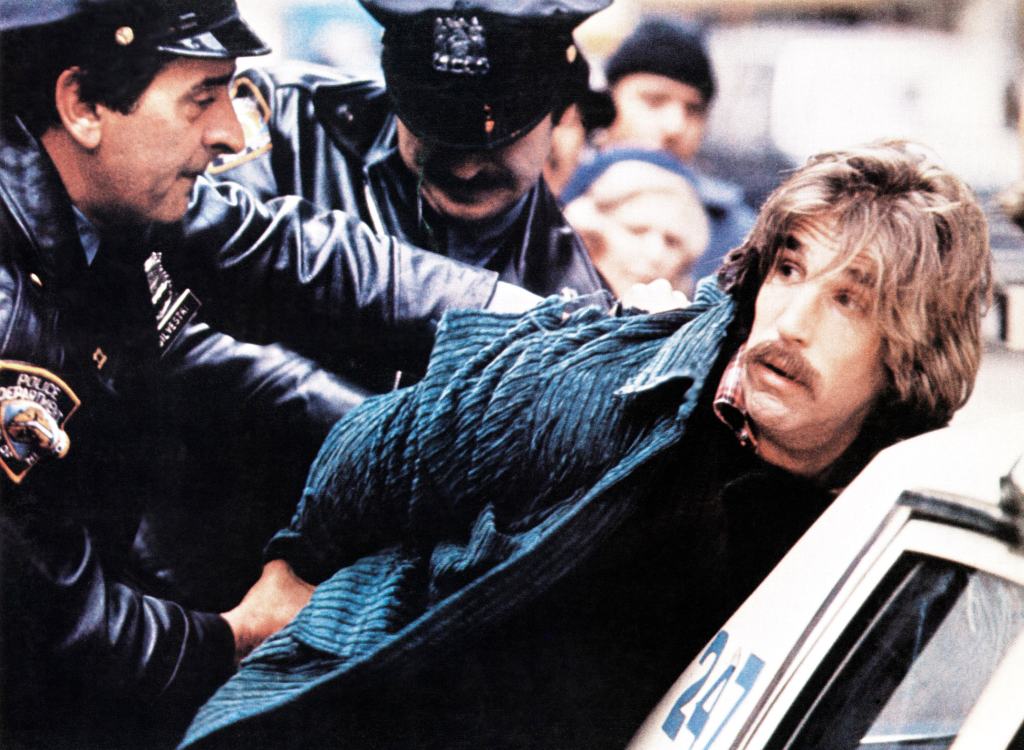
That “something” was Heroes, a very different kind of film that traded catchphrases for vulnerability, and confidence for emotional uncertainty. In it, Winkler plays Jack Dunne, a troubled Vietnam veteran recently released from a psychiatric hospital, struggling to reconnect with the world while clinging to a fragile dream of starting a worm farm in California with fellow soldiers he hasn’t seen in years.
Jack is talkative, hopeful and at times disarmingly earnest—but there’s an instability beneath the surface. His plans feel both sincere and illusory, and as the film unfolds, it becomes clear that he’s struggling to reconcile his past with any kind of stable future. Winkler leans into that emotional uncertainty, allowing Jack’s vulnerability to emerge in ways that are often uncomfortable and even heartbreaking. As such, it was a deliberate risk. “I did the Fonz. He’s done, and I still do him,” he noted. “So when I go outside, hopefully there are other characters inside me.”

That search for something beyond the Fonzie persona wasn’t just theoretical. It was right there on screen in Jack Dunne, a character constantly reaching for connection even as he seems in danger of losing his grip on reality.
The irony, of course, is that Winkler’s success as Fonzie is what made Heroes possible in the first place. “He gave me that film, actually,” shared Winkler.
By 1977, success for the actor had already proven to be something of a double-edged sword. Happy Days had turned him into a star, opened doors and provided opportunities most actors could only dream of. But it also created an expectation—one that threatened to define him long-term.
Sally Field was already transforming
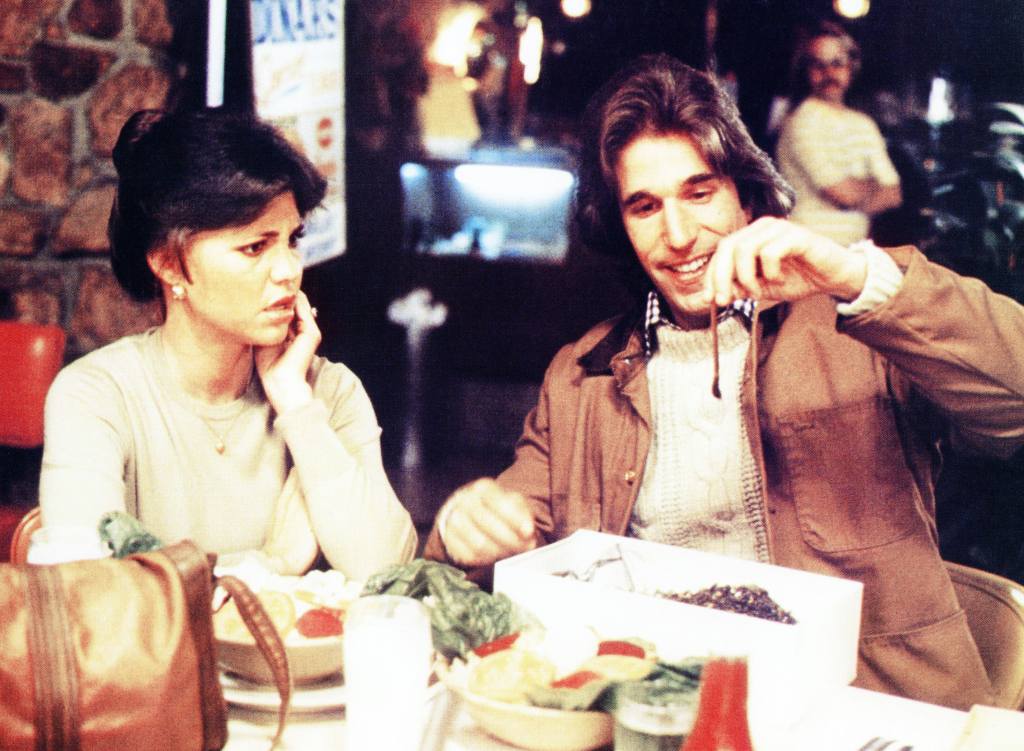
If Winkler was trying to break free of Fonzie, co-star Sally Field was already in the midst of proving herself an acting escape artist. For years, she had been closely associated with light television roles like Gidget and The Flying Nun, performances that made her instantly recognizable but didn’t necessarily reflect the depth she was capable of as an actress. By the mid-1970s, however, she had begun actively pushing against those limitations.
The turning point came with the 1976 television film Sybil, in which Field delivered a raw, emotionally complex performance as a young woman suffering from dissociative identity disorder. The role stunned audiences and critics alike, earning her an Emmy Award and, more importantly, forcing Hollywood to reassess what she could do. By the time she stepped into Heroes, that shift was already underway.
In the film, Field plays Carol Bell, a woman traveling cross-country to reunite with her fiancé, only to find herself drawn into the orbit of Winkler’s Jack Dunne. Carol is grounded, observant, and quietly conflicted—someone who begins to question the life she thought she wanted as she connects with Jack’s vulnerability and unpredictability.
What makes the performance so effective is its restraint. Field doesn’t overplay Carol’s emotional journey; instead, she lets it unfold gradually, revealing layers of doubt and self-awareness that mirror her own career trajectory at the time.
And in an interesting bit of timing, Smokey and the Bandit arrived the same year, reintroducing Field to mainstream audiences in a more familiar, accessible light. The contrast between the two films is striking and together they underscore just how wide her range truly was. If Sybil proved what she was capable of, and Smokey and the Bandit reaffirmed her popularity, Heroes sits right between them—a film that captures Sally Field in transition, already breaking free, but still in the process of redefining how the world saw her.
A film about reinvention
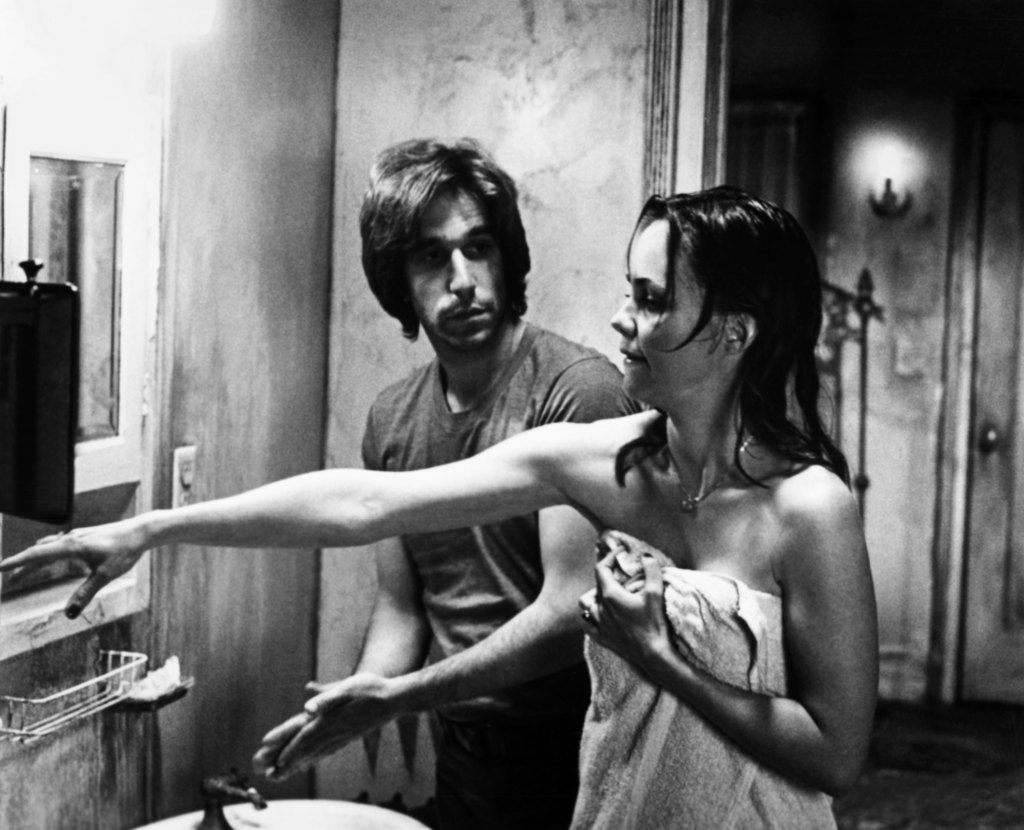
Seen through that lens, Heroes becomes a moment in time when two actors, both widely known and yet not fully understood, stepped into roles that challenged perception. And for Winkler, it was deeply personal. And when he finally saw the film with an audience, the experience hit him harder than he expected: “I was so blown away by the emotionality of the experience that I missed my name up on the screen.”
Despite its unconventional nature and the fact that it has largely been forgotten over the decades, Heroes was far from a failure. In fact, it was a commercial success, earning roughly $33 million against a modest $3 million budget—a strong return by any standard, particularly for a character-driven film. And yet, success at the box office didn’t necessarily translate into a complete shift in perception—at least not immediately.

Winkler had taken the risk and delivered the performance. But audiences—and perhaps more importantly, the industry—weren’t quite ready to let go of the image of the Fonz they had already embraced. That tension is something he seemed to understand even as it was happening. “The challenge is hard,” he said, “but lovely. I mean, that’s one of the reasons I’m an actor, I think.”
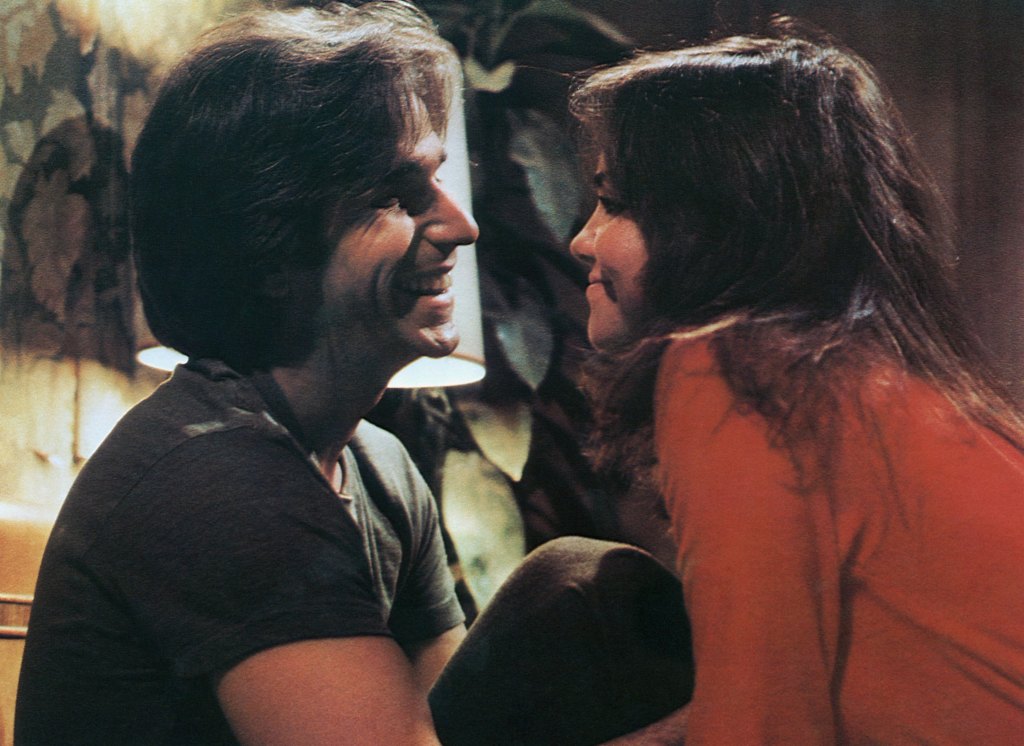
Looking back today, Heroes occupies an interesting place in both actors’ careers. It isn’t the film most commonly associated with either of them, yet it may be one of the most revealing. In the years that followed, both Winkler and Field would continue to evolve—Field achieving critical acclaim and Oscar recognition, Winkler gradually reshaping his career in ways that would ultimately allow audiences to see him in a very different light.
But Heroes remains a turning point. Not because it changed everything overnight—but because it proved that change was possible. And for Winkler, that was always the point. “Every time you make a film, if you don’t put your neck on the block, then don’t make the film,” he mused. “And one of my credos is that life is filled with risks, you take them or you don’t. So you have to go all out. You can’t live in the middle. I sometimes think, and without being mushy, that the characters are my paintings on the wall. I can’t paint and I can’t draw, so I make them. I want to create the perfect character. That is one of my dreams in my life.”
Conversation
All comments are subject to our Community Guidelines. Woman's World does not endorse the opinions and views shared by our readers in our comment sections. Our comments section is a place where readers can engage in healthy, productive, lively, and respectful discussions. Offensive language, hate speech, personal attacks, and/or defamatory statements are not permitted. Advertising or spam is also prohibited.