Before ‘Grease,’ Olivia Newton-John Answered 1 Question: ‘How Would You Like to do a Space Musical?’
James Bond producer Harry Saltzman hoped the film would launch the next Beatles. It didn't.

Key Takeaways
- Before 'Grease,' Olivia Newton-John starred in the forgotten sci-fi musical 'Toomorrow.'
- James Bond producer Harry Saltzman hoped 'Toomorrow' would launch the next Beatles.
- The film flopped, but it gave audiences their first glimpse of a future superstar.
For millions of moviegoers, Olivia Newton-John seemed to arrive on the big screen fully formed in 1978. Grease didn’t just make her a movie star, it became a cultural phenomenon, turned Sandy Olsson into one of cinema’s most beloved characters and cemented Newton-John’s place as one of the defining entertainers of her generation.
But Grease, it turns out, wasn’t her first film. Eight years earlier, long before she and John Travolta lit up movie screens, Newton-John made her feature film debut in a project so unusual that even today it sounds like something out of an alternate Hollywood history. It was called Toomorrow, a science-fiction musical about a young pop group whose music is capable of saving an alien civilization. Behind it were James Bond producer Harry Saltzman and music impresario Don Kirshner, the man whose remarkable track record already included helping to launch Neil Diamond’s career and co-creating The Monkees.
They weren’t just making a movie, they were trying to create the next great pop phenomenon. When Saltzman and Kirshner unveiled Toomorrow in February 1969 at New York’s Rainbow Grill, they weren’t thinking small. The music group had been assembled after what was described as a six-month worldwide talent search, with candidates reportedly narrowed through “computer analysis” (in 1969!) before the final four members were selected. Their ambitions extended well beyond records or a single film, with plans calling for a multimedia empire that would include feature films, merchandise, clothing, games and even a cosmetics line.
Insofar as Kirshner was concerned, the timing couldn’t have been better. “Ever since The Beatles became big business, leaving behind their image as exciting, real people, no genuine super-group has come along to take their place,” he said. “We feel the time is now ripe for such a group.”
Saltzman saw the same opportunity. According to Robert Sellers’ When Harry Met Cubby, the Bond producer hoped Toomorrow would “fill a void for 14-year-olds to 30s” created by The Beatles’ breakup. It was an enormous goal, but then Saltzman rarely thought in small terms. While his producing partner Albert R. Broccoli was increasingly focused on the James Bond series, Saltzman constantly pursued ambitious projects outside the 007 franchise, convinced the next big success was always just around the corner.
Finding the right performers
The eventual lineup featured American drummer Karl Chambers, English pianist Vic Cooper, Georgia-born guitarist Ben Thomas and a 20-year-old Australian singer named Olivia Newton-John. She had already enjoyed modest success in Britain and had performed with singing partner Pat Carroll, but she was still years away from international stardom. But Saltzman was convinced he had found something special.
According to a 1970 interview, Newton-John was already under contract when he decided he wanted her for the project. “It cost £15,000 to buy out her existing contract and pay off the original girl,” he explained. “She’s worth every penny.”
Few people outside the music business had heard of Olivia Newton-John at the time, but Kirshner reportedly recognized her potential immediately after her audition in Saltzman’s office.

Now they needed someone to turn an increasingly bizarre idea into a movie. Saltzman found his man in veteran British director Val Guest, whose résumé included everything from Hammer horror films to the acclaimed science-fiction drama The Day the Earth Caught Fire. When the producer called to pitch the project, he didn’t ease into the conversation. Instead, he posed a question that Guest never forgot: “How would you like to make the first outer space musical?”
Guest later admitted he probably should have walked away right then. Instead, he accepted the assignment, but it didn’t take long for him to realize he had inherited a much bigger challenge than directing an offbeat musical. The screenplay he’d been given, written by novelist David Benedictus, wasn’t working for him. Saltzman agreed. According to Sellers, the producer quietly asked Guest to begin writing an entirely new script while Benedictus continued working on the original, unaware his version had already been abandoned. It was an awkward situation that eventually left Guest taking the blame when Benedictus discovered what had happened.
If the script needed rebuilding, the concept remained intact: The members of Toomorrow played art students who form a band to pay their way through college. Their music attracts the attention of an alien living secretly on Earth, who kidnaps the group because the sound waves produced by their songs can save his home planet from extinction.
Even by late-1960s standards, it was an unusual premise, which somehow seemed to fit Saltzman perfectly. When Toomorrow was announced, it wasn’t sold simply as another pop movie, but rather as the start of a series. In fact, Olivia Newton-John later recalled that the producers were already talking about future installments, including a Western musical. The film audiences eventually saw was only supposed to be the first chapter.
Where things went wrong
The production itself looked impressive on paper. Beyond Guest, Hugo Montenegro (Hurry Sundown, Lady in Cement) was brought in to compose the score with Kirshner overseeing the music. Saltzman supplied the financing and production experience that had helped make James Bond one of the biggest franchises in the world. It should have been an ideal combination, but almost from the beginning, the project became increasingly difficult.
Years later, Guest remembered that Saltzman and Kirshner had reached the point where “they didn’t talk to each other, they didn’t like each other. It was an absolutely madhouse film.”
Caught in the middle was Guest, who found himself receiving a steady stream of script suggestions from Kirshner’s New York office, only to have Saltzman ask him to talk Kirshner out of making them. Trying to satisfy two producers who were no longer communicating with each other became part of his daily routine.
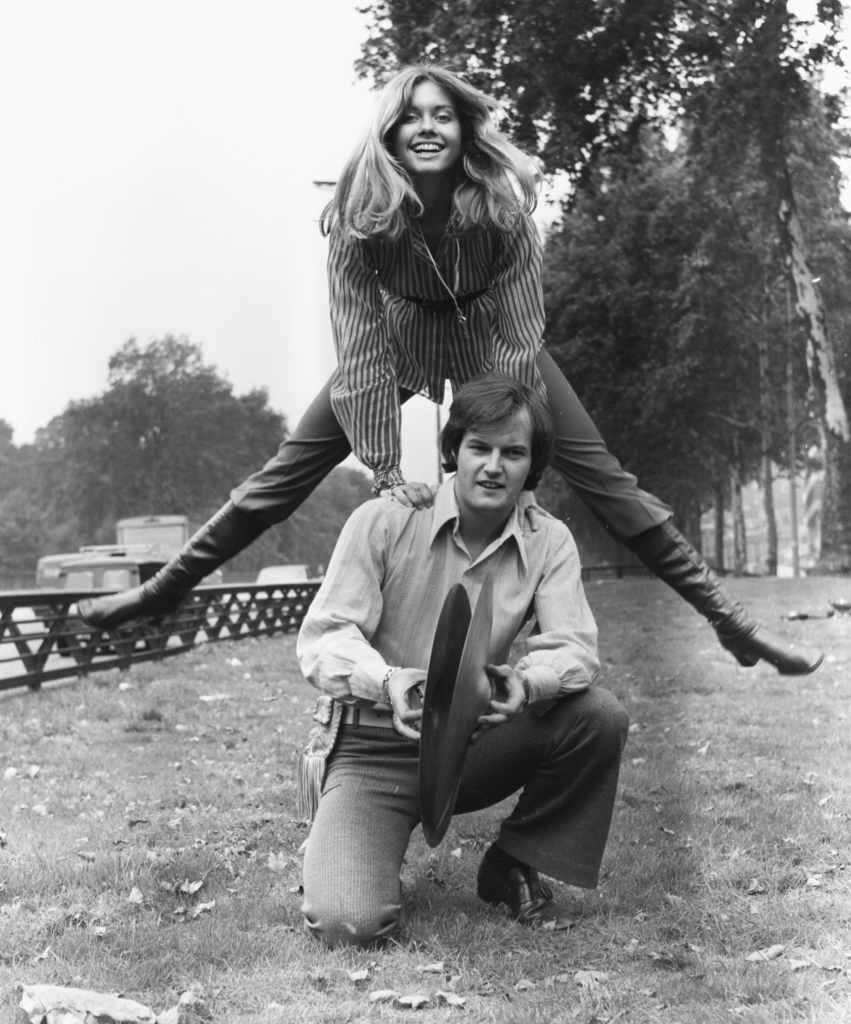
Through it all, the youngest members of the cast were simply trying to keep up. Newton-John had never carried a feature film before. Looking back years later, she laughed about the experience. “I was part of a new group, put together for the picture, called Toomorrow—yes, with four o’s—and we were supposed to be the next big musical group,” she recalled, while acting became another matter. “They kept telling me I had to project, so I went through the whole movie shouting.”
It was exactly the sort of self-deprecating observation that became one of Newton-John’s trademarks, but at the time there wasn’t much to laugh about. She was learning how to make a movie while surrounded by seasoned filmmakers, an ambitious producer and a project carrying enormous expectations.

Guest, however, never lost confidence in his young leading lady. “I was very taken with Livy,” he later said. “I thought she had everything going for her in this fresh bubbly way.” He believed she was nervous at first, but quickly found her footing in front of the cameras. More importantly, he saw something in the young singer that convinced him she had a future well beyond Toomorrow. “It was quite obvious that Livy was going places.”
As events unfolded, that prediction would prove to be one of the few things about Toomorrow that everyone eventually agreed on.
Behind-the-scenes
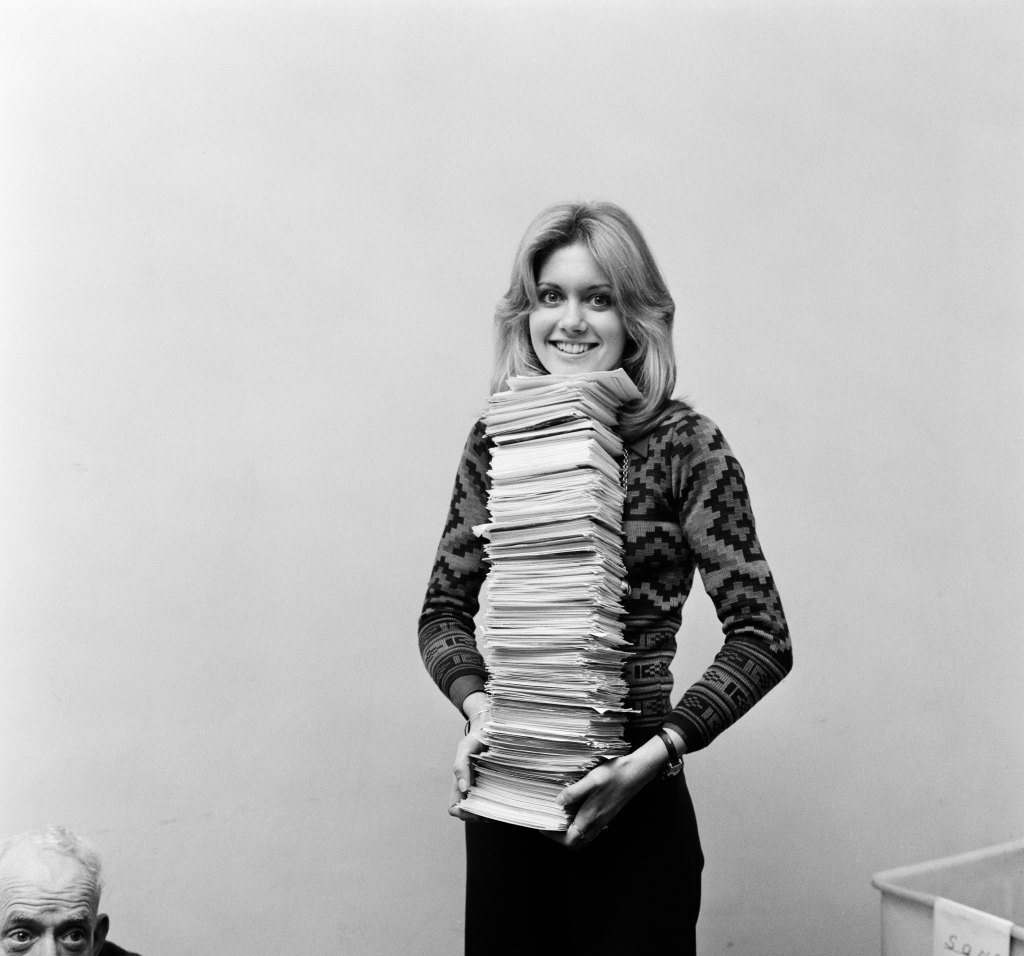
If the production was becoming increasingly chaotic behind the scenes, audiences knew none of it as the publicity surrounding Toomorrow continued to promise something extraordinary. Newspapers described the group as the next great pop phenomenon, while the film was promoted as the launchpad for an empire. The dream that Saltzman and Kirshner had sold from the beginning was still very much alive, but the reality was very different.
One of the most uncomfortable moments came when Kirshner wanted Newton-John to appear in a romantic scene that made the young singer deeply uneasy. Guest later recalled that she became so upset she burst into tears. The director backed her, the scene was abandoned and filming moved on, but it was another sign that the production wasn’t nearly as harmonious as audiences imagined.
When Toomorrow finally reached theaters in 1970, it wasn’t the sensation its producers had envisioned. Some critics found it innocuous, even describing it as “clean, harmless light-hearted fun.” Others were far less charitable, with one reviewer suggesting the filmmakers and the band “should have stayed at home and gone their separate ways,” while another concluded that the enormous investment had produced a loser. Yet even reviewers who dismissed the film often found something to like in its young leading lady. Variety, for example, singled out Olivia Newton-John as “particularly promising as a screen potential.” That observation would prove remarkably prophetic.
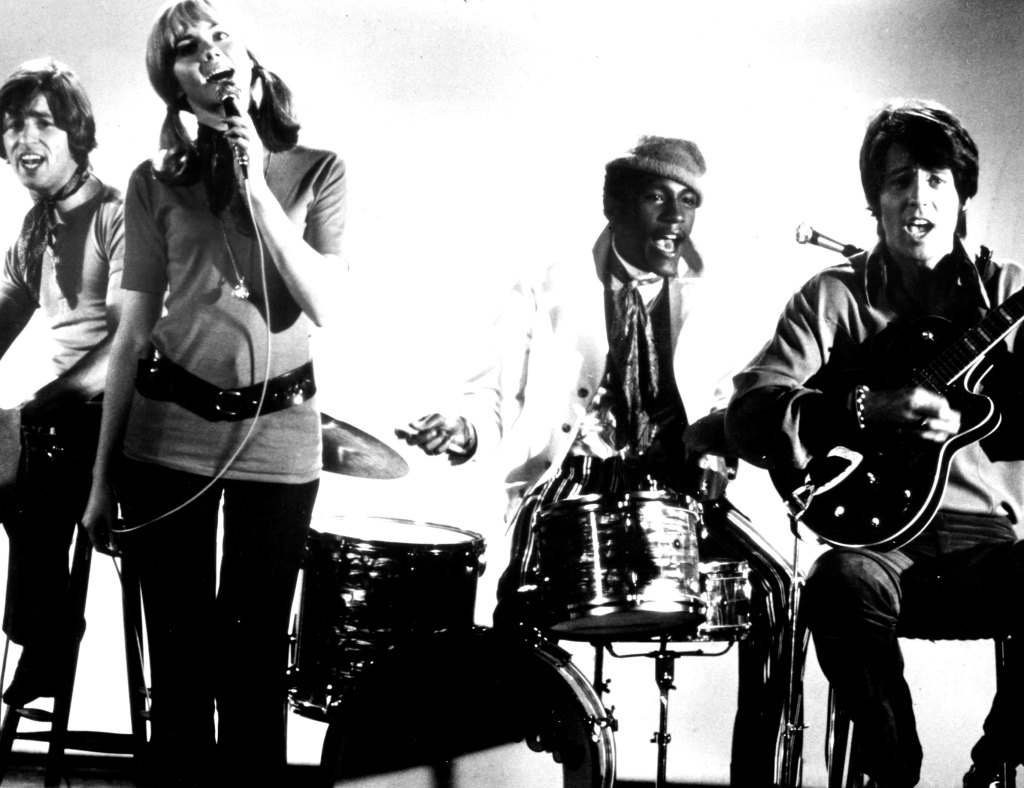
The film’s biggest problems, however, had little to do with reviews. Money began running out. Guest had agreed not only to direct the picture but also to oversee the editing and music recording, but the payments stopped. When he asked Saltzman what had happened, the producer admitted he simply didn’t have the money. Guest’s lawyer had a blunt response: “You’d better find it, because the film is opening at the London Pavilion next week.” The money never arrived.
After Toomorrow had been playing for only a short time in London’s West End, Guest sought an injunction over the unpaid fees, bringing the film’s run to an abrupt halt. But it really wasn’t much of a victory in that the movie disappeared from theaters and Guest still wasn’t paid.
For the four young performers who had been told they were about to become international stars, the news was even worse. The grand experiment was over, and, according to Robert Sellers, Saltzman eventually called the members of Toomorrow into his office and told them they were being released from their contracts. The multimedia empire had collapsed before it ever had the chance to begin.
Looking back, Vic Cooper believed the project’s biggest mistake had been trying to launch a movie and a band at the same time. “I don’t regret it,” he said. “We should have made the pop group and Toomorrow separately.”
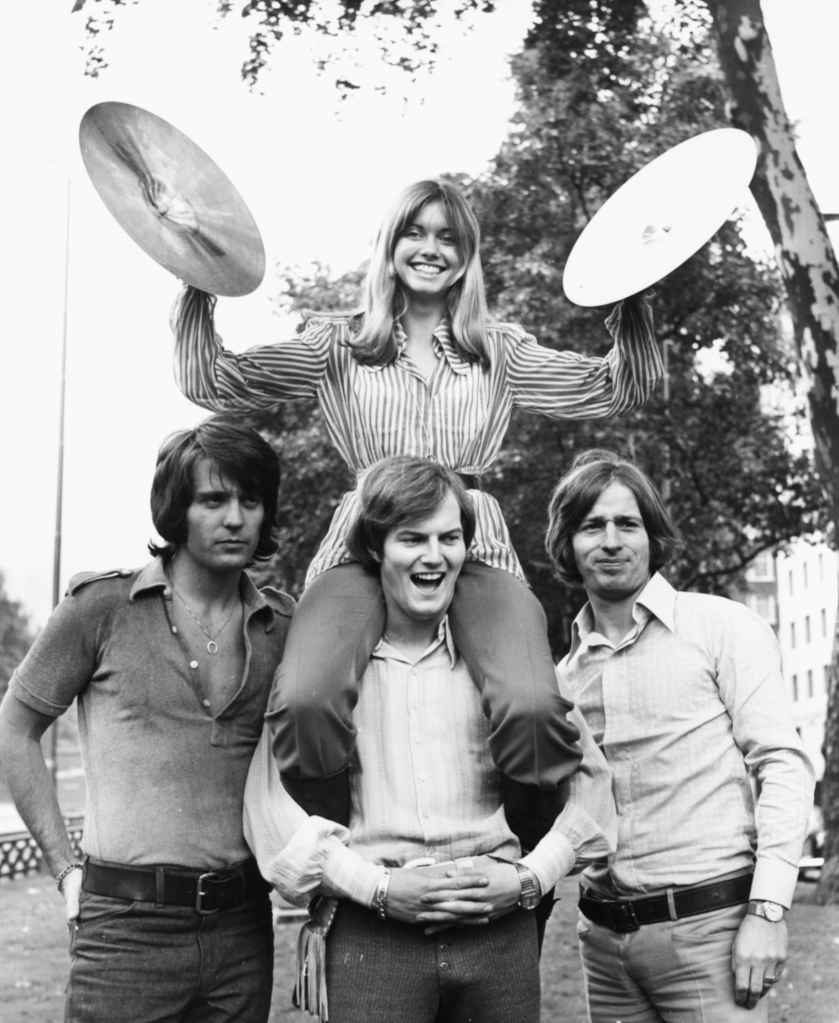
Olivia Newton-John was equally candid, although her disappointment was tempered by characteristic good humor. “Our film died a death and it was all a bit of a shambles,” she reflected in 1971. “But it was a good experience.” A few years later, she was a little more direct. “Oh, God… What can I say but it was terrible and I was terrible in it? Toomorrow had left scars.”
But as Toomorrow faded away, Newton-John’s career was just beginning to find its footing. Within months, she was building a solo career that would take off with Bob Dylan’s “If Not for You,” followed by a string of international hits that established her as one of music’s brightest new stars. The movie that had been designed to introduce her to the world had failed. Ironically, it was music—not movies—that finally made her famous.
Even so, Toomorrow lingered in the back of her mind. “We made a film and it died,” she said years later. “We were eventually dropped and I guess we did some good as a tax write-off for the producers.”
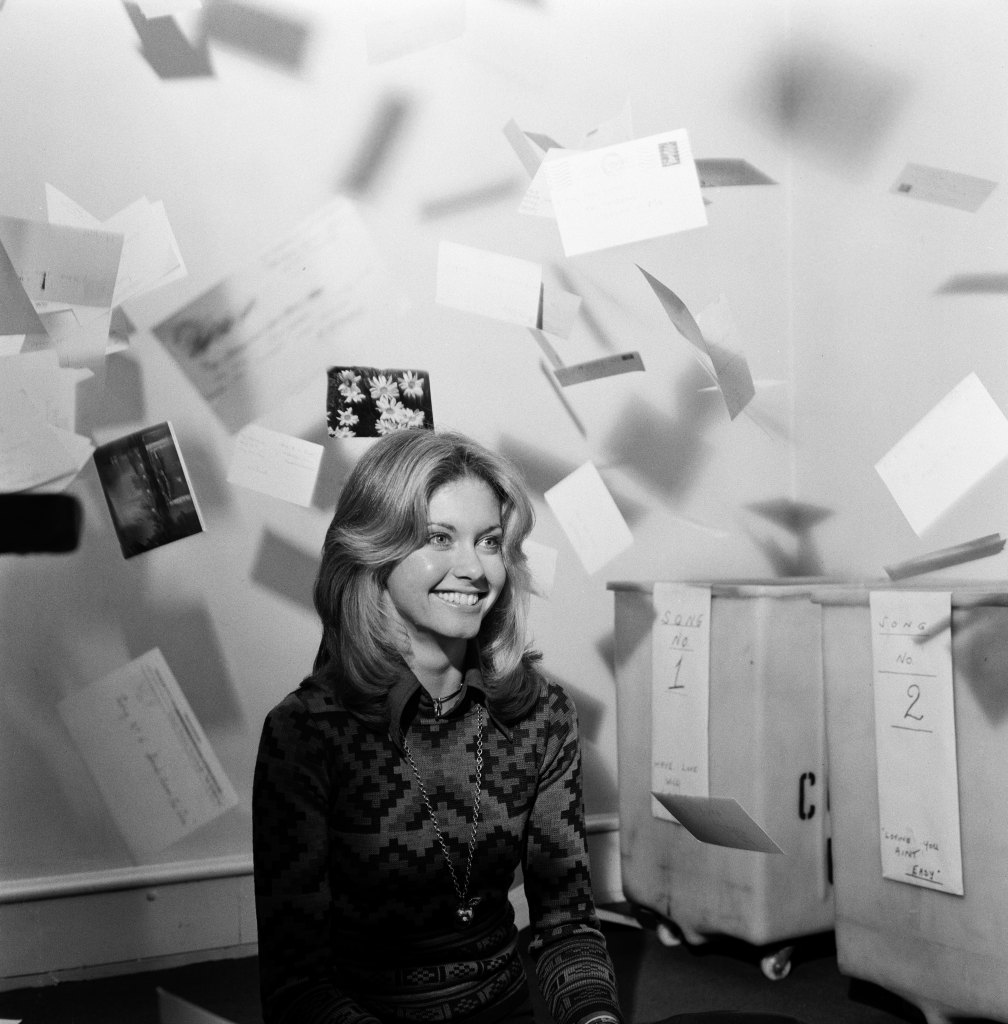

It was classic Olivia Newton-John—honest, self-deprecating and delivered with a smile. But beneath the humor was a genuine disappointment. Looking back after Grease became a worldwide phenomenon, she admitted the experience had shaken her confidence. “It was such a disaster, I was quite nervous about movies.”
When producer Allan Carr approached her about playing Sandy in Grease, Newton-John wasn’t immediately convinced. At 29, she worried she was too old to play a high school student and remained uncertain about making another film at all. It took considerable persuasion before she finally agreed. Obviously the gamble paid off.
Released in 1978, Grease became one of the most successful movie musicals ever made, earning hundreds of millions of dollars worldwide and turning Newton-John and John Travolta into one of Hollywood’s most beloved screen pairings. For millions of fans, it felt like her arrival as a movie star. In reality, it was her second chance.
Conversation
All comments are subject to our Community Guidelines. Woman's World does not endorse the opinions and views shared by our readers in our comment sections. Our comments section is a place where readers can engage in healthy, productive, lively, and respectful discussions. Offensive language, hate speech, personal attacks, and/or defamatory statements are not permitted. Advertising or spam is also prohibited.