‘Every Year After’ Book vs. Show Adaptation: Major Changes Everyone’s Talking About
If you loved the Amazon Prime series, here are reasons to pick up the novel and its bestselling sequel

Key Takeaways
- All 8 episodes of 'Every Year After' is available to binge on Prime Video!
- Discover the 5 main differences between the 'Every Summer After' book and show.
- Give the sequel, 'One Golden Summer' a read after finishing the first book.
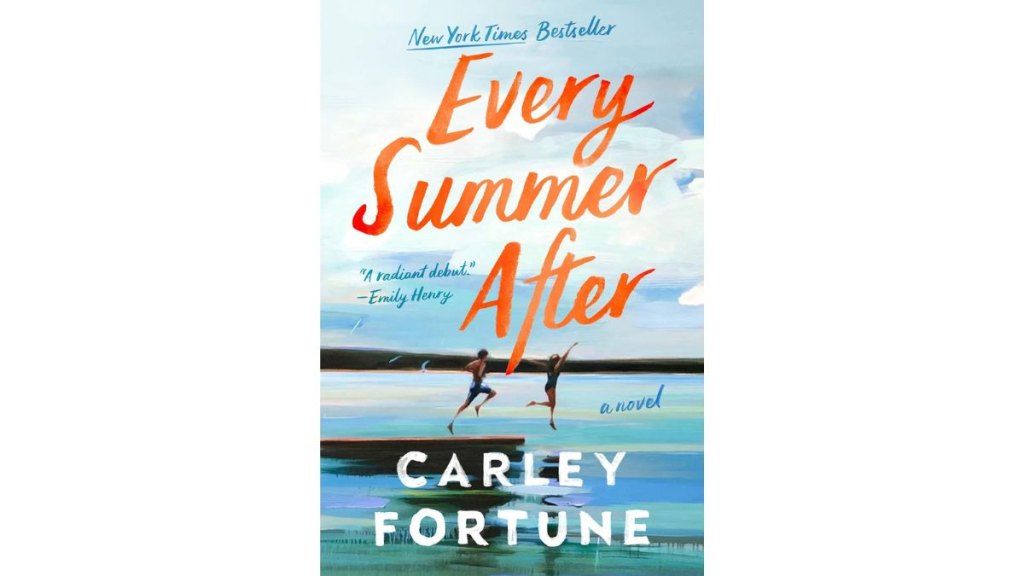
Prime Video’s newest breakout hit, Every Year After, has officially landed on the streaming platform, and viewers are already hooked on the swoony second-chance romance, lingering looks and nostalgia-filled reunions between Percy Fraser and Sam Florek. Based on the bestselling 2022 novel Every Summer After, by Carley Fortune, the series captures the emotional pull of the original story while expanding its small-town setting, layered friendships and years-spanning love story for the screen.
Curious how the Every Year After compares to the bestselling book? We’ve broken down the biggest differences between the series and the novel that inspired it. Discover what changed in the transition from page to screen, which storylines were expanded or altered and why the book is still worth reading—even if you’ve already binged every episode.
What is ‘Every Year After’ about?
Every Year After follows a young Percy Fraser (Sadie Soverall), as she spends her summers growing up at the lake in Barry’s Bay. What she expects to be a boring three months spent with her parents turns into years of adventure and friendship when she meets Sam Florek (Matt Cornett) and his brother, Charlie (Michael Bradway).

The series dives into Percy and Sam’s blossoming friendship over the course of six summers, as it gradually becomes something more, until a major betrayal knocks them off course.
Percy disappears from Sam’s life for 10 years, but when tragedy strikes, she finds herself heading back to Barry’s Bay to pay her respects, confront her past and finally see Sam again.
Every Year After jumps back and forth between Percy and Sam’s childhood summers and present day as they try to figure out their feelings for each other and whether they were truly meant to be—or if it was all wishful thinking.

How do the book and show differ?
The title change
As with most book-to-screen adaptations, some changes are inevitable—whether to better suit a television format, update certain elements, or create more dramatic, episode-driven storytelling. One of the biggest differences is its title. The novel Every Summer After was renamed Every Year After for the television series, leaving many readers curious about the reason behind the switch. Fortunately, author Carley Fortune has shared her thoughts on why the adaptation received a new name.
“There were a lot of conversations about it,” Fortune shared in an interview. “The feeling was that Every Year After opened it up to live beyond the book, and to more seasons beyond the book. And it was one of those things that in an adaptation, things just change when other people come into the mix. So that title is one of them.”
Plot differences **Spoilers ahead**
Another significant difference between the Every Summer After book and the Every Year After series is how Sam responds when he learns about Percy’s betrayal. In the novel, Sam reveals that he has known for years that Percy slept with his brother, Charlie, after their breakup and admits he forgave her long ago. The series takes a more dramatic approach. When Percy finally confesses the truth a decade later, Sam is blindsided by the revelation, and their path to reconciliation becomes much more complicated.
The adaptation also introduces an entirely new storyline surrounding the Florek family tavern. After the death of Sam and Charlie’s mother, Sue, the brothers learn that she has left the business to Percy—a twist that does not exist in the book, where the tavern’s future is never addressed.
Several supporting characters receive expanded roles as well. Chantal (played by Aurora Perrineau) and Jordie (played by Joseph Chiu) have much larger storylines in the series, while the show also adds a new subplot involving an affair between Charlie and Percy’s friend Delilah (played by Abigail Cowen).
There’s a ‘Every Summer After’ sequel


If reading Every Summer After book still leaves you wanting more time in Barry’s Bay, there’s good news: the story doesn’t end there. In 2025, author Carley Fortune released One Golden Summer, a companion novel that shifts the spotlight to Sam’s brother, Charlie Florek, and Alice Everly.
The novel follows Alice, a burned-out photographer who returns to Barry’s Bay at 32 to care for her grandmother after a hip injury. The lakeside town holds special memories for Alice, who spent a life-changing summer there as a teenager. Back for the first time in 15 years, she reconnects with Charlie, the charming local who has become a beloved fixture in the community.
Looking for a fresh start, Alice creates a summer bucket list filled with experiences she never got around to having as a teenager. When Charlie offers to help her complete it, the pair embark on a series of adventures that slowly turn into something more. But while their chemistry is undeniable, Charlie isn’t convinced he’s ready for a serious relationship, leaving Alice to wonder whether their connection can ever go beyond friendship.
Set several years after the events of Every Summer After, One Golden Summer so if you’re hoping to avoid spoilers, it’s best to read Sam and Percy’s story first before diving into Charlie and Alice’s.
Conversation
All comments are subject to our Community Guidelines. Woman's World does not endorse the opinions and views shared by our readers in our comment sections. Our comments section is a place where readers can engage in healthy, productive, lively, and respectful discussions. Offensive language, hate speech, personal attacks, and/or defamatory statements are not permitted. Advertising or spam is also prohibited.