Medicare Part D Premiums Could Rise for Millions of Americans—Are You One of Them?
The Medicare Part D subsidy program that's kept drug premiums stable is going away—here's the fallout

Key Takeaways
- CMS is ending a subsidy that has helped keep Part D premiums stable.
- Seniors won't see any cost changes until the 2027 plan year begins.
- Medicare Part D coverage itself is not ending—only the subsidy is.
A Medicare Part D subsidy called the Premium Stabilization Demonstration is coming to an end this year. In a recent X (formerly known as Twitter) post, which was first covered by the Wall Street Journal, Mehmet Oz, MD, administrator of the Centers for Medicare and Medicaid (CMS), announced that the subsidy, which is meant to keep the cost of coverage down, is ceasing all operations once the year is up. The move comes less than a year after President Donald Trump announced his own direct-to-consumer drug company, TrumpRx, which offers medications to all Americans at a lower rate but does not accept insurance. The announcement also comes after the president and his administration vowed several times to protect Medicare and this nation’s seniors. To learn more about the cuts, including what it means for seniors on Medicare Part D and for open enrollment, keep scrolling.

What to know about the Medicare Part D subsidy cuts
Medicare coverage comes in four parts—Part A (which covers inpatient hospital stays, nursing facility care and hospice), Part B (which covers doctor services, outpatient care and preventive tests), Part C (also known as Medicare Advantage, which combines Parts A and B) and Part D (which helps pay for the brand-name and generic drugs). Most seniors enroll in A, B or C and then add D to help pay for their medications. In 2026, Part D cost seniors an average of $34.50 to $36 a month, however if they bundled Part D with Medicare Advantage, or Part C, it cost around $8 a month.
As it stands, 81.2 percent of seniors have Part D coverage, according to CMS. To help control premium costs for that group the government launched the Part D Premium Stabilization Demonstration in 2025, which provided additional federal support to insurers to reduce sudden increases for drug prices and allowed people enrolled in a standalone Medicare Part D plan (meaning they got coverage through an individual plan, not one included in a Medicare Advantage plan) to pay for the program without having to worry about sudden increases in premium costs. The subsidy was a direct result of the Inflation Reduction Act (IRA), which was passed by Congress and then signed into law by former President Joe Biden in 2022.
“I wish I hadn’t called it that because it has less to do with reducing inflation than it has to do with providing alternatives that generate economic growth,” former President Biden said in 2023, according to AP News. “We’re literally reducing the cost of people being able to meet their basic needs.”
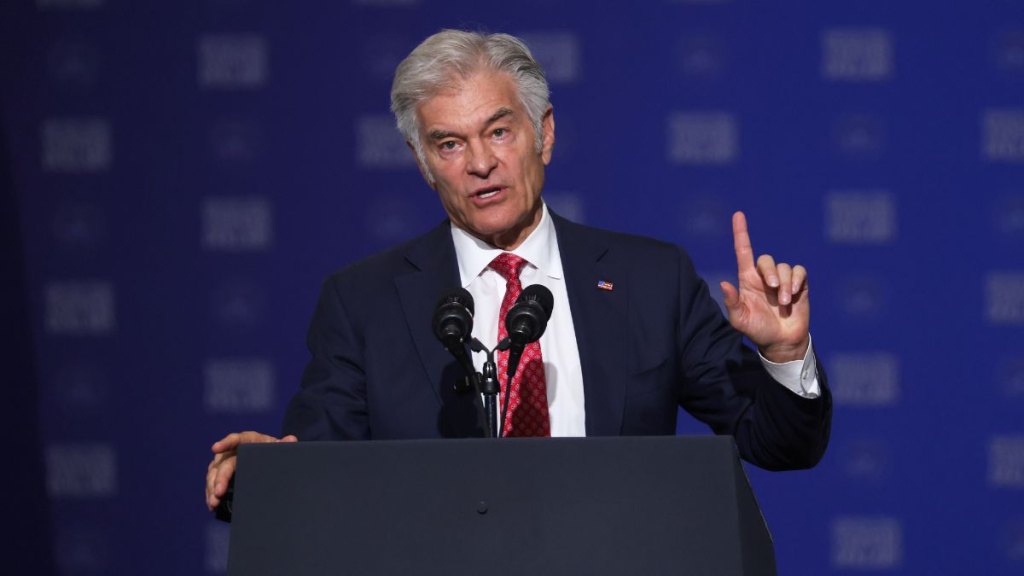
Now, a year after seniors on Medicare Part D felt the impact of the IRA and the part that significantly helps them—the Part D Premium Stabilization Demonstration—it’s all coming to an end. The reason for that decision? Trump’s Most-Favored-Nation (MFN) initiative, a system the president designed to reduce the cost of drugs. Dr. Oz also said that the CMS’ new Medicare Bridge Program, which gives seniors access to certain GLP-1 medications for just $50 a month, also impacted the decision to stop the subsidy.
“We are stabilizing the market so this bailout is no longer needed,” Dr. Oz wrote on X late last night. “Every Medicare beneficiary still has access to low-cost plans, and we will continue to lower prescription drug prices for every American patient, from more MFN deals to our policy giving seniors access to GLP-1s for $50 a month.”

How stopping Medicare Part D’s Premium Stabilization Demonstration will impact seniors
Stopping Medicare Part D’s Premium Stabilization Demonstration might mean some seniors have to pay more for their Part D coverage now that there is no law limiting it from increasing at an aggressive rate.
As for open enrollment—which begins on October 15—seniors will not feel the effects there since everyone who is eligible for Medicare will still be able to opt into Medicare Part D. The end of the Premium Stabilization Demonstration will just change how much each person pays for Medicare Part D.
Dr. Oz says ending Medicare Part D’s Premium Stabilization Demonstration means premiums will “go up by less than $10 for most Medicare recipients, with many even seeing LOWER premiums.” However, since the CMS has not officially announced the cost of Medicare in 2027, that could change.

But experts are worried about the change. Leslie Dach, a chair at Protect Our Care, a nonprofit dedicated to helping people get affordable healthcare, said, “Donald Trump and Republicans are making healthcare more expensive for seniors at every turn.”
“For older Americans living on fixed incomes, even an extra $10 or $20 a month can mean choosing between filling their prescription, paying the electric bill or buying groceries,” he added in a statement obtained by Newsweek.
As it stands, seniors will not feel the effects of this shift until 2027. The subsidies still stand for the rest of 2026.
Conversation
All comments are subject to our Community Guidelines. Woman's World does not endorse the opinions and views shared by our readers in our comment sections. Our comments section is a place where readers can engage in healthy, productive, lively, and respectful discussions. Offensive language, hate speech, personal attacks, and/or defamatory statements are not permitted. Advertising or spam is also prohibited.