A Spider Smaller Than a Pencil Eraser Was Just Filmed for the First Time Ever
This itty-bitty spider just made history with its first-ever video appearance.

It measures roughly 3 millimeters—smaller than a grain of rice—and until recently, no one had ever seen it move. Now, the first-ever video footage of Cryptodrassus michaeli, a newly discovered ground spider species from southeastern Spain, is giving scientists their earliest glimpse at how this tiny arachnid behaves in the wild.
The footage, released by the Associated Press in April 2026, shows the spider navigating across the ground, a moment that marks the first visual documentation of the species’ behavior. The species itself was only officially described in 2024 by scientists working in Spain, meaning the window between discovery and first film is remarkably narrow.
The tiny spider was found in a Spanish desert park
Researchers discovered Cryptodrassus michaeli in the Cabo de Gata-Níjar Natural Park in Almería, a semi-arid region in southeast Spain. The park is a striking landscape of semi-arid desert, coastal areas and volcanic formations—not exactly the lush jungle habitat most people picture when they think of wildlife discoveries.
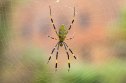
The spider was one of three new species identified during field surveys in the area. The other two, Echemus almeriensis and Zelotes imazigheni, were also documented during the same research effort.
Tiny, even by spider standards
What makes Cryptodrassus michaeli stand out, even among ground spiders, is its size—or lack of it.
Jordi Moya-Laraño, a research scientist at the Spanish Research Council, told the Associated Press: “It is a new species and the particularity of this species is that it is very tiny compared to others in their family.”
That family is Gnaphosidae, a group that includes approximately 2,500 species of ground spiders. These spiders are typically nocturnal and range from small to medium in size, often covered in dark, velvety hair. Cryptodrassus michaeli fits the profile with its brown and black coloration, which allows it to blend into soil and leaf litter—essentially disappearing against the ground beneath it.
How they got the shot of the tiny creature
Capturing footage of something this small and camouflaged required patience and hands-on fieldwork. Researchers obtained the video through methods that included searching through leaf litter, overturning rocks and studying specimens in laboratory conditions. The AP video shows the spider moving across the ground in what amounts to a scientific first.
Despite the breakthrough footage, scientists report that little is currently known about the species, including its diet, population size and reproductive behavior. In other words, the video is just the beginning of understanding what this spider actually does.


The discovery carries weight beyond its novelty. Researchers are studying the ecosystems of Cabo de Gata-Níjar Natural Park as climate change poses risks to biodiversity in the region. One concern is sobering: species may become extinct before they are fully documented.
That makes every new identification—and every bit of behavioral footage—a race against time. Spiders play a role in maintaining ecosystem balance, making their identification and study important for understanding environmental changes.
Cryptodrassus michaeli is a reminder that even in well-studied parts of Europe, there are creatures living just underfoot that science has never seen. And at 3 millimeters long, it would be easy to miss one — unless, of course, someone thought to flip over a rock and point a camera.
Conversation
All comments are subject to our Community Guidelines. Woman's World does not endorse the opinions and views shared by our readers in our comment sections. Our comments section is a place where readers can engage in healthy, productive, lively, and respectful discussions. Offensive language, hate speech, personal attacks, and/or defamatory statements are not permitted. Advertising or spam is also prohibited.