Livestream Captures Bald Eaglet Swallowing Fishhook as Rescue Teams Rush to Save It
A bald eaglet swallowed a fishhook on livestream—what happened next saved its life.

Thousands of people tune in to watch the bald eagles nesting near U.S. Steel’s Irvin Plant in Pennsylvania raise their young on a popular livestream. But over the weekend, viewers watched something no one expected—a two-week-old eaglet swallowing a fishhook, line and lure, accidentally fed to it by a parent.
What followed was a dramatic race against time involving a steel company, a wildlife rehab center, professional tree climbers and federal agencies—all working to save one tiny bird.
A heart-dropping moment on camera
The incident was captured on the U.S. Steel eagle nest livestream, which follows a family of bald eagles that have become beloved fixtures near the Irvin Plant.
Don German, a retired manager at U.S. Steel who helps monitor the nest, described the gut-wrenching moment.
“Your heart drops, right? They become your babies, and whenever you see your own child get injured, you want to help in any way you can,” German told CBS News.
The eaglet, known as USS11, had ingested the hook during a routine feeding. Watchers quickly realized the bird was in serious danger.
A rescue assembled in record time
Volunteers and officials contacted Tamarack Wildlife Center, which recommended removing the eaglet for “medical evaluation and treatment.” The center acknowledged on Facebook that interfering with eagle nests is typically avoided.
“It is usually advisable to avoid interfering with nests, but ingestion of the hook and fishing line posed a risk of death to the young eaglet,” the post shared.
The rescue required approvals from federal agencies, state agencies and the landowner. Carol Holmgren of Tamarack Wildlife Center marveled at how quickly it came together.
“To get all of those permissions in the course of an hour on a weekend was just stunning,” Holmgren said.
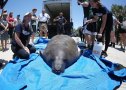
A crew from Northwood Tree Care climbed to the nest, and by approximately 3:30 p.m. Saturday—the same day as the incident—the eaglet was safely extracted.
German described the harrowing retrieval: “We ended up putting it into almost like a tool bag and zippered it up, then got it to the ground, carried it up the embankment, and got it into the vehicle.”

Emergency surgery in West Virginia
USS11 was rushed to Morgantown, West Virginia, where avian veterinary specialist Dr. Jesse Fallon of the Avian Conservation Center of Appalachia was waiting. X-rays revealed the hook had moved “deep into the digestive tract,” requiring surgical removal.
The surgery was performed less than 12 hours after the eaglet swallowed the hook.
“Surgery is risky in a patient this young, but initial indicators are promising,” Tamarack Wildlife Center shared in an update, adding that “the most dangerous first hurdle has been cleared.”
According to Tamarack, USS11 could return to the nest within about one week and is expected to be accepted back by its parents.

U.S. Steel released a statement reflecting the deep bond the community has formed with the eagle family.
“The bald eagles nesting near our Irvin Plant are an important part of U. S. Steel—symbols of pride for our employees and the focus of a growing community of nature lovers that follow the family via webcam,” the company said.
“We’re deeply concerned about the health of USS11 and are grateful to Tamarack Wildlife Center for acting quickly to ensure USS11 received necessary treatment. We will share updates on USS11 as we are able.”
Conversation
All comments are subject to our Community Guidelines. Woman's World does not endorse the opinions and views shared by our readers in our comment sections. Our comments section is a place where readers can engage in healthy, productive, lively, and respectful discussions. Offensive language, hate speech, personal attacks, and/or defamatory statements are not permitted. Advertising or spam is also prohibited.