Black Friday Scams to Watch For—Experts Share How to Shop Safely This Holiday Season
Learn the top Black Friday scams experts warn about and how to keep your holiday shopping safe

With holiday shopping expected to grow this year, 2024 Black Friday sales are sure to attract eager customers. While shoppers will be focused on scoring décor and gifts for less, scam artists will be busy with their own plans. Massive shopping events like this are the perfect opportunity for bad actors to get access to people’s financial and personal information as they navigate all of these deals. To stay safe as a consumer, all it takes is knowing what to look for! Below you’ll find more information about the most popular Black Friday scams and ways to prevent being victimized by them.
Common Black Friday scams
Fake online stores
One of the easiest ways bad actors can enjoy financial gain at the expense of others is by creating fake online stores. On these websites, popular products are offered at low prices to encourage you to buy from them instead of a reputable retailer. Once you believe you’ve “ordered” one of their items, the scammers have your money, financial information or both.
Sometimes they will make a site that appears to be a replica of a legitimate company. “Spoofed websites are up over 200% in the past four months compared to the previous four months—showing just how common these fake sites are becoming,” says Ami Patel, VP of ecosystem risk protections at Visa.
Enticing ads on social media
“Fraudsters use social media platforms to promote fake deals and giveaways,” explains Patel. They make the advertisement not only appealing, but use it to push a sense of urgency, reports PC Tech Magazine. Sometimes this is in the form of a countdown timer or a comment on how it’s your “last chance” to get the item for a bargain before it’s too late.
Though authentic retailers may have limited-time deals, they won’t do anything to pressure shoppers into acting quickly and without exercising caution.
Fake celebrity endorsements
Another variation of an enticing Black Friday advertisement employed by scammers can involve celebrities. “One emerging scam involves the use of deepfake technology—videos where a celebrity’s likeness is manipulated without their permission to create fake endorsements and deceive consumers,” shares Abhishek Karnik, director for threat research and response for McAfee (a computer security company).
These AI-powered deepfakes have become a problem year-round too. A McAfee study found that 1 in 5 people have fallen victim to scams featuring AI-generated celebrity endorsements. If you believe a celebrity trusts and uses a product, you might be more likely to believe it’s real and of good quality.

Phishing emails
Around Black Friday, it’s common to see a flood of messages in your inbox advertising upcoming sales. While most of these are likely from legitimate businesses, it’s more than possible for a phishing email to get caught in the mix. In fact, it’s easy for many scammers to make them so realistic you won’t easily be able to tell they aren’t legitimate.
“Advances in AI are making phishing emails significantly more convincing,” cautions Karnik. “While older models were capable of duping 2 out of 10 victims, newer ones, from 2023-2024, can create phishing emails that trick up to 49% more victims compared to human-written phishing attempts. This highlights a concerning trend: as these tools evolve, humans’ ability to spot phishing attempts is diminishing, making it increasingly difficult to tell legitimate messages from scams.”
False delivery notifications
If you choose to order an item online during Black Friday instead of in-store, you may have signed up for shipping notifications to keep track of your purchases. An unfortunately timed text message from a scam artist could catch you off guard if you think it’s legitimate.
These often occur in the form of a text message, reports Forbes. The message will claim to be from a delivery service like the United States Postal Service and say the sender needs more information or state there is an issue with your package. You will then be asked to provide personal details or financial information to ensure their “information” is up to date.
Dropshipping ads
Not all scams involve stealing information or money with the customers receiving nothing in return. Ads can pop up on social media that take users to dropshipping websites while claiming to be a local business that offers both quality products and quick delivery.
As the experts at PC Tech magazine say, their inventory is actually full of cheap goods sourced from overseas. The scammers hope that people will assume the company is legitimate because the ad appears on a reputable social media platform. But the item the person receives will be of poor quality and likely not what they thought they had purchased.

Signs you might be dealing with a scam
Although some of these Black Friday schemes are more complex than others, there may be red flags that indicate something isn’t right. These can include:
- Poor grammar and spelling. A legitimate company will want to ensure any form of communication, whether it be email or an advertisement, reads well.
- Links with errors. If you hover over a link and notice misspellings or other information that doesn’t mention the sender’s organization or company, it’s likely a phishing attempt or a fake website.
- Suspicious logos. “Low-resolution or distorted logos that don’t look professional could be a sign of a scam,” says Karnik.
- Urgent messages regarding your account. A scammer may send a message telling you that your account for a retail business is suspended or requires immediate action. A company will not try to get you to act without thinking.
- Unsolicited two-factor authentication requests. Similar to the urgent message, if you’re being asked to log in or provide a code for a customer account you haven’t accessed recently, it’s likely a scam.
The one thing all Black Friday scams usually have in common? The scammers’ attempt to target customers looking to save money on their holiday shopping.
“The general rule of thumb I like to use is that if a deal seems too good to be true, it probably is,” shares Patel. “Scammers prey on any sort of heightened emotional response, and excitement is one of the most powerful emotions. If you think you need to act now to avoid missing out, take a moment to think about whether a deal is legitimate.”
How to protect yourself from Black Friday scams

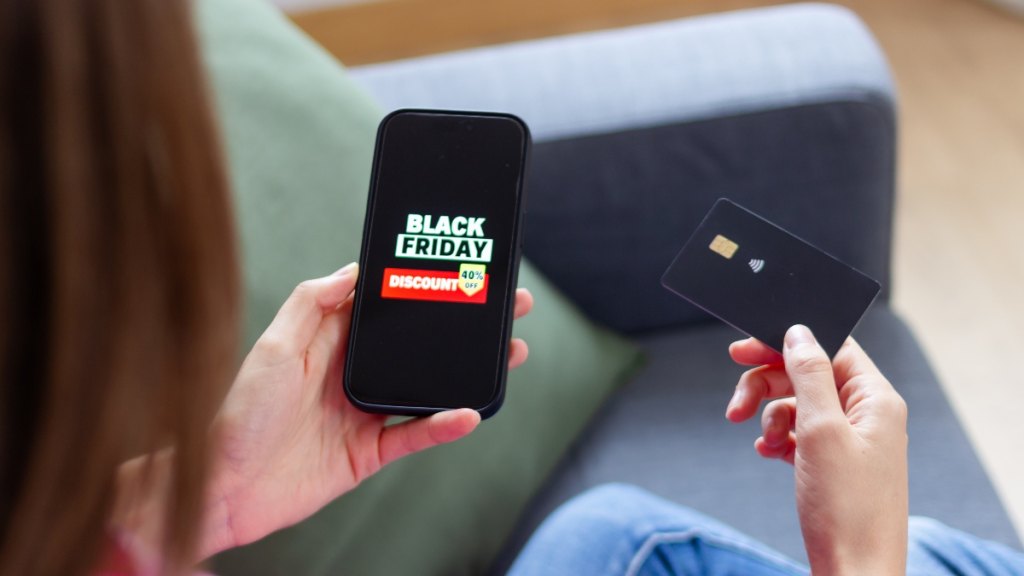
Whether you are planning to head to the store on Black Friday or look for deals online, you can prevent your finances and/or identity from being stolen by bad actors by following the below expert advice:
- Only buy from trusted retailers. “Shop at stores you know to be safe and verify any unfamiliar ones by reading reviews or checking the Better Business Bureau’s list,” suggests Karnik.
- Verify the URL. Make sure any website you are on has a security badge or trust seal, which indicates it’s a secure site. The URL should also start with “https.”
- Skip the debit card. Consumers should make sure they are shopping with a credit card,” suggests Patel. “That way, if they do fall prey to a scam, they can be confident that they have protection on their purchases.”
- Pause before you click. This is particularly true with email or text messages that claim to be about a shopping order of yours. “It’s best to avoid interacting with the message altogether,” says Karnik. “Always go directly to the source and interact with reputable companies.”
Being on the lookout for scams will ensure you can safely enjoy your holiday shopping!
Conversation
All comments are subject to our Community Guidelines. Woman's World does not endorse the opinions and views shared by our readers in our comment sections. Our comments section is a place where readers can engage in healthy, productive, lively, and respectful discussions. Offensive language, hate speech, personal attacks, and/or defamatory statements are not permitted. Advertising or spam is also prohibited.