The House Voted to End Daylight Savings Time—Now It’s the Senate’s Turn
Meet the Sunshine Protection Act, the bill that could make permanent sunshine real

Key Takeaways
- Daylight Saving Time is still set to end on Sunday, November 1, 2026.
- The Sunshine Protection Act has passed the House—but not the Senate.
- Americans will still fall back unless Congress and Trump act first.
When the weather begins to cool down and Halloween decorations begin to appear in stores, it can only mean one thing: Fall is coming. And with that comes the end of Daylight Saving Time. But is that actually going to happen this year now that the House of Representatives passed the Sunshine Protection Act? We share what you need to know about the bill and Daylight Saving Time in 2026 (and beyond) below.
Why do we have Daylight Saving Time?
Daylight Saving Time was first introduced to the United States in 1918 through the Standard Time Act. The goal was to help Americans make better use of natural daylight during the summer months. Many people believe it was also created to benefit farmers, but farmers have refuted that claim, saying the time change disrupts their milking and harvesting schedules.
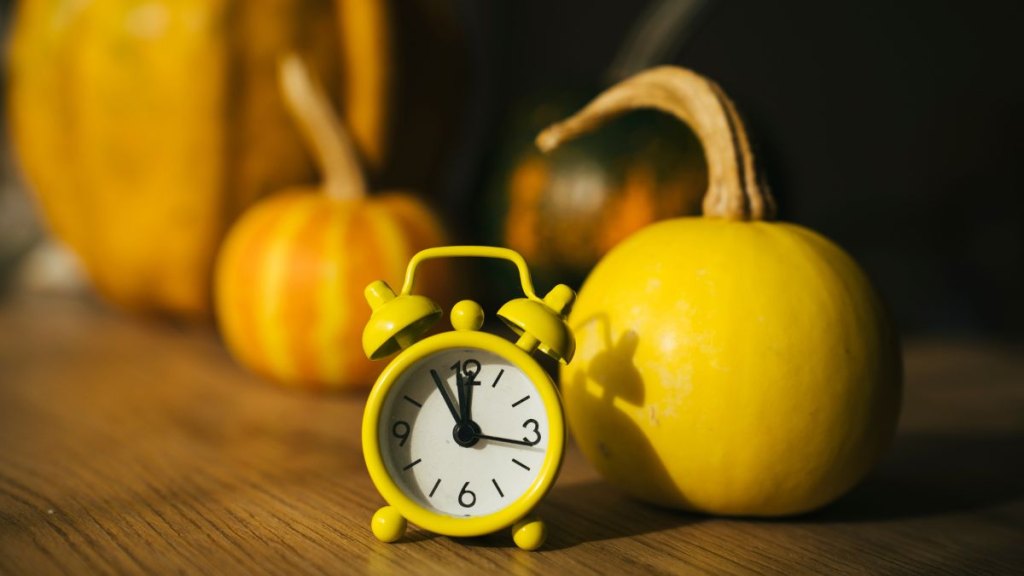
Currently, Daylight Saving Time begins in the spring when we “spring forward” and lose an hour of sleep but gain an hour of sunlight, and it ends in the fall when we “fall back” and gain an hour of sleep but lose an hour of sunlight. Every state in the U.S. participates in the time change except Arizona and Hawaii. The time change causes millions of hours of lost productivity, and studies show that Daylight Saving Time can disrupt eating schedules and sleep schedules.
A 2025 study conducted by Stanford Medicine scientists even suggested that the health of most Americans would improve without Daylight Saving Time, since the event can disrupt the circadian cycle, a 24-hour biological process that regulates body temperature, hormone levels and the sleep-wake cycle.
“We found that staying in standard time or staying in daylight saving time is definitely better than switching twice a year,” Jamie Zeitzer, PhD, professor of psychiatry and behavioral sciences and senior author of the study, said in a statement. “When you get light in the morning, it speeds up the circadian cycle. When you get light in the evening, it slows things down. You generally need more morning light and less evening light to keep well synchronized to a 24-hour day.”
“The more light exposure you get at the wrong times, the weaker the circadian clock. All of these things that are downstream—for example, your immune system, your energy—don’t match up quite as well,” Zeitzer concluded.

When does Daylight Saving Time end in 2026?
As it stands right now, Daylight Saving Time will end on Sunday, November 1, meaning clocks will “fall back” one hour at 2:00 a.m. As a result, the sun will set earlier, reducing evening daylight by about an hour.
What is the Sunshine Protection Act?
Earlier this month, the House passed the Sunshine Protection Act, which would give each state the option to observe permanent Daylight Saving Time, resulting in more sunlight and less darkness year-round. It would also help Americans save money on electric bills, since they could rely more on natural light and less on artificial lighting.
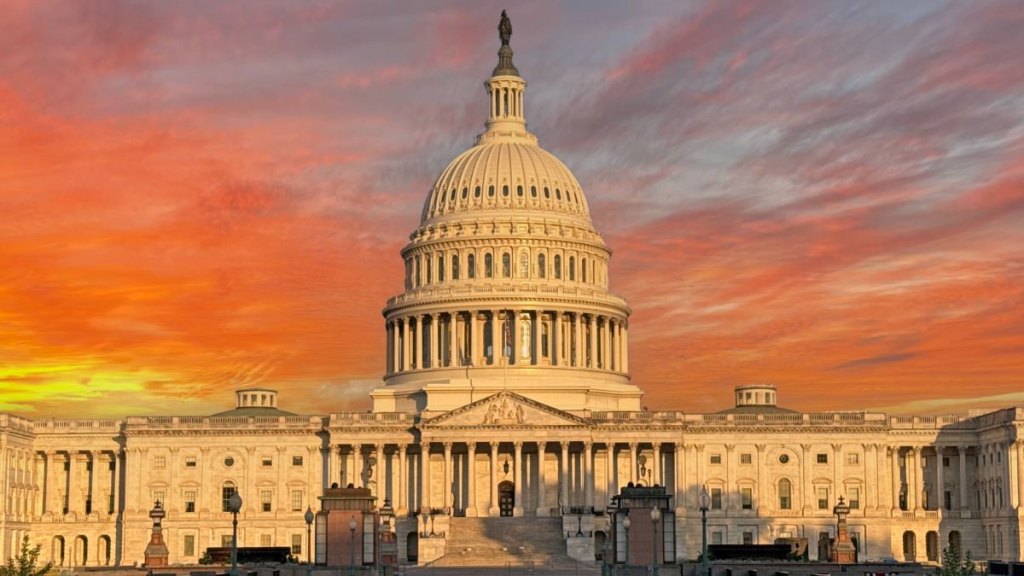
The bill now heads to the Senate for debate and discussion. It’s unclear how long that process will take or if they will approve it. The debate will likely be a lengthy one though, since the Senate already tried to push a similar version of the Sunshine Protection Act last year, but it failed to get approved by the House.
“I’m kind of digging the fact that we’re going to fix it, I hope,” Representative Tim Burchett told NBC News. “See if the Senate takes it up. They probably won’t, but we’ll see.”
If the bill does pass the Senate, it will then go to President Trump’s desk, where he will either sign it into law or veto it altogether. In the past, Trump has shown his support for the bill, calling it “a very nice WIN” in May of this year in a Truth Social post aimed at trying to convince the House and the Senate to pass it.
“I am going to work very hard to see the Sunshine Protection Act signed into law. It’s time that people can stop worrying about the ‘Clock’ not to mention all of the work and money that is spent on this ridiculous, twice yearly production,” Trump continued. “We are going with the far more popular alternative, Saving Daylight, which gives you a longer, brighter Day — And who can be against that—This is an easy one!”
If the Senate doesn’t approve the bill, it will go back to the House, who can either set it aside or revisit it and then resubmit it to the Senate.
“I think it’s popular. It shouldn’t be controversial. It should be bipartisan. It saves money,” Georgia representative Rich McCormick told NBC News.

Will the Sunshine Protection Act affect Daylight Saving Time?

As it stands now, the Sunshine Protection Act has passed the House of Representatives but still must be approved by the Senate and signed by President Trump before it can become law. If it is approved before November 1, 19 states (Alabama, Colorado, Delaware, Florida, Georgia, Idaho, Louisiana, Maine, Minnesota, Mississippi, Montana, Oklahoma, Oregon, South Carolina, Tennessee, Texas, Utah, Washington and Wyoming) have already passed trigger laws that would allow them to immediately switch to permanent Daylight Saving Time once federal law permits it.
However, as of publication, the Senate has not yet voted on the bill, and President Trump has not signed it into law, meaning Daylight Saving Time will still end in November as scheduled.
Ready for more? Subscribe to our YouTube channel for video podcasts, health tips and uplifting stories designed for women 40, 50, 60 and beyond.
Conversation
All comments are subject to our Community Guidelines. Woman's World does not endorse the opinions and views shared by our readers in our comment sections. Our comments section is a place where readers can engage in healthy, productive, lively, and respectful discussions. Offensive language, hate speech, personal attacks, and/or defamatory statements are not permitted. Advertising or spam is also prohibited.