A New Bill Could Decide the Future of Your Social Security Check—But Experts Are Wary
AARP says the bipartisan Social Security bill could do more harm than good

Key Takeaways
- The bipartisan PROMISE Act aims to stop a 22 percent Social Security benefit cut by 2032.
- AARP opposes the bill, saying it fast-tracks changes without enough public debate.
- Seven senators from both parties have signed on to sponsor the legislation.
Lawmakers on Capitol Hill are working on passing a new bipartisan bill, the Protecting Retirement Opportunities and Maintaining Income Security for Everyone (PROMISE) Act, which would help extend Social Security’s funding past 2032. The issue? Experts are warning that passing a bill this early could end up harming the program instead of helping it. Keep scrolling for all the details.
What to know about the PROMISE Act
Earlier this month, Louisiana Senator Bill Cassidy, MD, and Illinois Senator Dick Durbin introduced the PROMISE Act to the Senate floor. The bill was later cosponsored by North Carolina Senator Thom Tillis, Virginia Senator Tim Kaine, Texas Senator John Cornyn, Maine Senator Angus King, Delaware Senator Chris Coons and Oklahoma Senator Alan Armstrong, making it one of the largest pieces of bipartisan legislation introduced this year.
The bill proposes giving the Social Security Advisory Board (SSAB) a new task list, which would help make sure Congress funds the Social Security trust funds are funded for at least the next 50 years. Right now, the program’s trust funds are on track to run low by 2032, mainly because of demographic shifts, including lower birth rates and slower tax revenue growth. If nothing changes, anyone claiming benefits in or after 2032 could see their monthly checks cut by about 22 percent. The PROMISE Act aims to prevent that cut, so future retirees can count on receiving their full benefits.
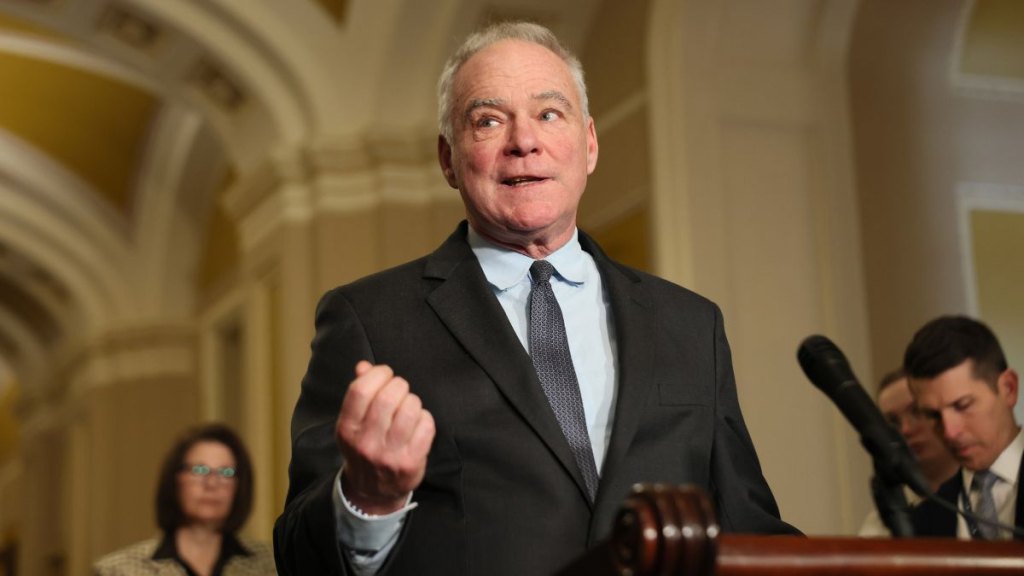
“For nearly a century, Social Security has been a lifeline that allows Americans to retire with dignity. Congress should not wait around until the last minute to shore up this critical program and prevent broad-based benefit cuts upon Trust Fund depletion,” Senator Kaine said in a statement. “That’s why I’m joining a bipartisan group of my colleagues in introducing legislation that will encourage Congress to roll up its sleeves and find a path forward to ensure current and future generations of retirees and their families are able to receive the benefits they have earned and which they are owed.”

Will the PROMISE Act get passed?
As it stands, the PROMISE Act is being debated by the Senate. If it gets approved there, it will then be sent to the House of Representatives. If they pass it, it will be sent to President Donald Trump’s desk, where he will either sign it into law or veto it altogether. As of publication, there is no word on how the Senate, House and White House are leaning. But even without the PROMISE Act, lawmakers in Washington, D.C. are working toward finding a solution for the depleting Social Security fund.
“Social Security is on an unsustainable path that will lead to dramatic benefit cuts for retirees and growing skepticism among workers paying into a program on the brink of insolvency. With each passing year, the menu of options that preserve benefits and limit tax hikes narrows. The modest reforms Congress contemplated in 2010 would have put Social Security on solid footing for 75 years; today, those same reforms would add less than two years to our current runway,” Senator Tillis said in that same statement. “I won’t pretend there’s consensus on how we solve this, but the math is unforgiving: The longer Congress waits to act, the fewer good options remain, which is why I am proud to support this legislation.”

How experts feel about the PROMISE Act
After the PROMISE Act was introduced earlier this month, AARP’s chief advocacy and engagement officer Nancy LeaMond wrote a letter to Senator Durbin and Senator Cassidy, then cc’ed Senator Kaine, Senator Tillis, Senator King, Senator Cornyn, Senator Armstrong and Senator Coons, saying the bill could hurt retirees and Social Security in the long run.
“We agree with you that Congress needs to act to address Social Security’s financial challenges and to strengthen Social Security for generations to come. Congress can, and should, do that without cutting the benefits that Americans have earned and are earning. But how Congress acts matters,” LeaMond wrote on July 21. “We strongly object to fast-tracking Social Security changes through Congress, as your bill would do. Strengthening Social Security should happen through regular order, in full public view, with openness and transparency—rather than through a process that limits the type of amendments and sets arbitrary procedural deadlines to short-circuit the debate. If regular order is the gold standard for routine legislative matters, it certainly should be the standard for something as important as Social Security.”


As it stands, none of the senators have commented on LeaMond’s letter, nor have they shared any updates on how the bill is faring on the Senate floor..
“For years, we’ve known that Social Security faces serious long-term financial challenges, yet Congress has repeatedly chosen to look the other way,” Senator King said. “This legislation creates a bipartisan process to ensure Congress finally does its job. Social Security is a promise millions of Americans have earned through a lifetime of work—household budgets rely on the timely arrival of these earnings to pay for mortgages, heat, and medications. We have a responsibility to preserve that promise for today’s retirees and for generations to come.”
Ready for more? Subscribe to our YouTube channel for video podcasts, health tips and uplifting stories designed for women 40, 50, 60 and beyond.
Conversation
All comments are subject to our Community Guidelines. Woman's World does not endorse the opinions and views shared by our readers in our comment sections. Our comments section is a place where readers can engage in healthy, productive, lively, and respectful discussions. Offensive language, hate speech, personal attacks, and/or defamatory statements are not permitted. Advertising or spam is also prohibited.