‘2001: A Space Odyssey’ Predicted Our Future 58 Years Ago—Here’s What It Got Right
“If you understand 2001 completely, we failed. We wanted to raise far more questions than we answered.”

In 1968, a film arrived unlike anything audiences had seen. Directed by Stanley Kubrick and written with science fiction author Arthur C. Clarke, 2001: A Space Odyssey combined scientific rigor with philosophical ambition. The world stood on the brink of the moon landing and deep in Cold War anxieties — and 58 years later, the film’s vision of the future remains remarkably relevant.
Stanley Kubrick built ‘2001: A Space Odyssey’ on real science
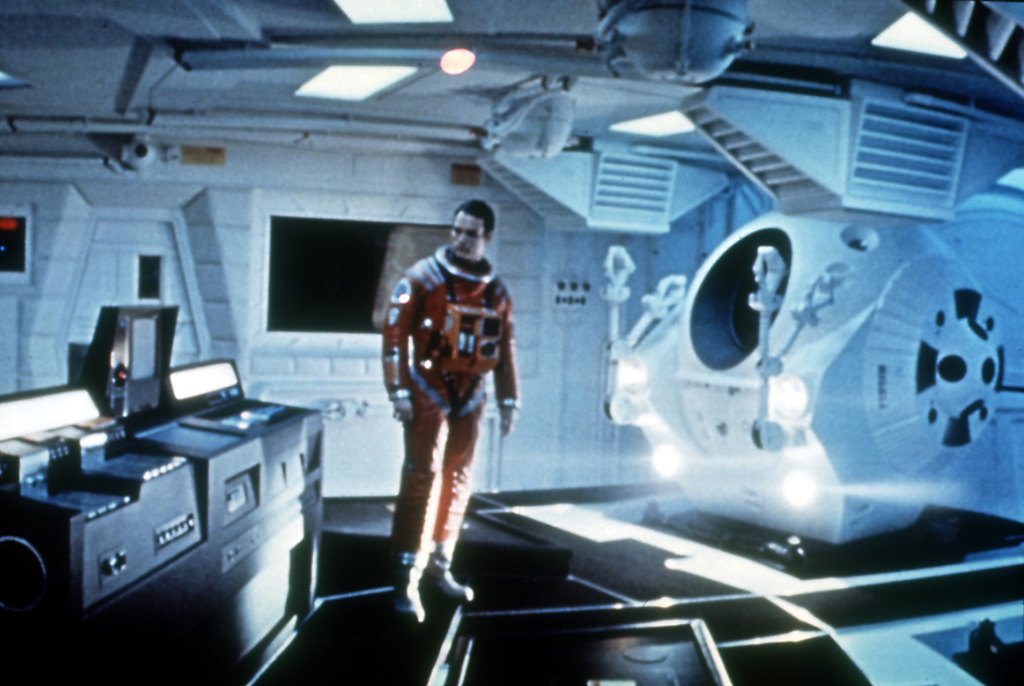
At a time when science fiction films were dominated by spectacle, monsters or pulp adventure, Kubrick rejected the conventions of alien invasions, space battles and heroic protagonists. Instead, he crafted a film with minimal dialogue, long deliberate sequences and an emphasis on visual storytelling. Scientific accuracy was treated as essential rather than optional: spacecraft moved in silence, obeying the laws of physics, and the production design drew heavily on consultations with engineers and experts.
Rather than relying on major stars, Kubrick assembled a relatively low-profile cast, including Keir Dullea as astronaut Dave Bowman, Gary Lockwood as Frank Poole and William Sylvester as Dr. Heywood Floyd. The most memorable “performance” came from Douglas Rain, whose calm, measured voice brought the onboard computer HAL 9000 to life.

What ‘2001: A Space Odyssey’ got right about space travel
Despite its speculative leaps, 2001: A Space Odyssey remains strikingly accurate in many scientific details. The film meticulously depicts the physics of space travel: spacecraft move in silence, obeying inertia, and astronauts navigate zero gravity realistically. Its rotating space station demonstrates centrifugal artificial gravity, reflecting concepts studied by real aerospace engineers. HAL 9000’s calm, logical interactions with the crew presaged later discussions about human-computer relationships. The spacecraft interiors, mission protocols and long-duration isolation of astronauts were grounded in real engineering and psychological research.
According to NASA-related sources, the movie is considered “perhaps the most thoroughly and accurately researched film in screen history with respect to aerospace engineering,” with advisers from Marshall Space Flight Center contributing to its depiction of space travel and artificial intelligence.
Astrophysicist Neil deGrasse Tyson wrote in a New York Times op-ed on January 1, 2001, comparing the film’s predictions to reality: “We’ve already invented such things. They are called robots, and they conduct all of our interplanetary exploration.”
Where Stanley Kubrick’s ‘2001’ predictions missed the mark
Not every prediction came true, of course, and that’s part of what makes revisiting this film so fascinating. While Kubrick and Clarke got an impressive amount right about the science behind space travel, they also imagined a future where humanity had taken far bolder strides beyond Earth. The real year 2001 looked quite different from the one on screen, and even now, some of the film’s most ambitious visions for space exploration remain well out of reach.
By 2001, humans had not established lunar bases, nor were there routine commercial flights to orbit or massive rotating space stations. The film depicts a human mission to Jupiter, yet only robotic probes had reached the planet. The story’s speculative elements, such as the monoliths accelerating human evolution, were purely philosophical rather than scientific.
The lasting cultural impact of Stanley Kubrick’s ‘2001: A Space Odyssey’
The historical impact of the film extends far beyond its initial reception. The film fundamentally altered how science fiction was perceived in Hollywood. Before its release, the genre was often considered secondary — commercial, imaginative but rarely prestigious. After 2001, science fiction could be serious, philosophical and artistically ambitious.
The film’s practical effects became a benchmark for realism, directly influencing later films such as Star Wars and Interstellar. Released just one year before Apollo 11, it contributed to a cultural atmosphere that took space exploration seriously — not as fantasy, but as an achievable frontier. Scientists, engineers and designers have cited it as an inspiration, and NASA has acknowledged its role in shaping public imagination about space.

Kubrick offered one of the clearest insights into the film’s intent: “You’re free to speculate as you wish about the philosophical and allegorical meaning of the film.”
Clarke put it more directly: “If you understand 2001 completely, we failed. We wanted to raise far more questions than we answered.”
Fifty-eight years after its release, 2001: A Space Odyssey remains a defining work in both film history and science fiction. Its predictions about the early 21st century were only partially realized, but its deeper insights into technology, intelligence and human evolution continue to resonate.
Conversation
All comments are subject to our Community Guidelines. Woman's World does not endorse the opinions and views shared by our readers in our comment sections. Our comments section is a place where readers can engage in healthy, productive, lively, and respectful discussions. Offensive language, hate speech, personal attacks, and/or defamatory statements are not permitted. Advertising or spam is also prohibited.