The Lost ‘Star Trek’ Movies and Shows That Almost Happened—and the Stories Behind Them
A Spock-led film, a Kirk-Jesus fistfight and Eddie Murphy. The 'Star Trek' that almost was

Key Takeaways
- Star Trek’s “lost years” were filled with bold ideas, not silence.
- Unmade films and shows reveal how close 'Trek' came to radical change.
- Creative clashes shaped 'Star Trek' into the enduring franchise we know.
For Star Trek fans, the years between the 1969 cancellation of The Original Series and the 1979 release of Star Trek: The Motion Picture are often treated as a gap, summed up best by the phrase “the lost years.” But the reality is something very different.
Behind the scenes, the show skyrocketed in the ratings through syndication, the fans, in essence, took control with the creation of impactful fan fiction, the Star Trek convention circuit exploded and the franchise itself was the subject of constant reinvention, with proposed films, television series and scripts moving in and out of development—some coming surprisingly close to production.
All told, these unrealized projects offer a revealing look at how Star Trek survived, evolved and ultimately returned. Drawing on firsthand accounts from the writers, producers, actors and creatives involved, what emerges is a story not of absence, but of persistence—and of the many different versions of Star Trek that might have been, but were ultimately lost.
The lost film that put Spock front and center
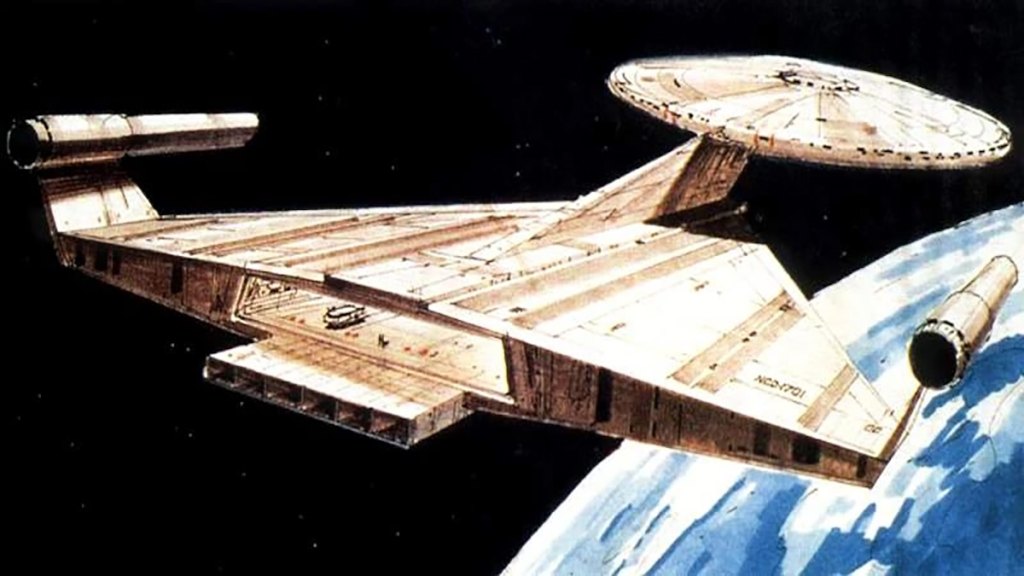
Of all the projects that never made it to screen, Planet of the Titans may have been the most daring departure. Developed in 1976, this film placed Spock—not Kirk—at the heart of the story, born out of the creative impulse of director Philip Kaufman.
“We sat in a room and Phil basically talked to us about the Star Trek audience and who the characters are,” recalled producer Gerald Isenberg. “It’s Spock. You can take any other character out of that series and the series is the same. Even Kirk. You just replace him with another captain. But Spock is the center of the series.”
The plot opened with Kirk missing and presumed dead for three years. Spock, having returned to Vulcan to purge his emotions, rejoins Starfleet when energy readings suggest Kirk might still be alive inside a black hole. Kaufman described the story’s scope: “It was an adventure through a black hole into the future and the past… There were more relationships really developed beyond just the crew relationships. Kirk was to have an important role but not the center; the center was Spock, a Klingon, a woman parapsychologist who was trying to treat Spock’s insanity [he had gotten caught in his pon farr cycles].”
Kaufman drew from Olaf Stapledon’s Last and First Men and aimed for the philosophical ambition of 2001: A Space Odyssey. He even hoped to cast Toshiro Mifune as the Klingon antagonist. “Toshiro Mifune up against Spock would have been a great piece of casting,” he said. “There would have been a couple of scenes between the two of them, emotion versus Spock’s logic mind shield.”
The ending was radical: the Enterprise escapes the black hole only to emerge in Earth’s distant past, where the crew realizes they are the legendary “Titans” of myth, the spark responsible for the evolution of humanity. Ken Adam and Ralph McQuarrie contributed concept art, and the Enterprise design developed for the film would resurface—in altered form—as the title vessel in 2017’s Star Trek: Discovery.
Then Paramount pulled the plug. “I still remember the night when I was getting very close,” Kaufman recalled. “I called Rose, my wife, and I said, ‘I’ve got it, I really know this story,’ and right then the phone rang. It was Jerry Isenberg saying the project’s been canceled. I said, ‘What do you mean?’ and he said, ‘They said there’s no future in science fiction.’ About two or three months after Star Trek was canceled, Star Wars was released.”
Gene Roddenberry’s most provocative script

Roddenberry’s own 1975 script treatment was the most provocative lost project of all. Director Richard Colla, who read what became known as The God Thing, described its climax: “[An alien being] manifested itself and said, ‘Do you know me?’ Kirk said, ‘No, I don’t know who you are.’ So, it shift-changed and came up in the form of Christ the carpenter, and says, ‘Do you know me?’ and Kirk says, ‘Oh, now I know who you are.'”
Jon Povill, who did research for Roddenberry on the project and would become associate producer of Star Trek: The Motion Picture, was blunt about why it died: “It probably would have brought Star Trek down, because the Christian Right, even though it wasn’t then what it is now, would have just destroyed it. He started the script under one Paramount administration and handed it to another in the form of Barry Diller, who was a devout Catholic. There was no way on Earth that that script was going to fly.”
When Pocket Books later attempted to novelize the treatment, writer Michael Jan Friedman read the material and was dismayed. “In the climactic scene, Kirk had a fistfight with an alien who had assumed the image of Jesus Christ… So, Kirk was slugging it out on the bridge of the Enterprise. With Jesus.” Friedman refused to simply expand Roddenberry’s script into novel form as his estate insisted, concluding that “public scrutiny of this story in anything approximating its original form would not have put Gene or his legacy in a good light.”
The TV revival that became a movie

Between these lost films sat Star Trek: Phase II, the television revival that generated 19 scripts and story treatments before transforming into The Motion Picture. Story editor Jon Povill championed the new Vulcan character Xon, to be played by actor David Gautreaux as a replacement for Leonard Nimoy’s Spock: “I thought there was something very fresh in having a nice young Vulcan to deal with; somebody who was trying to live up to a previous image. We never wanted Xon to be a Spock retread.”
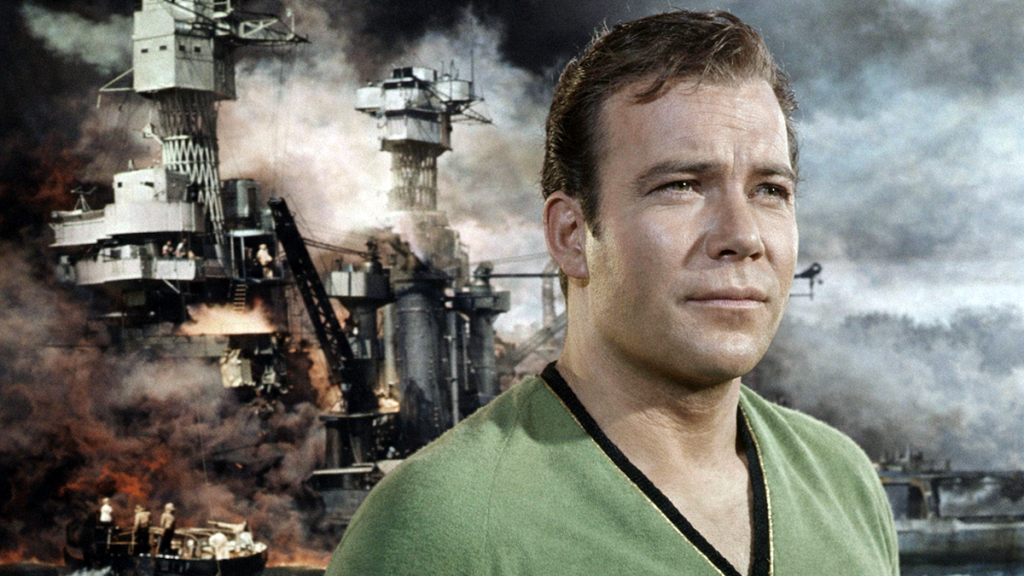
One of the most compelling unproduced episodes was “Tomorrow and the Stars,” which sent Kirk back to Pearl Harbor in 1941. Writer Larry Alexander had originally pitched a darker concept— “Ghost Story”— with Kirk’s id destroying an alien planet. “I thought it was a wonderful story idea to have Captain Kirk responsible for the death of a planet,” Alexander said. Roddenberry rejected it, preferring the Pearl Harbor setting.
The two-hour premiere “In Thy Image” became The Motion Picture after Paramount’s fourth-network plans collapsed and Star Wars changed the industry calculus overnight. Director Bob Collins recalled attending Close Encounters with Roddenberry: “We came out, both pretty blown away. I turned to him and said, ‘Well, there goes our low-budget special effects.'”
Two more near-misses ‘Star Trek’ fans should know about


After Star Trek V underperformed in 1989, producer Harve Bennett proposed a prequel film following young Kirk, Spock and McCoy as cadets at Starfleet Academy. Roddenberry rejected the concept flatly: “I didn’t like it. It didn’t fit in with the rest of Trek. It wasn’t good. Some of it was like Police Academy.” James Doohan (who famously played Scotty) was equally blunt: “He wanted to take over Star Trek for himself. The whole thing would have been starting out as if from scratch.”
Even 1986’s The Voyage Home nearly took a different shape. Eddie Murphy was in discussions to play a professor who believed in extraterrestrials, whose classroom whale songs would guide the Enterprise to modern-day Earth. Producer Harve Bennett recalled the initial meeting as “a little bizarre”—Murphy arrived with two associates, all dressed in black leather. Murphy himself later reflected: “In retrospect, I think I might have been better off doing Star Trek IV than The Golden Child.”
These lost projects reveal a franchise shaped by tension—Gene Roddenberry’s philosophical ambitions colliding with studio economics, collaborators pushing Star Trek toward cinematic scope even as its creator fought to preserve the nature of the television series he had built. What ultimately reached the screen was never any one person’s vision, but something forged from those competing ideas. But that creative friction didn’t weaken Star Trek. Instead, it defined it and helps explain why the franchise continues to endure 60 years after its debut.
Conversation
All comments are subject to our Community Guidelines. Woman's World does not endorse the opinions and views shared by our readers in our comment sections. Our comments section is a place where readers can engage in healthy, productive, lively, and respectful discussions. Offensive language, hate speech, personal attacks, and/or defamatory statements are not permitted. Advertising or spam is also prohibited.