The Lost 1970s ‘Star Trek’ Movie: Inside the Forgotten Script Where Spock Had to Embrace His Humanity
Before 'The Motion Picture,' a secret 'Star Trek II' script saw the crew battle a psychic cloud

When it comes to Star Trek, the 1970s became a kind of creative holding pattern—a decade littered with abandoned, half-formed and often wildly ambitious ideas designed to reunite the crew of the starship Enterprise years after their original 1966–1969 adventures had come to an end. There was The God Thing, the version in which Captain James T. Kirk (William Shatner) would confront a godlike being on the Enterprise bridge—later mythologized as a story in which Kirk “fought Jesus Christ; Planet of the Titans, which sent Spock (Leonard Nimoy) through a black hole in search of a missing Kirk and reveals the crew’s role in the evolution of the human race; and the aborted Star Trek Phase II, a proposed television revival that would have reunited most of the original cast—minus Spock, who would have been replaced by a Vulcan named Xon, played by David Gautreaux—for what was envisioned as a new five-year mission. In the end, audiences received Star Trek: The Motion Picture in 1979—but as it turns out, that was only one of many possible futures.
One of the most intriguing alternatives never made it to the screen at all—and went by the working title Star Trek II. It was developed by Jon Povill, who had done research for Gene Roddenberry on The God Thing, served as story editor on Phase II and later became an associate producer on The Motion Picture. Encouraged by Roddenberry, Povill wrote an initial treatment without pay and without any assurance it would ever move forward. At the time, he believed he was simply responding to a rare and personal invitation—only later would he realize just how many other writers had been invited to that same party and just how crowded the room really was.
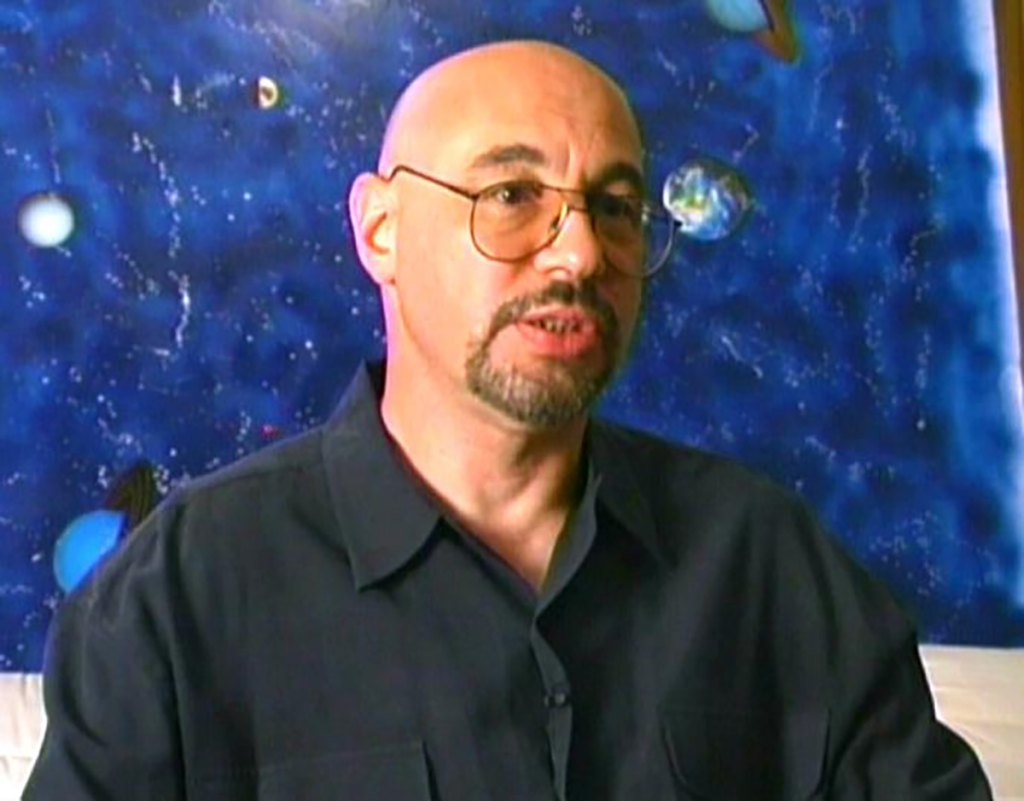
“What I didn’t know at the time was that about 700,000 other writers had been told the same thing,” Povill says. “Some of them—I think—were being paid to come up with their ideas.” Among those circling the possibility of a Star Trek feature, he recalls, were Harlan Ellison (writer of the original series’ “The City on the Edge of Forever”), Norman Spinrad (writer of TOS’ “The Doomsday Machine” and unfilmed episode “He Walked Among Us”), John D. F. Black (Trek’s first story editor and writer of “The Naked Time”), Richard Matheson (the classic TOS episode “The Enemy Within” and the Darren McGavin Kolchak TV movies The Night Stalker and The Night Strangler), Ted Sturgeon (TOS Season 2’s “Amok Time”) and others, both from within and outside the Trek universe.
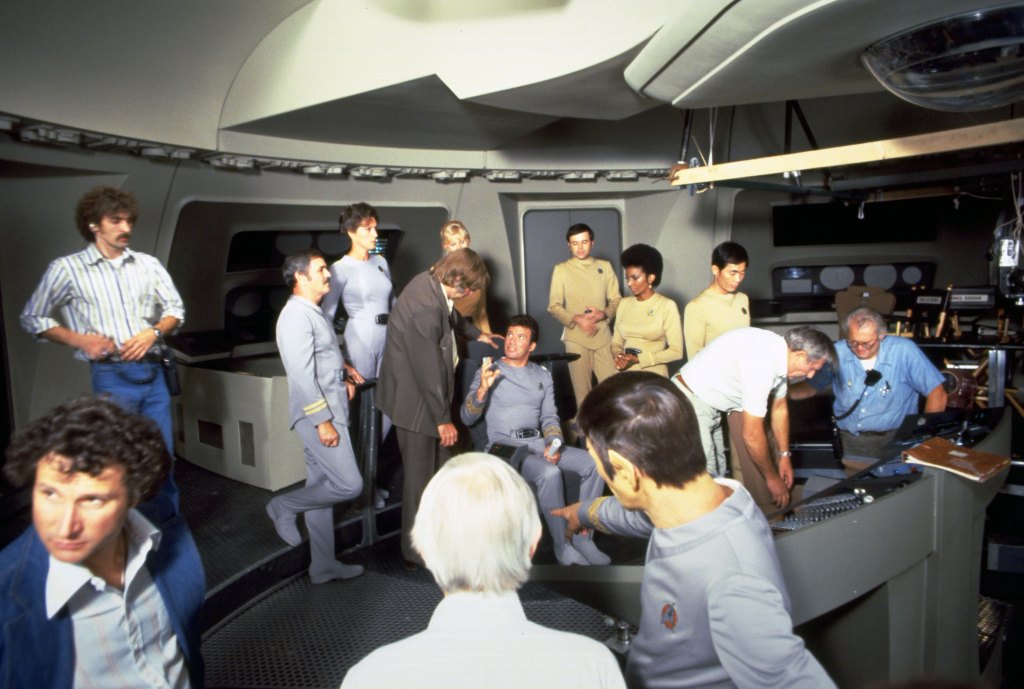
Detailing the history of this lost Star Trek film, he details, “Gene went to work on The God Thing in May of 1975 and it was his first attempt at a Star Trek feature. By August, it was sh**canned by Paramount President Barry Diller. Gene, who had gotten to know me pretty well by then, suggested that I take a crack at writing a treatment, which I did. Then he and I worked on a treatment together. Treatment One was a spec story that I did after Gene told me that the studio had turned down The God Thing—which was not the actual title of his script, just what the script has come to be called since then. So, Gene told me it’d been rejected and that if I wanted to come up with a Star Trek movie story of my own, he’d be happy to look at it and to pass it along if he thought it was worthy. Again, I didn’t know about the other writers who were attempting to do so as well.”
A Vulcan-centric story approach

In his story, planet Vulcan (home world of Mr. Spock) has traveled through an area of space in which they had previously released a “psychic cloud” that they believed would fill the enemy with distrust and result in the break down all military discipline and create chaos within enemy ranks.
“They had done this in the final war that they’d fought,” he says. “A war in which things were going so poorly that they were forced to release the cloud prematurely, without full testing that would have revealed the damn thing only worked on Vulcans. But as with most weapons, it’s only a matter of time before whatever you came up with winds up being used against you—only in this case, it was more a matter of the movement of star systems bringing Vulcan into this area of space.
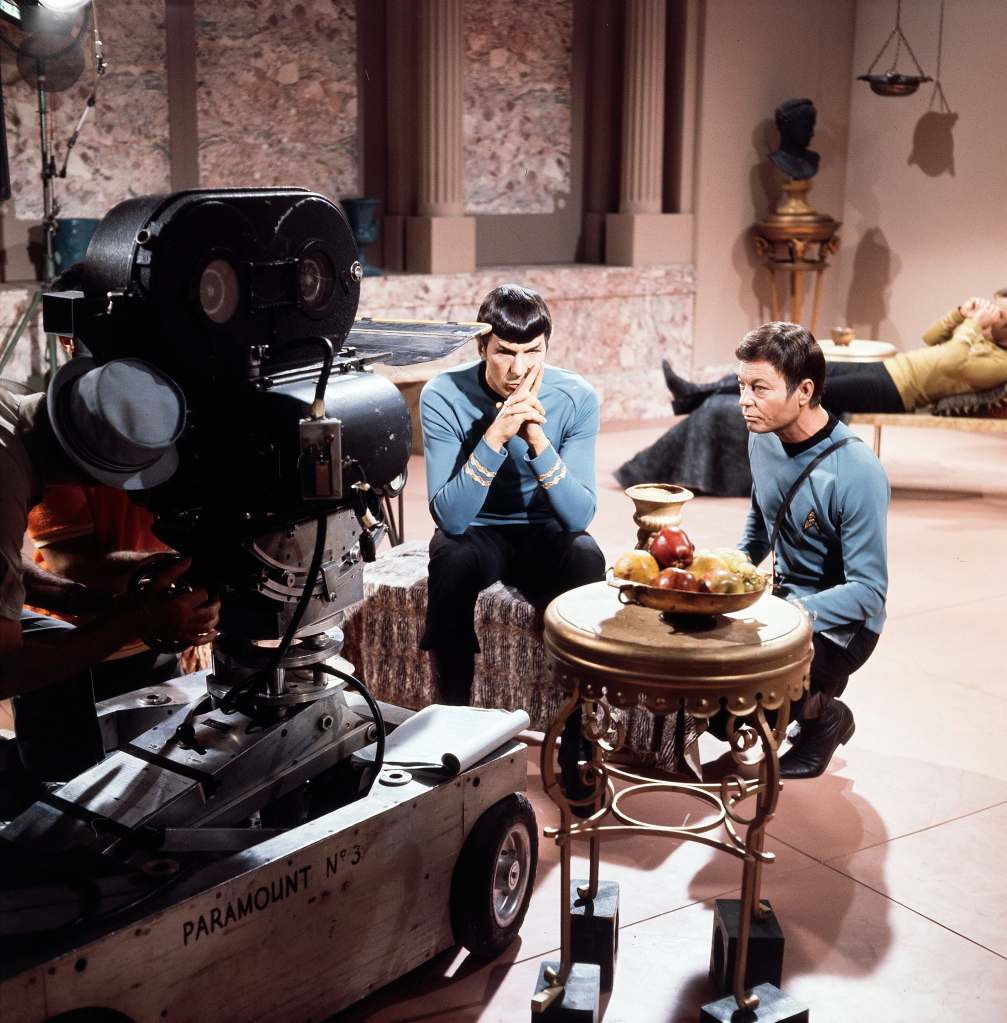
“Interestingly,” he elaborates, “in order for Spock to be free of the influence of the cloud, he has to focus himself totally on the human half of his being—and he remains human and quirky for the majority of the story. Ultimately, the Enterprise must go back in time to the final Vulcan war in an attempt to prevent the release of the cloud. When they fail to do so, Spock uses the equipment to send out a psychic cloud of his own—of logic, trust, restraint and respect that effectively counteracts the effects of the initial cloud. The Enterprise turns the tide in the war against the ancient foe so that Vulcan is not conquered or destroyed.”

He gave the treatment to Roddenberry sometime in late August or early September of 1975. “He read it,” recalls Povill, “and said it would have made a swell episode, but that he didn’t think it would work as a feature. But in December 1975, he called me and said he had a new idea for a feature; would I like to work on it with him?”

Jon Povill laughs as he details what happened next. “I still remember standing in my kitchen and hanging up the phone after I said yes, I would be interested,” he says, “and then whooping so loudly that my neighbors came running over to see what the hell was going on.”
What the hell was going on was that he and Gene Roddenberry were going to collaborate on yet another version that would ultimately find itself yet another historic footnote in the resurrection of Star Trek.
Conversation
All comments are subject to our Community Guidelines. Woman's World does not endorse the opinions and views shared by our readers in our comment sections. Our comments section is a place where readers can engage in healthy, productive, lively, and respectful discussions. Offensive language, hate speech, personal attacks, and/or defamatory statements are not permitted. Advertising or spam is also prohibited.