Lost ‘Star Trek’ Film That Would Have Seen Captain Kirk Fight Jesus on the Bridge of the Enterprise
The definitive account of the controversial script, featuring insights from those involved

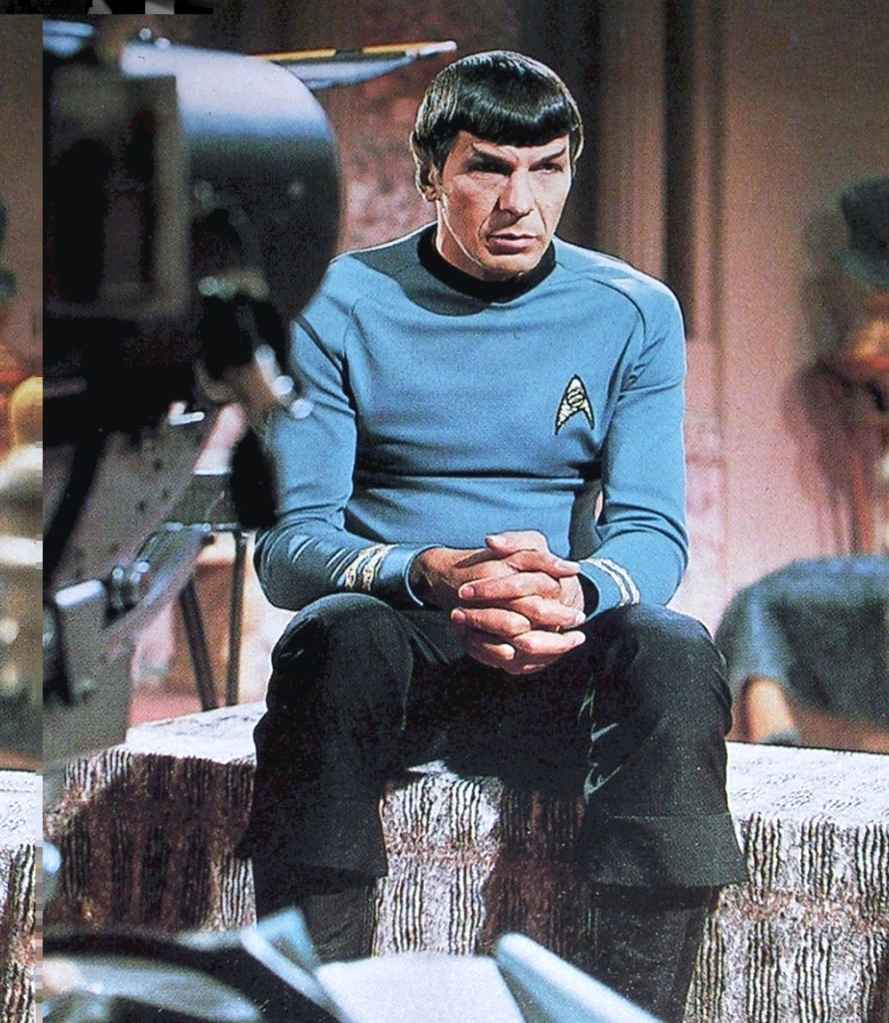
By the mid-1970s, Star Trek had done something no one at NBC anticipated: it had come back from cancellation stronger than ever. In syndication, the series was breaking records, fan conventions were multiplying across the country and for the first time since the show left the air in 1969, there was serious discussion of bringing Star Trek back—not to television, but to the big screen. At the center of that early effort was series creator Gene Roddenberry.
Roddenberry began developing a story treatment for what would eventually become known as The God Thing, a project that imagined Admiral James T. Kirk reassembling the crew of the Enterprise to confront a mysterious alien force on course for Earth—one that claimed to be God. In Roddenberry’s conception, the “deity” was ultimately revealed to be a living computer, created by a race cast out of its own dimension and trapped in ours. The story ended with the entity restoring youth to Kirk and his crew and returning them to the five-year mission, effectively resetting the clock on Star Trek itself.
While The God Thing was never produced, its DNA can be found scattered throughout later projects—most obviously 1979’s Star Trek: The Motion Picture, and, more controversially, 1989’s Star Trek V: The Final Frontier, a film Roddenberry publicly rejected during its production. “The fact that The God Thing never got produced could have been the reason Gene hated the idea of Star Trek V,” muses Jon Povill, story editor of the aborted Phase II television series and associate producer of The Motion Picture.
Clarifies Roddenberry’s longtime assistant Susan Sackett, the concept went through multiple philosophical permutations before the studio ultimately shut it down. “There was an entirely different story in which there was going to be some kind of creature that was going to claim to be God and turn out to be the Devil,” she says. “It was a morality play. It was very esoteric and the studio turned it down. At one point it was going to be novelized, but it didn’t come about.”
‘God Thing’ discovery
William Shatner first learned that Star Trek might return in the most unexpected way—by wandering back onto the stages where the series had once been filmed. “I was working on the series Barbary Coast at the time, which was done at Paramount. It was on one end of Paramount, and Star Trek had been filmed at the other end of Paramount,” reflects Shatner, whose tongue is firmly implanted in cheek as he speaks. “I had never, for the longest time, revisited the stage area where [we had] filmed. One day I decided to go there and I hear the sound of a typewriter at the end of the hall. I opened the door and there was Gene Roddenberry!
He was sitting in a corner, typing. I hadn’t seen him in five years. I said, ‘Gene, the series has been canceled!’ He said, ‘I know, I know the series has been canceled. I’m writing the movie!’”

What Roddenberry described to Shatner that day was The God Thing in its most expansive form—part reunion, part cosmic morality play. “First of all, we have to explain how you guys got older… You become an admiral, and the rest of the cast become Starfleet commanders… One day a force comes toward Earth—might be God, might be the Devil…”
Even in its earliest conception, the story was ambitious, philosophical, and deliberately provocative—qualities that would ultimately doom it.
The non-‘Star Trek’ version
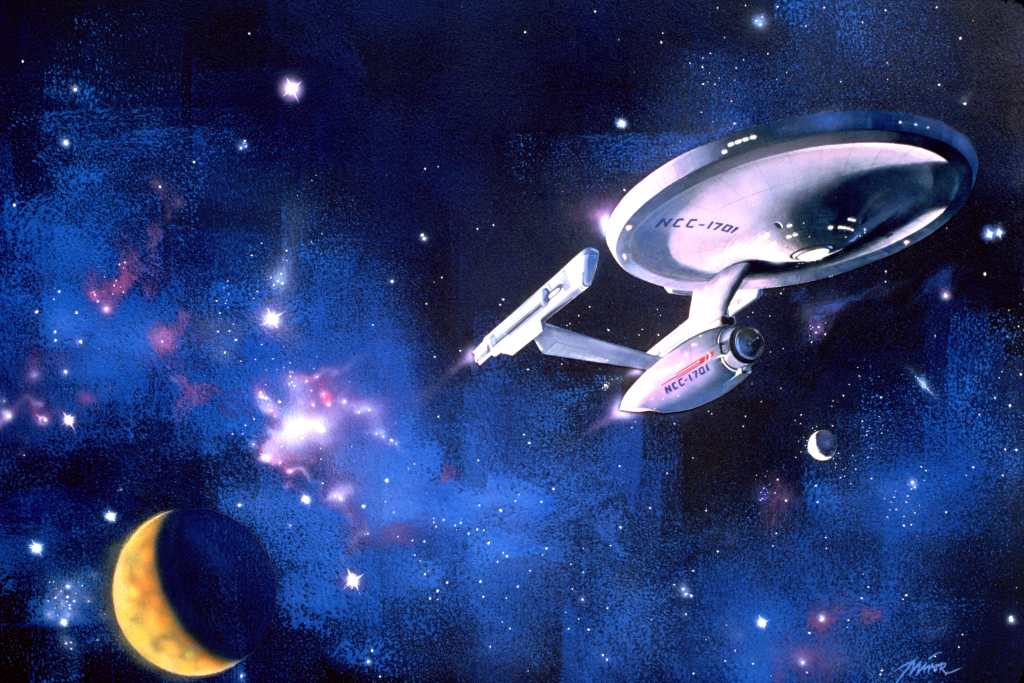
“Gene had hired me to do research for a novel called The God Thing, but it wasn’t a Star Trek novel,” says Povill. “I was researching stuff that would later appear in Close Encounters, which is, ‘How would the planet react? How would the military react? What would the interaction likely be at this stage in terms of if we discovered a ship and extraterrestrials in orbit around our planet? How would we deal with it?’ I was trying to ascertain that kind of stuff. It was an original novel using all different characters, but the premise of it was that this big starship comes back to Earth and it hadn’t been here since Christ’s time, and it turns out that the starship interacts with planets by ascertaining the level society is at and providing a prophet that suits that level of development. Then it can interact and advance society in some way or another, contrary to the Prime Directive. But now this spaceship malfunctions and instead of ascertaining where we are now, it delivers us Christ again.
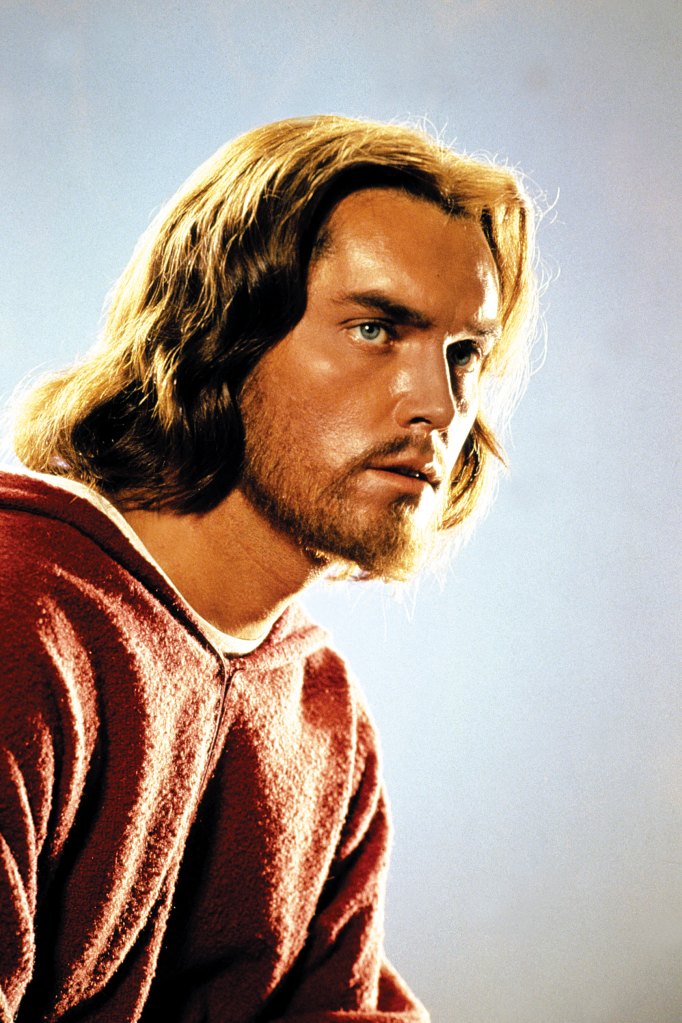
For director Richard Colla, who had worked closely with Roddenberry on The Questor Tapes, The God Thing was bolder—and riskier—than anything that would eventually reach the screen. “Gene showed me that script, which was much more daring than Star Trek: The Motion Picture would be,” Colla emphasizes. “The Enterprise went off in search of that thing from outer space that was affecting everything. By the time they got into the alien’s presence, it manifested itself and said, ‘Do you know me?’ Kirk said, ‘No, I don’t know who you are.’ It said, ‘Strange, how could you not know who I am?’ So, it shift-changed and became another image and said, ‘Do you know me?’ Kirk said, ‘No, who are you?’ So, it shift-changed and came up in the form of Christ the carpenter, and says, “Do you know me?” and Kirk says, “Oh, now I know who you are.”
“It probably would have brought Star Trek down, because the Christian Right, even though it wasn’t then what it is now, would have just destroyed it,” Povill laughs. “In fact, he started the script under one Paramount administration and handed it to another in the form of Barry Diller, who was a devout Catholic. There was no way on Earth that that script was going to fly for a devout Catholic.”
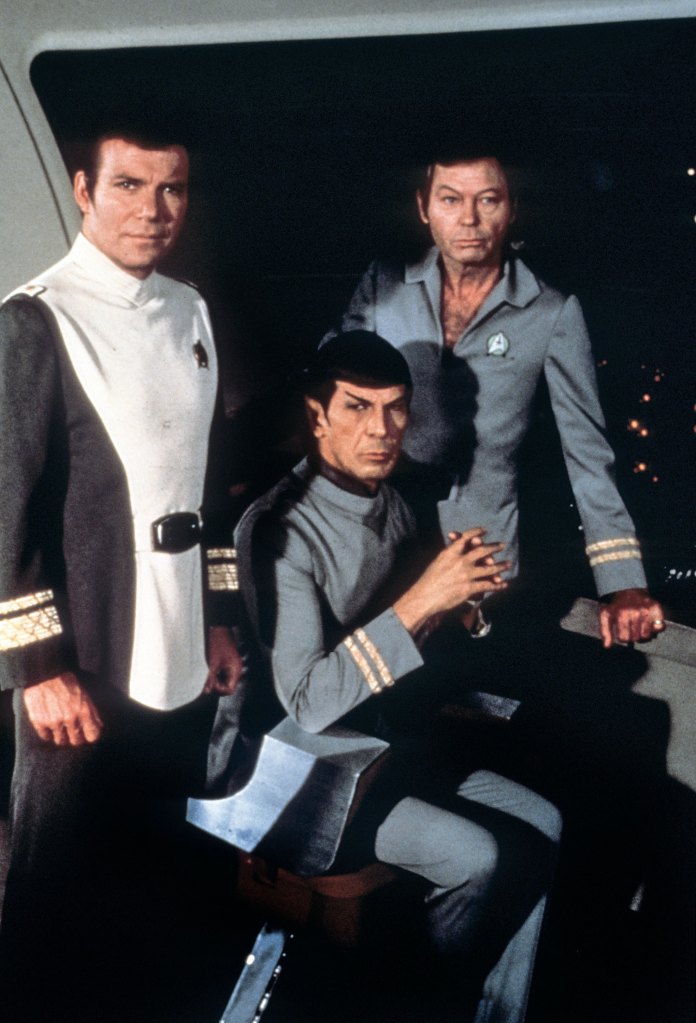
In Colla’s opinion, what Roddenberry had written was the notion that this “thing” was sent forth to communicate the law of the universe, and that as time went on, the law was meant to be reinterpreted. Two thousand years earlier, the law was interpreted by the carpenter image. “As time went on,” he says, “the law was meant to be reinterpreted, and the Christ figure was meant to reappear in different forms. But this machine malfunctioned, and it was like a phonograph record that got caught in a groove and kept grooving back, grooving back, grooving back. It’s important to understand the essence of all this and reinterpret it as time goes on. That was a little heavy for Paramount. It was meant to be strong and moving, and I’m sorry it never got made.”
Roddenberry viewed the story simple: “It wasn’t God they were meeting, but someone who had been born here on Earth before, claiming to be God. I was going to say that this false thing claiming to be God had screwed up man’s concept of the real infinity and beauty of what God is. Paramount was reluctant to put that up on the screen, and I can understand that position.”
The afterlife of ‘The God Thing’
Although The God Thing never reached the screen, it refused to disappear. Over the decades, the project resurfaced repeatedly—most often as a proposed novel—each attempt running headlong into the same creative and philosophical obstacles that had stopped the film. Several writers were at one time or another attached or rumored, including Susan Sackett, Fred Bronson, Roddenberry biographer David Alexander, Walter Koenig and ultimately Michael Jan Friedman, whose version for Pocket Books came closest to completion. For those involved on the publishing side, the goal was to honor Roddenberry’s original intent while making the material workable in another form.
Former Pocket Books Star Trek editor David Stern explains that the intent was to make publication of The God Thing part of Star Trek’s 25th anniversary in 1991. “My first memories of The God Thing really date to the period after Gene’s death,” he shares. “Gene’s lawyer, Leonard Maizlish, and I had several meetings, including a couple with Majel Barrett [Roddenberry’s widow], regarding the manuscript. The manuscript existed as a very long treatment, much more of a film treatment than a book. I had proposed Mike Friedman as the person to expand that treatment into a novel, because Mike was not only a good writer, but someone very, very used to the approvals process at that point. He could take a no and work with it. Which is what happened a couple times.”
“Gene had written a script for the first Star Trek movie,” Friedman picks up the scenario. “Certain elements showed up in Star Trek: The Motion Picture, but most did not. So, there was this mysterious script floating around that people talked about as if it were the Dead Sea Scrolls. After I had written several successful Trek novels, Trek editor Dave Stern asked me to turn Gene’s efforts into a novel called The God Thing. To the best of my recollection, I received both the script and a short narrative version of it. Naturally I jumped at the chance to translate and expand it. Gene was—and still is— one of my heroes, for God’s sake, no pun intended. As he had already left the land of the living, this was a unique opportunity to collaborate with him. But when I read the material, I was dismayed. I hadn’t seen other samples of Gene’s unvarnished writing, but what I saw this time could not possibly have been his best work. It was disjointed—scenes didn’t work together, didn’t build toward anything meaningful. Kirk, Spock and McCoy didn’t seem anything like themselves. There was some mildly erotic, midlife crisis stuff in there that didn’t serve any real purpose. In the climactic scene, Kirk had a fistfight with an alien who had assumed the image of Jesus Christ… So, Kirk was slugging it out on the bridge. With Jesus.”
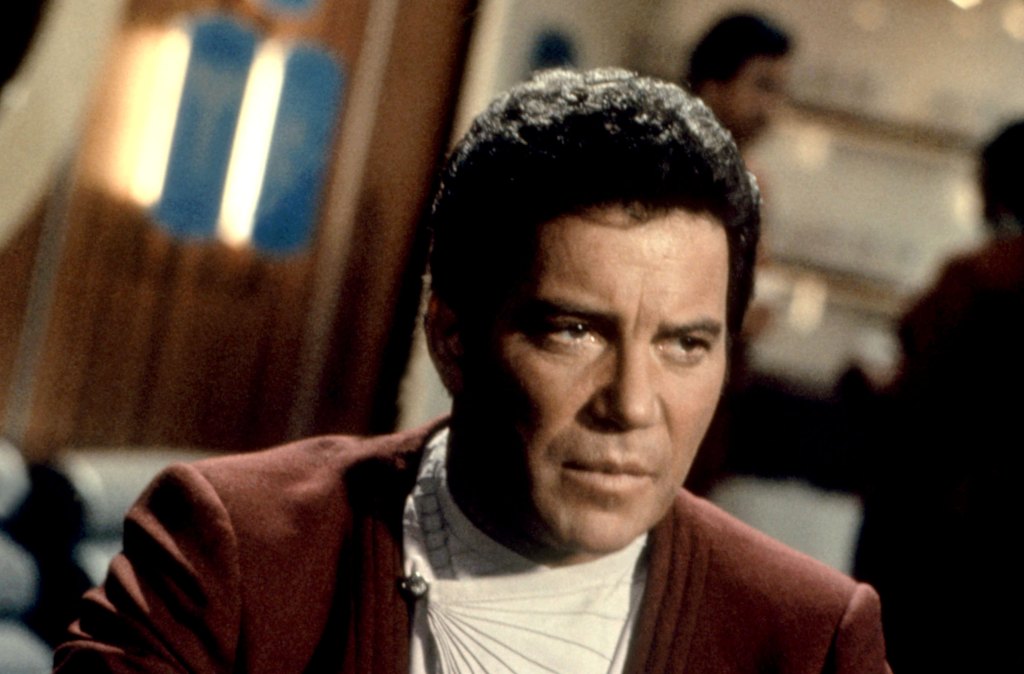

Stern notes that they worked up an outline but were ultimately told that elements added to expand the treatment to novel length were unacceptable; that the estate wanted only Roddenberry’s ideas to be represented. “There was the added complication—though I suspect this wasn’t as much of a worry at the time—that a lot of themes in that treatment Gene had subsequently addressed in Star Trek: The Motion Picture and in his TNG work, and that Star Trek V had touched on some similar themes as well,” he explains. “I believe what happened then—after a couple go-rounds—is that the project was simply allowed to die. I don’t know for certain, though, because by that point I had left Trek.”
Closes Friedman, “Gene’s feelings about organized religion had made their way into other Trek episodes and movies. In these other cases, his comments were more measured, more considered; they worked in the context of the story, making a point about our place in the universe. I don’t think that happened in The God Thing. The best Star Trek is about ultimately embracing the alien and unfamiliar. This took the opposite tack. I discussed the problem with Dave Stern. Pocket had already invested in the project, even printed a dust jacket, so we decided I would come up with a coherent novel outline that incorporated as many elements of Gene’s script as possible. I did this. However, Majel, Gene’s widow, wasn’t on board with what I had done. She insisted that Gene’s script be expanded into a novel-length narrative, period. No changes, no substantive additions, no embellishments.
“This was, of course, her prerogative. After all, she was Gene’s widow. And I could have tried to do what she was asking—just stretch out the scenes to take up more pages. Certainly, it would have been a healthy payday for me. The print run was slated to be enormous. But public scrutiny of this story in anything approximating its original form would not have put Gene or his legacy in a good light. It would not have put me in a good light. And it would not have put Pocket in a good light. In the end, after discussions with Majel and after entertaining the possibility of using one other writer, Pocket agreed with my assessment and scrapped the project. I wish it had turned out otherwise. But you know, all things considered, it’s probably better this way.”
Conversation
All comments are subject to our Community Guidelines. Woman's World does not endorse the opinions and views shared by our readers in our comment sections. Our comments section is a place where readers can engage in healthy, productive, lively, and respectful discussions. Offensive language, hate speech, personal attacks, and/or defamatory statements are not permitted. Advertising or spam is also prohibited.