19 Lost Episodes of ‘Star Trek’: The Adventures of Captain Kirk and the Enterprise You’ve Never Seen
Before the movies, an entire TV revival was planned—these are the stories we could have seen

During its original network run in the 1960s, Star Trek was famously saved from cancellation twice by fan letter-writing campaigns—an unprecedented show of audience loyalty. That passion only grew in the 1970s as the series thrived in syndicated reruns and inspired a rapidly expanding convention circuit, transforming Star Trek into a full-scale pop-culture phenomenon. With interest at a peak, rights holder Paramount Pictures began developing a television revival titled Star Trek: Phase II. Although the project was ultimately reworked into Star Trek: The Motion Picture, numerous scripts and story treatments were written to continue the voyages of the U.S.S. Enterprise.
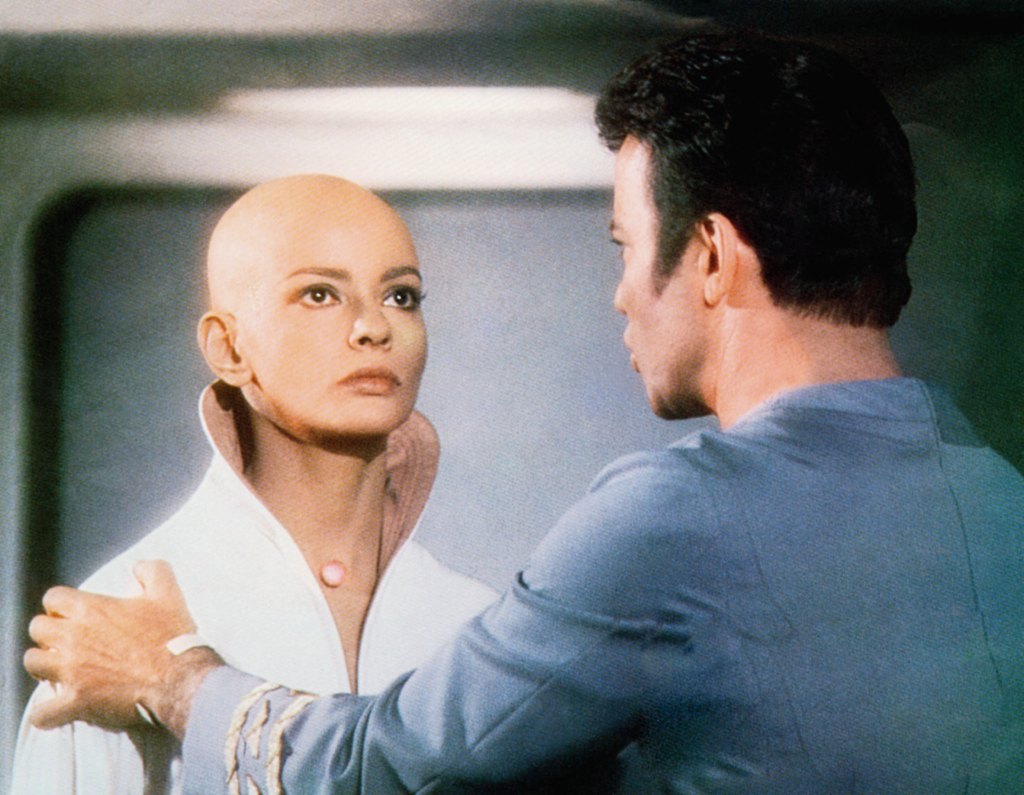
Conceived as a second five-year mission, Phase II aimed to retain the spirit of the original series while addressing ideas suited to a 1970s audience. Returning were Captain Kirk, Dr. McCoy, Scotty, Sulu, Chekov, Uhura and Christine Chapel, while Spock was written out as having returned to Vulcan. New characters included Vulcan science officer Xon, first officer Will Decker and Deltan navigator Ilia. Long discussed largely in terms of what it became, Phase II remains Star Trek’s lost season—its unfilmed stories preserved only on the page—and presented below.
1. “In Thy Image” by Harold Livingston

“In Thy Image” was conceived as the two-hour premiere of Star Trek: Phase II and later became the foundation for Star Trek: The Motion Picture. The story recalls Admiral James T. Kirk to command the Enterprise after a vast, unknown entity destroys three Klingon vessels and heads toward Earth. Reuniting with much of his original crew, Kirk also takes on new officers as the ship ventures into deep space. Tensions arise as Kirk measures Xon against Spock and forges a mentor-student relationship with Decker, one that challenges both men’s assumptions about command. The intruder is ultimately revealed as V’ger, a long-lost Voyager probe that has evolved into a godlike intelligence seeking its creator and judging humanity as a flawed, parasitic species. Rather than resolving the crisis through force, the story culminates in an appeal to understanding, with Kirk and his crew arguing that humanity’s capacity for growth, curiosity and self-awareness makes it worthy of survival.
Harold Livingston (writer/producer): “I tried to make the pilot more of a universal story. The audience for Star Trek was, I thought, restrictive and I felt there was a greater audience for this. It was my feeling that almost all of the stories seemed allegorical, and I wanted them a little harder and a little more realistic. That was important, because I have a fear of these cult series and films. They really are self-defeating in the end due to your limited audience. That was my feeling about the script and the show, right or wrong.”
Alan Dean Foster (story writer, “In Thy Image”): “The real reason that Star Trek became a movie was because of the success of Close Encounters and Star Wars. When the word came down from up high that they were going to do a big-budget movie, everybody started running around like crazy. What I think happened, and this is all supposition on my part, is that after years of being told, ‘Yes, we’re doing a series, no, we’re doing a movie,’ suddenly somebody said, ‘Yes, we are doing a movie,’ and everybody hears money. Everybody ran around trying to find something so that they could get started right away with budgeting, casting and everything else. Then, they said, ‘We’ve got this two-hour script treatment here. Let’s give them this before they change their minds again.’”
2. “The Child” by Jon Povill and Jaron Summers

“The Child”—later adapted for Star Trek: The Next Generation—finds the Enterprise passing through an energy cloud that impregnates Lt. Ilia with a rapidly developing life-form. Within days she gives birth to a daughter, Irska, who ages at an accelerated rate and repeatedly saves the ship from catastrophic failures. When the Enterprise’s molecular hull begins to disintegrate, a Vulcan mind meld by Xon reveals that the child must merge with a luminous entity trailing the ship. Once this occurs, the vessel is restored, and Kirk and his officers realize that Ilia and the Enterprise had served as successive “wombs,” allowing the child to absorb human emotion, attachment and sacrifice before evolving into a higher life-form.
Jon Povill (story editor, Phase II): “One of the keys to me becoming story editor on Star Trek II was that ‘The Child’ had to be written in a week. I had Jaron Summers do a first draft in a week, and then I had to do a pretty complete rewrite. It had to get into shape for shooting, and the way that script came out would determine whether or not I could be the story editor.” He got the job.
3. “The Savage Syndrome” by Margaret Armen and Alf Harris
“The Savage Syndrome” places the Enterprise in peril when Decker, McCoy and Ilia investigate a derelict ship orbiting a dead world and discover its crew slaughtered one another in an outbreak of unexplained savagery. The mystery deepens when a space mine detonates near the Enterprise, releasing an energy wave that disrupts the crew’s neural impulses and reduces them to violent, primitive behavior. As order aboard the ship collapses, the away team races to identify the cause and reverse the effects before the starship—and everyone on it—is destroyed by the very madness they are struggling to contain.
Margaret Armen (writer): “Alf Harris and I started with the what if? Motif. There’s an old saying, ‘Scratch the man, and the savage bleeds.’ So, what if these people from this futuristic, very scientific civilization have something happen to them which strips them down to the basic emotions and drives of the cave? That was the line of thought we pursued. Gene Roddenberry was very close to the show. Alf and I went in with three stories, and in the end, it was ‘The Savage Syndrome’ that Gene liked because he was looking for Star Trek stories that were really different.”
4. “Practice in Waking” by Richard Bach

“Practice in Waking” centers on a derelict sleeper ship carrying a single passenger in suspended animation. When Scotty, Decker and Sulu beam aboard to investigate, an accidental activation of the vessel’s controls plunges them into a shared dream state, where they awaken in ancient Scotland with no memory of their lives aboard the Enterprise. There, they encounter the same woman from the sleeper ship and find themselves defending her from a hostile mob convinced she is a witch. Back on the Enterprise, McCoy discovers that the three men’s life signs are steadily fading, realizing that the longer they remain trapped in the dream, the closer they come to actual death. With time running out, Kirk and the crew must find a way to awaken them before the dream becomes permanent.
Harold Livingston: “Getting Richard Bach to work on Star Trek was a real score for the show. This story would have made one hell of an episode.”
5. “To Attain the All” by Norman Spinrad

“To Attain the All” finds the Enterprise trapped in another dimension and boarded by a blue-skinned being calling himself the Prince, who offers humanity the ultimate reward—the attainment of the “All”—if Kirk proves his species worthy. Forced to comply or remain stranded, Kirk allows Decker and Xon to undergo the test, transporting them into a vast maze where their personalities begin to invert, with the Vulcan relying on intuition and the human on logic. At the maze’s end, Xon makes contact with a glowing sphere whose alien intelligence begins spreading through the Enterprise, possessing the crew and erasing individuality as it merges minds into a single consciousness. The Prince argues that surrendering identity in exchange for immortality is a fair bargain, but Kirk rejects the price, ultimately leading the effort—along with Decker—to preserve humanity’s individuality and stop the forced assimilation before it consumes the ship and its crew.
Norman Spinrad (writer): “They commissioned X number of scripts and Y number of treatments. This was a treatment that never went any further. I don’t remember where the idea came from, except that I’ve always been fascinated with the high mind concept, which I have dealt with in my books. It would have made a great TV piece because it’s all in the acting. They’re taking on each other’s characteristics, which is something really weird and strange that wouldn’t be as interesting in a novel. It would have to be in an oral form, something with acting.”
6. “The Prisoner” by James Menzies

“The Prisoner” begins when the image of Albert Einstein appears on the Enterprise’s viewscreen, claiming that he and other early–20th-century Earth scientists were abducted and preserved by an alien “storage battery.” Though Kirk doubts the claim, curiosity leads the ship to the planet in question, where a group of famous scientists materializes in the transporter room—illusions that Xon quickly identifies as part of a trap. Unable to break orbit, Kirk beams down and confronts Logos, the alien intelligence responsible, whose plan is to absorb human identity and experience, beginning with the Enterprise crew. Logos argues that humanity’s violent history, particularly its flirtation with nuclear annihilation, justifies his actions, while Kirk insists that mankind has evolved beyond that past. What follows is a contest of philosophy and resolve, with the crew forced to defend humanity’s capacity for change against an intelligence determined to prove it otherwise.
Harold Livingston: “I don’t clearly recall the genesis of ‘The Prisoner,’ but I think it happened in our first flush when we were anxious to put projects into work. Overanxious. The basic problem is that nothing happens—none of the characters are very interesting. The idea of the being manifesting himself in the form of Albert Einstein is interesting, but it doesn’t pay off. Analyzing the story—and the premise—you begin to see that it can’t pay off: there simply is not enough substance.”
7. “Tomorrow and the Stars” by Larry Alexander
“Tomorrow and the Stars” sends Kirk back in time to Pearl Harbor in 1941 after a transporter malfunction, initially rendering him ghostlike and unable to interact with the physical world. He encounters Elsa Kelly, an unhappily married woman who gradually accepts Kirk’s impossible story, even as Xon and Scotty struggle to retrieve him. Their attempts inadvertently make Kirk solid again, leading to a deepening romance and a moral dilemma familiar to Star Trek: whether Kirk should warn Elsa about the impending attack on Pearl Harbor or preserve history and return to the Enterprise. While the story inevitably recalls City on the Edge of Forever and raises practical questions about time travel mechanics, its strength lies in its updated, post-1960s sensibility—reframing a classic Trek theme with more modern dialogue, emotional nuance, and perspective.
An interesting character moment occurs shortly after the transporter malfunction, with the ghost-like Kirk screams out, “Xon, what have you done to me?” The line seems to indicate a continuing sense of Kirk’s bitterness that Xon isn’t Spock.
Larry Alexander (writer): “Oh yeah, but that’s only because I was able to take it one step further. In other words, Xon is not Spock, even though I considered him Spock from a character point-of-view. So, there is a little resentment there. It seemed the ‘logical’ thing to do.”
The origins of “Tomorrow and the Stars” trace back to an earlier concept developed by Gene Roddenberry, who, in an effort to accelerate script development, handed writer Alexander a story titled Genesis II—a project originally written for the aborted Genesis II series. Alexander reworked the idea into a script called “Ghost Story,” in which Kirk and an away team discover a ruined planet filled with advanced technology but no surviving civilization. Kirk is thrown backward in time and encounters scientists experimenting with a mind-scanning device that reacts catastrophically when used on a human. Connected to Kirk’s brain, the machine externalizes his Id, unleashing a destructive force that ultimately wipes out the planet—explaining the devastation the Enterprise crew later finds. While Alexander openly acknowledged the influence of Forbidden Planet, he maintained that the story pushed beyond its inspiration by placing the psychological danger squarely within Kirk himself.

Larry Alexander: “I thought it was a wonderful story idea to have Captain Kirk responsible for the death of a planet and it’s the one step beyond Forbidden Planet that had never been dealt with. It makes it much more human and, to me, much more of an interesting irony. That’s the kind of material I think is interesting, and I was shocked when Gene Roddenberry said he didn’t want to go with it. It was suggested that saddling Kirk with a planet’s destruction wasn’t the right thing to do to a heroic character. But in effect, it wasn’t his doing. He asked them not to do it. I was very strict about that. He didn’t volunteer to do this, and when he realized what was going on, he did everything possible to stop it. All of that, I think, holds up on that basis. I was thinking very strictly about what happened to Kirk in many episodes where things didn’t turn out the way he hoped. That’s what makes Star Trek so wonderful.”
“As heroic as Kirk was, through no fault of his own, hard choices had to be made. In Harlan Ellison’s story (“The City on the Edge of Forever”), Kirk has to allow Edith Keeler to die. It’s a gulp at the show’s end, and it’s like that when the people of this planet find that it’s his demons which have destroyed their world, not theirs. It makes it that much more ironic.” Roddenberry preferred instead that Kirk go back to Earth’s past and chose Pearl Harbor as the time and place.
Larry Alexander: “It seemed a very obvious choice. Pearl Harbor is good because it’s visual and you could use footage from various war films, which would work. But I didn’t want to have the responsibility because the story works as a story. It’s like sending somebody back in time to kill Adolph Hitler in the crib, and he does it, the only irony you can have is his coming back and them saying, ‘Why didn’t you kill Kowalski like we asked you to?’ History would be the same, but somebody else would do the job. You want to go back in history? Give me an event, and I’ll do it. The story is the same no matter what.”
8. “Devil’s Due” by Williams Lansford
“Devil’s Due”—later reworked as an episode of Star Trek: The Next Generation—begins when the Enterprise responds to a distress signal from Neuterra, a solar system that theoretically should not exist. Beaming down, Kirk and his team discover a serene, idyllic world shadowed by deep sadness. The planet’s elder statesman, Zxoler, explains that Neuterra’s people were granted 1,000 years of peace and prosperity by a powerful being called Komether after their own scientific excesses nearly destroyed the planet—but the bargain is now coming due, and all life will end in 20 days. Unable to evacuate the population in time, Kirk is drawn into a trial against Komether, acting as the planet’s defender while questioning whether the entity is truly the Devil or a manifestation born from the Neuterrans’ collective guilt and fear. The story frames a moral and philosophical confrontation, pitting faith, responsibility, and accountability against the seductive promise of salvation without consequence.
Harold Livingston: “This was essentially The Devil and Daniel Webster. The story had been developed to a point where we all felt it would be a most exciting Star Trek.”
9. “Deadlock” by David Ambrose
“Deadlock” places the Enterprise in the middle of what are presented as routine war-game exercises, with Kirk ordered to take direction from Starfleet science adviser Lang Caradon—a development that immediately raises McCoy’s suspicions of behavioral manipulation. What begins as controlled testing escalates into a dangerously real confrontation, nearly triggering a fatal battle between the Enterprise and Starbase 7. Investigating in person, Kirk, Decker, McCoy and Xon discover that key Starfleet officials, including Commodore Hunter and Caradon, have been replaced by alien infiltrators. Fearing the Federation’s expansion toward their territory, the aliens have engineered the crisis in hopes that humans will provoke their own destruction. With time running out, Kirk and his crew must both defuse the immediate threat and convince the hidden adversaries that the Federation poses no danger.
Harold Livingston (in a memo from back in the day): “David Ambrose is a British writer whom we had at one time considered for the two-hour premiere. His story ‘Deadlock’ concerns the Enterprise and a starbase involved in war games which turn out to much more serious and which truly test the mettle of all our characters, our procedures and the bravery of our Enterprise crew. This should also be an extremely exciting story.”
10-16. Stories by Jerome Bixby
All of Jerome Bixby’s Star Trek Phase II submissions—typically one to four pages in length—were conceived strictly as story premises, not finished teleplays. They were intended as launching points for further development and should be viewed as conceptual explorations rather than complete narrative statements.
“The Darker Side”: On the long-abandoned planet Demonos, an Enterprise landing party discovers ruins marked with pentagrams and occult symbols, along with primitive humanoids descended from the world’s original inhabitants. After returning to the ship, the crew unknowingly carries aboard a contagion that spreads rapidly, stripping away moral restraint and amplifying humanity’s darkest impulses. As order collapses, some crew members attempt to form a new society on the planet’s surface, only to be captured by the natives. Kirk ultimately confronts a horned, devil-like alien entity that feeds on negative human emotions and has cultivated them for millennia. Drawing on what he calls “a particle of scientific truth within occult belief,” Kirk defeats the creature, freeing both his crew and the planet from its influence.
“Lords of Limbo”: The Enterprise delivers supplies to Limbo, a prison planet that has evolved into a self-contained society complete with its own government, industries, and corruption. Kirk and his landing party are immediately imprisoned, the result of a calculated move by an inmate seeking to provoke Federation scrutiny of the planet’s abuses. Matters worsen when it’s revealed that certain prison officials are secretly aligned with the Klingons and have been diverting critical medical supplies for their own addictive use. Conceived as light melodrama, the story emphasizes fast-paced action, political intrigue, and satirical exploration of institutional decay within a supposedly regulated system.
“Skal”: A brilliant Klingon scientist—the intellectual equal of Einstein among his people—defects to the Federation in hopes of fostering peace. While preparing him for life on Earth, McCoy discovers that Skal is unknowingly carrying a biological agent designed to activate once he reaches a human environment. The infection spreads rapidly aboard the Enterprise, killing crew members and resisting all medical countermeasures. Realizing the Klingons anticipated his defection, Skal offers his life to save the ship. Kirk ultimately devises a solution using the transporter to phase the organism out of Skal’s system, even as Klingon cruisers attack in an effort to preserve the weaponized contagion.
“Only a Mother”: Billed as a comedy, this story follows the unintended consequences of installing an energy-to-matter converter aboard the Enterprise. After the ship’s computer is altered during a stop at a matriarchal world, the Enterprise begins to “reproduce,” creating a dozen miniature replicas that trail the original vessel. When the Klingons capture one of the smaller ships with a tractor beam, Kirk must recover it before its technology can be studied and duplicated. The premise combines visual absurdity with espionage stakes, using humor to explore technological vulnerability.
“Small War”: While confronting a Klingon vessel near the Neutral Zone, Kirk suddenly finds himself alone on the bridge, observed by towering alien beings. Moments later, he and the Klingon commander, Kos, are displaced into a series of shared environments—each increasingly hostile—where survival depends on cooperation. Despite being sworn enemies, the two men form a temporary alliance, navigating deadly pursuits and trials. Ultimately, the giant aliens reveal the test’s purpose: to determine whether rival species are capable of intelligent cooperation. Having passed, Kirk and Kos are returned to their ships, and hostilities quietly dissolve without a single shot fired.
“Marla”: While delivering supplies to the colony Marcus X, Kirk becomes the object of affection for Marla, the daughter of the colony’s leader. Soon after, the Enterprise is trapped in orbit as reality itself begins to fracture. Kirk finds his wishes inexplicably coming true, culminating in a vivid return to his childhood home in Iowa. Breaking free from the illusion, he discovers that Marla is unconsciously using a crystalline alien computer designed to fulfill desire without limitation. After a violent psychic backlash, Marla is stopped, and the colonists choose to repurpose the technology for constructive ends such as agriculture, education, and infrastructure.
“Pandora’s Planet”: Answering a distress call in uncharted space, the Enterprise encounters survivors of a Federation ship that crashed on a nearby planet decades earlier. The colonists are under siege by technologically advanced reptilian natives, but Kirk soon uncovers the truth: the original crew violated the Prime Directive, teaching the locals Federation science and warfare. The resulting arms race has destabilized the planet and turned its inhabitants into adversaries. The story centers on the long-term consequences of cultural contamination and the ethical cost of well-intentioned interference.
17. “Lord Bobby’s Obsession” by Shimon Wincelberg
“Lord Bobby’s Obsession” opens when Starfleet detects a possible Romulan incursion into the Neutral Zone and orders the Enterprise to investigate. There, Kirk encounters a small vessel piloted by a man calling himself Lord Bobby—revealed to be Robert Standish, the third Earl of Lancashire, abducted from Earth in the early 20th century and rendered immortal by long-vanished aliens. Delighted to be among humans again, Bobby is brought aboard just as the Enterprise is suddenly surrounded and attacked by multiple Romulan ships, leaving the starship crippled and unable to escape. As Kirk struggles to convince the Romulans that the Enterprise is not on a hostile mission, McCoy uncovers a more troubling truth: “Lord Bobby” is not human at all, but an alien entity whose true motives remain unclear. Caught between an external military standoff and an internal threat, Kirk must unravel Bobby’s identity before either situation turns catastrophic.
18. “Are Unheard Melodies Sweet?” by Worley Thorne
“Are Unheard Melodies Sweet?” follows an Enterprise landing party to a planet in the Hyades star cluster while searching for the lost U.S.S. St. Louis, whose logs reveal the crew succumbed to a planet-borne delirium and deliberately crashed. As the illness spreads among the Enterprise crew, Decker vanishes and is discovered to be held by an alien race capable of powerful illusions, forced to live out idealized fantasies while their civilization crumbles around them. Once a savage people, the aliens suppressed their violent nature by retreating into illusion, but now lack the biological means to sustain it. Their plan is to harvest hormones from the Enterprise crew to preserve their dream world and prolong their species. As McCoy races to cure the spreading disease, Kirk must resist the planet’s seductive unreality, rescue Decker, and confront the cost of a society that chose illusion over confronting its true nature.
Worley Thorne (writer): “Working on Star Trek was something I very much wanted to do. I began my career the year that the original show started, and I felt as though I missed out because I wasn’t established enough to write for it. This was an opportunity to do something I had always wanted to do.”
19. “Kitumba” by John Meredyth Lucas
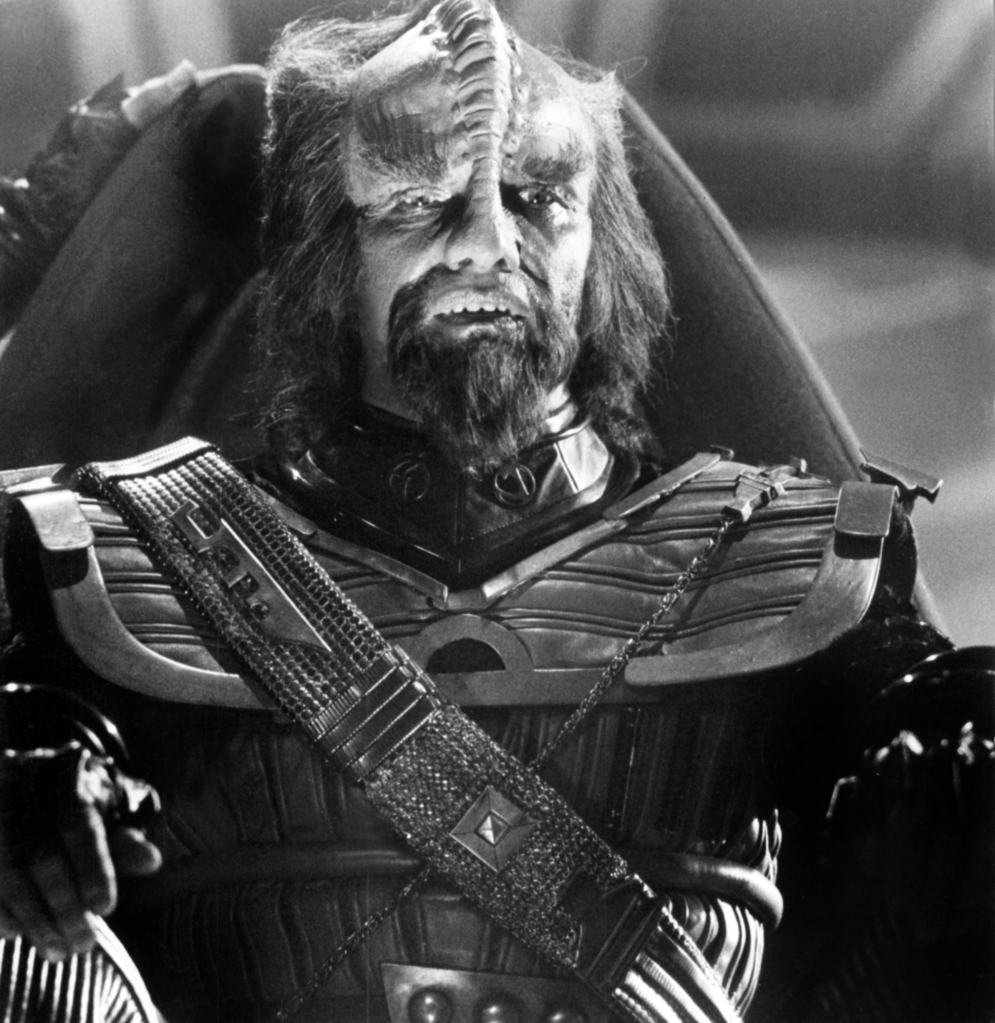
“Kitumba” sends the Enterprise on a near-suicidal diplomatic mission to the Klingon homeworld in an effort to avert an impending intergalactic war. With the help of Ksia, a Klingon warrior who believes such a conflict would be fatal to both sides, Kirk reaches the planet and comes face to face with the Kitumba—the child ruler of the Klingon Empire, already burdened by destiny and expectation. As Kirk attempts to persuade the young leader that war with the Federation would be catastrophic, he discovers that the true danger lies within the Klingon power structure itself. Caught in a volatile struggle between the Kitumba and his closest advisers, the Enterprise crew finds itself entangled in an internal conflict whose outcome will decide whether diplomacy or war prevails.

Harold Livingston (at the time): “I think ‘Kitumba’ is very exciting, visually interesting and dramatic. It should be one hell of a show. (My notes) on it are really very minor, which illustrates the excellent flow of the story. So go with it and good luck.”
John Meredyth Lucas (writer): “I wanted something that we had never seen before on the series and that’s a penetration deep into enemy space. I then started to think of how the Klingons lived. Obviously, for the Romulans, we had Romans, and we’ve had different cultures modeled on those of ancient Earth, but I tried to think of what the Klingon society would be like. The Japanese came to mind, so, basically, that’s what it was, with the Sacred Emperor, the Warlord and so on.”
Conversation
All comments are subject to our Community Guidelines. Woman's World does not endorse the opinions and views shared by our readers in our comment sections. Our comments section is a place where readers can engage in healthy, productive, lively, and respectful discussions. Offensive language, hate speech, personal attacks, and/or defamatory statements are not permitted. Advertising or spam is also prohibited.