James Doohan of the Original ‘Star Trek’: The WWII Heroism and Survival of the Man Behind Scotty
Discover how a silver cigarette case saved his life on D-Day and the secret he hid for 40 years
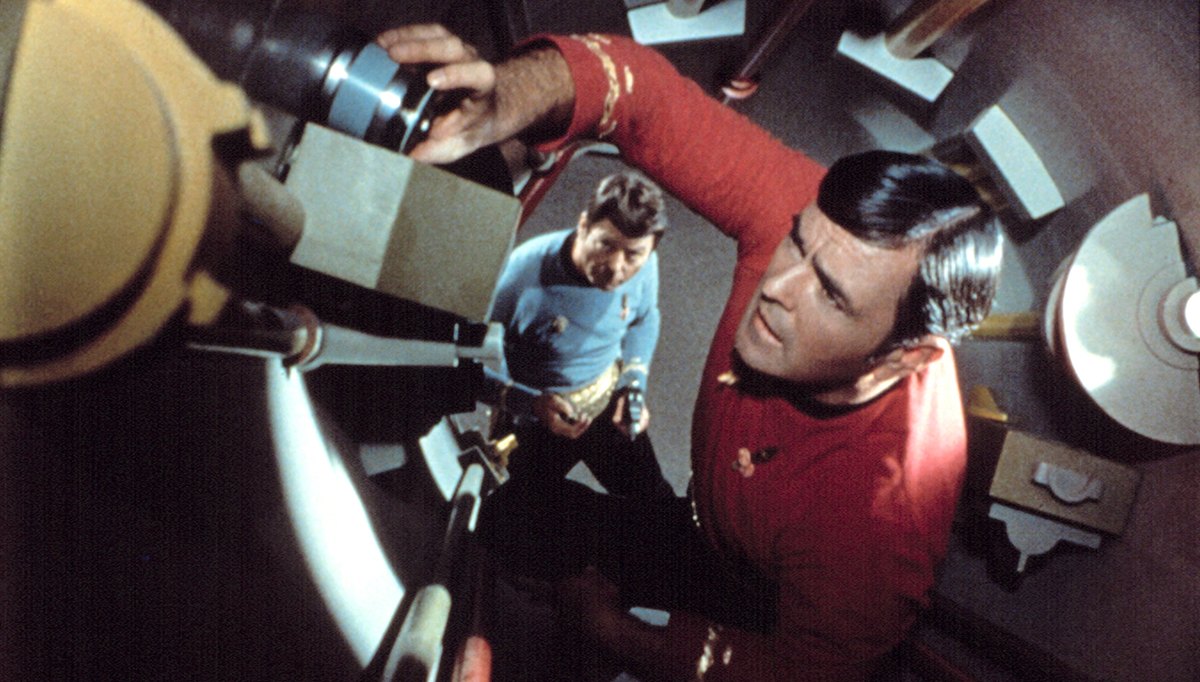
Long before audiences came to know James Doohan as the warm, witty miracle worker of the Star Trek engine room, he was a young Canadian officer facing something far more real than sci-fi. To generations of fans, Doohan was Chief Engineer Montgomery “Scotty” Scott— the man who could fix anything aboard the starship Enterprise with confidence and charm. What many never realized was that the calm authority and ability to think outside the box he brought to the role had been forged years earlier, under fire, on one of the most dangerous days of World War II.
Doohan rarely spoke at length about his military service, and when he did, it was often with understatement or humor. But the facts alone tell a remarkable story of courage, chance and survival that followed him for the rest of his life. It’s a chapter that adds unexpected depth to a man already beloved for his on-screen legacy. What follows is James Doohan’s military story.
June 6, 1944: landing at Juno Beach
On the morning of June 6, 1944, James Doohan was among the first wave of Canadian soldiers to storm Juno Beach as part of the Allied invasion of Normandy. Serving as a lieutenant in the 13th Field Artillery Regiment with the 3rd Canadian Infantry Division, he was dropped into chaos almost immediately. The beach was under heavy German fire, and casualties mounted quickly as troops struggled to gain a foothold inland.
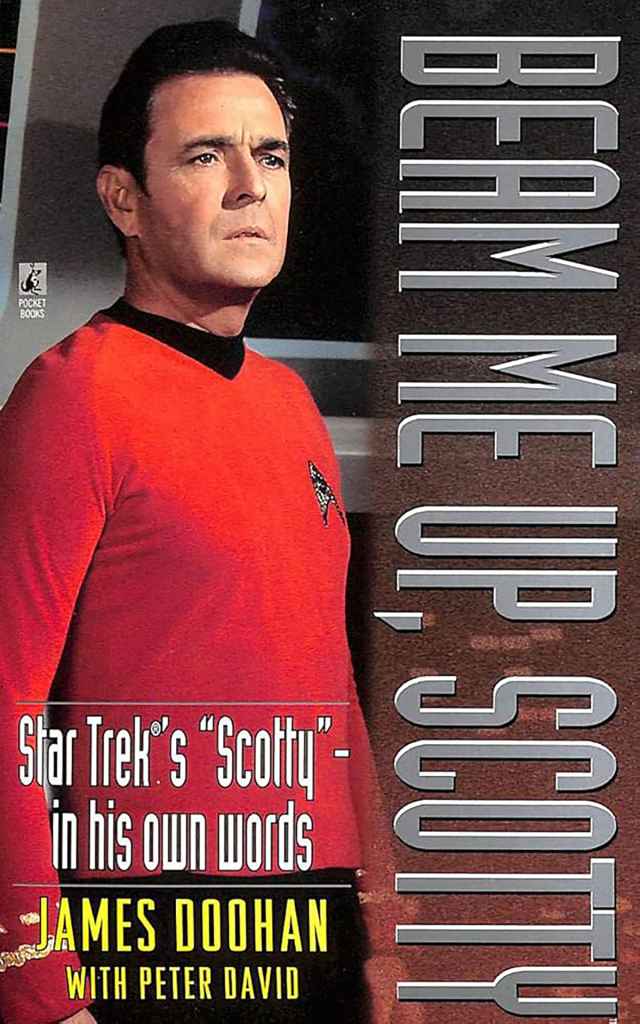
“We pounded through the sand, but it was deep and thick, the worst possible surface to try and make our way through quickly,” writes James Doohan in his memoir, Beam Me Up, Scotty: Star Trek’s Scotty—In His Own Words. “It was like slogging through snow. And because it was 7:30 in the morning by that point, we were absolutely perfect targets in the new daylight. We covered 75 yards and it felt like 7500. Trace bullets blew past us, in front and behind, as the Germans returned fire… Something like 1200 rounds a minute hurtled around us. It was as if we were wading through a swarm of infuriated hornets, hurling ourselves into the midst of an angry nest.”
In the middle of that confusion, Doohan took decisive action. Under fire, he is credited with taking out two German snipers who were pinning down advancing soldiers. It was the kind of split-second decision that could mean the difference between life and death—not just for him, but for the men around him.
“I’d never shot at a living being before, but it was the job,” he observed. “You had to do the job. I swear to you, you never thought of anything other than getting the job done.”
As the fighting pushed forward, Doohan led his unit across what turned out to be an anti-tank minefield. At the time, the danger wasn’t fully understood; the soldiers only later realized how close they had come to disaster. The mines failed to detonate, not because the field was safe, but because the soldiers were too light to trigger them. One wrong step and the outcome could have been catastrophic. For Doohan, it was only the beginning of a day that would test just how much a person could endure and still keep moving forward.
The night he was shot six times

After surviving the landing at Juno Beach and pushing inland with his men, James Doohan’s most dangerous moment didn’t come from the enemy—it came later that same night. As darkness fell on June 6, 1944, the battlefield became even more chaotic. Units were scattered, communication was limited and nerves were stretched thin. While moving between command posts, Doohan was suddenly caught in a burst of gunfire. In the confusion, a nervous Canadian sentry mistook him for an enemy soldier and opened fire. He was hit six times.
“It hit me and spun me around,” he recalled of the first shot. “Staggering, I fell down into the shell hole. For a moment, I hadn’t fully registered that I’d been struck. I just knew that something had shoved me with tremendous force. Then I looked at my right hand and saw the blood covering it. I could see the holes in my middle finger… Staring at my perforated finger, I felt no pain. The adrenaline got in there and acted as a buffer, although I knew I’d feel it later. I felt as if I were looking at it from a distance, as if it had happened to someone else.”
Doohan was actually hit a total of six times, though he hadn’t realized it until a medic was bandaging his hand and commented on the wound to his leg. He looked down and noticed it for the first time. “I couldn’t believe it,” he wrote. “I’d taken a bullet in the leg as well. Then my astonishment grew as he removed bullet after bullet … two, three, then a fourth. And as I glanced down at my shirt, I noticed something. The upper right pocket of the shirt was torn. In the upper right corner, there was one, possibly two, bullet holes. I’d been shot in the chest.”
It was a shot that should have killed him instantly, but instead slammed into a silver cigarette case he was carrying in his breast pocket, a gift from his brother. “The bullet had come in at an angle, ricocheted off the cigarette case and bounced away. Four inches from my heart. Can you imagine that in an episode of Star Trek? Scotty’s life was saved because a stray phaser blast was deflected by a silver cigarette case given to him by his brother. Fans would shake their heads and think that the writers had lost their minds, falling back on unlikely cliches.”
The ‘craziest pilot’ in the Canadian Air Force

After surviving D-Day and recovering from his injuries, James Doohan could have been sidelined for the rest of the war. Instead, he volunteered for one of its most dangerous jobs: he became an Air Observation Pilot, a role that required flying low and slow over active battle zones to spot enemy positions and direct artillery fire. The work was perilous by design—these small aircraft had little protection, making them easy targets for ground fire, but their pilots played a crucial role in keeping advancing troops alive.
Doohan approached the assignment with the same mix of confidence and nerve that had carried him through Juno Beach. He quickly earned a reputation for fearlessness in the air — and occasionally for pushing the limits a bit too far. In 1945, that reputation became legend. While flying an Auster Mark IV aircraft, Doohan decided to see whether the plane could be maneuvered between a line of telegraph poles. It could and he did, proving his point—and earning himself a severe reprimand. The stunt also earned him a nickname among his peers: “the craziest pilot in the Canadian Air Force.”
The injury he carried into Hollywood
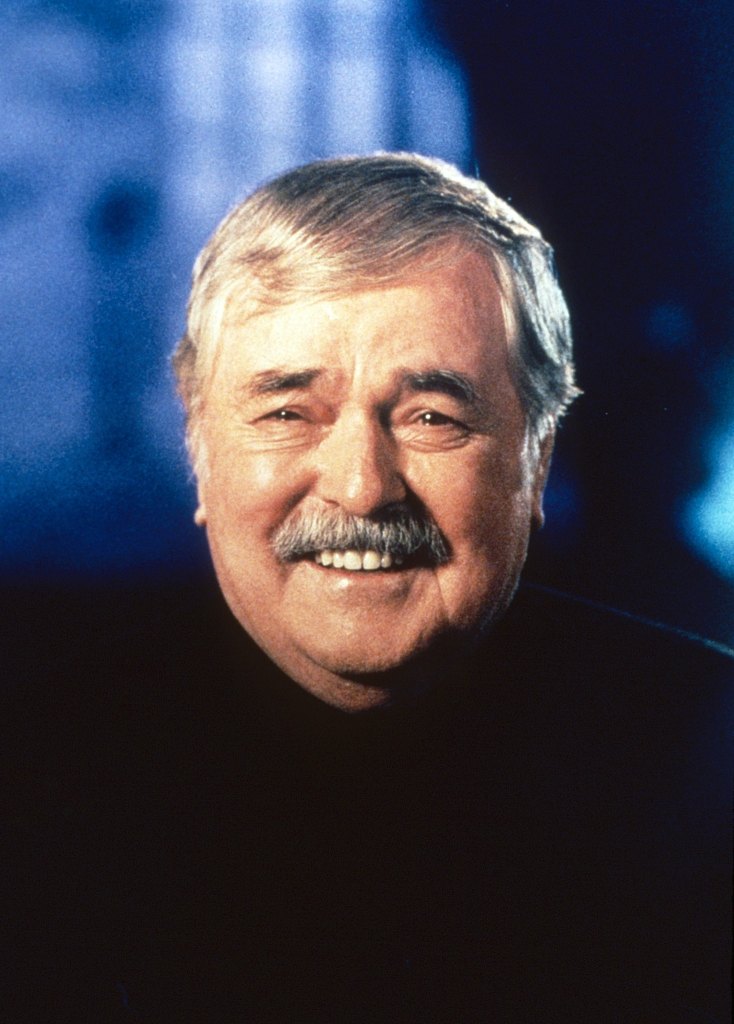
One of the permanent effects of his war experience was that the middle finger of his right hand had been so badly damaged by that bullet that doctors had no choice but to amputate it. When Doohan returned to civilian life after the war, he did so with a future still very much ahead of him—and with a permanent reminder of how close he had come to losing it.
As he moved into an acting career, that injury became a quiet concern. Film and television are unforgiving mediums, and Doohan was keenly aware that a missing finger could distract audiences or limit the roles he was offered. But rather than drawing attention to it, he chose to work around it. Over time, concealing his right hand became second nature.
That instinct carried over when he was cast as Montgomery “Scotty” Scott on Star Trek. Week after week, Doohan found subtle ways to keep his hand out of view—holding props, angling his body or tucking his fingers just out of frame.
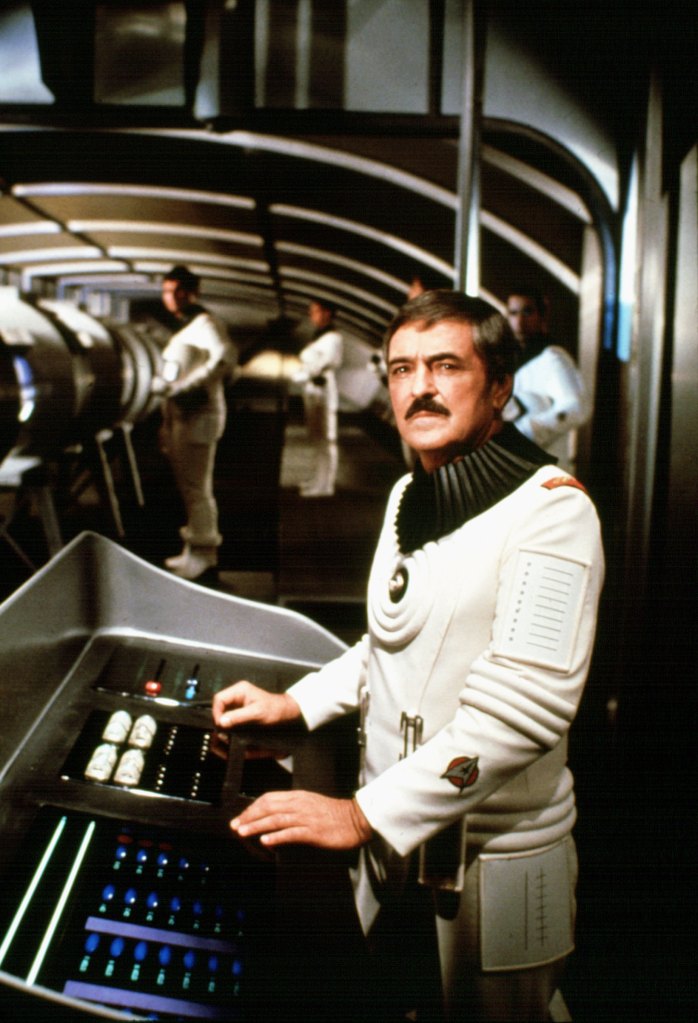
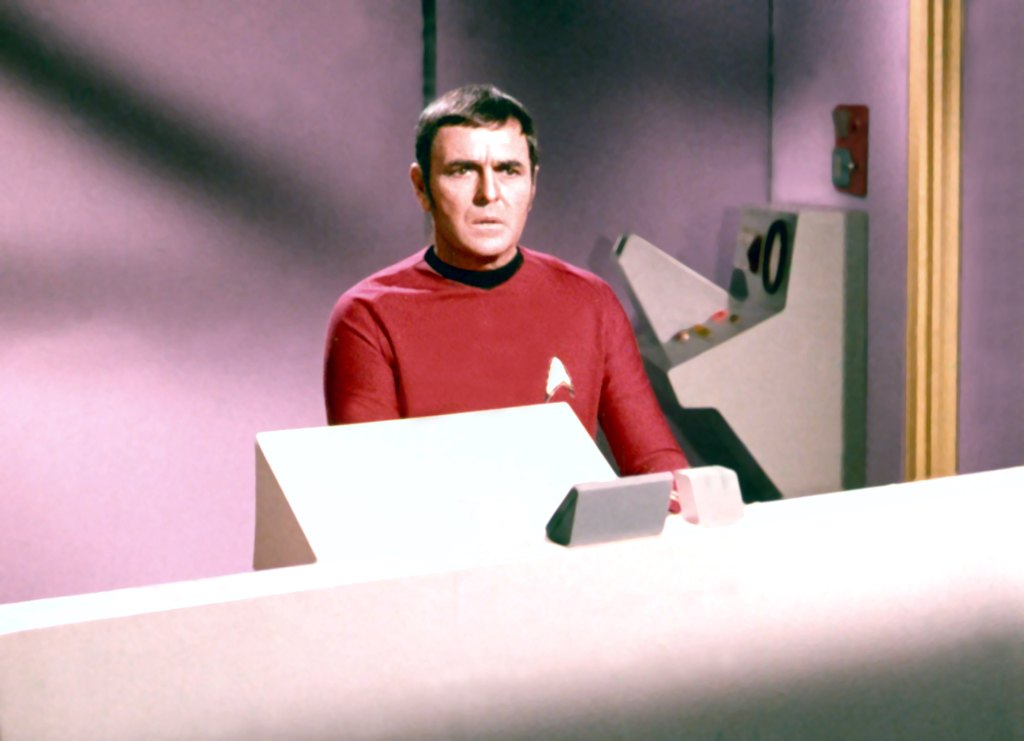
“You probably never even noticed the number of times that Mr. Scott would be sitting in the command chair of the bridge with his right hand tucked securely out of sight,” he said. “Captain Kirk, when at that post, would reach up and tap the communications switches on the right armrest when he wanted to communicate to Scotty that more warp power was required, else the Enterprise would be free-floating atoms before the next commercial break. But if Scott, having taken command, paged Captain Kirk on the planet’s surface to let the captain know about the latest crisis that threatened the ship, Scotty would oftentimes reach across his body with his left hand. The right remained obscured. The reason was simple: Mr. Scott was missing the middle finger of his right hand. Why? Because James Doohan was likely bereft of the same finger.”

There were, he pointed out, a few times when it was conspicuous, most notably in the episode “The Trouble with Tribbles.” Said Doohan, “Scotty walks into a room with a massive armload of tribbles. The right hand is exposed and the gap is evident… I became less concerned about it after a time. By the time we got to the famed Star Trek cement ceremony in front of Mann’s Chinese Theater, I was so unconcerned about it that I did the imprint with my right hand when I could just as easily have reached over with the left.”
Why he rarely spoke of the war years
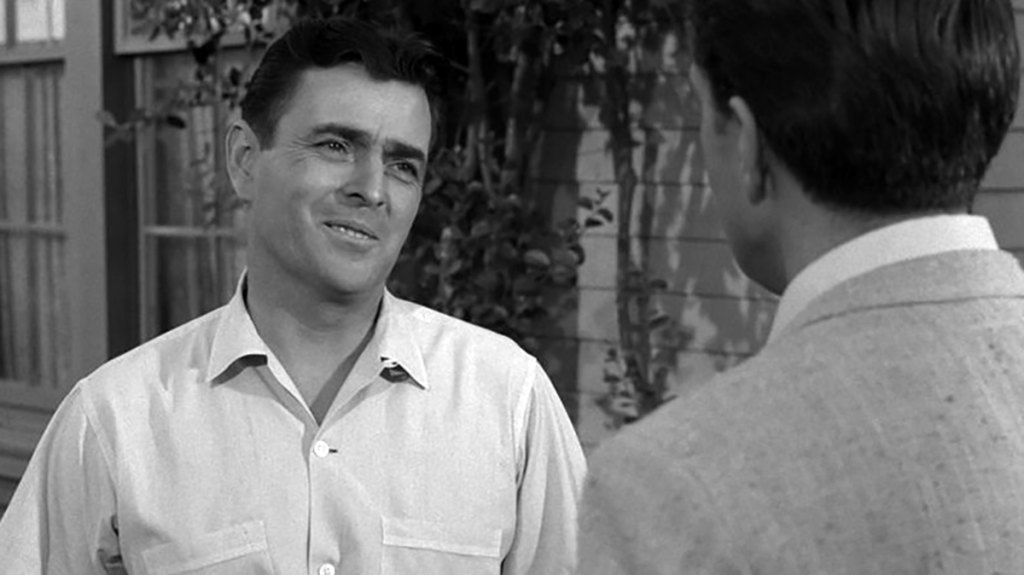
For all that James Doohan had survived, he never seemed interested in being labeled a hero. When his World War II service did come up later in life, he tended to downplay it, sometimes deflecting with humor, sometimes shifting the focus back to the people around him. Like many veterans of his generation, he didn’t see his experiences as extraordinary—just part of what had been asked of him at a moment in history when ordinary people were called upon to do unimaginable things.
Conversation
All comments are subject to our Community Guidelines. Woman's World does not endorse the opinions and views shared by our readers in our comment sections. Our comments section is a place where readers can engage in healthy, productive, lively, and respectful discussions. Offensive language, hate speech, personal attacks, and/or defamatory statements are not permitted. Advertising or spam is also prohibited.